How I Handle “Roller Coaster” Blood Sugar Days

“Roller coaster” blood sugar days happen to the best of us. Wild fluctuations from high to low and back again are sometimes just part of life with diabetes, but that doesn’t make them any less frustrating. So how can they be handled without losing your mind?

The answer is simple, and probably a bit unsatisfying: I just take the highs and lows as they happen. Rather than dwelling on the literal big picture of ups and downs that my CGM displays, I decide to treat each instance uniquely and have faith in the fact that everything will stabilize eventually.

How I Handle _Roller Coaster_ Blood Sugar Days
Honestly, give me high and low blood sugars over the twists and turns of a real roller coaster any day of the week.

For example, a recent weekday started off wicked badly for me when I had a low blood sugar at around 4 A.M. I did the thing that you’re not supposed to do and totally over-treated it (whoops), resulting in me having to take insulin to counteract the carbs. Well, I didn’t take quite enough insulin, because I was pretty high still when I woke up again a couple hours later. I took an aggressive bolus for the high and did my morning exercise routine…

…which backfired on me because soon after completing my workout and eating a quick breakfast, I was dropping like crazy. I’m almost certain that most other T1Ds would agree with me when I say that having a low blood sugar right after eating (and taking insulin for said meal) is SO obnoxious. I knew my carbs would kick in eventually, though, so I opted to suspend my insulin and went about getting ready for work…

…only to be sky-high again when I arrived to the office. I took another big bolus, knowingly stacking my insulin but not caring because I just wanted to get my blood sugar down…

…and that absolutely worked like a charm! By lunchtime, I was low again and literally eating frosting out of a Tupperware container (don’t @ me). Usually, I have zero restraint when it comes to sweet things like frosting and I was worried that I’d gone overboard with my spoonfuls of it. But magically, the low/high roller coaster stopped for the rest of the day after that! In fact, I was level between 90 and 110 for THE REST OF THE NIGHT.

I’m not saying it was worth it to deal with the incessant ups and downs all morning and part of the afternoon; rather, I’m trying to point out that I just did what I could in order to get off the roller coaster ride and it paid off  by the day’s end.

Sometimes, with diabetes, it’s more important to focus on blood sugar in the moment rather than stress about what it did or what it’s going to do. That way, I find that I can help treat my diabetes the way it needs me to treat it then and there rather than trying to anticipate what it might do later on. It’s all about perspective and remembering to keep it simple, even if it doesn’t always yield the fastest results.

“This is Type 1”: A Podcast to Know

Back in November, I had the pleasure of making a guest appearance on the Ask Me About My Type 1 podcast (which I wrote a blog post about that you can check out here).

The whole experience, from being interviewed by Walt and my Type None Emma to hearing positive feedback from listeners, was so enjoyable that I jumped at the opportunity to do another podcast called This is Type 1.

What makes This is Type 1 special? For starters, it’s hosted by two life-long T1Ds. Colleen Mitchell is a writer, analyst, and entrepreneur who has had type 1 diabetes for 24 years. On her website, Inspired Forward, she explains that she’s an advocate for educating others about diabetes. Her co-host is Jessie Tuggey, who Colleen describes as her “pseudo-daughter” that she’s known since her days attending diabetes camp.

Capture
The podcast logo, featuring the two co-hosts.

Colleen and Jessie have explored a variety of topics in their podcast since it launched in August 2019. Examples of subjects they’ve discussed are insulin, insurance, weight loss as a T1D,  how to handle stress as a T1D, and diabetes in pop culture (which was a theme of one of my blog posts last year that happens to get quoted in the episode). They’ve also interviewed a handful of guests, from family members to get parent/sibling perspectives to fellow diabetes podcast hosts.

After listening to one of their recent episodes, I was thrilled when Colleen and Jessie invited me to come onto the show so they could ask me about my life with diabetes and my blog. That episode is coming out next week and I plan on linking to it in a blog post, but for now, I highly recommend that you check out some of their other episodes. They range from 20-60 minutes, so it’s easy to listen to a few in one sitting.

You can listen to This is Type 1 on Stitcher, Apple Podcasts, Spotify, Google Podcasts, and generally, any other place you can find and listen to podcasts.

Remembering My Grandpa

Six years and one day ago, my maternal grandfather passed away. He was 87 years old and lived a very full life, but his passing felt sudden to all of his family members who simply believed that we had more time with him.

In the immediate days following his death, my parents, brother, aunts, uncles, and cousins experienced a wide array of emotions, as well as physical side effects from overwhelming grief. I had some of the highest blood sugars of my life during this time, and I also came down with some sort of fever that left me boiling hot one minute and head-to-toe shivering the next.

I remember that getting myself ready for his wake was a real process – I was collapsed on the floor just outside of the bathroom, waving a hair dryer not just on my head, but also all over my body because I felt so frigidly cold. Little did I know, my blood sugar was also well over 400, but even if I’d known that fact sooner, I probably wouldn’t have cared very much.

6917FE19-CAB8-4A7E-9E60-8CD0742F2BFE
A photo from my Grandpa’s last birthday with us.

Anyways, the intent of this post isn’t to remember a truly heart-wrenching period of my life. It’s to help me remember my grandpa, and catch him up on everything that’s happened since he left us. I thought it’d be most appropriate to do this in the form of a letter.

Dear Grandpa,

I have so much to tell you. But let me start with an apology. I’m sorry that I didn’t appreciate you more when I was younger. I’m sorry that I didn’t try harder to talk to you and hear your many stories firsthand. I always respected you throughout my youth and teenage years, as my parents instilled upon me early on to respect my elders. And even in childhood, I knew you were the elder to respect; after all, I was convinced that you single-handedly ended WWII. What’s more respectful than that? Anyways, I digress – the point is that I wish I made more of an effort to learn more from you and I’m sorry that I’ll never get a chance to make up for that.

You probably already know most of what I’m going to tell you. We lost Zuzu the same year we lost you, and I’m sure she’s with you in heaven now, but then we gained Clarence a couple of years ago and I think you would get such a kick out of him. There’s been a few more losses in our family, too, but many more gains of all kinds, and I know that in a way, you were there with us for those occasions and everything in between.

You also probably already know that since we lost you, I graduated college and started my career. Weird, right? I also started a blog about diabetes, and really, it’s become a much bigger part of my life than it ever was before. I would love to see your eyes widen in awe at our diabetes technology and how advanced it has become over the years. (I remember how amazed you used to be when we showed you our computers and early-model eBook tablets, I can only imagine your reaction to medical technology!)

As I sit here and type this and marvel at how much (and how little) has changed since you left, I remain grateful for the fact that you were a big part of our childhoods (“our” meaning my brother’s and my cousins’ childhoods, as well as mine). I also take comfort in the fact that just because you’re not physically here to witness all of this stuff, you’re here in our hearts and you’re with us in that manner for every step in our journeys. I know that when I’m having a tough diabetes day, you’re one of the guardian angels looking out for me and helping me recover from it.

And I also know that you’d be proud of me for what I’ve accomplished so far in life, and for me, that’s more than enough motivation to keep going, fighting, and working hard to beat diabetes and be successful in other arenas, too.

Love,

Molly

Knitting Keeps My Diabetes (And Me) From Unraveling

Sometimes, I feel like I’m 86 years old instead of 26 years old.

Why?

Well, for starters, I’ve always loved watching the soap opera General Hospital, a television program that’s more often associated with older demographics than my own millennial age group. I also enjoy wearing pajamas and being in bed as early as possible on weeknights. And I have developed various aches and pains in the last year that make me feel like my joints are aging at a much more rapid pace compared to the rest of me.

Oh, and one of my favorite pastimes happens to be knitting, which is apparently an “old lady” activity. And if liking to knit makes me old, then dye my hair gray and give me a walker, because I won’t be giving it up any time soon.

Knitting Keeps My Diabetes (And Me) From Unraveling (1)
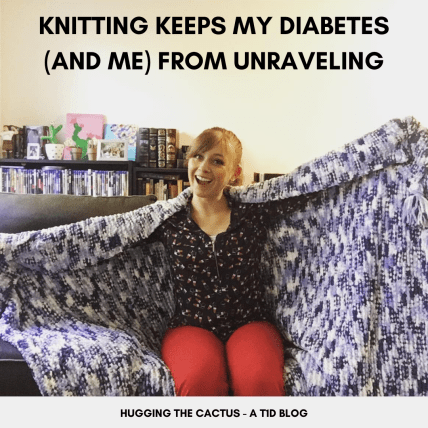
Me, triumphantly showing off the very first blanket I knit this past fall.


Knitting has become important to me because it’s not just about producing something pretty: It’s an outlet for me. It allows me to be creative and it gives me something to focus on when anxious thoughts and feelings start to overtake my mind. It’s a way for me to express my love for someone when I make them a blanket or a scarf that took me hours to stitch together. And it has become a special form of self-care for me and my diabetes that isn’t necessarily about treating myself (like I do with a massage), it’s more about me channeling my time and energy into something else, if that makes any sense.

To elaborate more on how it helps me and my diabetes, knitting is the perfect thing for me to get into when I’m waiting for a bolus to kick in and bring down a high blood sugar. It’s also great when I’m wanting to snack on food because it keeps my brain and fingers preoccupied. Nine times out of ten, if I’m knitting, I’ll choose to continue working on my project rather than pausing for a snack break, which is better for my blood sugar and my waistline.

My balls of yarn and growing collection of knitting needles are there for me when I’m seeking solace or distraction, whether or not I need one or the other due to diabetes. By no means am I awesome at knitting (I truly have a lot to learn still), but that’s not the point…the point is that it keeps me and my diabetes from unraveling during the times that I feel like I’m one stitch away from becoming undone, and I’m so glad that I’ve found joy in it.


Spare a Rose this Valentine’s Day

It’s Valentine’s Day in a couple of days. Whether you celebrate the holiday or not, I’d like to make you think about something that represents the day well: a bouquet of a dozen roses.

A dozen roses is a classic Valentine’s gift, right? But what if you received 11 roses in your bouquet, instead of 12? What if you knew that a rose was spared because the value of that flower helped support a child living with diabetes in a less-resourced country?

I bet you wouldn’t mind getting one less rose in that case.

SquareTag
Who knew that the value of a dozen roses could pay for a child with diabetes to live another year of life?

This Valentine’s Day, please consider sparing a rose. Life for a Child is a nonprofit charity that created the Spare a Rose campaign. They’re able to support nearly 20,000 young people living with diabetes by using donations to buy them insulin, syringes, clinical care, diabetes education, and more. Anyone who’s familiar with diabetes realizes that access to care, education, and resources is critical to living a healthy and normal life. No one would want to deny another, especially a child, from having to forgo these resources because of the financial burden associated with them.

I’ve written about the Spare a Rose campaign for the last few years because I think it’s a beautiful way to celebrate a day that makes some swoon and others sick to their stomachs. A common complaint among people in this day and age is that too many holidays are all about raking in the dough for companies like Hallmark; in other words, most holidays have lost their original meaning and have become too commercialized.

So here’s your chance to bring back some significance to Valentine’s Day, whether you’re single, partnered, or married.

Spare a rose and save child this Valentine’s Day.

Why I Care Less About My Blood Sugar When Practicing Self-Care

Do you ever let your blood sugar run high on purpose?

I do. But only when I feel it’s necessary. One such occasion is when I’m treating myself to a spa day.

I don’t do that often (because it’s hella expensive), but I looooove unwinding by getting an hour-long massage or a facial. And the last thing that I want to worry about when I’m pampering myself is my blood sugar.

I don’t want to hear any alarms going off, I don’t want to check my blood sugar, I don’t want to bolus, and I certainly don’t want to dwell on diabetes during a period of time in which I’m supposed to relax. Because diabetes is the opposite of relaxing, and anyone who lives with it in any capacity deserves to have a mental break from it as often as possible.

I also never, ever want a low blood sugar to happen when I’m practicing self-care. Talk about a total buzzkill! In my imagination, nothing could be more disruptive to a moment of zen than hearing a low alarm go off and having to roll off a massage table to grab a tube of glucose tabs, all while being mostly naked. NO THANKS.

Red Valentine Countdown Social Media Post
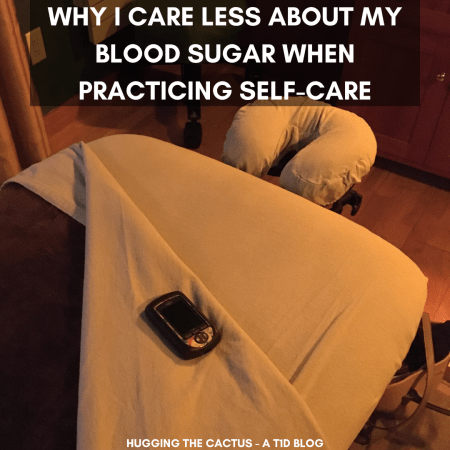
Right after this picture, the PDM, Dexcom, and phone were all tucked away for an hour that flew by too fast.

So I will purposely let my blood sugar run high when I’m practicing self-care because for that window of time, it’s super important to me to forget about diabetes, the biggest source of stress in my life, and focus on enjoying a mini vacation from it. And it’s not like I’m ever letting myself climb dangerously high (because dealing with a 250+ blood sugar during self-care sounds almost as awful as having a low) – I usually aim for 150-180.

For me, it’s incredibly worth it to just let it go and embrace being slightly out of range for a blissful (but all too short) period of time.

When a Normal Shopping Trip Turns into a T1D Supply Stock-Up

Last week, I went to my local Walgreens to pick up a couple of prescriptions for conditions I have other than diabetes (but I don’t have separate blogs for them because I’m not sure I could write three posts a week on my annual asthma flare-ups or allergy to cats and dogs).

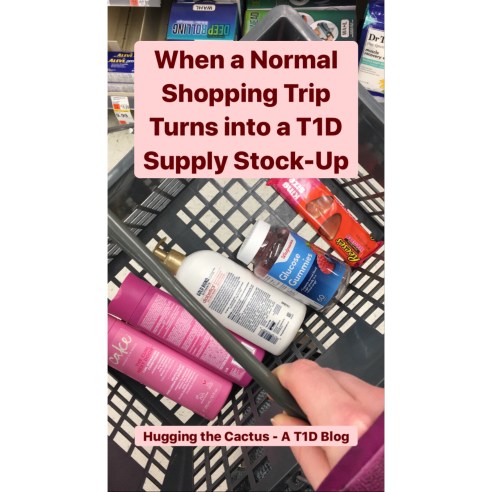
Besides shampoo and conditioner, I didn’t need to pick up anything else at Walgreens – it was going to be a quick in-and-out trip. That was the plan, anyways, until I saw my beloved glucose gummies on the diabetes shelf right next to the pharmacy.

7E098686-825A-4FE1-8B93-9CD4A7ABC64D
The contents of my shopping basket…I have no shame, apparently. But look, I did end up buying the shampoo and conditioner I actually needed! (And YES, I got my prescriptions, too.)

I couldn’t help but notice that this was the only bottle in stock, so without thinking twice, I put it into my basket. I didn’t need them at this moment in time, but I probably would, down the road – and why not treat a future low with something I actually like?

Then I saw the lotion formulated “just for diabetics”.

Normally, I don’t use products “exclusive” to people for diabetes. But I’ve used this particular lotion before and I can attest to the fact that it is very, very good. It’s probably the best lotion I’ve ever used and the only one I’ve come across (so far) that can actually hydrate my dry, cracked hands in the wintertime. I didn’t need it…but I justified it by saying that it was specially made for a person with diabetes, like me, so it meant I should buy it.

So into the basket it went.

And then, just as I was making my way over to the checkout counter after finally adding the shampoo and conditioner to my basket, my eyes fell on the seasonal candy display.

Oooh, was I in trouble now…

So into the basket went the king-sized Reese’s cups…which I am deeming as a medically necessary diabetes supply item. I didn’t need the Reese’s cups, but I sure as hell WANTED them. Plus, they’d make my gummies last longer, right? I could use them before I opened that bottle.

And sure enough, the Reese’s cups totally came in hand when I had a not-low blood sugar that very same night!

It’s interesting how what was supposed to be an innocent trip to the pharmacy turned into a bit of a T1D shopping spree. I wound up with items for my diabetes that I could certainly live without (except the Reese’s cups, for sure, I can never live without those) but that I could add to my supply stash, anyways…because it never hurts to have extra low supplies or hydrated hands.

An Interview with my Diabetes

Diabetes does not have a life, a voice, or a soul. But many people with diabetes, including me, tend to characterize it like it has human emotions and reactions. “My diabetes is so misbehaved today!”, “Ugh, my diabetes hates when my stress levels get too high”, and “Oh, exercise makes my diabetes very happy!” are among the sentiments that have been said countless times, in a variety of ways, by tons of people with diabetes.

Podcast Logo_
It shouldn’t be surprising that my diabetes, personified, is a cactus. 

So I decided to take it a step further with this blog post and imagine myself conversing with my diabetes…actually, it’s more like an interrogation. There are so many questions I’d like to ask my diabetes so I could maybe, hopefully understand it better. And these are the answers that I can see myself getting in reply.

Me: Hi, diabetes. Wow, 22 years with you and we’re finally just getting to talking now. What’s it been like to grow up with me?

My diabetes: WELL, it’s been a TRIP! Time flies when you’re having as much fun as me, wreaking absolute havoc in your life!

Me: Um, that’s kind of rude. But accurate, I suppose. And it leads to my next question: Why are you so temperamental? Like, one day you’ll be swimming straight in between the lines of my CGM graph…and the next day, I do and eat the exact same things as the day before and you go haywire.

My diabetes: Biiiiiitch, that’s just because I like to keep you on your toes. And I CAN go nuts whenever I want, so why the hell not?

Me: Whoa, relax. No need for the name-calling –

My diabetes: I’ll do what I want! See, look! Your blood sugar is going up RIGHT NOW just because you’re getting all flustered over this interview! Hee, hee, isn’t this fun?

Me: Thanks a lot! Whatever, I’ll just take a bolus –

My diabetes: You’re gonna need a whole lot more than that! 1.5 units to take this 250 down? That’s hilarious. So cute of you.

Me: WHY YOU LITTLE – *lunges for “my diabetes” as if it’s a physical object I can take into a chokehold and strangle, Homer Simpson style*

*Record scratching noise*

That, my friends, is where this totally made-up interview would definitely be cut short because I imagine my diabetes as nothing other than the petulant asshole that it seems to be lately. I’m dealing with a lot of stress lately, and my diabetes is punishing me with plenty of high blood sugars and sluggish responses to my fast-acting insulin.

It’s extremely annoying, but I will admit that writing this fictional interview with it was a little cathartic.

A Tough Topic: Diabetes Complications

I’m broaching a subject I’ve never openly discussed in an online forum in today’s blog post…and that is diabetes complications.

The reason why I’ve never talked about complications is straightforward: They absolutely terrify me.

It’s a topic that’s so foreign and frightening to me that I don’t even know the full extent of diabetes complications. You can Google them, for sure, and discover a long list of scary conditions involving the heart, eyes, extremities, and other internal organs. But I’d rather not do that to myself, let alone the audience of this blog.

I don’t want you to think that I’m naive, though…I know that not talking about something doesn’t mean that it’ll just go away or never happen.

Recently, I became glaringly aware of this fact through the form of (what I presume to be) my own diabetes complication: tendonitis in my left hand.

In the last year or two, I’ve felt sporadic sensitivity in my left hand when I fully extend my wrist, bear any weight on it, or even when I do simple wrist rotations. I never really knew when to expect the pain, but it happened every few months and lasted about a week each time. So when I felt it again around the time I was due for my annual physical with my PCP, I decided to ask him about it.

He explained to me that, based on the type of pain and its duration, it wasn’t carpal tunnel (numbness and tingling are symptoms of that, not pain) like I thought it might be. It also wasn’t arthritis (I didn’t have swelling or reduced range of motion) or neuropathy (I wasn’t experiencing pins and needles), but he did say that those aren’t uncommon in people with diabetes. That’s when he located the exact inflamed tendon – the thick, fibrous cord that attaches muscle to bone – in my left hand/wrist that was giving me trouble.

A Tough Topic_ Diabetes Complications
Me with my new (but occasional) accessory.

Just like all the aforementioned conditions, my tendonitis is probably due to my diabetes. Although my PCP didn’t explicitly state that I definitely have it because I’ve had diabetes for 22 years, he did identify a cause-and-effect relationship between the two. But, fortunately, he also reassured me that my occasional flares of tendonitis are nothing to worry about. As long as I continue to do what I’m doing (which is supporting my hand and wrist with a brace when I experience bouts of pain, as well as rest the area as much as possible during those times), then I’ll be totally fine.

While I’m not exactly thrilled to have to deal with tendonitis, I am very relieved that I know there’s an explanation to help make sense of it all, and that I’ve been doing the right things to handle it. So even though I won’t be going out of my way to research any other diabetes complications any time soon (why on earth would I want to stress myself out unnecessarily), I have come to terms with my tendonitis as a possible complication for me. And rather than seeing it as a completely negative thing, I’ve decided to just keep doing what I’m doing, and continue to take the best possible care I can of myself and my diabetes.

They say prevention is the best medicine for a reason, right?


One Night with Diabetes

You settle into bed, ready to fall asleep after another long day.

But first, you check your blood sugar, just like you do multiple times every day.

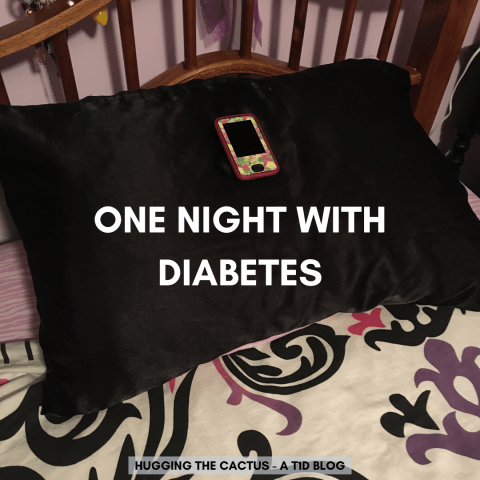
Your glucometer reads 201.

Suddenly,  you’re a little nervous to drift off to dreamland, because you just changed your insulin pod an hour earlier and you’re not quite sure if it’s the reason behind the high blood sugar.

You wonder: Could my blood sugar be high due to a miscalculation with insulin or carbs at dinner? Is it because of my stress levels? Is it because I’m dehydrated, or because I’m starting to get sick, or because my new pod’s site is on scar tissue, or because…?

Before long, you feel incredibly exhausted because you’re cycling through what seems like an endless list of reasons why you might have an elevated blood sugar and it has zapped you mentally.

You feel your eyelids grow heavy, and just before you go to sleep, you give yourself an insulin dose that should bring your blood sugar back down before long.

You experience a broken night of sleep.

One Night with Diabetes
When you read this, put yourself in the shoes of a person with diabetes…and this is just one night with the damn thing.

Since your Dexcom app is programmed to alert you when you’re over your high threshold for an extended period of time, it goes off, practically every hour, from 10 P.M. to 1 A.M.

Every time it happens, you wake up to the sound of your Dexcom alarm blaring in your ear.

You worry about waking up others in the household before you even begin to worry about your blood sugar.

You’re pretty sure it’s not a pod problem, since your blood sugar would probably be higher if that were the culprit, but you’re too damn tired to care about the cause at this time of night.

You bolus, go back to sleep, hear a high alarm, wake up, and repeat until finally your sleep stops getting interrupted by your Dexcom.

You get a few hours of broken rest.

You wake up at 6 A.M. and realize that, after all that, your blood sugar levels are still slightly elevated.

You’re pissed that your Dexcom was off by 40+ points, as confirmed by a fingerstick check.

You take more insulin, and force yourself to get up and out of bed because it’s time to start the day: Your diabetes is waiting for nothing, least of all you.

Just another night of not enough sleep and too much worry, thanks to diabetes.