Why I’m Thankful I DIDN’T Attend Diabetes Camp as a Kid

Growing up, the notion of diabetes camp was gently nudged into my brain each Spring. My endocrinologist and my parents would ask me, “Do you want to give it a try this year?” and my annual response, unfailingly, was “NO!”

To this day, I still don’t really know why I was so against diabetes camp. Part of the reason may be because I was a bit of a nervous Nelly growing up (okay, okay, I still am) and didn’t like the thought of sleepaway camp: It meant being away from home for an extended period of time, which made me feel nothing but anxious.

But my best guess as to why I didn’t want to go is that I felt that camp wouldn’t benefit me in any way. Both my mom and my aunt have type one diabetes, so they were (and still are) my go-to sources whenever any sort of diabetes issue crops up for me. I didn’t see how meeting kids my own age with diabetes would help me; after all, I thought I had everything I needed in my mom and aunt.

Things changed drastically for me when I started college and made the transition to caring for my diabetes independently. I got wind of a diabetes student organization on my campus and was interested in attending a meeting. That was it for me: for the next three years, I was very involved with this organization (the College Diabetes Network), eventually becoming the President of my school’s chapter and continuing to this day to volunteer for them whenever I can.

IMG_3242
I wasn’t ready for any kind of diabetes camp as a kid…but it’s a different story now that I’m an adult.

My involvement with the CDN has resulted in me meeting countless other T1Ds my own age, and it’s been amazing. I love sharing stories and learning from them. And as it turns out, most of these individuals went to diabetes camp when they were young and loved it. In many cases, diabetes camp is where they thrived and met some of their closest friends. They learned a lot about caring for their own diabetes and became more independent with diabetes management at a younger age.

But even after hearing the rave reviews about diabetes camp…I’m still thankful that I didn’t go to it when I was a kid.

Why? Because I think that a person’s journey with their own diabetes is highly personal. Like insulin-to-carb ratios or multiple daily injections versus insulin pumps, diabetes is often a disease about choices and responsibility. As an individual with diabetes, I hate being told how to handle my condition by someone who thinks they understand it better than me. I’m the one person in this world who understands MY diabetes better than anyone else. I know my body and I know what diabetes treatments and decisions are best. And for those few years of my life, I thought it was best for me to not go to camp. It was out of my comfort zone, and I refused to be coerced into going.

Perhaps in the back of my mind, I knew I’d have an opportunity later in life to connect with people my age who have diabetes. And I’m so thankful that I did because it came at a time in which I felt ready and was more accepting of my diabetes overall.

So there are no regrets for me when it comes to my choice to not attend diabetes camp. You could say that my decision to stay at home during those summers made me a happy camper…

Sorry, not sorry for the bad pun.
 

Managing Diabetes When Sick

The inevitable finally happened: I caught a cold. It really didn’t surprise me, because 1) it’s cold season and 2) I’ve been running around like a mad woman the past couple weeks and missing out on sleep.

Though it was expected, it certainly wasn’t welcome. I can’t stand being limited with my activity levels, and it’s been tough enough to get by recently due to my broken arm. Alas, I spent about three full days doing nothing but sleeping and binge watching Gilmore Girls as I nursed myself back to health.

621660CD-E223-479A-8639-6E6287D78D7B
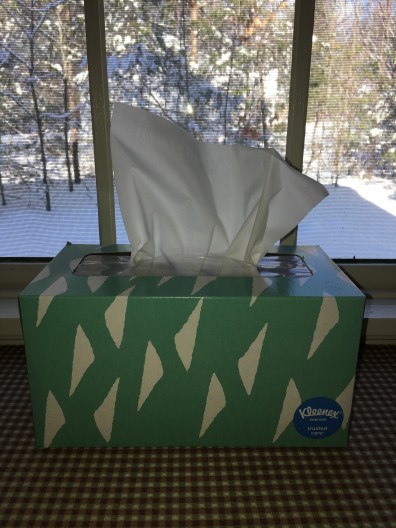
My best friend during my cold? This box of tissues.

During this time, I was extra concerned about my blood sugar levels. They tend to be better when I’m active, so I was worried about how they would fare when I was moving so little.

I admit that I probably did the wrong thing by not eating much during this time. It seemed like I needed to pump myself up with a heftier dose of insulin any time I was eating a meal, likely to compensate for the lack of movement. Even so, I seemed to spike a little too much for my liking after meals. So I really cut back on food. In hindsight, it wasn’t my best move, because even when I did eat it was not healthy (few fruits/veggies, mostly breads and fats).

But I do give myself credit for staying hydrated – a crucial step in getting better. I drank so much water, Powerade, and tea that I felt like I was constantly taking trips to the bathroom. It was worth it, though, because it’s easy to become dehydrated when sick and make a bad situation worse.

Also, I think I made the right move by taking some sick time from work. The day I woke up with a tingly throat, I thought I could soldier on and work a full day, but it became clear the moment I sat down at my desk and couldn’t focus that it would be best to just go home. I took a sick day the following day and was able to work from home the day after that, so I’m grateful that I have a flexible and understanding employer who knows that health is a priority over everything else.

As much as I loathed being mostly confined to my room for 72 hours, it was the smart call. It reminded me how important it is to listen to my body and to not push it when I’m not feeling 100%. There’s no shame in self-care.

Sometimes, You Just Need to Enjoy the Sushi.

Or the pizza. Or the burrito. Or the decadent three-layer chocolate cake. Whatever the high-carb indulgence is, I’d rather just relish in it rather than focus on my diabetes.

Does that make me a “bad” diabetic? No. It’s not like I’m skipping an insulin dose or binge-eating food. I’m merely trying to enjoy a rare treat as well as the social experience that comes with it – like having sushi with coworkers.

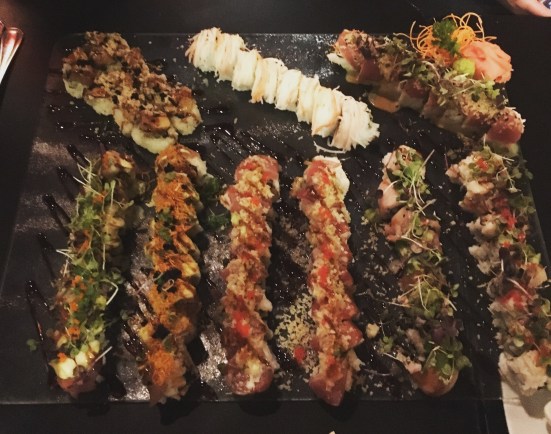
93B96F97-34C6-4FE0-94E5-0B00D31BA43B
A recent sushi dinner reminded me that it’s okay to stop thinking about my diabetes for a little while.

So instead of staring at my double-up arrows on my Dexcom, I’m staring at the artfully arranged sushi platter in front of me.

Instead of ordering the lowest-carb item on the menu, I order what I actually want to eat.

Instead of fretting over how quickly my insulin will kick in, I fret over which sushi roll I should try first.

Instead of letting my diabetes take over my dinner, I’m letting it go and living.

Sometimes, I need to remind myself that it’s okay to stop obsessing over my blood sugar in order to just live and enjoy my life.

Why I Refuse to Quit Carbs

Recently, a random person on the Internet criticized my choice to incorporate carbohydrates in my daily diet. Thanks for the unnecessary judgment, stranger!!!

I’m not really upset about the comment, though, because it prompted me to reflect on why I consume carbs.

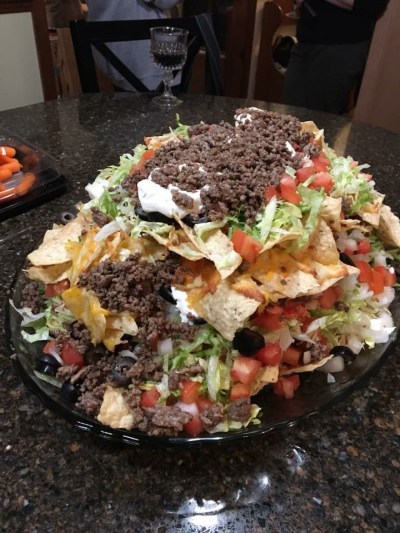
F57D800E-5EE7-49C7-8D8D-682748908BD4
I LOVE CARBS. But of course, everything in moderation! So as much as I’d like to eat this mountain of nachos – a serving will do just fine & works better for me.

For me, it’s about more than just enjoying (relishing, adoring) the taste of carb-heavy substances both starchy and sweet. Carbs also help me achieve balance in my blood sugars. For instance, I find that consuming a serving of carbohydrates at dinnertime keeps me steady as I move through the evening hours. Say that I’m eating grilled chicken with a side salad for dinner. That’s a good meal by itself, but I like to complement it with a carb like half a cup of mashed potatoes or brown rice. I’ve noticed that the carbs kick in more slowly when they’re consumed with minimal or zero-carb foods, thanks to the power of the glycemic index.

The glycemic index is, in short, a measure of how quickly the carbohydrate content of foods will affect blood sugar levels. Since learning about it in college and subsequently researching the glycemic indices of various foods I eat, it’s been an immensely useful tool in determining the makeup of my meals throughout the day. Knowing the glycemic index of a wide array of foods also helps me figure out the timing of my insulin doses; in turn, preventing crazy spikes or crashes after eating.

I can’t shortchange carbs for the fact that they literally save my butt sometimes, too. When I’m experiencing a low blood sugar, nothing BUT carbs will bring me back up to a normal level. Whether it’s carbohydrates from healthy fruits or straight-up candy, it’s giving my blood sugar the surge it needs to keep me going. Like many things in life, it’s a matter of moderation – making sure I don’t consume TOO many carbs when I’m experiencing a low.

If you’re someone who thrives on low carb, high fat diets, that’s great! I know that many people find this to be a successful method in achieving target blood sugars. But for me, my tried-and-true technique of balancing carbs, fats, and proteins is always going to be my ideal strategy. Just because that’s what works for me doesn’t give anyone a right to criticize me for it. I’m here to live my best life, as we all should try to do. Shouldn’t we encourage one another to thrive, instead of judging?

The answer, if you didn’t realize, is YES.

Keep or Toss? Decluttering my Diabetes Supplies Stash

Warning: The following image may be disturbing to anyone adverse to messiness and general disorder.

Viewer discretion is advised!

Okay, ready? Here it is…

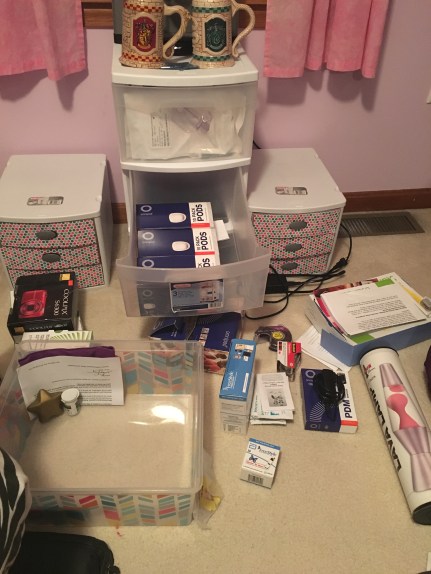
36F46E18-66F3-4999-9548-9487FBB27A8E
My extremely disorganized diabetes supplies stash evokes a one-word reaction: Yikes!!!

I told you it wasn’t pretty. Hence, I took it upon myself the other night to go through my entire stash of diabetes supplies to see what I should keep and what I should toss.

It was much easier than I thought it would be, albeit time consuming. It was a matter of putting the supplies into two separate piles (keep or toss), and then putting them away in a manner that made sense.

Items that wound up in the “discard” pile included expired test strips, duplicate instruction manuals, product boxes (which were empty; therefore, merely taking up space), old batteries, and used CGM transmitters. I decided to keep three or four spare test kits (you never know when they’ll come in handy), extra chargers, single copies of instruction manuals for all of my devices, all unused and unexpired pods/sensors, and that lava lamp – because it’s groovy, duh!

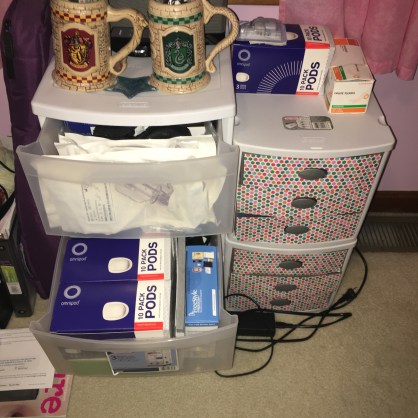
Once I had my two piles, I threw out the bunch I wasn’t keeping – freeing up my work space – and sorted through the items I was keeping. I wanted to make sure that items I need access to regularly (such as my pods and sensors) were within reach, so I left my box of pods on top of one set of drawers, and put my sensors in a stack in the front top part of the other set of drawers. Everything else, like the manuals and spare test kits, were placed neatly in the first and second parts of the bigger set of drawers.

43BBF4C4-F7B7-442A-9DD4-84E2EEF47AB8
Ahh…much better! (Don’t mind the Harry Potter mugs)

And…voila! Just like that, my supplies were organized and I’m feeling great about it. I like knowing the exact location of all my diabetes materials. This way, I won’t be rifling through a haphazard heap when I’m looking for something in particular – it’ll just be a matter of sorting through my tidy supplies stash.

Traveling with T1D: Upon Arrival

Bags packed? Check. Made it to the airport? Check. Boarded the plane? Check. Touchdown? Check. I’ve made it through the actual travel part of my trip. Yay! But after all that, I’ve still got a routine to follow, even though I’ve reached my destination.

C17960F7-CD51-4441-81DE-84B3FB5EF8AB
This little cooler comes in handy when en route to a destination, but I always feel much better when I can get my insulin vials into an actual refrigerator.

It’s pretty straightforward, really. I simply need to determine where to keep my diabetes supplies for the duration of my stay. If I’m in a hotel room, I locate the mini fridge and stash my insulin vials  in there. I tend to keep everything else (pods, swabs, etc.) out of plain sight in order to avoid attracting attention from housekeeping. I mean, if I was going in and out of hotel rooms all day long and noticed that one contained a bag filled with needles, I’d probably get a little suspicious. So this means my other supplies live in my suitcase for the week, in an easily accessible pocket.

It’s easier if I’m going to be visiting with friends or family. I still find a fridge to home my insulin, but I worry less about “hiding” my supplies. I’m able to keep them in a spot that’s convenient for me, which helps make site changes throughout my trip a smoother process.

Speaking of site changes, I find them particularly annoying when I’m on vacation. It feels like I have to plan a day – or several days in a row – around the fact that I’ve got an upcoming site change. But planning is a part of T1D management, so I’ve come to accept that I need to be diligent with scheduling activities and meals around it.

Sometimes site changes are no big deal on a trip, other times they’re a whole event (like when my mom and I went to Disney and had to change our pods in the parks – going into a family bathroom to do it was not overly fun). And other, more seldom times, site changes are reminders of why it’s so important to pack extra supplies on a trip.

Case in point: My family and I went on a Caribbean cruise a few years ago. It was an amazing vacation, but also one that presented a few challenges regarding diabetes. I was spending a lot of time in the sun and on beaches, and that took a toll on my pods a couple of times. I had to rip off pods prematurely twice on this trip and replace them with my backups. Thank goodness I had thought to bring a pod for every single day of the vacation (seven days, seven pods) – because I wound up using five of them. So I never feel badly about obsessively packing tons of extra supplies that I might not necessarily use, because I never know when they’ll come in handy.

Travelbetes. It can be kinda complicated; hence, it requires its own word. But it’s worth it in the end, because my choice to travel independently with diabetes shows that it won’t stop me from seeing new places.

Sun Salutations and Stable BG: Yoga Does the Trick for my Diabetes

1C08F38B-F61A-4747-BDA2-FD3A32F8315C

Whoa, who’s that dork doing a high-speed yoga routine up there?

Hi, it’s me!!

It’s kind of weird to watch a video of yourself doing yoga – especially when you see how awkward you look because the time-lapse feature on your iPhone sped it up so much.

So why did I film myself doing a yoga routine? Once I get past my self-consciousness, I look at the video to see what needs adjusting; for instance, I could sink a little deeper when I’m in my chair pose. I could also stand to slide my foot a bit higher up my leg, perhaps balance it on my thigh, when I’m in the tree pose.

Aside from looking for what needs to be improved, filming the routine also helps me understand why I do yoga. It shows me how my flexibility has increased, as well as my balance. I also realize that it shouldn’t be a surprise to me that I worked up a sweat during this practice – I’m constantly shifting from the ground to standing to various other poses. My muscles are stretching out and getting warm from the movements, so of course I’m giving my body a workout in the process.

And in turn, I’m also keeping my blood sugar stable. The yoga poses combined with controlled breathing and mind wandering does wonders for both my diabetes and my mental health. More often than not, I ride a straight line on my CGM throughout a yoga practice. It’s a great way to get in the right frame of mind at the start of a day, or unwind at the end of a long one.

Plus, there’s nothing like sinking into child’s pose (lying face down on the mat with your arms extended, your knees apart, and your rear in contact with your heels) or taking a nice long savasana (or corpse pose, in which you lie face up with your eyes closed, arms at your side, with fingers and toes spread open – without letting your muscles tense up) at the end of a practice to reset the mind.

Can’t beat the benefits of yoga.

Happy New Year!

Dear reader,

Happy 2018! I wanted to take a moment to wish you well. I hope the new year brings you health and happiness!

44592AD7-719A-45F6-95C1-2C59907BC8F7
Fireworks!!!

Like many others, I’ve come up with a few New Years resolutions that I’d like to fulfill in 2018. One revolves around this blog – I want to increase the variety of content featured here and, overall, improve it so it has a bigger impact on the diabetes community and beyond.

That’s where YOU enter the picture. Have a suggestion for me? Let me know! This blog isn’t just about me – it’s about you, too. That’s why I want to make sure I’m making good use of this site and offering content and insight that you care about. Thank you in advance for your ideas. I sincerely appreciate them!

Curious about my other goals for 2018? Look for a follow-up post about ’em sometime in the next couple of weeks. Sharing them will help keep me accountable, right?

Be well,

Molly

What it Feels Like to Have Low Blood Sugar

Diabetes evokes curiosity for those who are not familiar with it. I’ve been asked many questions over the years – can you eat sweets, does it hurt when you give yourself shots, do you have to protect your pump from water, just to name a few – all relatively easy-to-answer, yes-or-no questions. But every now and then, someone will ask harder questions. And one that I’ve struggled to answer in a succinct manner is: What does it feel like to have low blood sugar?

There isn’t really a simple answer. I guess my textbook response is to rattle off a list of common hypoglycemic symptoms: shakiness, dizziness, sweating, slurred speech, weakness. But I know that other PWD experience slightly different symptoms, such as feeling cold instead of sweaty, or drastic changes in personality. And there are even some PWD who don’t experience any symptoms due to hypoglycemia unawareness.

So how exactly do I response to a question like that, one that’s more loaded than it appears?

lowbg
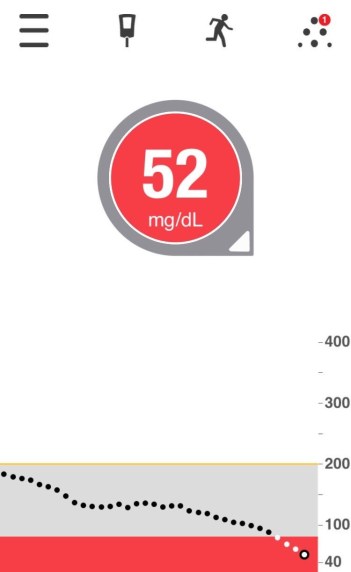
A graphical representation of a sudden low – I guarantee I was not feeling great when this one hit.

I could tell the asker to imagine feeling simultaneously ravenous and disoriented. I could tell them to picture walking into the kitchen and feeling like inhaling the entire contents of the pantry – that’s how intensely your body craves sugar.

I could tell them to think about what it’s like to wake up in the middle of the night drenched in sweat. It might seem like a reaction to a nightmare, but it’s the body trying to convey a message that is, by some miracle, supposed to be grasped by someone who was just trying to get a solid night’s sleep.

I could tell them to envision feeling like energy is sapped out of every pore in the body abruptly, with little warning.

I could tell them that sometimes, it results in pure panic, particularly when no fast-acting carbohydrates are on hand or when no one is around to help you.

I could tell them that low blood sugar is one of the biggest sources of anxiety for many PWD, that it causes a deeply rooted fear. That it can sometimes lead to a PWD making unhealthy choices just to avoid a low from happening in the first place.

I could say all of this to anyone who asked me this question – and I still don’t think it would completely convey what it’s like to have low blood sugar.

How would you describe it to someone asking you about it? Would you use the terse medical explanation, or would you try to talk about how it really feels?

Leave your responses in the comments – I’d like to know how you handle this. And if you thought this was an interesting post, let me know. I’m thinking of doing a series about how I answer the more complicated diabetes-related questions I’m asked.

The Cookie Conundrum

Merry Christmas, dear reader! I hope you enjoyed a wonderful holiday yesterday. Thank you for your continued support of my blog. I’m looking forward to continue writing in the new year! Enjoy this new blog post about my favorite food weakness this time of year.

Hi, my name is Molly, and I have an addiction to cookies.

Not just any kind of cookies, though – Christmas cookies, to be exact. I think my obsession with them truly took shape when I was in eighth grade. That’s when my aunts, cousins, and I gathered for our first annual Christmas cookie swap, a joyous occasion during which we spend an afternoon sampling cookies we’ve baked. It’s just as glorious as it sounds.

Unless you’ve got diabetes, of course.

D38B3F51-F358-4ABA-8778-9291ED7F7073
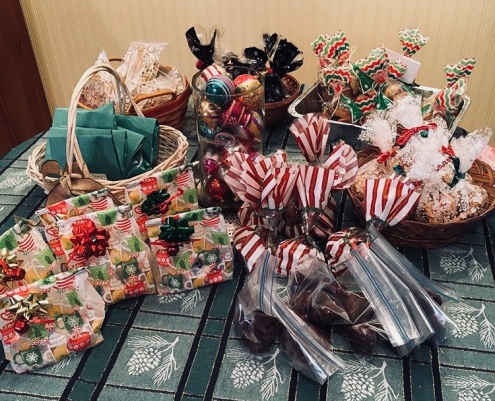
Bags and baskets filled with sweet little sugar bombs (A.K.A. cookies!!!)

I say that because it seems no matter what I do, my blood sugar always ends up high after partaking in the cookie consumption. And I’ve tried many different strategies to combat it, including:

  • Pre-bolusing
  • Breaking cookies in half to cut down on the carb intake
  • Running a temp basal rate
  • Exercising pre- or post-swap, depending on my blood sugar

I’m fully aware that I don’t HAVE to eat the cookies – I could go to the swap and watch everyone else try them and plaster a fake grin on my face – but honestly, how miserable does that sound? I fully believe that just because I have diabetes, it doesn’t mean that I should deprive myself. And as a disclaimer, I’m not sitting there wolfing down cookie after cookie like I’m the Cookie Monster: My family sets out just enough so that each person can try one cookie from all participating bakers. So usually, accounting for all the cookies I split in half, I eat approximately 6-7 whole cookies (which vary in size but are typically no larger than 3-4 inches in diameter). All that said, I still account for at least 45 grams of carbohydrates when I bolus for the cookies, which should have me covered…

…in theory, anyways.

Hence, my cookie conundrum, which occurred yet again when I participated in the 2017 swap. I spent a solid few hours in the late afternoon and early evening battling blood sugars in the high 200s and low 300s, which proved to be extra challenging without my CGM’s aid (I had to remove it because the dreaded ??? appeared and wouldn’t go away for several hours). But I handled it: I managed to get my numbers back down, try an array of fabulous cookies, and spend an afternoon with my wonderful family members.

Cookie conundrum overcome, if you ask me.