Money Talks, Low Blood Sugar Slurs

Somewhere between Class A, B, and C share mutual funds, I got lost. That familiar fog clouded my brain and I had trouble focusing my gaze on anything, let alone absorbing any of the information being shared with me. I felt like I must’ve nodded my head so many times over the course of the conversations that I probably resembled a bobble-head. Words tumbled slowly, awkwardly, out of my mouth: I babbled “yup” and “right” over and over again to show that I was still engaged, even though I absolutely wasn’t.

What was wrong with me? I was having a low blood sugar in the middle of my (first-ever) meeting with a financial advisor. Stellar!!!

Obviously, I made it through the meeting fine. I got back to my car, tested my blood sugar, discovered that I was 66, and corrected it with three glucose tablets. I wiped my hands together, watching glucose dust puff up into the air like a cloud, and chided myself for not taking action sooner than that moment. I suppose I didn’t want to alarm the advisor by sticking a needle into my finger in the the middle of our meeting, but that hasn’t stopped me from doing what I must do, medically speaking, in other situations. Ordinarily, I would have calmly explained, “I have type one diabetes. I think I’m experiencing a low blood sugar right now. Do you mind if I check my blood sugar here, or could you please direct me to a place where I can do that?” I would also let the person know that I’d be fine either way, I just wanted to be sure so I could focus my energy back onto them and not my diabetes.
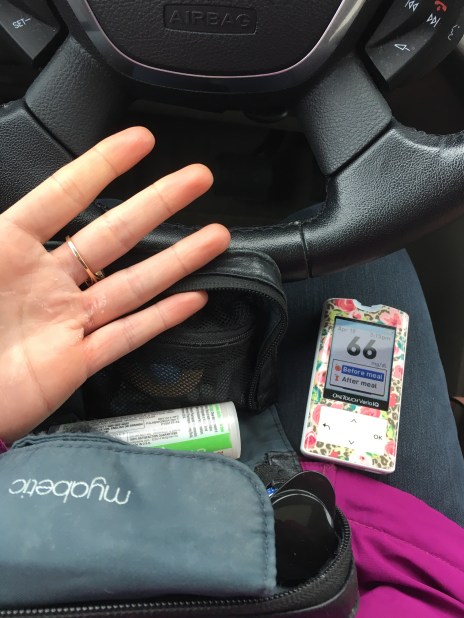
IMG_6428

I’m not really sure what was different about this particular low blood sugar event, but I didn’t do the “right” thing because I didn’t want to be rude and interrupt the advisor’s train of thought. But waiting nearly thirty minutes into experiencing these symptoms could have caused things to turn out much differently. My blood sugar could have gone even lower, and it could have become an embarrassing or scary situation for both of us.

I guess this’ll serve as a reminder to myself to speak up. It’s okay to interrupt, because my health and safety (and potentially the health and safety of another person) is at risk. It’s not rude, it’s good common sense.
“I’ll Have a Regular Soda, Please.”

A funny thing about life with diabetes is that new experiences occur all the time. For example, this was a first for me the other day: ordering a regular soda at a restaurant instead of a diet.

Why was this necessary? I chalk it up to a few different factors that affected my blood sugar: 1) I did strength training earlier in the day, which can make me go low several hours after the fact. 2) I ignored the diagonal down arrow that had appeared on my CGM, because I really didn’t think I’d end up below 100 mg/dL before dinner. 3) It took a long time for our dinner to come out, and I’d made the rookie mistake of bolusing soon after ordering the food. 4) I also think I miscalculated the carbs in my dinner – I’m used to ordering this particular dish, a cajun chicken salad, with a beer or two. But since I gave up alcohol for Lent (more on this in an upcoming blog post), I wasn’t getting the extra carbs from the beer, which I forgot to take into account.

So yeah, in hindsight, I could’ve seen the low blood sugar coming. But I just didn’t anticipate some of these occurrences, such as our food coming out late. This particular restaurant is usually timely, but since it was a Saturday evening and the bar was rapidly filling up, I should’ve connected the dots.

IMG_5443
Diet Coke has a special place in my part, but in a hypoglycemic emergency, it just won’t cut it.

Shoulda, woulda, coulda. There was nothing I could do about my rapidly dropping blood sugar, unless I bit the bullet and ordered a regular soda. Shoving my diet root beer to the side, I flagged down my semi-bemused bartender and asked for a regular Pepsi, trying to ignore the fact that he was joking about how “diet just wouldn’t do it for me any longer, eh”.

If only he knew that the circumstances required sugar, stat.

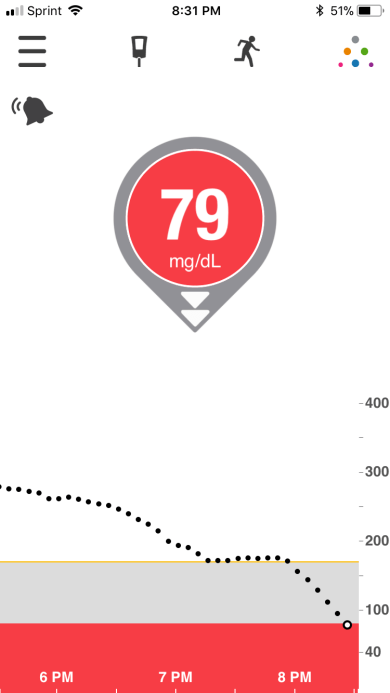
It only took him about 60 seconds to deliver the Pepsi, but it felt like a long time. My CGM alerted me to an urgent low and things around me were a little fuzzy. I was trying to engage in conversation with my companions, who knew that I was going low, but maybe weren’t aware of how quickly I was going down due to my determination to appear normal.

Once my Pepsi arrived, I gulped down several sips and sighed with relief as my dinner appeared soon after. I wolfed down every last bit of it within 15 minutes, taking breaks only to drink a little more soda. I knew I needed to control how much I drank, because I didn’t want to end up sky high later on in the night.

Fortunately, my blood sugar was coming back up to normal within no time, and I actually didn’t even go higher than 172 mg/dL for the remainder of the night. A huge win, all things considered. Even though it was a somewhat scary experience, I’m glad I did what I needed to in order to take proper care of myself…even if that meant drinking regular soda, which was actually pretty gross. How do people actually enjoy that saccharine sludge?!

Testing for Accuracy, in Addition to Blood Glucose

Blood glucose meters serve the sole purpose of checking current levels of glucose in the blood. Pretty self-explanatory, right? And it’s equally obvious that it’s crucial for all meters to generate accurate results so PWD can make the right treatment decisions based on those numbers.

Unfortunately, though, accuracy isn’t always what I get.

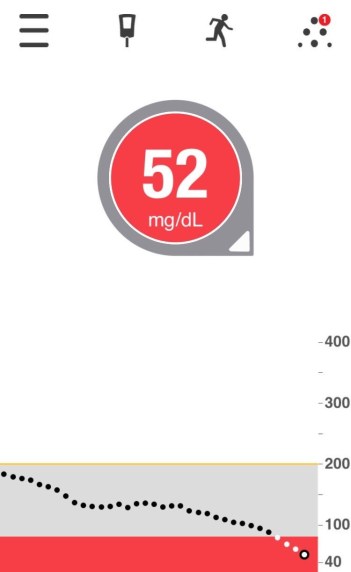
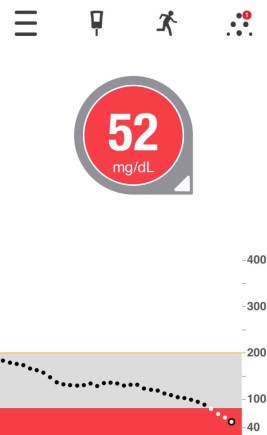
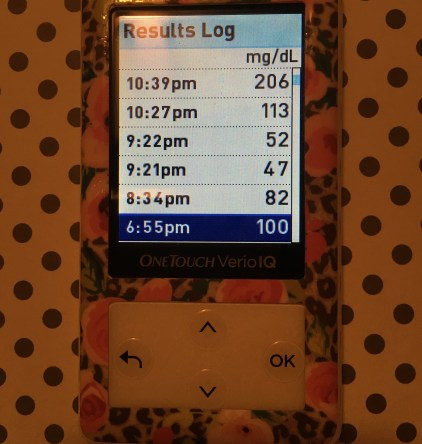
The other day, I was running low before bedtime. I corrected with an organic rice crispy treat (honestly, it was a million times better than the brand name kind). I waited nearly an hour for my blood sugar to come up. When my CGM wasn’t showing any progress, I tested: I was 47. It’s rare for me to be that low, so I tested again. 52. I believed it, especially since I was experiencing several hypoglycemic symptoms.

img_5802.jpg
My unicorn bg quickly turned into A Situation.

I chugged a glass of orange juice and plopped down on the couch to wait for signs of improvement. Before long, I was freezing cold – a sure sign I was coming up, because I had been sweating 20 minutes prior. But I didn’t feel comfortable going to bed yet. I wanted to see if my CGM would show an up arrow. When it finally did, I made my way upstairs to brush my teeth and wash my face. In the middle of my routine, though, I decided to glance at my CGM again – and saw the dreaded ??? screen.

I decided then that the Dexcom should be out of commission, a.k.a. not trusted at all, for the remainder of the evening.

I ripped it out and inserted a fresh one, not really caring that it would wake me up in two hours to be calibrated. I would need to set at least two alarms for the middle of the night, anyways, if I decided to go to bed disconnected from my Dex. So it just made sense.

Once that was done, I tested again. I was pretty tired at this point and really didn’t want to have to eat something else, so I did it as quickly as I could. In my haste, I jostled my meter just so – enough that I saw the test strip, already marked with my blood, move slightly as it brushed against my PDM and was placed next to it.

113 mg/dL flashed upon the screen. Normally, I’d be thrilled! But I furrowed my brow. Something just felt…off about that reading. So I tested again.

206.

What?!

I tested a third time – 203. Okay, something was definitely wrong. Either that 113 was wrong (likely) or my meter had just produced two wildly inaccurate blood sugars in a row (less likely).

This is one of the many times that it’s convenient to live with another PWD. I asked my mom if I could borrow her test kit and see what result it generated. Seconds later…a twin 203 popped up on the screen, reassuring me that the 113 was a fluke on my meter.

Relief with the reality and irritation with the technology washed over me simultaneously as I went to correct the high with a bolus. I was glad I wasn’t heading down again, but irked that my meter had failed me. True, it was a bit of human error there, but aren’t we at a point in technological advancements where this sort of thing just shouldn’t happen? I put my life into the “hands” of my meter, Dexcom, and OmniPod. They should produce results that are undoubtedly accurate.

I guess we aren’t quite there yet.

The Week of Never-Ending Lows

A couple weeks ago, I was convinced that I was going to go insane.

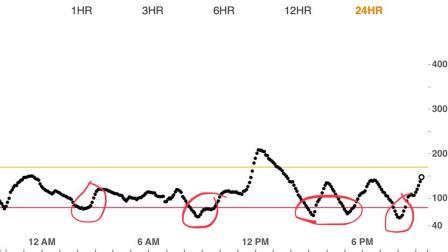
That’s because my graphs looked a lot like this for several days in a row:

28276753_2470934019799402_3452392286696220057_n

All those red circles represent low blood sugars. The first day it happened, it was annoying. The second day, it evolved into concerning. Seven long days later, I was feeling incredibly burnt out as the low streak finally came to an end.

I have NO idea what triggered these lows. My activity levels were practically non-existent and I cut back on my insulin intake as it grew more apparent that this situation was sticking around for a bit. Besides standard stress levels, I wasn’t experiencing any crazy emotional swings that could cause wacky numbers. It was that certain, ahem, time of the month – but that happens every month, and I’ve never had a series of low blood sugars as a result of it. So what gives?

My honest assessment: Diabetes is unpredictable. You think you know it so well. You think you can have a handle on it when it decides to give you a big, old middle finger, as if to say, “Joke’s on you!!!”

And that’s beyond exhausting. The physical and mental toll that a week of low blood sugars had on me is indescribable, and it made me reluctant to even talk about the experience – because enduring it was enough, why the hell should I bother writing about it?

I write about it because I want it as evidence so I can remember that I can overcome any diabetes obstacle. I write about it because I want others to know that even though I seem okay on the surface at a given time, I actually might not be due to my diabetes. I write about it because I hope that another PWD can read it and say, “Yes, that’s exactly what it’s like!” or “I can relate.”

I write about it to feel less alone, and make other people affected by T1D feel less alone.

Diabetes, in a Picture

4A3993A4-7086-41D7-9343-474B3DA45F9A
Ugh.

Okay, this isn’t a real blog post. But this is a very accurate representation of my diabetes lately. It’s like a moody teenager, filled with sudden ups and downs and likely to sour the mood of everyone around it.

Hey, diabetes? Get it together? Pretty please, with sugar-free sprinkles on top?

Thanks.


Memory Monday: BD Glucose Tablets

One Monday per month, I’ll take a trip down memory lane and reflect on how much diabetes technology, education, and stigma has changed over the years. Remember when…

…BD glucose tablets were like, the only kind of tabs available?

I remember them vividly. The tablets were came in what looked like giant packages of gum. They were orange-flavored, but colored white. And they were square, chalky, and the epitome of boring. Even so, I’m slightly embarrassed to admit that I used to sneak them from my mom’s purse when I was little. (Sorry, mom.)

I don’t really know why I did it, considering they weren’t exactly the tastiest treats. But it felt rebelliously good to take one here and there, even if I wasn’t experiencing a low blood sugar. I knew I wasn’t allowed to graze on snacks as I wanted, and I knew that it would make my blood sugar go up. I also knew that I didn’t fully understand what diabetes was and why it was so important to be careful with how many glucose tablets I ate at the tender ages of six and seven years old.

Over time, I kicked the habit. As more flavors and varieties of glucose tablets popped up in the market, I grew increasingly resentful of having to use them to treat lows in the first place. I wasn’t enticed by the tropical or berry flavor mixes; after all, they didn’t have quite the same appeal as those weird white tablets.

772D403E-BB4C-4A32-8579-3AFFE9FF404B
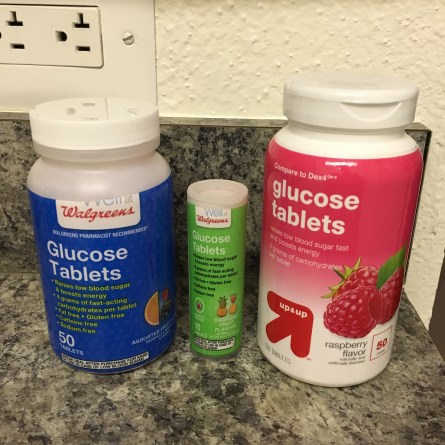
Today’s glucose tablets come in much more colorful and flavorful varieties.

Now, I’m just glad I’ve discovered ways to bring up a low quickly that don’t involve chewing chalky discs. Orange juice, mini boxes of raisins, gummies, smarties, and more all work efficiently. I still choose to carry around glucose tablets, though, because the tube they come in is discreet. Glucolift brand tablets are a personal favorite to stock the tube with, because they’re more pleasant to ingest, thanks to their quick-dissolve formula. Plus, I can’t totally hate something that’s saved my butt more times than I can count.

What it Feels Like to Have Low Blood Sugar

Diabetes evokes curiosity for those who are not familiar with it. I’ve been asked many questions over the years – can you eat sweets, does it hurt when you give yourself shots, do you have to protect your pump from water, just to name a few – all relatively easy-to-answer, yes-or-no questions. But every now and then, someone will ask harder questions. And one that I’ve struggled to answer in a succinct manner is: What does it feel like to have low blood sugar?

There isn’t really a simple answer. I guess my textbook response is to rattle off a list of common hypoglycemic symptoms: shakiness, dizziness, sweating, slurred speech, weakness. But I know that other PWD experience slightly different symptoms, such as feeling cold instead of sweaty, or drastic changes in personality. And there are even some PWD who don’t experience any symptoms due to hypoglycemia unawareness.

So how exactly do I response to a question like that, one that’s more loaded than it appears?

lowbg
A graphical representation of a sudden low – I guarantee I was not feeling great when this one hit.

I could tell the asker to imagine feeling simultaneously ravenous and disoriented. I could tell them to picture walking into the kitchen and feeling like inhaling the entire contents of the pantry – that’s how intensely your body craves sugar.

I could tell them to think about what it’s like to wake up in the middle of the night drenched in sweat. It might seem like a reaction to a nightmare, but it’s the body trying to convey a message that is, by some miracle, supposed to be grasped by someone who was just trying to get a solid night’s sleep.

I could tell them to envision feeling like energy is sapped out of every pore in the body abruptly, with little warning.

I could tell them that sometimes, it results in pure panic, particularly when no fast-acting carbohydrates are on hand or when no one is around to help you.

I could tell them that low blood sugar is one of the biggest sources of anxiety for many PWD, that it causes a deeply rooted fear. That it can sometimes lead to a PWD making unhealthy choices just to avoid a low from happening in the first place.

I could say all of this to anyone who asked me this question – and I still don’t think it would completely convey what it’s like to have low blood sugar.

How would you describe it to someone asking you about it? Would you use the terse medical explanation, or would you try to talk about how it really feels?

Leave your responses in the comments – I’d like to know how you handle this. And if you thought this was an interesting post, let me know. I’m thinking of doing a series about how I answer the more complicated diabetes-related questions I’m asked.

French Fries are Evil

Last week, my mom and I both rediscovered the reason why we usually order side salads with burgers or sandwiches served in restaurants: french fries. They’re tasty, carb-y, salt bombs that wreak havoc on our blood sugar. We’re both convinced that our indulgence in fries at dinner was responsible for the dramatic spikes, followed by sharp plummets, that interrupted our sleep overnight and made us understandably grumpy the following morning.

Here’s the timeline of what happened:

6:30 P.M. – Dinnertime. Ordered a chicken pesto sandwich with a side of sweet potato fries. I thought I’d be safe as long as I didn’t eat all of my fries, and if I left behind half of the bun. This certainly helped, but my carb counting was either severely off or the high amount of fat that I consumed threw my blood sugar for a loop.

7:30 P.M. – Blood sugar holding fairly steady around 160 mg/dL. Maybe restraining my carb consumption worked, after all!

9:00 P.M. – Eh, not so much. I’m seeing a diagonal arrow pointing up, indicating that I’m slowly creeping into the 200s. I’m not pleased.

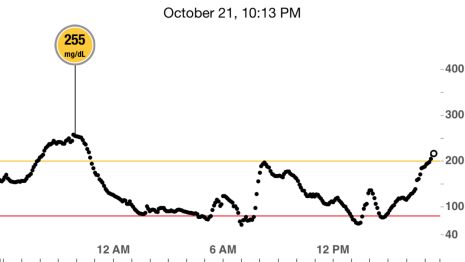
10:13 P.M. – Yep, topping out at about 255 mg/dL. Gross! I take some insulin and wait for it to kick in.

IMG_4313
This is as high as my blood sugar got after eating the evil french fries…

11:30 P.M. – I feel relieved, I’ve come down to below 180 mg/dL and I can now go to sleep. I’m not dropping fast and I suspect that, due to the insulin I have left on board, I’ll level out around 130 mg/dL overnight.

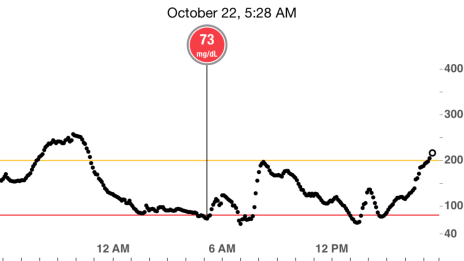
5:28 A.M. – Ah, a blissful five and a half hours of sleep before my diabetes said “LOL nope” and woke me up. I’m feeling shaky, so I roll over to check my CGM. Sure enough, I’m below my low limit (which is set at 80). My symptoms match my Dexcom graph, so I pop three glucose tablets into my mouth and plop my head back down on my pillow. I should be okay until I get up in a few hours.

IMG_4314
…and this is one of the multiple low points I hit in the wee hours of the morning.

7:00 A.M. – Except nope! My CGM’s alarms and my low symptoms wake me up again. I’m frustrated, because it’s beyond annoying to wake up at the same time I normally do for work on a Sunday morning, and especially since it’s because of my diabetes. I reach for a granola bar that contained 22 grams of carbs (way more than I needed for my correction) and wolf it down. I toss and turn for the next hour. I can’t fall back asleep because it feels like my CGM won’t stop alerting me to what my blood sugar’s doing. It’s almost 8:00 A.M. when I decide to take a small bolus, because I definitely over-corrected for the last low.

9:30 A.M. – I get up for real and start my day. Miraculously, I test my blood sugar and it’s 148 mg/dL. I thought it would be worse but I guess the single unit of insulin I took did its job.

This is a night in the life of a PWD. This is what it’s like to have a chronic illness that doesn’t sleep. This is what it’s like to feel out of control of your own body.

And this is why I think french fries are evil – because they’re fatty, slow-releasing but high carb little jerks.

Hypoglycemia Strikes Again

I rolled over onto my stomach and groggily opened my eyes. I checked the time – 1:30 A.M. I felt beads of sweat form on my forehead and back. I kicked my blankets off my body just as I heard my CGM vibrate: five urgent, successive buzzes, a grating sound. I knew what it meant without looking at the screen. My blood sugar was low, and I had to do something about it.

lowbg
Low blood sugar is never fun, but especially when it happens in the middle of the night.

Blindly, I groped around in the dark, my arm hanging off my bed as I searched the floor for my purse. Once I located it, I rummaged through the inside, looking for a miniature box of raisins that I knew would boost my blood glucose up. I found them and ate them quickly, sitting upright in bed. As I chewed, I registered the sensation that occurs once in a blue moon with these middle-of-the-night lows…

…Raging hunger.

It’s that feeling that you have when your blood sugar gets below a certain point.

That feeling of utter starvation.

That feeling that deprives you of good common sense.

That feeling that forces you to get out of bed, even though the rational part of your mind just wants you to go back to sleep.

Damn it. I’ve succumbed to it, again.

It’s not like this happens every time I have a low at ungodly hours of the morning. In fact, it probably only happens to me four or five times throughout the year. Maybe because I fight against it so hard, since I know that it’ll lead to nothing but high blood sugar and regret.

These thoughts cross my mind, but it’s fleeting. I make my way down the stairs, pausing to grab my bathrobe to keep me warm (the sweating will stop soon and it will be replaced by nonstop chills). Hey, at least I have enough logic at this moment in time to remember the BATHROBE of all things!!!

I turn the light on in the kitchen, blinking rapidly to clear the sleep from my eyes. And then I raid the cabinets.

Fistfuls of Smart Food popcorn are devoured one minute, and in the next, I’m swallowing spoonfuls of crunchy peanut butter (my dear, delicious vice). I take a pinch of Parmesan from the fridge and a tiny tower of Toasteds crackers to complete my smorgasbord. I wash it all down with sparkling water and remove myself from the kitchen before I can do any more damage.

I don’t know what’s more sad – the fact that I gave in to these carnal hunger pangs even though I knew my blood sugar would be fine after having the raisins, or that my snacking was absurdly out of control for 1:30 in the morning. Truly, the knowledge that I must’ve consumed close to 400 calories – roughly how much I eat at lunchtime each day – was disgusting to me.

I could blame it on my lack of self-control. I could blame it on the early morning hours and my sleepy state. I could blame it on the peanut butter for being so addicting.

But instead of beating myself up for a snack attack in the witching hours, I’ll just accept it happened and blame it on the hypoglycemia for striking me when I was vulnerable. It happened, it’s over, it’s time to move on and try harder next time.