Favorite Things Friday: My OmniPod

One Friday per month, I’ll write about my favorite things that make life with diabetes a little easier for me.

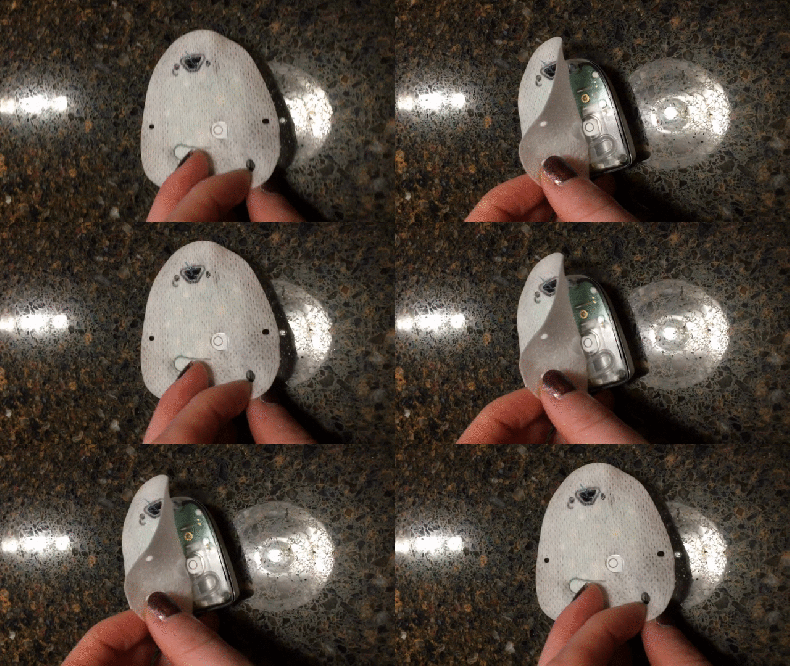
This month’s favorite thing is so damn obvious that it’s kind of shocking I haven’t written about it yet on the blog: my OmniPod insulin pump.

I love the friggen’ thing.

Untitled design
My OmniPod PDM.

I don’t know if it’s because pumping works better for me in general over multiple daily injections (MDIs), or if it’s because the OmniPod is simply the perfect pump for me. Honestly, it’s probably a combination of the two. I love how convenient it is – I can deliver insulin any time, any place, I don’t have to worry about tubing getting caught on random objects, and it lasts me for three full days (of course, only if it’s working properly…I’d estimate that it does about 90% of the time). And I love that my dosages are so much more precise compared to how they used to be when I was doing MDIs. It gives me more control, knowing that I can dose in .05 increments according to my current blood sugar levels and carbohydrate intakes.

However, it is merely another piece of diabetes technology, meaning that it does have some flaws. Sometimes pods fail for the silliest reasons, such as coming into contact with static electricity. And other times pods don’t work for no damn good reason at all, without giving the user proper notice (in the case of bent cannulas, something I recently encountered).

But for the vast majority of the time, I love my OmniPod. I’m still surprised to how quickly I adjusted to the system – the first week or two was tough, but then it was relatively smooth sailing after that period. I think it was easy for me to get used to another wearable device, because I’d already been wearing my Dexcom for a couple years by the time I got my OmniPod.

Will I wear my OmniPod for many years to come? Or will I want to switch things up and give another pump a try? Only time will tell, but for now, I think I’ll stick with what I know best in the world of insulin pumping.

For Feet’s Sake!

First and foremost, let me apologize: I’m sorry for all of the cheesy puns that are about to follow.

Now that’s off my chest, let me put my best foot forward and write about feet.

People with diabetes are told to pay extra special attention to their feet. There’s a few things to look out for, such as circulation and nerve issues. So recently, when an old foot injury flared up, I knew trouble was afoot and I better do my best to heel it.

A couple years ago, I broke a very tiny bone (roughly the size of a corn kernel) in my foot called the sesamoid bone. It was classified as a stress fracture, so I wore a bootie and did non-weight-bearing exercises for six weeks while it heeled. I also decided to take a break from high-heel shoes and cushion my sneakers with gel inserts, which wound up being an important step in recovery. Before long, my foot was feelin’ fine and my soul was joyous.

Untitled design

Fast-forward to the present day, and the injury seemed to be waltzing its way back into my foot. For feet’s sake, I thought it was a thing of the past! Luckily, I’d kept my gel inserts from the first time around and started wearing them again. I didn’t want to toe the line with this foot pain – I addressed it and monitored it closely, and will continue to do so.

For now, my foot is toe-tally better. I’m reminding myself that it’s important to pay attention to my body’s signals and handle them accordingly. Foot health is absolutely not something to mess around with, and like everything else related to diabetes, I’ve got to hop to it and take good care of my feet. Can you digit?

The Emotions of Low Blood Sugar

Previously, I’ve written about what it feels like to have low blood sugar. While many people with T1D feel the same symptoms as me when they experience a low, there are even more who experience a wider variety of emotions and sensations.

Renza, a T1D Twitter friend of mine, did a little investigating into how others would describe what it’s like to have a low blood sugar. She sent a tweet that read:

friends. I’m crowdsourcing (again). If you had to use ONE WORD to describe how hypos/lows feel to you, what would it be. Go!! #Hypoglycaemia

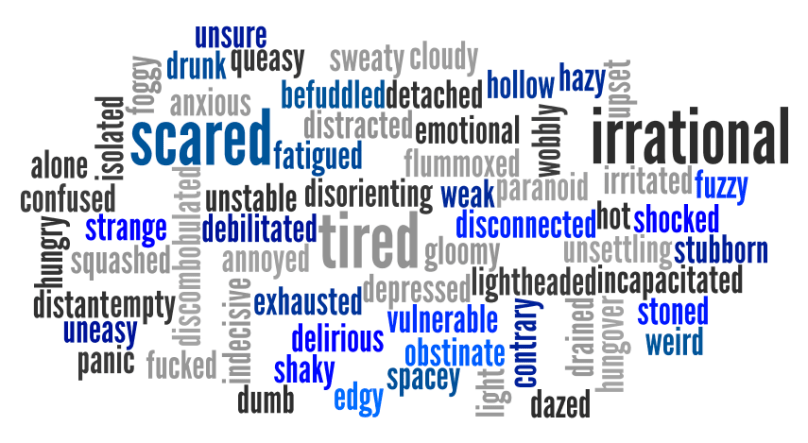
She received nearly 100 responses, which I’ve compiled into the below graphic.

Capture

Looking at this word collage is a bit startling because it represents the vast array of feelings associated with low blood sugar. Most of them are negative. A handful of them start with the prefix “dis”, which describes something with an opposing force. A couple of them relate to feelings associated with eating. And just about all of them can be summed up as sensations that I wouldn’t wish on anyone.

To me, this graphic serves as a stark reminder that diabetes is more than just a chronic illness that affects the body: It affects the mind, too.

When in Doubt, Change the Pod

I’d only been wearing my new pod for about an hour when my arm brushed up in exactly the wrong way against a chair. Riiiiiiiip!

My pod tore right off – not from my arm, but it lifted up from the adhesive that it was glued to and dangled precariously from the still-intact adhesive stuck to my arm.

9121BF44-6E91-4DCE-865A-5401B59A7CA5
Would you have kept the pod on, or changed it?

After cursing loudly, I asked my mother for her opinion. I wanted to know if she could see the cannula, because that was the component that made me most concerned. As long as the cannula was still stuck under my skin and delivering insulin, it shouldn’t matter that my pod was a little loose – right?

She tried to peek under and around my site, but it was virtually impossible to tell whether the cannula was where it should be. I thought about it for a few moments, and decided that it would be wise to just change out the pod. The notion of tossing one that had only been in use for an hour was unappealing to me, but I know myself pretty well, and I know for damn sure that I would’ve been super paranoid about the pod functioning properly for the following 72 hours. I also figured that it couldn’t hurt to try calling Insulet to see if they would replace the kaput pod. The odds were slim, but why not try?

So after I changed my pod, I dialed up Insulet and described the situation to the customer support representative. And…I got a replacement! I was pleasantly surprised by the rep’s empathy towards the situation and how easy it was to get my replacement. She reaffirmed that I did the right thing, noting that if she’d been in my shoes, she would have called it in, too. It goes to show that when in doubt, change the pod – and don’t hesitate to call for a replacement.

‘Tis the (Pumpkin Spice) Season

Let me begin this post by saying that I do not believe I can be categorized as “basic white girl”. For those of you who aren’t familiar with the term “basic white girl” in the Urban Dictionary sense of the word, it can be defined as:

A female who conforms to her surroundings and claims she is unique. She often drinks Starbucks, wears Ugg boots in August, and posts selfies on social networking sites every. single. day. Also uses hashtags that don’t have anything to do with the picture itself.

Basic white girl starter kit includes: Uggs, Starbucks, leggings or yoga pants, pumpkin spice, every social media platform ever created, etc.

– Urban Dictionary

I’ve never owned a pair of Ugg boots. I only drink Starbucks every once in awhile, but I don’t order froufrou “bevvies” when I go – usually, I just stick with an iced coffee, black. And I certainly don’t have enough self-confidence to post a selfie on social media every damn day. That sounds exhausting.

But if an undying love for any and all things pumpkin spice scented/flavored qualifies me as “basic”, then I guess I’m gonna have to take my pumpkin spice coffee and run with it!

Pumpkin Spice

Since pumpkin spice manifests itself in many carb-laden treats this time of year, you might be wondering exactly how I can get away with enjoying a mass quantity of the stuff. And no, my method doesn’t involve dosing tons of insulin so I can down endless amounts of pumpkin spice M&Ms, ice cream, Oreos, yogurt, muffins, or any other kind of pumpkin-spicy product you can imagine.

It’s much simpler than that – all that I do is make it my mission each year, right around mid-August, to find as many carb-free pumpkin spice products as possible, buy them, and revel in them for the following three months.

You’d be surprised to learn how easy it is, too. Here are just a few of the pumpkin spice products I’ve stocked up on in the last few years: Gum, candles, tea, butter (yes, pumpkin spice BUTTER), hand sanitizer, soap, peanut butter…the list can go on and on, and it does, considering that the gamut of pumpkin spice offerings only increases year after year.

I’ve hunted down foods that have both pumpkin spice and a lower carb count, like Halo Top Pumpkin Pie ice cream or FiberOne bars (ugh, they’re so good it’s not fair). I’ve even mixed it up by combining pumpkin spice with some more manageable carbs, such as plain oatmeal. I just can’t get enough, especially since this is a seasonal offering that plays pretty nicely with my diabetes.

So if that makes me basic, then I’ll wear the label proudly, just as I do with my diabetes.

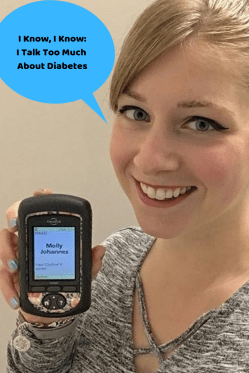
I Know, I Know: I Talk Too Much About Diabetes

Diabetes is never far from my thoughts.

I write a blog about it. I vent to family about it. I almost always casually mention it to new people that I meet.

I have multiple social media profiles dedicated to it. I own several t-shirts that identify me as a person with diabetes.

It’s the first thing I think about in the morning when I wake up, and the last thing I think about before I fall asleep at night.

And yet, sometimes people complain – jokingly and seriously – that I talk about it too much.

Of course I do! I totally own up to that fact. But think about it…

Doesn’t it make sense that I talk about it so much?

Untitled design
…but there’s a reason for it.

It affects the most mundane decisions that I make on a daily basis. It affects my mood. It affects my body. It affects the foods I consume. It affects what I carry in my purse each day and what I pack in my luggage on vacations. It affects my finances and my gym routine and the doctors I have to see.

If someone thinks I talk too much about my diabetes, then I’d like them to understand this:

Talking about diabetes spreads awareness and saves lives.

Bold, italicized, and underlined so the message and its significance is clear. Too many people in this world just don’t understand type 1 diabetes. They don’t realize how dangerous it can be, or how it is managed. In my personal experience, being open with others, answering their questions, and dispelling diabetes myths has resulted in nothing but positive outcomes.

It’s even helped people I know save a life, because they knew what to do when a T1D close to them was experiencing a hypoglycemic event.

All because I “talked too much” about diabetes.

With that in mind…you can bet that I won’t be shutting up about it any time soon.

My Blood Sugar is None of Your Business

This post originally appeared on my blog at ASweetLife.org on December 6, 2013. Even though that was nearly five years ago, my feelings on this haven’t changed – I strongly prefer to keep my blood sugars to myself.

Sometimes, I find myself getting angry and annoyed when others look at my blood sugar.

“256? Is that good or bad?”

“Oh man, you’re 61? You need to take some insulin right now!”

By making these seemingly innocent comments, people manage to simultaneously violate my privacy as well as sound ignorant.

I don’t have these feelings because I am ashamed of my diabetes. I don’t know what life is like without it, so I’ve had many years to come to terms with the impact it has on me on a daily basis.

1B5917BC-BCF2-4DF0-A8A0-E8A0DDC42086
The text in this post may be a few years old, but I felt that I ought to update it with a recent boomerang of how I feel when people try to look at my bg.

Rather, I think it’s more of a defense mechanism. When I see my friends or family craning their necks to look at the number on my meter, I tend to prevent them from seeing by cradling my hands around the meter or lifting it up so I am the only one who can read it. That way, I can react to my blood sugar on my own terms without having to worry about how someone else feels about it. I appreciate that I’m surrounded by people who genuinely care about my health, but just because my loved ones are aware of my diabetes doesn’t make them experts. In some instances, my friends have been so concerned about a slightly hypoglycemic blood sugar that they kept a closer monitor on my sugars than I did for the next couple hours. I hope I don’t sound ungrateful for their support, but my goodness, it’s tiring to have to deal with multiple reactions to my own blood sugars. I’m the one who has to deal with them, and that’s enough for me to handle at any given time.

On that note, I think that my defensive nature applies to myself, not just others. I am protective of myself because I like to test my blood sugar and analyze my feelings and what actions I should take once I know the number. When I can focus on this on my own, I have a greater understanding of how my body reacts in certain situations and what kinds of preventive or corrective measures I need to take in the future.

I guess what I’m wondering here is whether or not any other people with diabetes also feel this compulsion to keep their numbers private. Am I being too sensitive? Is it natural for me to want to tell others that my blood sugars are none of their business?

T1D and the Workplace: Feeling Envious of Coworkers with Professional Pancreases

I’m envious of people with functioning pancreases.

It goes without saying, but they don’t have to worry about all the things that PWD have to worry about. They can live life with a little more spontaneity. They don’t have to do as much math. They don’t have to lug around test kits and glucose tablets and strips and needles and whatnot at all times. They don’t have to hide their emergency snack stashes from their coworkers – well, okay, maybe they do, depending on some office environments.

They don’t have to worry about minute things, like “is my pod going to start beeping” or “is my blood sugar going to go low or high” during a very important meeting with a very very high-up executive.

EEE38767-FD48-471B-B93B-FF79827F5B8C
Conference room or anxiety-inducing room?

I’m envious of my coworkers, who were able to just sit there and listen to the executive speak when he made a special visit to the office last week. I was as attentive as I could be throughout the nearly 90-minute meeting, but I was definitely a bit anxious in there without any of my devices. I’d left them all at my desk to avoid awkward questions from the executive. I’m sure he wouldn’t have minded their presence, had he known they were medical devices, but still…I just didn’t want to deal with it.

I’m envious that a meeting is just a meeting to some people, but for a person with diabetes like me, it can trigger fear and concern and a gamut of other emotions regarding blood sugar/diabetes issues in the workplace alone – forget other social situations.

It goes to show that diabetes is never far from my mind, even in situations when I really want or need it to be. I wish my diabetes knew how to act more professionally.

But I guess from practically the beginning, my diabetes – or shall I say, my pancreas – was unprofessional. After all, my pancreas quit on me only four years into the job.

What a lazy jerk.


I’m Right, You’re Wrong: Debating with T1D

I found the diabetes online community (DOC) a few years ago – or perhaps it found me – and to this day, I’m incredibly grateful for it. It’s introduced me to new friends and it’s always been a reliable source of information. Whether I’m lamenting a low blood sugar at 2 A.M. or asking if anyone has advice on a pod problem at 2 P.M., odds are I’ll have someone reaching out to me within minutes in some form or fashion. That kind of on-the-fly support is invaluable.

That being said…the DOC is not always a perfect safe haven.

A9C03A36-6350-4D4F-A23F-E76A67DE4AFA
When it comes to diabetes, there shouldn’t be a “right” or a “wrong” side. T1D is hard enough.

In fact, if there was one thing I could change about it, it would be to make it a judgment-free space: because all too often, people are unfairly judged for how they choose to manage their own diabetes.

I’m not saying that people aren’t entitled to opinions. Of course they are! But what happened to respectfully disagreeing with people?

I’ve seen situations like the following across different social media platforms:

  • People getting attacked for following low/medium/high-carb diets
  • People getting criticized for sharing “good” and “bad” blood sugars/A1cs
  • People getting judged for dealing with diabetes burnout – as well as people getting judged for sharing their diabetes triumphs
  • People getting discouraged from posting only the pretty parts of diabetes

We can’t keep doing this to each other. Just because a certain diet or T1D management strategy works out well for one person, doesn’t mean that it will work the same for another. That’s because diabetes is not a one-size-fits-all condition.

And we shouldn’t be judging one another for our differences. In fact, our differences can teach us so much more than our similarities can. We should celebrate one another for living with diabetes: doing the best we can, day after day, whether it yields “ideal” or “not ideal” results. Because it’s damn difficult to manage, and anyone who says otherwise is being judgmental.

We can learn and grow from one another, which is pretty powerful, as long as we refrain from this “I’m right, you’re wrong” attitude.


What’s Worse than High or Low Blood Sugar?

High blood sugar and low blood sugar are both incredibly draining. One turns me into a grump who can’t drink enough water and the other turns me into a shaky, sweaty, slurring hot mess who can’t string a simple sentence together. Needless to say, neither situation is fun.

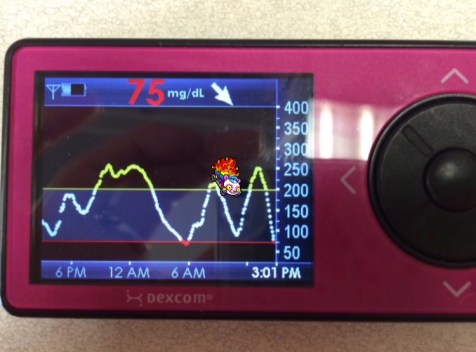
But there’s one even worse than that: the roller coaster situation. It’s best illustrated using a CGM graph like this:

7594B528-CBC7-43AD-8A55-CF1600A950D6
I added the little graphic of psychedelic teddy bears riding a roller coaster – it seemed to illustrate my point well. 

It’s what I use to describe blood sugar that won’t level out to my target range. It just goes up, up, up, and falls dramatically – just like an actual roller coaster – once the high is corrected. And boy, does that drop down take my breath away.

But then wait, there’s more! After the crash and the inevitable need for lots of sugar (and fast) is satisfied, the blood sugar soars back up again, leaving me frustrated as I take another bolus to fix it…

…only for it to happen again. And again.

Get me off this ride!

When I’m stuck on these blood sugar roller coasters, it’s mentally and physically exhausting. I question my every action over and over again as I try to do the “right thing” and make my numbers level out, only to end up berating myself for getting into this situation in the first place.

I’ve never been a fan of roller coasters in real life – they make me a combination of anxious and nauseous that I’ve dubbed “nauxious” – but I’d rather ride one that goes upside down than experience the T1D roller coaster situation again any time soon.