Diabetes, in a Picture

4A3993A4-7086-41D7-9343-474B3DA45F9A
Ugh.

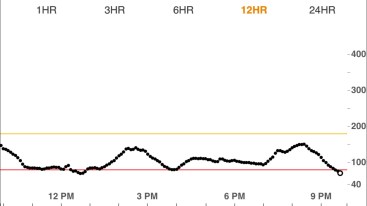
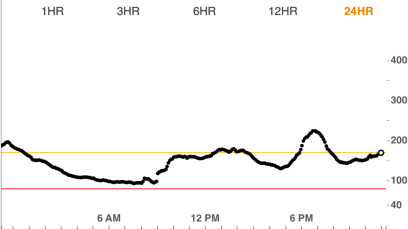
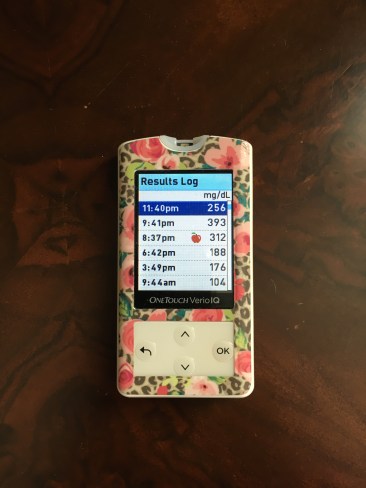
Okay, this isn’t a real blog post. But this is a very accurate representation of my diabetes lately. It’s like a moody teenager, filled with sudden ups and downs and likely to sour the mood of everyone around it.

Hey, diabetes? Get it together? Pretty please, with sugar-free sprinkles on top?

Thanks.


Waiting for the Shift in Numbers

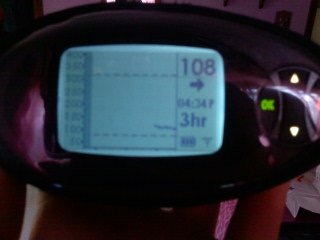
Call me crazy, but sometimes, I find myself staring at my Dexcom app in anticipation of catching the numbers changing.

It might be because I’m hoping for a change (coming down from a high, coming up from a low). Or it could be because I find a strange satisfaction in receiving real-time data of my blood sugar levels. Whatever, so be it: I’m a diabetes nerd!

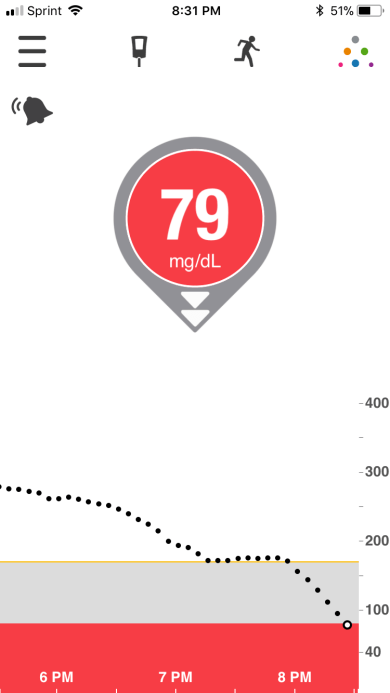
I remember this particular example bringing me happiness, because I’d been hovering pretty close to my high limit (170 mg/dL) for a couple hours. So watching that three-point shift happen reassured me that I was going to come down. And sure enough, 15 minutes after capturing these screenshots, I was going down closer to my target of 100.

When it comes to diabetes…it’s the little things, right? Am I the only one who likes monitoring my CGM this closely, every once in a while? Or am I just weird?

Maybe don’t answer that last question…

Managing Diabetes When Sick

The inevitable finally happened: I caught a cold. It really didn’t surprise me, because 1) it’s cold season and 2) I’ve been running around like a mad woman the past couple weeks and missing out on sleep.

Though it was expected, it certainly wasn’t welcome. I can’t stand being limited with my activity levels, and it’s been tough enough to get by recently due to my broken arm. Alas, I spent about three full days doing nothing but sleeping and binge watching Gilmore Girls as I nursed myself back to health.

621660CD-E223-479A-8639-6E6287D78D7B
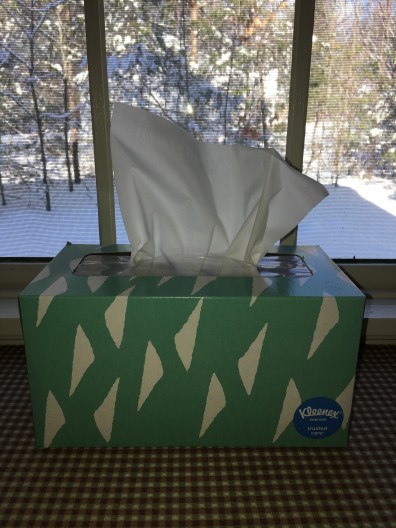
My best friend during my cold? This box of tissues.

During this time, I was extra concerned about my blood sugar levels. They tend to be better when I’m active, so I was worried about how they would fare when I was moving so little.

I admit that I probably did the wrong thing by not eating much during this time. It seemed like I needed to pump myself up with a heftier dose of insulin any time I was eating a meal, likely to compensate for the lack of movement. Even so, I seemed to spike a little too much for my liking after meals. So I really cut back on food. In hindsight, it wasn’t my best move, because even when I did eat it was not healthy (few fruits/veggies, mostly breads and fats).

But I do give myself credit for staying hydrated – a crucial step in getting better. I drank so much water, Powerade, and tea that I felt like I was constantly taking trips to the bathroom. It was worth it, though, because it’s easy to become dehydrated when sick and make a bad situation worse.

Also, I think I made the right move by taking some sick time from work. The day I woke up with a tingly throat, I thought I could soldier on and work a full day, but it became clear the moment I sat down at my desk and couldn’t focus that it would be best to just go home. I took a sick day the following day and was able to work from home the day after that, so I’m grateful that I have a flexible and understanding employer who knows that health is a priority over everything else.

As much as I loathed being mostly confined to my room for 72 hours, it was the smart call. It reminded me how important it is to listen to my body and to not push it when I’m not feeling 100%. There’s no shame in self-care.

Breakfast or a Plateful of Carbohydrates?

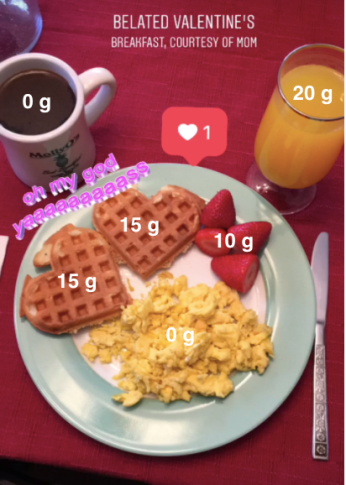
Look at the following image: What do you see? Breakfast, or a plateful of carbohydrates?

4B3EFDB5-F145-49D4-A3D1-7C87C4526847
Breakfast, or a plateful of carbs? Trick question, it’s both.

Trick question, it’s both.

I seldom enjoy large breakfasts like this, but when I’m treated to them, it’s more than just a savory, delicious meal. It’s also a math problem. So besides looking at a plate full of yum, I’m also looking at this:

Screen Shot 2018-02-18 at 10.11.21 AM
Looks like I’m having approximately 60 grams of tasty carbohydrates.

I can’t help it, I HAVE to look at my food this way because it helps me determine how much insulin I have to take. Once I add it up, I take the total amount (60) and divide it by 8, because that’s my morning insulin-to-carb ratio. From there, I take about 7.5 units of insulin to cover my breakfast. Of course, I’m not doing the division by myself – my pump is programmed to know all my mealtime ratios, so the only steps I’m responsible for is adding up my carbs and entering that information into my PDM.

You might think it’s a lot of work, but it’s what I’m used to, along with my fellow T1Ds. It all comes with practice, and before long, calculating carbs becomes part of the normal daily routine.

So this example is both breakfast and a plateful of carbohydrates, but that doesn’t make it any less enjoyable. After all, I’m used to crunching numbers along with my food.

An Ode to Diet Coke

Growing up, Diet Coke was my lifeblood. It was my zero-carb drink of choice with every meal, the one beverage I craved when dealing with high blood sugar. Liters of it were in my house at all times, because once a fresh bottle was popped open, it was certain that it wouldn’t last long.

But as I got older (and wiser, I’d like to think), I realized that I needed to wean myself off Diet Coke for my health. My water intake was practically non-existent, and reports of large quantities of soda made me wary of what it was doing to my body. So I replaced Diet Coke, slowly, with flavored water and sparkling water. At first, it was tough, but I got used to it. Gradually, Diet Coke evolved from an everyday dietary staple to a monthly indulgence. I didn’t even really miss it as I began to incorporate funky flavors of seltzer water into my lineup of drinks.

Of course, it was harder to stay away from Diet Coke when I began working at my current job. Suddenly, a fully-stocked fridge of Coca-Cola products was within my reach. It wasn’t just Diet Coke, it was Coke Zero and its enticing kin, Vanilla and Cherry Coke Zero. Boy, was it difficult to avoid the temptation of cracking one open. I would cast longing looks in the direction of the red and black cans as I forced myself to opt for lime and mixed berry seltzer waters. The fizz quelled my desire for carbonation, but it was far from replacing the peppery sweet satisfaction of an ice-cold sip of Diet Coke.

A few months ago, though, my attitude towards my diet soda ban changed. Why was I depriving myself so much? What’s the harm in having a Diet Coke once or twice a week? Surely, that would be an improvement compared to my younger years of gulping down gallons of the cola weekly. So I’ve stuck with this plan, and I’m happier to have rekindled a more positive relationship with my beloved diet drink of choice.

And everything came full circle when I visited the World of Coca-Cola museum in Atlanta, Georgia earlier this month. A fellow T1D friend and I had an absolute field day tasting dozens (and I mean DOZENS) of diet and sugar-free Coca-Cola products. Seriously, that Coca-Cola Freestyle machine is an amazing invention. Without it, we never would’ve discovered how awesome Sprite Zero Strawberry tastes, or how aesthetically alarming diet Fanta products are, with their neon green and purple hues. We felt like diet soda wizards, summoning the most wild flavor combinations from the machine with just a touch of a button. Though our bellies quickly filled up from all the carbonation, we had a blast experimenting with all the zero-sugar possibilities. Plus, learning the history of Coca-Cola and experiencing all the sights, sounds, smells, and tastes made for a fabulously fun afternoon.

Ah, Diet Coke – I admit that I tried to quit you, but you’re just a part of my life. You’ve consoled me through sticky high blood sugars and you’ve been my drink of choice at countless parties and occasions over the years. Thanks for being a loyal pal to this T1D.

Memory Monday: 1st Generation Dexcom CGMs

One Monday per month, I’ll take a trip down memory lane and reflect on how much diabetes technology, education, and stigma has changed over the years. Remember when…

…Dexcom CGMs made their debut?

It was just over ten years ago that the Dexcom SEVEN CGM System launched. I didn’t actually know more about it, though, until a couple years after the fact. That was when my endocrinologist encouraged me to sign up for a week-long trial run with this new technology to see how I liked it.

023E152D-A6FF-4555-80F0-67764C9523BB
Then: The Dexcom SEVEN CGM System

I didn’t like it, I LOVED it. I quickly became obsessed with the ability to monitor my blood sugar levels at all times. But it’s funny to think back to how bulky and just plain different that first-generation system was compared to today’s sleek and highly functional models.

A few key differences between now and then:

  • Size. The first CGM was large. It was roughly the size of my OmniPod PDM, which might not seem so significant, but it is when measured up against newer CGM models.
  • Display. The screen on my first CGM was very simple. No colors, no frills – just readings of my blood sugar. That was all fine, but I have to say that I’m a fan of color-coordinated blood sugar reports (red for low, yellow for high, gray for in-range numbers). In a weird way, it motivates me to keep my graph as gray as possible.
  • Distance restrictions. I hated that I had to keep my first CGM so close to me at all times, or else run the risk of losing data! It was hyper sensitive and my readings would be lost if I left the same room as the CGM for more than a couple of minutes. My CGM is now able to pick up readings from much farther away – sometimes, even when I’m downstairs and it’s upstairs.
  • Sounds. My memory is a little foggier on how the sounds compare between old and new Dexcom CGM generations, but I do recall the beeps and vibrations being far more aggressive and annoying on older models.
  • Smartphone access. This might be one of the biggest and best changes – the ability to download an app on your smartphone that can replace a Dexcom receiver. How awesome is that? Plus, if you choose to do so, you can invite family and friends to monitor your blood sugar along with you, which can be helpful in certain situations. Cell phones are so ingrained into society, so this move was brilliant on Dexcom’s part.
IMG_4180
Now: Dexcom data, on my iPhone!

All these improvements have made me a member of Team Dexcom for life. It’ll be neat to see what they come up with next to help make the lives of people with diabetes easier and better.

Behind the Scenes: Shooting a T1D Marketing Campaign

Last week, I had the exciting opportunity to participate in a T1D marketing campaign! I won’t say too much about the brand or product itself, because I don’t want to share more than I’m allowed, but I WILL say that there is some very cool stuff in the works for the diabetes community – and that’s a total understatement.

And I also wanted to share what it was like to be on a production set like that! I arrived in Atlanta late on Thursday night, woke up early on Friday, and got myself ready to head over to the shoot for 11 A.M. From there, it was a long blur of a day. I was whisked from wardrobe to hair/makeup to a holding room to one room filled with wicked bright lights and dozens of people to another room with a plain backdrop and just a few people to another room that’s best described as a closet. Actually, that latter room was where I did an audio-only interview, and I felt just like Harry Potter in the fourth book when he was being interviewed by Rita Skeeter in a broom cupboard. Except I wasn’t being grilled by a nosy reporter like he was; on the contrary, my interviewer couldn’t have been friendlier.

This whole process took about seven hours – that’s a pretty long while to be going around from room to room and having to be on my feet for varying lengths of time. But it was so exciting that I didn’t mind one bit.

But I DID mind my blood sugars; at least, as much as I could when I wasn’t having my makeup touched up or staring into a camera, responding to questions. I had no clue how it would fare after several hours on location and minimal physical activity. I was also worried about the food/drink situation: Would I have access to ample snacks and beverages?

Fortunately, that was a total non-issue. The production company had numerous snacks and bottled water in nearly every room on set, on top of a hot lunch. Around one o’clock in the afternoon (five hours after I ate breakfast), I helped myself to a serving of salmon, squash, and green beans. I was impressed with the quality and healthiness of the food, and even more pleased to discover that among the diet drinks was unsweetened iced tea and sparkling water. Score!

14789128-556D-49CF-8596-80C88D2AEABB
Not perfect, but manageable and steady. A win in my book.

This food kept me fueled all throughout the afternoon on set, and I enjoyed steady blood sugars for the duration of the shoot. Rather than stressing about my blood sugar, I was focusing on posing for photos and answering prompts from producers. It really, truly was a one-of-a-kind experience. I feel so lucky to have been invited to partake in this campaign, and even luckier to have met a diverse and welcoming group of individuals (T1D and non-T1D) along the way.

On top of all that, I proved to myself that I CAN do “crazy” and unique things like this without my diabetes getting in the way. It’s more proof that diabetes will never stop me from living a full and extraordinary life.

Spare a Rose this Valentine’s Day

Happy Valentine’s Day, readers. Whether you celebrate the holiday or not, I’d like to make you think about a dozen roses today.

A dozen roses is a classic Valentine’s gift, right? But what if you received 11 roses in your bouquet, instead of 12? What if you knew that a rose was spared because the value of that flower helped support a child living with diabetes in a less-resourced country?

I bet you wouldn’t mind getting one less rose in that case.

SquareTag

This Valentine’s Day, please consider sparing a rose. Life for a Child is a nonprofit charity that created the Spare a Rose campaign. They’re able to support nearly 20,000 young people living with diabetes by using donations to buy them insulin, syringes, clinical care, diabetes education, and more. Anyone who’s familiar with diabetes realizes that access to care, education, and resources is critical to living a healthy and normal life. No one would want to deny another, especially a child, from having to forgo these resources because of the financial burden associated with them.

Spare a rose and save child this Valentine’s Day.

Highs Happen, and That’s Okay

Nothing makes me feel as defeated as high blood sugar.

Maybe it’s because it takes so long for my blood sugar to come back down from a high.

Maybe it’s because I feel like I directly caused it – miscalculated my carb intake, or snuck in a snack that I shouldn’t have.

40072427-73BB-45FB-B4E5-F6564C46D3B0
Most of these highs occurred due to a bent cannula in my pod a couple weeks ago.

Maybe it’s because it makes me feel like I’ve lost all control. That I can’t do anything but monitor the situation and take more insulin as necessary. I hate feeling so dependent, so trusting, of my insulin alone.

Maybe it’s because the technology has failed me, and there’s few things more frustrating than that. Imagine doing everything the “right” way, the way you’re supposed to, and getting the “wrong” results. You begin to question everything and your emotions get the better of you.

Whatever the reason is, I know I’ve got to work on accepting the fact that highs happen. I’ve dealt with many over the years, and I know I’ll encounter plenty more in the future. They’re upsetting, tiring, and irritating. They test my patience as I wait for long stretches of time for my insulin to finally kick in and stabilize my blood sugar. They are one of the more mentally and physically draining components of type 1 diabetes management.

But highs happen, and that’s okay.

Favorite Things Friday: Adhesive Remover Wipes

One Friday per month, I’ll write about my favorite diabetes products. These items make the cut because they’re functional, fashionable, or fun – but usually, all three at once!

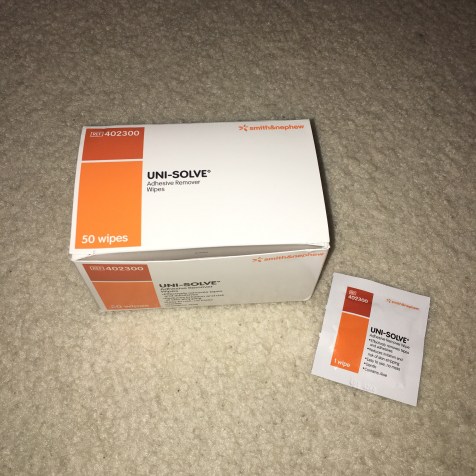
“Adhesive remover wipes” sounds about as exciting as dryer lint. But these really are a nifty invention, especially for someone like me who wears multiple T1D medical devices.

My pods stay on my body for three days at a time, and my CGM sensors can last as long as two weeks. So needless to say that they need to be equipped with super strong adhesive to ensure they stick for the necessary length of time.

IMG_5246
These adhesive remover wipes look lame, but trust me, they’re pretty impressive.

I’m grateful for the high-quality adhesive, but man, it can be difficult to completely remove from my body. Before I discovered these magical wipes, I’d rub my skin raw in an attempt to get rid of all traces of leftover adhesive. As a result, I’d either walk around with gray circles of adhesive on my abdomen and arms, or with irritated, pink skin that I needed to let heal before reusing as a site. A surefire lose-lose scenario either way, right?

A quick search online caused me to discover these adhesive remover wipes. I purchased them immediately and I can say it was a brilliant buy. I no longer scratch at my skin until the adhesive disappears; rather, I merely wipe the area with one of these towelettes and within seconds, all adhesive is painlessly removed.

If you’ve struggled in a similar manner with removing your medical adhesive, definitely look into these wipes and save your skin from stress.