Metformin Update #3: Is it My Imagination…or Side Effects?

Frequent readers of this blog are probably familiar with my journey with Metformin. If you aren’t, or want to brush up on my history with it, read here, here, and here in order to get caught up.

The big white “horse pill” that is known as Metformin has become a relatively solid part of my routine in the last six or so weeks. I’ve skipped doses here and there for varying reasons (i.e., on occasions when I’ve had two or more alcoholic beverages); otherwise, I’ve been taking it and monitoring my blood sugars carefully each day.

But apparently, my blood sugars aren’t the only thing I should be watching diligently.

METFORMIN UPDATE #2

Just like any other drug out there, Metformin comes with side effects…which I totally chose to discount from the beginning, mainly because my endocrinologist thought that the extended release tablets would mitigate the likelihood of side effects. I’m questioning that logic, though, after experiencing indigestion and general stomach discomfort within a few hours after taking my Metformin pill.

It didn’t happen just once. There were at least three consecutive days that I experienced these symptoms. Within an hour or so after eating dinner, I felt uncomfortably full – like I’d eaten a whole Thanksgiving meal instead of a normally portioned dinner. I know that I wasn’t eating a larger quantity of food than usual, and since I typically have a semi-insatiable appetite, I knew that it just had to be related to my Metformin dose.

I decided to do some more research into the side effects of Metformin. And I was pretty surprised by what I saw. Shocked, actually. Because evidently, a massive array of side effects can occur on Metformin. The stomach discomfort I’d experienced was common, but other side effects that caught my attention included restless sleep, muscle pain, cramping, and a rash/hives.

Very interesting. I’ve felt all of those things in the last few weeks. I chalked it up to overdoing it with my exercises, but…it’s not like I was doing anything new or particularly strenuous in my routines. I do a combination of cardio and resistance training, for about an hour most days of the week. I always make sure to stretch before and after working out, and yet I felt a soreness and achiness (mostly in my legs) for a few nights in a row a couple weeks back. There was even one night that I tossed and turned so much that I hardly slept a wink – the restlessness in my legs was that bad. And the rash/hives? I’ll go into more detail in a future post, but on a random Tuesday night, I experienced a breakout so bad that I wound up going to the ER. They cleared up within an hour or so of a Benadryl dose, but it was still a scary experience.

Okay, so I think I can safely blame all of these issues on my Metformin intake. But that still doesn’t quite answer why I was experiencing multiple symptoms so suddenly. My theory is that my body was struggling to adjust to taking Metformin consistently, and as a result, I was feeling the side effects. There’s no way for me to be sure, but I think this warrants another experiment…another break from Metformin. My blood sugars have been good on it, but have they improved so drastically that I can’t imagine life without Metformin?

The answer is a resounding no.

I’ll likely consult with my endocrinologist at some point to tell her my thoughts and theories. But for now, I’m taking a break for an unknown period of time to see if there’s any change in how my body feels. We’ll see how it goes.

Do You Have 2 Minutes to Spare?

If you’re reading this post, then the answer is YES – of course you have 2 minutes to spare. In that amount of time, you can share your opinions and help my dear friend, Heather, with her research.

Capture
Make your opinions heard by taking this survey.

Please click this link to access the survey. It’s very simple: You’ll see 24 phrases that relate to diabetes in some manner. You’ll rate how often you see these phrases around the Internet using a scale of 1-5. Then, you’ll share which one resonates with you the most and which one you see the most on various diabetes online communities. And…that’s it! You don’t even have to share your name or any of your contact information. It’s quick, easy, and you’ll get to share your opinions in a way that will make a difference. I’d say that’s a great way to spend 2 minutes, wouldn’t you?

It’s Not Called Cryabetes

C’mon, Molly. Get it together. It’s not called cryabetes. I stared at myself in the bathroom mirror, giving myself an internal pep talk to keep the tears from flowing down my cheeks. I felt a little uneasy on my feet, so holding a steady gaze proved to be challenging after a few moments.

Why was I on the verge of an emotional breakdown? It was all my blood sugar’s fault, of course. For about an hour, I’d been hovering in the upper 60s to lower 70s. There are far worse blood sugar ranges to fall in, but I’d been feeling the classic symptoms of a low for that entire span of time – and it was really testing my fortitude.

My self-talk was fruitless; within seconds, the first few tears escaped from my eyes. It wasn’t long before a couple tears turned into full-fledged bawling. Alarmed by my outburst, my boyfriend tried to calm me down (he was aware of my low blood sugar situation) and attempted to use humor to get the crying to stop. Very quickly, he discovered I was a bit beyond that and that it was best to just let me be sad.

I was sad because I was tired and wanted to go to bed but it didn’t feel safe for me to sleep just yet. Safe to sleep. Can you imagine not feeling safe enough to fall asleep, even in your own bed surrounded by your own blankets in your own room, with your partner nearby?

So the tears came and went because, even though I tried my damnedest, I still felt so out of control in this situation. Not knowing how long it would take my blood sugar to come back up to a level that I felt safe to sleep at, not knowing what exactly caused this predicament in the first place, and not being capable of being mentally stronger than my diabetes all in that moment in time got to the best of me.

Definitely very chronically UN-chill of me, right?

Dualitee Apparel

So sure, diabetes isn’t called cryabetes. But that doesn’t mean my emotional lapse – or any emotional lapses related to diabetes – wasn’t warranted. Crying can be healing, and in this moment in time, it was the only thing, oddly enough, that could make me feel a tiny bit better.

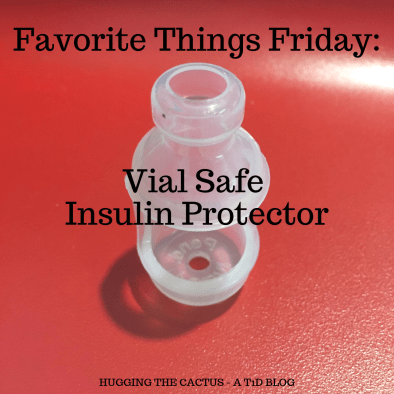
Favorite Things Friday: Vial Safe Insulin Protector

One Friday per month, I’ll write about my favorite things that make life with diabetes a little easier for me.

Okay, so it’s DEFINITELY been a few months since I last wrote about a favorite thing of mine. I admit that I started running out of things that I deemed worthy enough of sharing with my readers! It felt silly to continue doing it on a monthly basis if I didn’t have anything particularly great to write about, so I stopped, promising myself that I’d pick it up again the next time I got excited about a product.

Enter the Vial Safe insulin protector sleeves that I just ordered.

Favorite Things Friday_ Vial Safe Insulin Protector.png

I’d seen posts about these little insulin vial jackets before on Instagram, and I always had them bookmarked in the back of my mind as something I should order. After all, I’ve felt the agony of a shattered insulin vial before, and let me tell you: It’s awful. I was somewhat young when I broke my first (and hopefully only) vial and basically brushed the whole thing off because I assumed that it would be easy (i.e., free) to get a replacement. But now, at age 26 and in my first few months of being on my own health insurance plan, I know better. Accidentally breaking an insulin vial in this day in age seems like the equivalent to setting a stack of hundred dollar bills on fire – completely pointless, unnecessary, and wasteful.

So I’m betting that my two new Vial Safe sleeves will help protect me from ever experiencing a shattered vial again. I’m especially looking forward to bringing them with me on my next trip, as they’ll surely keep my vials more secure as I have the tendency to shove them wherever I can find space in my luggage.

I bought my Vial Safe insulin protectors on Amazon, but there also available for purchase here. And no, I wasn’t asked (and I’m definitely not being paid) to write about these or any other products I’ve ever mentioned on Hugging the Cactus – I simply believe in spreading the word about a quality item if it has helped make diabetes management easier for me in some way.


Oops! My CGM Did it Again

Oh baby, baby
Oops, my CGM did it again
It played with my BG, got lost in the graph
Oh baby, baby
Oops, my CGM thinks it’s right
That it’s control is tight
I’m not that gullibleeeeeeeeeee…

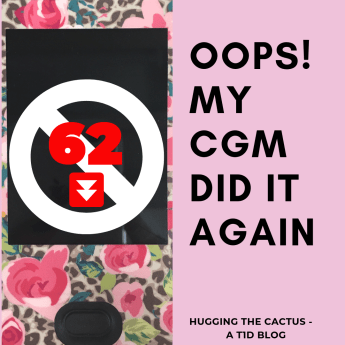
Ahem, oh! Excuse me for changing the words to Oops! I Did It Again, a real Britney Spears banger that I listened to over and over again in my younger years. But it just seemed appropriate because it describes the exact kind of betrayal I got from my CGM – at the tail-end of a very long day in the car, no less.

Oops! My Cgm did it again

Learning to be Chronically Chill

I’m not sure that I’ll ever fully be at peace with my diabetes.

I have days when I hate it a little less, sure. I even have days when it doesn’t bother me at all. But true acceptance of my diabetes? I used to think I had it…not anymore. In 22 years, there’s just been too many times that I’ve detested every aspect about life with diabetes: the painful shots/needles, the constant planning, the many doctors appointments, the countless hours of sleep lost, the amount of money that goes into caring for it…the list could go on and on.

I know, I know…this all sounds extremely negative. It’s a little unlike me. But let me tell you what, instead of forcing myself to unequivocally accept my diabetes, I’m learning how to be what I’ll call “chronically chill” with it. It’s a bit of a play on words, you see. Diabetes is considered a chronic illness (I prefer to think of it as a condition; to me, “illness” has an ickier connotation). By definition, the word chronic means long-standing or permanent, and I’ll always have diabetes. So it’s about time that I start to be chronically chill – persistently cool, relentlessly alright-fine-I-get-it-you’re-not-going-away-any-time-soon – with my diabetes.

Learning to be Chronically Chill
Me, being my chronically chillest, on the beach.

To me, this is different than accepting it. Others might disagree, which is totally fine, but I think that accepting diabetes means hugging it warmly, with open arms. I don’t want to do that. Rather, I want to get to a place where I can be just…fine with my diabetes. Just let it coexist with me. I never want it to get to the best of me, but I also don’t want it to think that it can stay with me forever. I guess it’s the optimist in me that still thinks a cure is right around the corner.

How am I going about this process of being chronically chill? I’m taking it a day at a time. I’m trying to not get bogged down so much by the small things. I’m trying (and this is super mega hard for someone like me) to come to terms with the fact that I can’t have control over everything in my life. I’m trying to focus more on things like time in range versus my A1c. I’m trying all of this at once, and I believe that it will help me achieve the chronically chill status I’ve described.

And if the process goes more slowly than I want it to, I’ll just refer to the above photo of me on the beach from time to time…because it’s hard to find a place where I’m more chill – my most serene self – than when I’m near the sand and surf.

Doing Everything Right and Still Getting it Wrong

One of the most frustrating things about having diabetes is feeling like you’re finally understanding it, perhaps even mastering it, only for it to lash out at you and make you feel like you don’t know shit about it.

It’s when you do everything right – check and treat accordingly, eat properly, exercise sufficiently – and still get it wrong when your blood sugars don’t behave the way they should.

I really hate when this happens, but I loathe when it happens on vacation…which is exactly what happened to me last week when I was in Maine for a few days.

Things started going awry shortly after I woke up (if only I knew then that I was in for a DAY!!!). I ate breakfast and my blood sugar swiftly started to rise. But I didn’t panic, because that’s what I wanted to happen. We’d be walking all around town for part of the morning and most of the afternoon, so I wanted my blood sugar to be on the higher side so that my chances of dropping dramatically in the heat were lower. I made the right call – soon after we got downtown, I noticed a diagonal down arrow on my Dexcom app. Things were headed in the right direction…or so I thought.

Not long after I spotted the diagonal arrow, I started to feel a little low-ish. Not super shaky or anything, but just a bit disoriented. I decided to pop into my favorite candy store to fill a small bag with treats so I had something sugary to munch on that would prevent a bad low blood sugar.

Those were mistakes number one and two…not consulting with my CGM again before eating candy, and going to town on it because it was CANDY and it tasted delicious.

Doing Everything Right and Still Getting it Wrong

Within a half hour, I was rising up, up, and up. I took a small amount of insulin to correct it, not wanting to be too aggressive and risk a real low. But as I walked around the amusement park with my boyfriend and his family, I just wasn’t coming back down like I thought I would. I lingered in the mid-200s for much of the early afternoon, and by the time we stopped for lunch, I was rage-bolusing to bring my numbers down faster. I even chose a lower-carb lunch option in the hopes that it’d stave off another high blood sugar, but nope, the BG gods were not in my favor that afternoon. As we moved from the amusement park to a brewery (a drastically different change in locale, I know), I bolused once again, and then noticed that the batteries in my PDM were low.

And that actually wasn’t a problem, because I was prepared enough to have spare triple A batteries on me – thank goodness! I took the old ones out, popped the new ones in, and waited for my PDM to come back to life. And it did…but it asked me to input the month, day, and year.

Dammit. THAT’S never a good sign. I entered the information and the system accepted it, and then my pod failed immediately after, which meant that I had to ditch the brewery and the group of people that I was with to get back to the house we were staying at as quickly as possible to put a new one on.

It doesn’t get much more irritating than that.

(Later, I discovered that my PDM’s internal battery was going, and that this behavior would occur every time I replaced the triple A batteries. Needless to say, I’m awaiting a new PDM from Insulet, because it’s just not smart to continue using an aging PDM.)

By the end of this day of turbulent blood sugars and unpredictable medical device malfunctions, I was mentally beat. I felt like I’d been thrown into the roughest of ocean waters and forced to tread water for hours in order to keep my head above the surface. It’s exhausting to know that, when it’s all said and done, I was really trying to do the right things and take care of myself. I was SO DANG PREPARED with those extra triple A batteries, for goodness’ sake! But man, diabetes…just when I think I know it better than anything else, it throws me for a loop and I remember a saying from Professor Mad-Eye Moody of the Harry Potter series (of course I’m talking about Harry Potter again, don’t act surprised): CONSTANT VIGILANCE. I’ve got to be aware of my diabetes at all times. I’ve got to know how to react and when so that my diabetes will remain in my charge – not the other way around.

Diabetes Checks into “General Hospital”

Soap operas: Many people scoff at them and the heightened drama that defines them. I get it. Betrayals! Infidelity! The mafia! Murder! Secret children! Evil twins! Name a ridiculous plot point, and I can virtually guarantee that it’s been explored on a soap.

But that’s precisely why I love soap operas. They’re the epitome of escapism. They’re so bizarrely over-the-top that it can be comical. And tuning into the absurdity is the perfect way for me to unwind after a long day.

My soap of choice? Why, it’s been the same one for years; in fact, since I was the tender age of nine years old…General Hospital. In the last 17 years, I’ve (mostly) kept up with the citizens of fictional Port Charles, New York. Their wild lives fascinate me. I think I’ve always been especially intrigued by the show because it centers around…well, a hospital. As a result, characters experience a myriad of maladies, everything from infectious diseases to totally invented my-memory-got-stolen-from-me-and-it’s-all-on-a-flash-drive-that-I-can’t-access sort of conditions.

So imagine how my interest piqued when longtime character Barbara Jean “Bobbie” Spencer got diagnosed with diabetes a couple weeks ago by her doctor son, Lucas (who has type 1 diabetes, himself).

The Minimal Lists
Diabetes is on the long list of medical conditions that GH has attempted to tackle over the years.

This plot line was…interesting. And somewhat concerning to me, because by the time the story wrapped, I’m not sure how much it did to raise diabetes awareness. Let me go over the good and the bad.

The good: Bobbie is a very petite woman who was diagnosed with type two diabetes. The character was in utter disbelief over this because she thought she practiced a healthy lifestyle. I can appreciate that the writers chose to diagnose her with type 2 to make viewers aware that obesity is not the only risk factor when it comes to developing it. And speaking of awareness, the writers chose to focus on the fact that people with diabetes are more susceptible to heart conditions. This is something that I like to pretend to not know sometimes, but it really is important to not be ignorant of complications.

The bad: Very little distinction was made between type 1 and type 2 diabetes with this new diagnosis. I can imagine that viewers who are unfamiliar with diabetes might be confused by what the difference is, especially considering that Bobbie was diagnosed by her son who has T1D. I feel like that should have been better explained or clarified. I also didn’t like how the whole plot line made diabetes seem very easy to treat and manage. I’m pretty sure the only things that Lucas told Bobbie to do was get her hemoglobin tested every 3 months and remember to take her medication (no mention of what kind, whether it was an oral drug or something else). Really? Frequent blood sugar checks, doctors appointments, and structuring a new daily routine couldn’t have been mentioned?

It’s just a bit frustrating to me as a person with diabetes. Of course, I don’t know what it’s like to live with type 2, but I know all too well about what goes into managing type one. And it’s not something that can be explained in a short story arc on a show like GH. Now I’m just curious as to how long the writers will prolong the diabetes diagnosis – will Bobbie’s condition be mentioned often, or will it only be swept under the rug until it’s a convenient time, story-wise, for it to come up? Time will tell.

Sugar and T1D: Friends, Not Foes

For someone who doesn’t eat sugar…. you sure do know how to bake….damn those were good

My coworker sent this to me via instant message as a way of thanking me for the cupcakes I’d brought into the office that morning. Before 11 A.M., a dozen and a half or so “butterbeer” flavored cupcakes I’d created were devoured by my coworkers, who gave rave reviews on their taste, much to the delight of this wannabe pastry chef.

This particular message of praise, though, made me simultaneously smile and cringe: It was that comment, again. The one about sugar and not being able to eat it.

Everyone in my office knows that I have type 1 diabetes. And because I make it my mission to spread awareness of how to react in certain situations that a T1D might encounter, most people I work with know that in cases of low blood sugar, fast-acting carbohydrates (i.e., sugar) are essential as they’re the fastest way to fix a low.

Calais University
Sugar saves my life from time to time…and no, that’s not an exaggeration.

But every now and then, I’m reminded that no, people don’t always remember what you tell them about diabetes. It goes to show that there’s always room for more advocacy…which is why I write about diabetes and won’t stop talking about it to those who want to know more.

As a result, I’m constantly telling people that I can and do eat sugar; in fact, it saves my life from time to time. Maybe that’s the subconscious reason why I love baking cupcakes, cookies, and more: For a girl who relies on sugar sometimes, I sure do know that a baked good every now and then is what helps me stay alive.

And the Nominee is…Me?!

Friends, I am pleased to share that I have been nominated for a WEGO Health Award. My blogging for Hugging the Cactus has qualified me to be a Patient Leader nominee for the “Best Kept Secret” award, which is very exciting to me! What’s more, if I advance to the finals round, I may be able to win a trip to Las Vegas for the HLTH conference in October. This would provide me the opportunity to be around other Patient Leaders who, I’m confident, I could learn so much from, as well as the rare chance to attend a health-focused conference based on merit rather than cost.

What exactly are the WEGO Health Awards? They were created to recognize and honor those who strive to make a difference in the online health community. In the past few days, I’ve scrolled through the growing list of nominees who are advocates for all sorts of conditions, from anemia to ulcerative colitis. It’s quite eye-opening to see just how many health topics inspire individuals to spread awareness via social media, blogs, podcasts, YouTube channels, and more. And it truly is an honor to be listed among these incredibly inspiring nominees.

70AA0C50-FF9F-4BCC-A8DE-20A76C79A2A5
Well, this is just plain cool.

If you feel that I deserve to move on to the semi-finalist round, please follow this link to endorse my nomination. By clicking the link, you can view the other nominees and their profiles, which I strongly encourage so you can find out for yourself the sheer volume of skilled storytellers out there. Plus, you never know, you might just discover someone who you can relate to or who inspires you. After all, in a world of chronic conditions that can feel so isolating, isn’t it always a comfort to find out that you’re not alone?