I’ve never really sat and thought about the power of seeing diabetes represented in media. Mostly, if diabetes is ever seen or mentioned in a TV show or podcast, it’s the butt of the joke, or portrayed with the slightest (or extreme, there’s no in-between) inaccuracies.
I guess the only time that I ever really considered it is when I weighed my experience filming a Dexcom G6 commercial (which you can read about here or watch here) against the knowledge that some other diabetes companies don’t have people who actually live with diabetes in their commercials; instead, they hire actors. I was – and still am – beyond grateful that Dexcom chose me and other people living with diabetes to be part of the G6 marketing campaign. It made me feel seen and heard, and perhaps inspired my mild irritation over the fact that other companies have chosen actors to appear in their ads. Actors can certainly pretend to know what it’s like to wear our devices or deal with diabetes 24/7, but the stark reality is that they have no clue – and let me tell you, it’s a lot more difficult than these commercials filled with smiling, happy people portray.
Anyways…the concept of diabetes representation mattering in a variety of contexts was driven home to me when I agreed to participate in a social media campaign for my pole fitness studio. All I knew was that the owner was going to film my very full level 1 class one night, and I had no idea if I’d actually appear in any of the footage selected for the Facebook/Instagram ads. Admittedly, I didn’t really care either way because I was just focused on learning the climbs, spins, and poses taught to us that evening, so I gave my permission to appear in the ads without a second thought. Imagine my surprise when, weeks later, I noticed a 3-second clip of myself climbing woven into one of the ads!
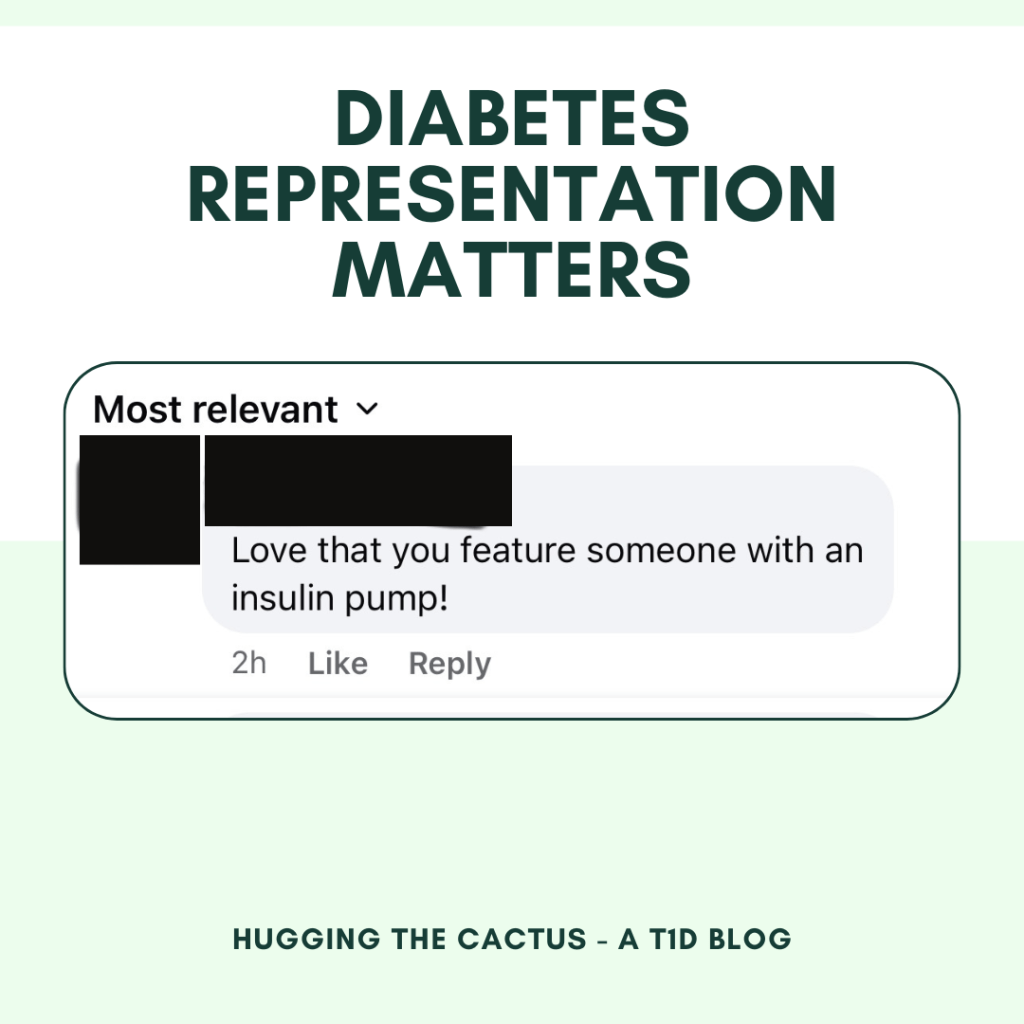
When I first saw it, I was a little embarrassed because I’m just naturally self-conscious and my form looked off in the video. But as days went by and it popped up every now and then on my social media feeds, I grew accustomed to it and let my inhibitions fade away. Any lingering anxieties over my appearance, though, turned into a burst of confidence and pride when this comment on the ad caught my eye one day:
Love that you feature someone with an insulin pump!
It’s funny how 9 words written by a total stranger on the Internet made me feel so good. It really serves as proof that representation does make a difference in defeating diabetes stigma and giving a normally invisible chronic illness greater visibility.
Thank you, random person who commented on this ad, for reinforcing that almost-forgotten notion for me.

 Hugging the Cactus
You were great !!!
LikeLiked by 1 person