What Would it be Like to Have Diabetes in the Wizarding World?

I’m a Harry Potter fan. A major one. I attended the midnight release book parties. I saw every movie in theaters. I’ve dressed as Hermione Granger for Halloween on more than one occasion. I’ve been to the theme park in Florida, I’ve read the books a countless number of times, and I’ve even written fan fiction before. So maybe I’m a little bit more than a fan…I’m an ardent enthusiast.

Even though the last Potter book came out years ago, I still indulge in the wizarding world somewhat often. One day, I was thinking about it and how nobody in the books ever suffered any serious maladies (okay, having all of your bones removed by your Defense Against the Dark Arts professor or getting petrified by a basilisk snake or Splinched when Apparating are all pretty significant conditions…but bear with me here). None of the characters had anything chronic, like arthritis, or Crohn’s disease, or type 1 diabetes. And one might make the argument that it’s the effing wizarding world…why couldn’t magic be used to cure any of these illnesses?

HUGGING THE CACTUS - A T1D BLOG.png

My response to that question would be: How come Mad-Eye Moody had a fake eye? Couldn’t a new, working one have been magicked into his eye socket? (Same thing goes for his wooden leg.) George Weasley lost his ear, thanks to a Death Eater – how come it couldn’t be restored onto his head? Dragonpox, Spattergroit, and lycanthropy are all serious conditions in the books that, if curable, weren’t easily healed. Particularly lycanthropy, otherwise known as a condition in which a person transforms to a werewolf. The books specifically said there was no cure for this; only Wolfsbane potion could be drunk by the affected person to ease the transition from human to werewolf.

So obviously, I think that lycanthropy = T1D, and Wolfsbane potion = insulin in this hypothetical comparison/scenario. That being said, life with diabetes in the wizarding world as I’ve imagined it would be a little something like this…

  • Diagnosis would take place at St. Mungo’s Hospital for Magical Maladies and Injuries. Madam Pomfrey would be on-hand to learn how to help the affected student.
  • Pumpkin juice and butterbeer are definitely the best/most preferable ways to bring up a low blood sugar.
  • Honeydukes, the confections shop in Hogsmeade, would offer sugar-free confections that tasted so wonderful that I’d forget they were sugar-free.
  • Insulin would be administered in a much less painful and invasive way. Perhaps Professor Snape would let me brew some potions for doing so in class?
  • Quidditch would be the ideal form of exercise/would help keep my blood sugars in check.
  • Instead of Express Scripts, I’d get my medications via Owlery Express – my very own Hedwig-esque owl would deliver them to me. And they’d cost no more than a Knut (the lowest value coin in the wizarding world).
  • In Charms, I’d learn how to calculate the carbohydrates in my food with just the wave of my wand.
  • My Care of Magical Creatures class would introduce me to a hot-pink colored pygmy puff who would be the magical equivalent to a diabetes alert dog – just with a touch more inherent as opposed to learned knowledge about diabetes.
  • I’d learn all about Banting and Best in Muggle Studies.

Well, what are your thoughts? If you’re well-versed in the PotterSphere, what would you add to my bullet-point list? Drop a comment below…trust me, it’s actually incredibly fun to imagine a world where diabetes is a bit more tolerable, especially one so fantastically magical.
 

5 Things That I Don’t Mind About Having Diabetes

I thought about how I should title this blog post many, many times. It didn’t feel right to say “5 Things I Like About Having Diabetes” or “5 Things That Make Diabetes Okay”…because I will never like having diabetes, and I will never be okay with it.

But that being said, after living with it for 21 years, there are some “perks” to it that have made it somewhat more bearable. Okay, a LOT more bearable. Besides insulin, diabetes technology, and the like, there are five things that I came up with that make diabetes suck less for me.

5 things that i don't mind about having diabetes.png

First, and most obviously…diabetes has brought wonderful friendships into my life. I’ve written about these friendships many times before and I’m sure I’ll continue to do so in the future, because they’re invaluable to me. I have some regrets about not realizing the importance of peer support when it comes to diabetes when I was younger, but maybe I figured it out in adulthood because some part of me knew that was when I would need it the most.

Second, diabetes has made me stronger. I won’t downplay the fact that it increases my anxiety and stress levels…but I also can’t deny that the trials and tribulations of life with type 1 diabetes has made me a tougher person.

Third, diabetes has forced me to be an obsessive planner. I do wish that I could live a bit more spontaneously sometimes, but honestly, I’m pretty proud of my ability to think ahead and plan well in advance of things. These planning skills have translated to other aspects of my life, too – I wasn’t on the party planning committee at work just for the heck of it!

Fourth, diabetes has taught me so much about nutrition. I’ve been reading nutrition labels before I could read actual books. I’ve met with nutritionists at various points in my life to learn how to eat a balanced, healthy diet that consists of the right amount of carbohydrates for me. I’ve educated myself on the power of the glycemic index and how it impacts blood sugar. Without diabetes, I’m not so certain that I’d have such a clear understanding of how different foods affect my entire body. I’m grateful to know so much about nutrition, because I think it makes me a healthier person, overall.

And fifth, diabetes has lead me to several interesting (and in some cases, compensated) research opportunities. Yes, you’ve read that correctly – my diabetes has allowed me to be a research study participant in a handful of studies and I’ve gotten paid for my involvement. The amounts have varied over the years – anything from a $5 Amazon gift card to a $200 stipend – but it’s not just getting paid that makes research participation worth it to me. It’s also knowing that I could be making a difference to the larger diabetes community. For instance, offering detailed feedback on a diabetes device or product might help make it better in the future, and if that means I spend an hour on the phone answering questions, then of course I’ll do it.

In times of diabetes hardship, it’s important for me to remember these five things. Diabetes was a shit card in life that I was dealt, but it’s not the worst thing that could happen to me. Reminding myself of these bright spots help to make life with diabetes a little bit better.

Don’t Tell Me How My Diabetes Affects Me…Please!

This post originally appeared on my blog at ASweetLife.org on August 8, 2016. I modified the title a bit by adding in the word, “please”…because a little extra kindness can work wonders! This particular blog post is still very relevant to how I feel when strangers make uninformed comments on my diabetes. The bottom line? If you don’t know me and my medical history with diabetes, then please, please, PLEASE avoid telling me how I should handle it. Much obliged!

I like to think that I am fairly tolerant of people asking me questions about my diabetes. From “What’s that thing on your arm?” to “What do glucose tablets taste like?”, I’ve heard quite the gamut of queries from friends and strangers alike over the years. More often than not, I try to provide honest and thoughtful answers to these questions and field follow-ups with patience.

I don’t respond well, though, when someone TELLS me something about my diabetes rather than ASKING me. It’s one thing if you’re telling me something that you know to be factually correct about diabetes as a whole, but it’s completely different if you’re telling me something about my diabetes as it pertains to me alone. And when I say “I don’t respond well” to that, I mean to say I keep smiling on the surface, but on the inside, I’m seething.

It’s been awhile since I’ve dealt with annoying assertions of this nature; unfortunately, this past week I had to grin and bear through two incidents in which I was being told what I should and should not do. (Note that I chose to not specify when and where each comment occurred, for my privacy and the privacy of others!)

Scenario One: At an undisclosed location, I’m helping myself to dinner. I add a cookie to my plate. A person in the vicinity says, “You shouldn’t be having that!”

This is a classic case of what you should never say to a person with diabetes. Most T1Ds will tell people that we can eat whatever we like, as long as we do so in moderation and remember to bolus for it accordingly. I was a little taken aback to hear this remark considering this person has known me since birth; therefore, they should realize I know how to take care of my diabetes by now. Initially, I was annoyed with this comment, but I decided to be graceful about it and say, “Yes, I can have that—I can eat whatever I like, within reason,” before exiting the room.

please, don't tell me how my diabetes affects me
Between the title and my post…this image is self-explanatory.

Scenario Two: At an undisclosed location, I’m cold, so I wrap myself in a blanket. A person in the vicinity says to someone else close by, “Molly has poor circulation because of her diabetes. That’s why she’s always cold.”

In the 18.5 years that I’ve had diabetes, I’ve never had someone tell me that it’s the reason why I get cold from time to time…just like anybody else might, whether or not they have a chronic illness. This comment really bothered me because I’ve had plenty of conversations with the individual about my diabetes, and I’ve never once linked it to my body temperature. Last time I checked, my circulation is perfectly normal. No doctor has ever told me that it’s poor. Plus, with air conditioners being put on full blast all summer long, I think it would be natural to get a little cold after sitting inside all day long without exposure to the sun’s warmth. I wish I had said something to put this person in their place, but wanting to avoid confrontation, I forced a smile and changed the subject.

In both of these situations, I probably wouldn’t have felt irritated if these comments were phrased at questions. Believe it or not, there’s a huge difference between telling me that my diabetes affects my circulation and asking me whether it does. Regardless of how diabetes-related remarks, queries, jokes, and references are phrased, though, I’ll still try hard to handle them with poise and a smile. I may internalize my frustration at the time of a bothersome statement, but it’s there and it does get to me.

Memory Monday: The First Time I Self-Injected Insulin!

One Monday per month, I’ll take a trip down memory lane and reflect on how much my diabetes thoughts, feelings, and experiences have unfolded over the years. Today, I remember…

…the first time I self-injected insulin and how absolutely terrified the mere thought of doing so made me.

Since I’ve never really minded needles that much, you’d think that self-injecting would be a cinch for me. That couldn’t be further from the truth, at least for the first few times that I had to do it.

It goes back to one endocrinologist appointment when I was nine, maybe ten years old. My doctor and my parents were talking about how I was reaching an age where I should start to take on a little bit more responsibility in terms of my diabetes care. I don’t remember whether my endo or my parents suggested it, but one of the two parties said that a good starting place would be to start giving myself my own insulin.

Initially, I protested. I hated the idea. But I warmed up to it when my parents reassured me that they would check the syringe for me before I stuck it into my skin. At this point in time, I’d practiced drawing up my own insulin dosages. I’d pass the syringe along to my mother or father for the actual injection. So I had the first step in the process down pat, and it only made sense for me to put two and two together and do it all independently.

Since I was hemming and hawing over the prospect, though, my endo had the brilliant idea to practice on my father with a saline injection right then and there, given that he was willing for me to do it. As he rolled up his sleeve, I grinned wickedly (I was annoyed with him for some trivial reason that day) and waited while my doctor prepared the saline injection. As she brought it over, I panicked a little, and I must’ve asked two or three times whether it was actually safe for me to do this. Because even if I was irritated with him, for whatever stupid thing it was, I didn’t actually want to hurt him.

beechtownflorals

Once I was adequately assured that the injection would be harmless, I took the syringe into my hand, took a deep breath, and stuck it into my dad’s arm. I remember pushing down on the plunger slowly, and my dad sitting in the chair, totally composed and un-bothered by the sensation. When I took the needle out of his arm, I exhaled loudly, not realizing that I had been holding my breath the whole time. What can I say, it was a nerve-wracking feeling. It’s not every day that you learn how to inject yourself, or someone else for that matter, with a syringe.

Over the course of the next week or two, I practiced my new skill on oranges supplied to me courtesy of my parents. With each practice injection, my confidence grew and I realized that it wasn’t that scary. I would press the orange against my leg or my arm, pinch at its peel, and give it an injection of salt water – super quick, super easy.

In no time at all, I felt brave enough to give myself my first self-injection. Just like I did with my dad in the doctor’s office, I breathed deeply before plunging it into my leg, exhaling only when I was done. And I felt the satisfaction of having done it on my own, which was sweeter than I thought it would be.

Working up the courage to self-inject is just one example of many experiences I’ve had with diabetes and being afraid to try something new. Whether it was trying a CGM for the first time or transitioning to a pump, each new thing I introduced to my diabetes care and management routine scared the hell out of me at first. But just like I proved to myself that self-injecting was nothing to be afraid of, I’ve shown myself time and time again that new things for diabetes aren’t always so bad.

My Top 10 Diabetes “Yes!” Moments

This post originally appeared on my blog at ASweetLife.org on August, 3, 2015. But it’s one of my favorites that I’ve ever written, and I needed the reminder that diabetes isn’t all doom and gloom – in fact, it can bring bright spots and moments of triumph!

10. Finding a new, yummy snack that doesn’t skew blood sugar

I love cheese, veggies, and deli meats, but sometimes I get sick of turning to them when I’m looking for a low-carb snack that won’t make me skyrocket. That’s why I love discovering new, lower-glycemic index foods that taste great without triggering any CGM alarms.

Perfect BG Meme9. CGM and meter matches

Twins! It may be trivial, but I find it reassuring when the blood sugar that my meter reports happens to be exactly the same as the one on my CGM. It’s all about that accuracy!

8. Treating well for…well, treats

Speaking of accuracy, it can be ~hella~ tough to bolus after devouring a giant plate of nachos or a generous slice of cake with ice cream. The mental carb calculator might go a little haywire in the process of figuring out just how many grams of carbohydrate are in a given amount of “bad” food, but when you get it right, it feels so damn good.

7. Joining the Century Club

When I was a little kid and my blood sugar was 100 mg/dL, I would draw little fireworks next to the result in my logbook as a sign of my success. While I may no longer do that, I still feel happy when I reach the 100 mg/dL reading that I find pretty perfect. Definitely worthy of a meter advertisement!

6. Painless site changes

Oh my gosh, CGM changes and pod insertions can HURT. In fact, almost every time I change my pod I let out a little squeal of agony, whether it really was painful or not. So whenever I hit a sweet spot with a site change, it’s pure relief and makes the process less stressful.

5. Correcting accurately for a hyper

It’s not fun to have a hyperglycemic blood sugar. For me, it affects my mood by taking me from glad to grouchy within seconds. And don’t get me started on all the water/diet coke I down, resulting in endless bathroom trips! When I reverse a high by delivering a correction bolus that takes me back down to a better reading like 108 mg/dL, I feel that much better mentally and physically.

4. Conversely, correcting accurately for a hypo

Along the same lines, low blood sugars are so disorienting. I can’t stand feeling shaky, dizzy, and sweaty all at once. And it can be irksome to be forced to eat when you don’t necessarily want to. That’s why I take great pleasure in fixing a low with the bare minimum of carbs, which usually results in a near-perfect blood sugar reading later.

3. Seeing a doctor who just gets it

Over the last 17 years, I’ve seen my fair share of doctors – some I’ve loved, some I’ve loathed. Currently, I’m fortunate to have an endo who truly understands me and my needs. She listens, she cares, she doesn’t blame me diabetes mistakes. While I still don’t love having to see a doctor every three months, she makes it much more bearable.

2. Meeting other T1Ds

Talk about people who “just get it”! The only T1Ds I knew growing up were two immediate family members. When I went off to college, this completely changed and I connected with many other T1Ds. Suddenly, it was normal to whip out my meter or a syringe whenever needed, and conversations about carbohydrates were common.

1. Improved A1c results

A1c MemeThis. One of the ultimate victories! I’ll never forget how good I felt when my A1c dropped a whole point, marking major personal progress. An improved A1c is a true sign of your effort being worth it when it comes to your diabetes management. #FTW!

The Sounds of a Blood Sugar Check

What does a blood sugar check sound like, exactly? And why would I want to capture those sounds in words?

I was thinking about it the other day – the precise ritual that is a blood sugar check. It involves very distinct sounds from start to finish.

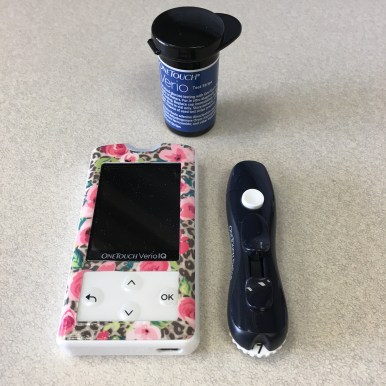
The ziiiiiiiiiip of opening up the meter case. The soft pop from flipping the cap off a vial of test strips. The pulling back of the lancing device to get it ready – click – and choosing a finger to draw blood from before pressing the button to prick it, a sound that’s a bit like a pow that ends in a dull thud.

301B8560-5345-4434-97C7-F0E99374A78B
These three things make very distinct sounds.

I’ve been in rooms filled with other T1Ds checking blood sugars all at the same time. It’s a chorus of the aforementioned sounds that are so recognizable to anyone with diabetes that they can’t be mistaken.

Sounds that punctuate our lives multiple times each day.

Sounds that help us make so many decisions – from mealtime boluses to deciding whether to have a snack before a workout or not.

Sounds that are a constant reminder of diabetes and its perpetual presence.

Sounds that will be there, always…until there’s a cure.

Memory Monday: 1st Generation Dexcom CGMs

One Monday per month, I’ll take a trip down memory lane and reflect on how much diabetes technology, education, and stigma has changed over the years. Remember when…

…Dexcom CGMs made their debut?

It was just over ten years ago that the Dexcom SEVEN CGM System launched. I didn’t actually know more about it, though, until a couple years after the fact. That was when my endocrinologist encouraged me to sign up for a week-long trial run with this new technology to see how I liked it.

023E152D-A6FF-4555-80F0-67764C9523BB
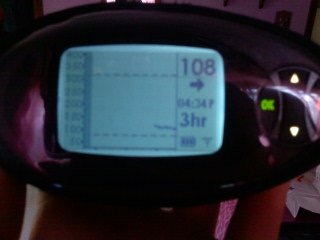
Then: The Dexcom SEVEN CGM System

I didn’t like it, I LOVED it. I quickly became obsessed with the ability to monitor my blood sugar levels at all times. But it’s funny to think back to how bulky and just plain different that first-generation system was compared to today’s sleek and highly functional models.

A few key differences between now and then:

  • Size. The first CGM was large. It was roughly the size of my OmniPod PDM, which might not seem so significant, but it is when measured up against newer CGM models.
  • Display. The screen on my first CGM was very simple. No colors, no frills – just readings of my blood sugar. That was all fine, but I have to say that I’m a fan of color-coordinated blood sugar reports (red for low, yellow for high, gray for in-range numbers). In a weird way, it motivates me to keep my graph as gray as possible.
  • Distance restrictions. I hated that I had to keep my first CGM so close to me at all times, or else run the risk of losing data! It was hyper sensitive and my readings would be lost if I left the same room as the CGM for more than a couple of minutes. My CGM is now able to pick up readings from much farther away – sometimes, even when I’m downstairs and it’s upstairs.
  • Sounds. My memory is a little foggier on how the sounds compare between old and new Dexcom CGM generations, but I do recall the beeps and vibrations being far more aggressive and annoying on older models.
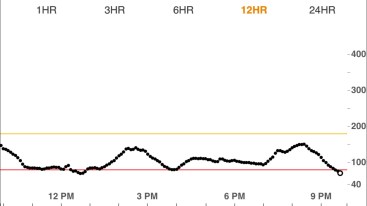
  • Smartphone access. This might be one of the biggest and best changes – the ability to download an app on your smartphone that can replace a Dexcom receiver. How awesome is that? Plus, if you choose to do so, you can invite family and friends to monitor your blood sugar along with you, which can be helpful in certain situations. Cell phones are so ingrained into society, so this move was brilliant on Dexcom’s part.
IMG_4180
Now: Dexcom data, on my iPhone!

All these improvements have made me a member of Team Dexcom for life. It’ll be neat to see what they come up with next to help make the lives of people with diabetes easier and better.