Call me crazy, but sometimes, I find myself staring at my Dexcom app in anticipation of catching the numbers changing.
It might be because I’m hoping for a change (coming down from a high, coming up from a low). Or it could be because I find a strange satisfaction in receiving real-time data of my blood sugar levels. Whatever, so be it: I’m a diabetes nerd!
Watching the 3 point drop…
…brought me a bizarre sense of delight.
I remember this particular example bringing me happiness, because I’d been hovering pretty close to my high limit (170 mg/dL) for a couple hours. So watching that three-point shift happen reassured me that I was going to come down. And sure enough, 15 minutes after capturing these screenshots, I was going down closer to my target of 100.
When it comes to diabetes…it’s the little things, right? Am I the only one who likes monitoring my CGM this closely, every once in a while? Or am I just weird?
Every now and then, I’ll think longingly about the diabetes products that should exist, but either don’t because nobody’s thought of them yet, or because I’m the only one who thinks they might be a good idea. Here’s my running list of diabetes products that I wish existed – what would your list look like?
A snack that keeps your blood sugar totally level while working out. No, not a low carb snack per se, but something that releases a small amount of carbohydrates into the system just as you need them. So it’s kind of a magic snack in that it predicts where your blood glucose is headed? In any case, I wish this was around because going low in the middle of a workout sucks, and I hate having to stop my activity to go drink a juice box or eat glucose tablets.
A portable sanitary station for changing insulin pump sites. This would look either like a small, collapsible table or a tray. But it would be a super clean and secure surface on which insulin pump sites could be changed, because I don’t know about you, but I’d much rather that than a dirty public bathroom sink.
Painless injections/cannulas/sensors. Yeah, I know that these things all need to puncture the surface of my skin in order to get insulin into my system or glucose readings, but I wouldn’t mind them so much if they didn’t sting. Don’t get me wrong, not all shots or needle pricks are painful – I’d estimate they only hurt 10% of the time. But that’s still too much.
A smaller, less invasive pod design. This one’s another practicality issue. I get that pods are kind of bulky because they’re supposed to be able to hold a three-day supply of insulin. And I wouldn’t trade the tubeless system for anything (except a cure, obviously). However, it would be awesome to wear a pump that’s tube-free and doesn’t create awkward bulges underneath my clothing.
A pump that needs to be changed once a month rather than once every three days. Hell, I’d take one that needs to be changed once a week, because rotating sites multiple times throughout the week can be inconvenient and exhausting. Again, there’s some logistical issues with this one – we rotate sites often to prevent scar tissue buildup and there’s a limited amount of insulin that one pump can accommodate. But this is wishful thinking, people! The sky’s the limit. And on that note, the last thing I wish existed?
A damn cure.
Hey, it’s me as a kiddo! It’d be nice if that little girl grew up knowing a cure for diabetes existed.
One Monday per month, I’ll take a trip down memory lane and reflect on how much diabetes technology, education, and stigma has changed over the years. Remember when…
…”It’s Time to Learn About Diabetes” came out on VHS, with a workbook to accompany it?
Oh, the ’90s. What a time to be alive. Nickelodeon was in its prime, boy bands and Britney Spears were all the rage, and VHS tapes preceded DVDs and Blu-Rays as the way to watch movies. In 1995, one particular VHS tape conveniently debuted one year after my diagnosis that quickly became one of my most-watched tapes of that decade:
“It’s Time to Learn About Diabetes” told the tale of two fellow ’90s kids, Cindy and Mike. This 20 minute video walked viewers through diabetes basics and it couldn’t be more supremely cheesy. I’m certain that if I were to unearth the tape today (and a VCR to play it, to boot), I would cringe for the duration of it.
This video definitely shows its age…
…which is approximately 22 years old.
It’s been about 20 years (!!!) since I last watched the tape, but here’s what I remember about it: 1) mentions of NPH and regular; 2) the kids playing on a playground when one of them experiences a low blood sugar; 3) tacky illustrations of beta cells (I think that’s what they were, anyways); 4) 60-second meter countdowns; 5) zero inclusion of insulin pumps or CGMs, because they weren’t invented yet; 6) no explanation of the difference between T1D and T2D (for that matter, I don’t think T2 was mentioned at all); and 7) really bad you’re-about-to-learn-yay-for-education-in-the-’90s introductory music.
I’m really selling this tape here, huh? In all honesty, it wasn’t a bad way for me to really understand my diabetes at a young age. After all, how many other small children do you know that can tell you what the purpose of a pancreas is? It was a different way to present vital information I needed to know and clearly, it stuck with me pretty well.
I guess it just resonates more strongly than ever with me today because it’s a reminder of how much technology and the way information is presented has changed since my diagnosis. The Internet was still pretty new when I was diagnosed, and smartphones didn’t even exist yet. Just as phones and computers were bulky and slow in those days, so was the DTech at my disposal. 20 years later, though, information is readily available at our fingertips. It’s incredibly fast and detailed, and as technology evolves, it continues to become even more streamlined. In this way, I’m glad to have been exposed to the technology, both medical and otherwise, of the ’90s: because it makes me grateful for the incredible improvements we’ve experienced since then.
It all started when I realized my Dexcom CGM wasn’t holding a charge. It went from needing a charge twice a week to practically every day. I knew this wasn’t right, so during the first week of July, I found myself reaching out to Dexcom support to see how I could go about getting it replaced.
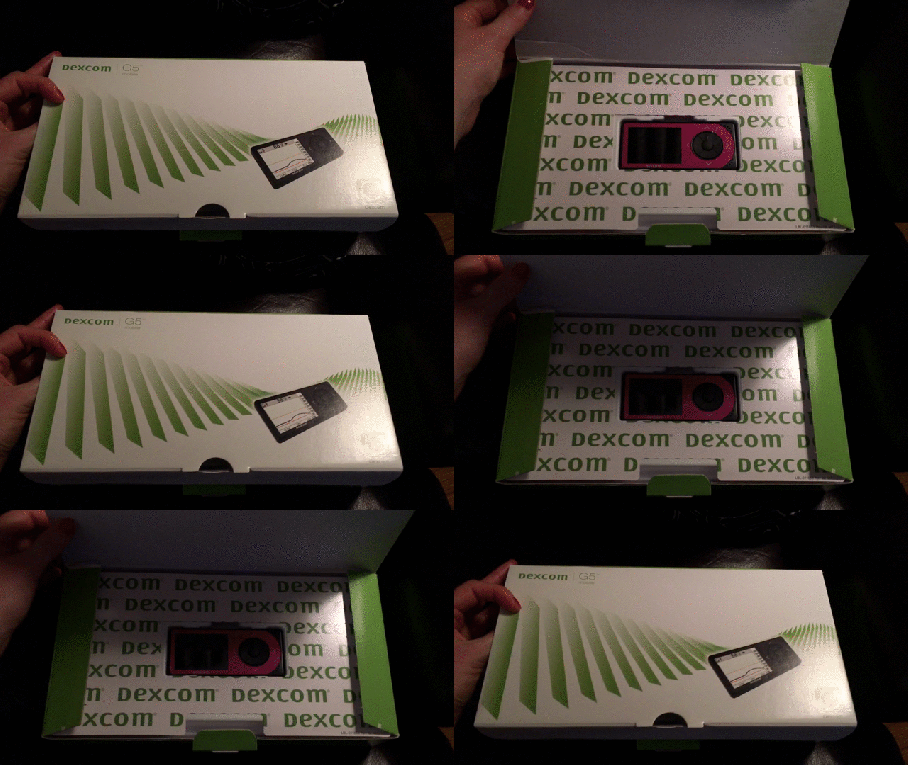
Three months later, I finally have my new Dexcom G5 CGM.
Of course, it shouldn’t have taken most of July, all of August, and part of September for me to get my new CGM. But it did, and resulted in my mother spending hours on the phone with Dexcom and our insurance provider on my behalf as well as countless communications exchanged between me and my endocrinologist’s office.
What was with the holdup? There were a few factors at play here, which is why I thought it was important to share this ordeal with you all. That way, if you or a loved one encounter an issue like this in the future, maybe you can learn from my mistakes and get your CGM sooner rather than later.
At last, my new (pink!) Dexcom has arrived.
Factor #1: The CGM was out of warranty. Normally, I would’ve had it replaced much faster if my Dexcom drama happened within one year of initially receiving the device. But I’d been using the same receiver (the handheld component of the CGM that displays blood sugars in real time) for like…four years. That was issue number one because Dexcom can’t do anything about products that have an expired warranty. Now, I know to get in touch with them every year to get a new receiver and to ensure that I’ll always have one that can be replaced.
Factor #2: My medical supply providers have changed recently. This one’s a bit out of my control, but a couple years ago, Neighborhood Diabetes was divested and sold to Liberty Medical. This meant I wouldn’t receive my sensors or any other CGM supplies from Neighborhood, like I had for a few years. So from then until now, I was getting my sensors from Express Scripts, which also ships my insulin to my home. But for other reasons, my mom and I discovered back in August that we would need to use Better Living Now to supply my Dexcom sensors. Getting confused yet? Yeah, this all went over my head, too. I’m extremely lucky that my mom helped me out and solved this confusing insurance situation.
Factor #3: Communication was poor. And I have to take some blame here, because I should’ve been checking the inbox that my endocrinologist’s office uses to communicate with me. I missed a couple of messages sent by a nurse at the office, and when I did finally see them, I was in a rush to reply and didn’t read his messages as thoroughly as I should have. This resulted in, I’m sure, frustration on both ends as we tried to explain what was going on to one another. There’s a reason why people say that communication is key, and I bet we would’ve had answers a little sooner if we had been on top of things.
That’s the story, in a nutshell and without getting too much into the insurance side of things. I’m just relieved that I finally have my new CGM, and it works great. It’s pretty cool to see my blood sugars displayed on my iPhone, too, using the Dexcom app. And I’m pretty grateful that I have an awesome mother who really came through for me, as well as an endocrinology team that was willing to bear with me through all this Dexcom drama.






 Hugging the Cactus