Happy Halloween, Boos and Ghouls!

(Yes, the “boos and ghouls” is a cheesy take on “boy and girls”…I have a goofy sense of humor, what can I say?!)

Happy Halloween! Just a friendly post to say: Yes, people with T1D can enjoy Halloween. Whether they choose to eat candies or stay away from them, there’s haunted happenings of all varieties that they can partake in. Here’s a little glimpse at what I did today to celebrate:

IMG_4381

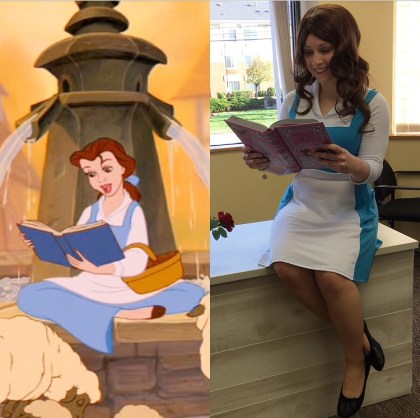
  • I dressed up as Belle from Beauty and the Beast! I love all things related to Disney, so I happily donned this costume to work today.

IMG_4385

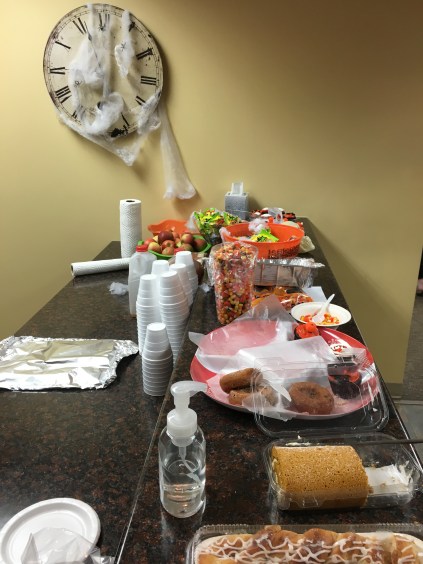
  • Speaking of work, we had a small Halloween celebration in the office! Pictured are several of the sweets we offered throughout the day. We also did a “spooky” scavenger hunt and had a costume parade, both of which were as awesome and fun as they sound!

IMG_4349IMG_4346

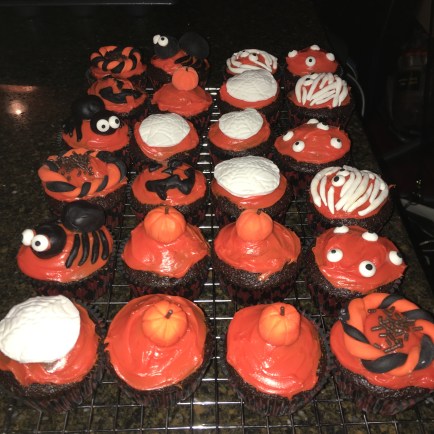
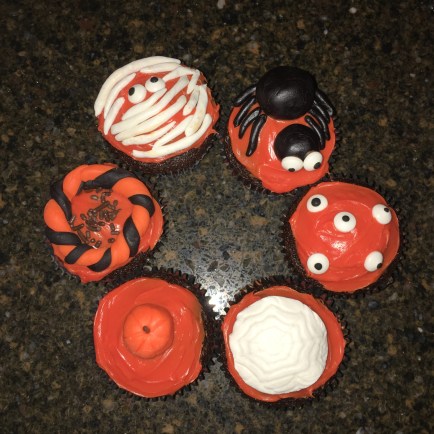
  • I also baked cupcakes for my coworkers! I didn’t eat any (I wanted to save my insulin for a few Reese’s cups, instead – they’re my favorite), but I had a blast baking these and using fondant to create some festive designs.

It doesn’t matter if you’re low-carb, sugar free, T1D, or none of those things – Halloween is for everyone to make whatever they want out of it! With that said…

Have a SPOOKtacular day, readers!!!

French Fries are Evil

Last week, my mom and I both rediscovered the reason why we usually order side salads with burgers or sandwiches served in restaurants: french fries. They’re tasty, carb-y, salt bombs that wreak havoc on our blood sugar. We’re both convinced that our indulgence in fries at dinner was responsible for the dramatic spikes, followed by sharp plummets, that interrupted our sleep overnight and made us understandably grumpy the following morning.

Here’s the timeline of what happened:

6:30 P.M. – Dinnertime. Ordered a chicken pesto sandwich with a side of sweet potato fries. I thought I’d be safe as long as I didn’t eat all of my fries, and if I left behind half of the bun. This certainly helped, but my carb counting was either severely off or the high amount of fat that I consumed threw my blood sugar for a loop.

7:30 P.M. – Blood sugar holding fairly steady around 160 mg/dL. Maybe restraining my carb consumption worked, after all!

9:00 P.M. – Eh, not so much. I’m seeing a diagonal arrow pointing up, indicating that I’m slowly creeping into the 200s. I’m not pleased.

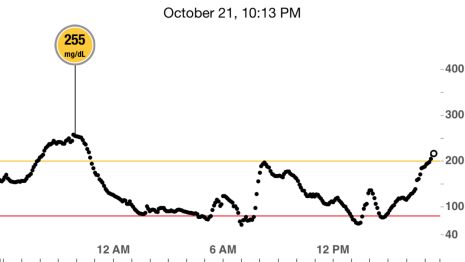
10:13 P.M. – Yep, topping out at about 255 mg/dL. Gross! I take some insulin and wait for it to kick in.

IMG_4313
This is as high as my blood sugar got after eating the evil french fries…

11:30 P.M. – I feel relieved, I’ve come down to below 180 mg/dL and I can now go to sleep. I’m not dropping fast and I suspect that, due to the insulin I have left on board, I’ll level out around 130 mg/dL overnight.

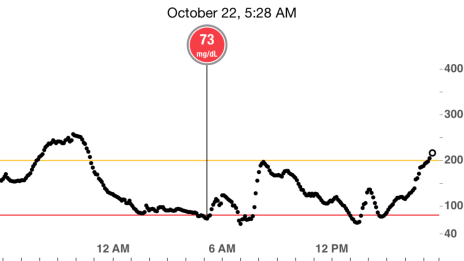
5:28 A.M. – Ah, a blissful five and a half hours of sleep before my diabetes said “LOL nope” and woke me up. I’m feeling shaky, so I roll over to check my CGM. Sure enough, I’m below my low limit (which is set at 80). My symptoms match my Dexcom graph, so I pop three glucose tablets into my mouth and plop my head back down on my pillow. I should be okay until I get up in a few hours.

IMG_4314
…and this is one of the multiple low points I hit in the wee hours of the morning.

7:00 A.M. – Except nope! My CGM’s alarms and my low symptoms wake me up again. I’m frustrated, because it’s beyond annoying to wake up at the same time I normally do for work on a Sunday morning, and especially since it’s because of my diabetes. I reach for a granola bar that contained 22 grams of carbs (way more than I needed for my correction) and wolf it down. I toss and turn for the next hour. I can’t fall back asleep because it feels like my CGM won’t stop alerting me to what my blood sugar’s doing. It’s almost 8:00 A.M. when I decide to take a small bolus, because I definitely over-corrected for the last low.

9:30 A.M. – I get up for real and start my day. Miraculously, I test my blood sugar and it’s 148 mg/dL. I thought it would be worse but I guess the single unit of insulin I took did its job.

This is a night in the life of a PWD. This is what it’s like to have a chronic illness that doesn’t sleep. This is what it’s like to feel out of control of your own body.

And this is why I think french fries are evil – because they’re fatty, slow-releasing but high carb little jerks.

Why it’s Worth it to Work Out Your Ratios

It’s not easy to figure out the insulin-to-carb ratio and basal rates that work best for you. In fact, it involves commitment, communication with your diabetes care team, and solid carb counting skills. But the work is so, totally worth it, because your blood sugar readings can look like this:

These 12- and 24-hour graphs were the result of me kicking it into high gear with my diabetes management in recent days. I can’t explain how awesome it felt to achieve graphs like this. Yes, I dipped a little lower than I would have preferred a few times, but the main accomplishment here is that I avoided the sticky highs that were frustrating me in the afternoons and in the middle of the night. Just looking at those smooth, nearly straight lines overnight brings a smile to my face.

I’d like to note that I did this WITHOUT making any special changes to my diet. In a single day, I ate fairly high carb for a PWD: around 30 grams of carbs at breakfast, another 30 at lunch, and between 40 and 50 at dinner. And depending on what my blood sugar is before bed, I’ll have another small snack, between 10 and 15 grams of carbs. So I think the main factors at play that lead to these beautiful graphs are 1) I bolused for my meals 10-20 minutes before eating them, 2) I ate the right balance (for me) of carbs, fats, and proteins, and 3) My insulin-to-carb ratios are spot-on at this time.

As long as I continue to put forth the right amount of effort, I think I’ll continue to have graphs like this. Of course, I know I’m going to slip up from time to time – occasions during which meals are a little more difficult to predict, or periods in which I experience higher stress levels – but this is okay. I constantly remind myself that diabetes is not something that can be completely tamed, no matter how hard I try. I accept that mistakes will happen along the way, and the best thing I can do is to learn from them to avoid making the same ones in the future. This acceptance, combined with perseverance and a willingness to always learn more about how my body reacts to certain foods and events, will help me meet my blood sugar goals on a more regular basis, which makes it an incredibly worthwhile pursuit.

Diabetes Products That Should Exist

Every now and then, I’ll think longingly about the diabetes products that should exist, but either don’t because nobody’s thought of them yet, or because I’m the only one who thinks they might be a good idea. Here’s my running list of diabetes products that I wish existed – what would your list look like?

  • A snack that keeps your blood sugar totally level while working out. No, not a low carb snack per se, but something that releases a small amount of carbohydrates into the system just as you need them. So it’s kind of a magic snack in that it predicts where your blood glucose is headed? In any case, I wish this was around because going low in the middle of a workout sucks, and I hate having to stop my activity to go drink a juice box or eat glucose tablets.
  • A portable sanitary station for changing insulin pump sites. This would look either like a small, collapsible table or a tray. But it would be a super clean and secure surface on which insulin pump sites could be changed, because I don’t know about you, but I’d much rather that than a dirty public bathroom sink.
  • Painless injections/cannulas/sensors. Yeah, I know that these things all need to puncture the surface of my skin in order to get insulin into my system or glucose readings, but I wouldn’t mind them so much if they didn’t sting. Don’t get me wrong, not all shots or needle pricks are painful – I’d estimate they only hurt 10% of the time. But that’s still too much.
  • A smaller, less invasive pod design. This one’s another practicality issue. I get that pods are kind of bulky because they’re supposed to be able to hold a three-day supply of insulin. And I wouldn’t trade the tubeless system for anything (except a cure, obviously). However, it would be awesome to wear a pump that’s tube-free and doesn’t create awkward bulges underneath my clothing.
  • A pump that needs to be changed once a month rather than once every three days. Hell, I’d take one that needs to be changed once a week, because rotating sites multiple times throughout the week can be inconvenient and exhausting. Again, there’s some logistical issues with this one – we rotate sites often to prevent scar tissue buildup and there’s a limited amount of insulin that one pump can accommodate. But this is wishful thinking, people! The sky’s the limit. And on that note, the last thing I wish existed?

A damn cure.

IMG_3097
Hey, it’s me as a kiddo! It’d be nice if that little girl grew up knowing a cure for diabetes existed.

My Experience Attending the 2017 Weekend for Women DiabetesSisters Conference

It’s always amazing to me how powerful it is to be in a room filled with people with diabetes.

I was lucky enough to experience that wonderful sensation this past weekend as I attended the 2017 Weekend for Women Conference held in Alexandria, Virginia. This conference brought together all sorts of individuals: people with type 1 diabetes (and people with T2D), people who love or care for someone with diabetes, diabetes educators, registered dietitians, certified personal trainers, gifted public speakers, and individuals who came to the conference willing to share with and learn from others. It was also a bit different from standard conferences because it was coordinated by two groups – DiabetesSisters and Diabetes Collective, Inc. (which created the Diabetes UnConference).

The 48 hours that I spent at the conference were an absolute whirlwind, but I’ll do my best to recap it for you here.

Let’s start with Friday evening. Almost immediately after arriving at the Embassy Suites hotel in Alexandria, Virginia, I sat down for my first session of the weekend: The Diabetes Policy Advocacy Coalition (DPAC) boot camp. I learned what exactly diabetes advocacy policy is and how easy it is for me to get involved with it. Now more than ever, it’s extremely important for PWD and those who care for them to push our policymakers into supporting public policy initiatives that improve the health of those with diabetes.

After this energizing session, it was time to mingle with all the other conference attendees. It was really neat to meet people who I previously “knew” from interacting with them online and make that face-to-face connection. I also enjoyed meeting new people and expanding my own personal diabetes network. We rounded off the evening by attending a hilarious forum called Sex, Pods, and Rock n Roll, where a panel of diabetes all-stars answered questions from the audience about the more “taboo” diabetes topics. All you need to know is that this session resulted in a room full of PWD brainstorming a new product idea: edible underwear. It’d be perfect for low blood sugars when you’re in…the heat of the moment, no?

Fast-forward to Saturday, a day with an extremely full agenda. It was hard to choose which workshops to attend, but I wound up going to sessions about mindful eating, the physiology of diabetes and exercise, balancing an active life and diabetes, and making use of the glycemic index. I found myself learning something new in each session, which is really cool. After all, I’ve had diabetes for almost 20 years, but it goes to show that you can always learn something new and useful about your chronic condition by listening to others.

This slideshow requires JavaScript.

In between the sessions, we enjoyed an extended lunch break in which I got to meet even more new people. I was particularly excited to meet and interview with Stacey Simms, who hosts the podcast called Diabetes Connections. That means there’s a chance you’ll hear my voice in one of her upcoming podcasts!

The evening ended with a reception hosted by Dexcom, similar to the one the night before. I didn’t stay for the whole thing, but I loved every second of it because I became immersed in a thoughtful conversation with other women with T1D. We talked about healthcare, politics, and what it’s like to be a woman with T1D in this day and age. It was a pleasure listening to what each lady had to say and again, really great to be talking to a like-minded group.

And just like that, it was Sunday morning – the final day of the conference. We only had a half day together, but it was just as awesome as the previous days. One session I went to was about diabetes and pregnancy, and the other was about being the CEO of your own healthcare. Just like the previous days, the speakers presented fantastic information and I found myself feeling sad that it was my last day with this group of people.

I had to duck out of the last group-wide activity a bit early, but I got the gist of the message it was meant to convey: Invest in you. Take time to look at the areas in your life that need attention, and come up with a plan to improve them. Put in the hard work to make your life what you want it to be and you’ll reap the rewards. I thought this was an especially good way to end the conference because it wasn’t necessarily related to our diabetes. It was a reminder that we are MORE than our diabetes and that we, ultimately, have control on how to live our lives happily and fully.

This was the conference, from my perspective, in a nutshell.

A special thank you to Anna Norton from DiabetesSisters and Christel Marchand Aprigliano from DPAC/the Diabetes Collective for their efforts to make this weekend a success. Thank you to each of the speakers for being engaging and putting together magnificent presentations. I wish I could personally thank each and every single attendee for being an active participant and making this conference worthwhile. I’m extra grateful to the people who I got to make more personal connections with, and I’m looking forward to keeping in touch with them. Thanks to YOU, if you were at the conference, and are now reading this recap! I’d love to hear from you what your favorite parts were – please feel free to leave a comment about your experience. Here’s to connecting with more members of the incredible diabetes community.