Mom Appreciation Post

I know Mother’s Day was yesterday, but mothers deserve more than a Hallmark-card holiday in order to be adequately recognized. (They also deserve more than just this blog post; however, I can only express my admiration for moms using my words.) Let me explain my appreciation for moms.

All of the mothers I know, especially my own mom, work tirelessly to support their families in multiple ways. This is especially true of mothers of children with diabetes. They spend so much time counting carbs, losing hours of sleep, injecting insulin, attending doctors’ appointments, and dealing with difficult diabetes emotions all on top of normal mom duties. And many of the diabetes moms I know work(ed) full-time jobs, to boot!

IMG_4673
My mom is so wonderful that Chewbacca (yes, the famous Wookiee) embraced her admiringly within the first few seconds of being in her presence.

I think my mom is particularly amazing because she did all of the above, all while managing her own diabetes, too. Now that I’m an adult, I can’t help but marvel over how she did it all with such capability, humor, and unconditional love. I’m blessed to have an incredible mom who taught me what it means to be a dia-badass.

I love you, Mom!!!


The CGM Experiment: Comparing the Dexcom G5 to the G6

I have the extremely good fortune of being one of the first people in the world to receive the Dexcom G6, the latest in continuous glucose monitoring (CGM) technology. After spending almost two years eagerly anticipating its FDA approval, I could scarcely believe that I finally had it in my hands when it first arrived a few weeks ago.

I am partway through my second-ever G6 sensor, so I’ve had enough time to come up with some initial opinions on the system as a whole compared to the G5.

Let’s start with what I knew going into the first insertion of the G6. I knew that the transmitter would have a sleeker profile than the G5. I also was aware that the insertion process would be much more streamlined – all I would need to do is push a button and it would be on my body.  Plus, the G6 required 0 finger sticks or calibrations, could be worn for 10 consecutive days, and would no longer block acetaminophen (Tylenol) like its predecessors did. So far, me and the G6 were off to a solid start.

Then, it came time for me to actually put it on. Rather then end my current session with my G5, I decided to leave it on so I could see how accurate it was compared to the G6.
5af0f7d2789dd724634597

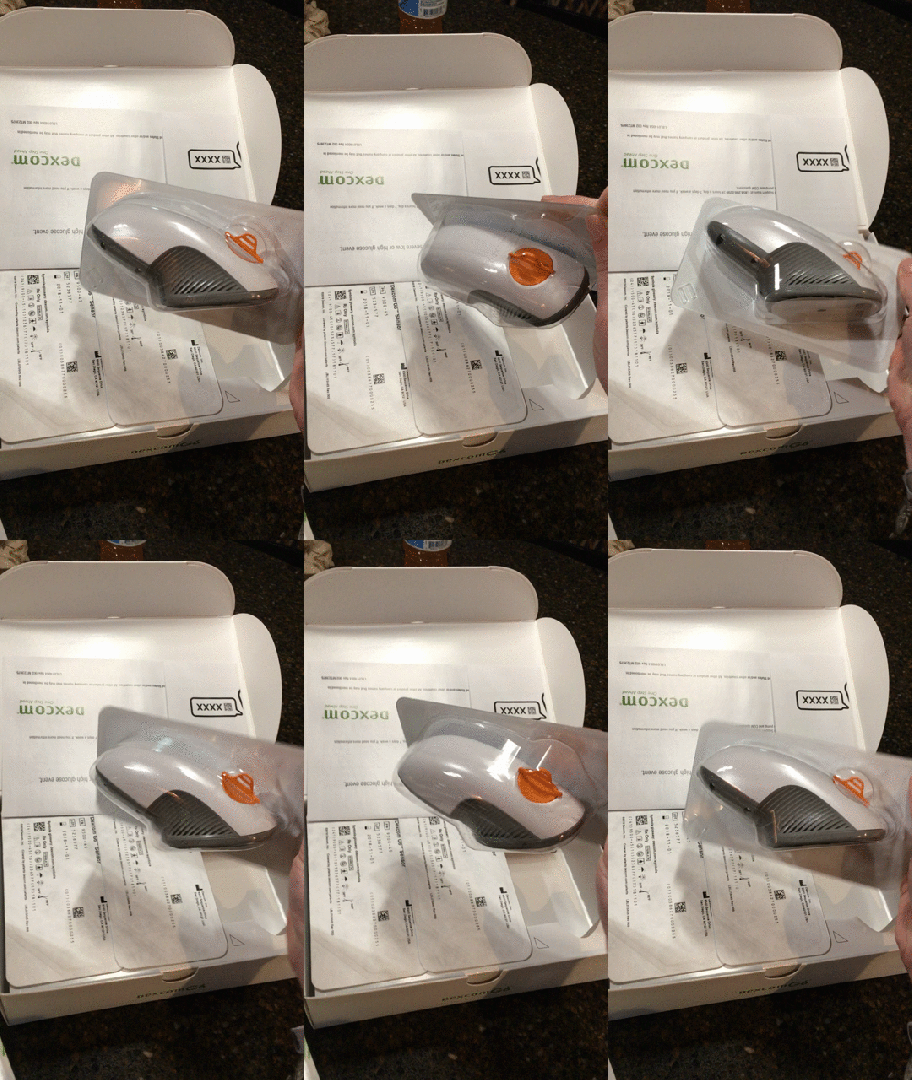
I was amazed by how easy it was to insert the G6. All I had to do was input a 4-digit code located on the sensor into my receiver. Once the code was accepted, I peeled the adhesive off the sensor, placed the system on my abdomen, folded the orange safety clip until it snapped off, and pushed the big orange button. I cringed when I did it for the first time; truthfully, I was prepared for it to hurt. It made a ka-shunk sound as the sensor inserted itself into my skin, and I…didn’t feel a thing. I marveled at how ridiculously comfortable it felt as I snapped the sleeker transmitter into place. I pressed one more button on my receiver to get the sensor warmed up, and that was it. Once two hours elapsed, my G6 system would be fully operational and could determine my blood sugar without requiring manual calibrations.
IMG_6655

While it felt great to know that I didn’t need to worry about calibrating my new device, I was more interested in seeing how well it matched up with my G5.

And I was a little let down…at least, I was in the beginning.

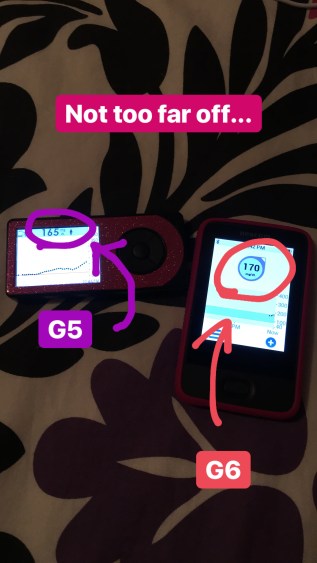
Initially, I was not impressed at all by the G6’s reports. They matched pretty damn closely with my G5. I was beginning to wonder whether the technology really was that excellent, and then my G6 proved to me that it was, indeed, kind of a big deal.

That moment came when it caught a low blood sugar sooner than my G5. I was feeling the early signs of a low, so it wasn’t much of a surprise when it alarmed. But what was particularly neat to me was that it was able to tell me that a serious low blood sugar (below 55 mg/dL) was oncoming in the next 20 minuets or less. In other words, it knew that I needed to treat my blood sugar right away to prevent a more urgent hypoglycemic event. That predictive feature was definitely a pleasant surprise.

As I wore my first G6 sensor for a few more days, it seemed to adjust better and better to my body. As evidenced in the above picture, it proved to be spot on when I compared it to the blood sugar readings I got from my meter. There’s absolutely still a bit of the classic CGM lag, as it takes about 15 minutes or so to catch up to what’s actually going on in the body, but that was to be expected.

I’m already on second sensor and I think it’s safe to say that I’m sold on the G6. But I don’t think that any product comparison/review is complete without a list of pros and cons, so here’s what I’ve come up with:

Pros of the G6 (compared to the G5)

  • Slimmer transmitter profile
  • 0 fingerstick calibrations (which I really loved when I didn’t have to wake up in the middle of the night to calibrate a sensor I inserted before bed)
  • Predictive low feature
  • Modern touchscreen receiver
  • Absolutely painless and foolproof application – honestly, it was THAT good that it might win me over from the G5 if that was the sole difference between the two

Cons of the G6 (compared to the G5)

  • Clunky applicator – as many other members of the DOC have noted, the system is comprised of a lot of plastic. Probably not very environmentally friendly. I wish it was possible to recycle it somehow
  • Automatic expiration after 10 days – with the G5, you could restart a sensor after a week had elapsed, and in theoryyou could use the same single sensor more than once for a few weeks in a row. The G6 automatically shuts down after 10 days, so you’re forced to put on a new sensor. This medical device is already pretty expensive, and you could at least get your money’s worth with the G5
  • No super noticeable improvement in blood sugar reporting capabilities

The bottom line is that the G6 is unquestionably an upgrade in diabetes technology. It requires fewer blood sugar checks and allows for greater discretion with its smaller size. The G6 is far from perfect, but it’s still a valued component of my diabetes toolkit. I’m excited to continue on this journey with it and discover just how much it helps me take the best possible care of myself.


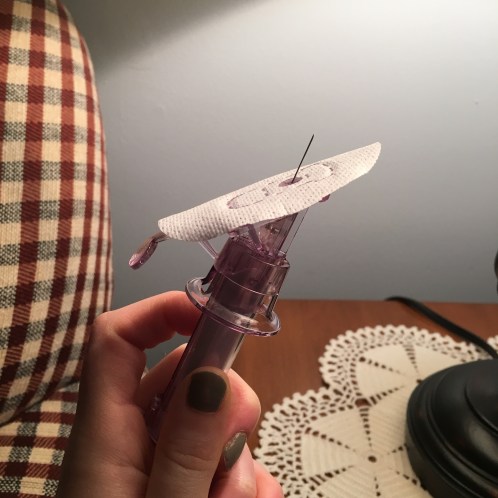
So THAT’S How Long and Sharp the Dexcom G5 Insertion Needle is…

IMG_6621

Oh, I cringe just looking at that.

This is a rare photo of the Dexcom G5 insertion needle. Yikes! I only captured it because somehow, my last sensor change with the G5 went awry and I wound up being unable to use this particular sensor. Before I threw it away, though, I played with it a bit to see if I could get a closer look at the needle that helps secure the sensor to my skin.

Obviously, the mission was accomplished. Even though I was slightly horrified by the needle’s pointy length, I was also relieved to know that it would be the last time it would puncture my skin. That’s because I knew my G6 was on its way and that one of the major improvements to it was making the whole process painless. Little did I know how true that would be until I put my first G6 sensor on…

In a couple days, I’ll *finally* publish a post that reveals my initial thoughts on my brand-new Dexcom G6. I’ll compare it to my experience with the G5 and share whether I think the G6 is worthy of all the hype it’s received.


What It’s Like to Wear a Medical Device 24/7

A question I’m often asked is: “Can you feel your CGM or insulin pump on your body?”

The simple answer to that is: usually, no. It’s something that you just get used to. You grow accustomed to seeing a lump underneath your clothing. You adjust to putting clothes on (and taking them off) carefully to avoid accidentally ripping a site out. You acclimate to showering without being completely naked.

And, of course, you get used to the questions from strangers asking about that device stuck to you.

But the more honest answer to that question would be that there are times that I feel it more than others. For example, sometimes I forget where I’m wearing my pump until I hit it against something (I’m a major klutz who constantly runs into doorways and trip over things, almost always managing to catch my pod on whatever it is), resulting in pain at the site and a curse word or two to fly out of my mouth.

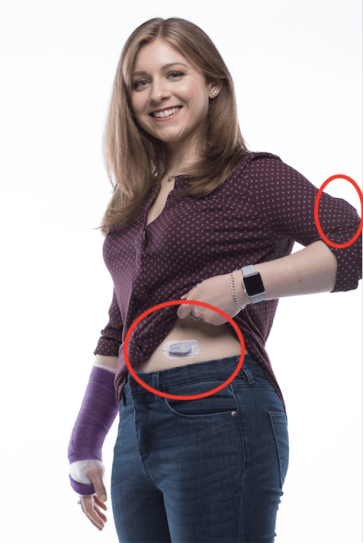
Circled Devices
My OmniPod (on my arm) and my Dexcom (on my stomach) are stuck on me 24/7.

I feel it the most, though, when people stare. Whether unconsciously or purposely, people do ogle at it in very not subtle manners. Which makes me feel extremely uncomfortable. It’s worse when they don’t even ask me what it is – I’d rather have a chance to use it as a teaching moment than to have someone walk away not knowing what the device does. This tends to make swimsuit season a little less welcome for me. Nothing will stop me from donning a bathing suit at the beach or by the pool, and I do so as much as possible in the summertime. But it’s just not as fun when I’ve got to cope with lingering looks, especially when I’m an admittedly insecure person in the first place.

So it’s a more complex question to answer than you might realize. Wearing a medical device 24/7 is humbling. It keeps me alive. I’m privileged to have access to it. I’m grateful for the ways it’s improved my life. I’m always wearing it, but it’s not at the forefront of my mind – unless it chooses to make its presence known by alarming, or I’ve got people blatantly checking it out. It’s kind of like diabetes itself. It can make you feel a gamut of emotions, but no matter what, it’s always there. It’s just a part of me, and I can deal with that.

A Good Diabetes Day

I’ve blogged plenty of times about my “bad” diabetes days – you know, those posts that I talk about stubborn blood sugar that won’t come down/up, or how technology refuses to cooperate, or how I’m feeling intense diabetes burnout.

This made me wonder about the “good” days. Besides my blood sugars looking so perfect that I question whether my pancreas has magically started to produce insulin again, what sets those days apart from the “bad” (and plain, old, ordinary days)?


The answer likely varies among people with diabetes, but let me describe my version of a darn good diabetes day:

  • Going to an endocrinologist appointment first thing in the morning and discovering that your A1c has dropped nearly half a point, down to 6.7. YAAAAAAS!
  • Being told by said endocrinologist that you’re doing an amazing job, and passed all other blood work tests with flying colors – I was most thrilled with my HDL cholesterol (the good kind) levels, which have gone up due to my current exercise regimen. And she said I lost a couple pounds, to boot!
  • Coming home from work to a package from Dexcom containing the brand new G6 receiver, transmitter, and sensors. I can’t remember the last time I was so excited about a delivery!
  • Topping it all off, my blood sugars throughout the day weren’t too shabby.
ezgif.com-video-to-gif.gif
Dancing excitedly with my new Dexcom G6! My puppy couldn’t understand what the hullabaloo was all about.

It’s days like that that make me feel validated – like all my hard work is worth it. It isn’t easy to manage diabetes every moment of every day, so when the diabetes stars align like this, it feels…wonderful.

Banana, No Bolus

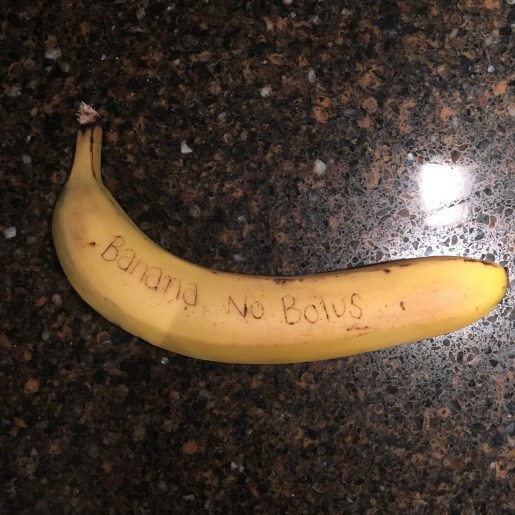
I ate a banana the other day without needing to correct for it. My blood sugar prior to eating it was 96 mg/dL. I sensed and oncoming low, and trusting this instinct, I decided to skip bolusing (taking insulin) for it. Two hours later, I was 108 mg/dL.

How did I do it?

Did my pancreas suddenly start working again?

Was it a low-carb banana?

Was sorcery involved?

I’ll explain how it happened; no, my pancreas didn’t suddenly decide to start secreting insulin; no, because low-carb bananas aren’t even a thing; and sadly, no, though I do wish I was well-versed in real-life wizardry and/or witchcraft.

IMG_6602

It happened because I was running around like a maniac that entire morning. High activity levels can do a number – that is, lower the numbers – on a diabetic’s blood sugar. Between walking my dog, playing with him some more outside, and running errands, I scarcely had a chance to catch my breath from the time I woke up until noon. It was still mildly surprising, though, since bananas are a notoriously high-carb and fast-acting food. I’d expected to be at least 50 points higher from the initial blood sugar.

I was pleased with this outcome, but I still think that the voodoo magic – ahem, science – behind diabetes is just plain weird sometimes.


Money Talks, Low Blood Sugar Slurs

Somewhere between Class A, B, and C share mutual funds, I got lost. That familiar fog clouded my brain and I had trouble focusing my gaze on anything, let alone absorbing any of the information being shared with me. I felt like I must’ve nodded my head so many times over the course of the conversations that I probably resembled a bobble-head. Words tumbled slowly, awkwardly, out of my mouth: I babbled “yup” and “right” over and over again to show that I was still engaged, even though I absolutely wasn’t.

What was wrong with me? I was having a low blood sugar in the middle of my (first-ever) meeting with a financial advisor. Stellar!!!

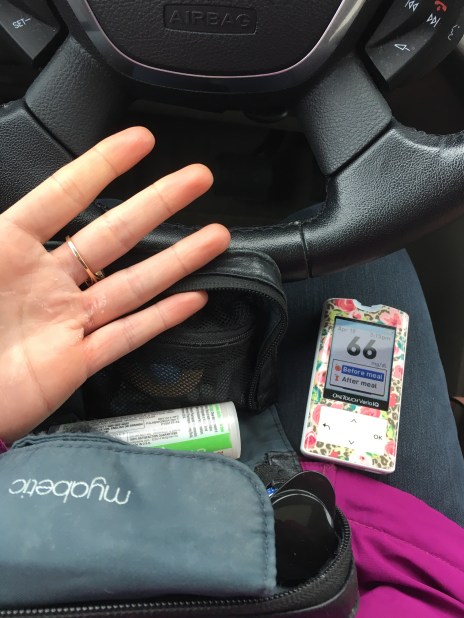
Obviously, I made it through the meeting fine. I got back to my car, tested my blood sugar, discovered that I was 66, and corrected it with three glucose tablets. I wiped my hands together, watching glucose dust puff up into the air like a cloud, and chided myself for not taking action sooner than that moment. I suppose I didn’t want to alarm the advisor by sticking a needle into my finger in the the middle of our meeting, but that hasn’t stopped me from doing what I must do, medically speaking, in other situations. Ordinarily, I would have calmly explained, “I have type one diabetes. I think I’m experiencing a low blood sugar right now. Do you mind if I check my blood sugar here, or could you please direct me to a place where I can do that?” I would also let the person know that I’d be fine either way, I just wanted to be sure so I could focus my energy back onto them and not my diabetes.
IMG_6428

I’m not really sure what was different about this particular low blood sugar event, but I didn’t do the “right” thing because I didn’t want to be rude and interrupt the advisor’s train of thought. But waiting nearly thirty minutes into experiencing these symptoms could have caused things to turn out much differently. My blood sugar could have gone even lower, and it could have become an embarrassing or scary situation for both of us.

I guess this’ll serve as a reminder to myself to speak up. It’s okay to interrupt, because my health and safety (and potentially the health and safety of another person) is at risk. It’s not rude, it’s good common sense.

Peanut Butter Paradise

Family members, friends, coworkers, and really any one person who is the least bit acquainted with me all know one thing: that I, Molly Johannes, have an addiction to peanut butter.

Creamy, chunky, even the powdered stuff that you mix with water – it’s all positively delicious to me. I’d like to blame it on the fact that peanut butter is a lower-carb food item; when I was little, it was the first thing I’d reach for when simultaneously experiencing high blood sugar and hunger. Okay, okay, it still is my go-to snack even now.

Capture
Living my best life in peanut butter paradise.

What’s not to love about peanut butter? It’s rich and thick, somehow sweet and savory at the same time. It pairs excellently with a number of foods, from apples and bananas to toast and crackers. It also comes in a wide array of flavors; beyond traditional, I’ve seen peanut butter fusions containing white chocolate, dark chocolate, honey, strawberry, and pumpkin. I can honestly say I’ve yet to come across peanut butter in any iteration that I truly disliked.

It’s a problem. A peanut butter problem. But an oh-so-tasty (if highly caloric) one to have, and one I’m happy to live with because it coexists so blissfully with my diabetes.

My Involuntary Hiatus from the CGM

Currently, I’m on a break from my CGM for an unknown length of time.

This temporary split wasn’t mutual; rather, it was due to a series of coincidences that occurred much to my chagrin. The short version of the story is that my CGM transmitter died a week earlier than I had anticipated. I thought it would be pointless to order a replacement since I was expecting the new Dexcom G6 to arrive at my house before the transmitter expired. When I learned there was a delay that would cause me to wait a little while longer, I realized I didn’t have much of a choice to go ahead and order a replacement G5 transmitter. After all, it was fly blind without my CGM for just a few days versus the possibility of missing out on that data for weeks.

fullsizeoutput_75dThe choice was obvious, and as I write this, my G5 replacement transmitter is on its way to me.

Though there’s comfort in that fact, I feel weird not having my CGM data available to me. It’s kind of nice to be wearing one less medical device on my body, but that’s really the only benefit of being without my CGM. The information it provides to me is invaluable, and an involuntary break from it makes me feel uneasy. I’m constantly reminding myself that I managed diabetes just fine for the first 15 years I had it without a CGM’s aid, which does offer a small amount of comfort. But it also reminds me how important the CGM has become in my daily care choices. Twenty-four hour, real-time updates of my blood sugar help me live a life less interrupted by my diabetes, something that’s extremely difficult to give up after 20 relentless years of dealing with it.

You really don’t know what you’ve got until it’s gone – even if it is only for a short period of time.

I’ll make the most of this situation. It will at least help me get in tune with my body’s signals when my blood sugar is high or low, which is definitely not a bad thing. And it makes me appreciate something that not every person with diabetes is lucky enough to have access to: serving as a humbling reminder of my fortunate circumstances.

How Raising a Puppy is Like Dealing with Diabetes

“Aw, she’s so cute! What’s her name? What kind of dog is she?” The woman stooped down to the ground to take a closer look at Clarence, my 12-week old Shetland Sheepdog – who is a boy.

I patiently answered her questions, knowing she wasn’t really paying attention. After all, she was totally distracted by my adorable little pup.

The man who accompanied her – undoubtedly her partner – was chattier. He looked at me, almost condescendingly, and said something about how this must be my first dog.

Nonplussed, I said, “Actually, this is my family’s third Sheltie. The last time we had a puppy like Clarence here, I was practically a baby myself.”

“Well, you know, I noticed that you’re buying puppy pads. You really shouldn’t do that if you want to get your dog housebroken, it’ll only encourage it to go indoors.” If I thought he was bordering on condescending before, he was definitely laying it on thick now.

IMG_6382

I hastily responded by telling him how the puppy chow that Clarence is eating is salty, and the high salt intake results in frequent puppy puddles in the kitchen. It’s virtually impossible to ensure that Clarence is outside every single time that he has to pee, so the puppy pads have been a huge help. I trailed off, wondering why I had felt the need to provide this stranger with an explanation that wouldn’t matter to him.

The man shrugged, clearly unimpressed by this answer, and walked away.

Upon reflection, this mildly irritating encounter turned into a bit of a metaphor for what life with diabetes is like. People you don’t know bombard you with questions about it. You answer as best as you can, hoping that your replies help these inquisitive folks understand diabetes better than they did before. But this ray of hope is quickly dimmed when the questioners run out of things to ask and begin to tell you how you should manage your diabetes. It’s baffling when it happens because you didn’t ask for advice, but you somehow get an earful of it every damn time.

So I guess in this way, diabetes is a little like raising a puppy. There will be highs and lows, good days and bad days. And unsolicited advice will be dished to you by strangers, even though nobody knows your diabetes – or your dog – the way that you do.