Molly, Meet Metformin

You may have read the title to this post and said to yourself, “Met-WHAT?”

Metformin is the new medication I’ve started taking (along with my typical insulin) to help regulate my blood sugars.

Maybe you didn’t make it all the way to that second sentence; instead, maybe you just Googled Metformin to learn more about it. And you probably immediately got confused, because the Google search results explained that Metformin is a medication normally prescribed to people with type 2 diabetes. You know that I have type 1, though, so what gives? Why am I taking this new pill?

You see, for about a year or so, my endocrinologist has been gently encouraging me to try Metformin. She expressed concerns over the fact that I’ve had diabetes for more than 20 years, and in that span of time, I’ve had to take a lot of insulin. Like, an incalculable amount. And while that insulin helps to keep me alive, there’s also risks associated with it. Namely, she explained to me that there’s research that indicates that people with type 1 who rely on large amounts of insulin have a higher risk of developing cancer later in life.

ClearanceYard Sale

Whoa. The “c” word. Something I never thought I’d hear during a doctor’s appointment. If you know me personally at all, then I’m sure it’s not hard to imagine that I pretty much shutdown at the mention of “cancer”. Almost immediately, I panicked and asked why she thought this research was worth mentioning. She said that it was part of her reasoning for wanting me to start Metformin. The idea is that it would make my insulin more effective, and ultimately decrease the amount of insulin I need each day. She went into a little more detail, mentioning that the only side effects tend to be nausea/upset stomach – and that’s when I stopped listening. I politely told her that I didn’t think Metformin was a wise option for me at that time, and later that day, when I took to Twitter to ask other T1Ds what they thought, I gained swift validation that I’d made the right decision: Other T1Ds with Metformin experience told me that the stomach issues they had when taking it were miserable and that they wouldn’t recommend giving it a try. Plus, I consulted with my T1D pharmacist aunt, and her opinions matched those of the other T1Ds on Twitter. So that was all I needed to hear to feel at peace with my choice to not take Metformin.

In fact, it was enough for me to turn my endocrinologist’s offer down during our next two or three appointments. I was relieved that she never pushed me to try it, but there was a small part of me that wondered whether I should give it more serious consideration. Maybe I should let her talk me into a little, rather than brushing it away and using fear as my excuse.

So we did talk about, during my most recent visit with her earlier this month. She gave me some more compelling reasons to consider taking it. Not only could I reduce my insulin intake, but it might also help me with some preexisting digestive issues I’ve had since childhood. When I asked her about the negative side effects on the stomach that I’d read about online, she told me that she would only prescribe me the “extended release” version of Metformin, which had a much lower (if any) chance of inducing nausea or any less…desirable gastrointestinal disorders.

This news definitely perked me up. We discussed a plan for introducing Metformin to my body: Start by taking one pill daily after dinner. Increase by one pill each week until I’m at four pills per day, the limit. At any point in time, I could message her with questions if I started to notice low blood sugars in the evening.

I felt reassured by this logical plan, as well as her explanations of the benefits of Metformin. So I bit the bullet and I’m in my first week of incorporating it into my post-dinner routine. I can’t say that I’ve noticed even the slightest difference, which isn’t a bad thing. I imagine that will change as my dosage increases.

I intend to blog about this new journey with Metformin; not just for the sake of keeping track of how it affects me, but to also help inform other T1Ds who may have been or may be in the same situation that I was. We’ll just have to see how it goes, but for now, rest assured that I’ll be honest in my writings about my Metformin experience. At this moment in time, I can’t help but feel hopeful that down the road, I’ll be glad I made this decision when I felt ready for it, as opposed to when I was fearful of it.

A T1Diary of my Recent Endo Appointment

I’m trying something new here today, folks. As you can see, this blog post features not just words, but video, too. How exciting! The aforementioned video shows the before, during, and after of my most recent endocrinologist appointment. I share a touch more than I normally would in this format, and I cover something that’ll be a big subject in one of my upcoming blog posts.

Originally, I shared this video (in short clips) directly to Instagram, where it would live in my stories for 24 hours before going away. But the thought occurred to me to save and splice the video segments together to create a full video, albeit a poorly manufactured one. I’ve decided to call it my first attempt at video blogging, otherwise known as vlogging.

Fear not, my fellow wordsmiths: I still plan on writing actual blog posts. I’m not sure how regularly I’ll be vlogging. But I can promise that if people kinda dig this, then I’ll make a point to vlog semi-regularly. I can also promise that the videos will be a bit shorter and shot in one take, because 1) I don’t think anyone wants to hear/watch me blabber for more than a couple minutes and 2) it’ll help ensure that I don’t jump around from topic to topic. And for the sake of full disclosure, I’m not lovin’ my once-a-month Favorite Things Friday post as much as I used to…so this may eventually replace it. We’ll see.

So, without further ado, enjoy this little video from me…and remember that it was initially created for Instagram, which encourages users to make very short video/photo clips, and helps explain why this whole package is a bit choppy. And please do let me know, in the comments or on various social media channels (accessible in the upper-right hand menu of the Hugging the Cactus homepage), what your thoughts are on vlogging.


The Hellacious, Headstrong High

There’s lots of different “kinds” of high blood sugar. There is the type that is self-inflicted due to inaccurate carb counting or insulin dosing. There’s the sort that can be blamed on technological error – an insulin pump failure or a cannula kink, for instance. And another kind is linked to illness, when a cold or other sickness prevents insulin from working efficiently, thereby stopping blood sugars from coming down to normal levels.

And then there’s the type of high blood sugar that simply can’t be explained. It’s high for seemingly no goddamn reason, and it’s the most frustrating high of them all.

That kind of high is also the kind that takes what feels like forever to come down.

I experienced this after a Saturday of travel earlier this month. I’m fairly accustomed to traveling, especially if it’s a quick trip on a plane or just a few short hours in the car. I say this because I’m almost positive that my hours-long high blood sugar had nothing to do with my travel day…although when it comes to diabetes, nothing can truly be ruled out.

Anyways, I digress. That day involved me heading out of the house at 10 A.M. I drove to the shuttle that would take me to the airport. I got to the airport about an hour before my flight was due to take off. I went through TSA Pre-Check – my first time using the service, which I totally recommend – without any issues. I had enough time to pick up some food for a small lunch, but when I checked my CGM and noticed that my blood sugars were hovering in the 200s, I decided to deliberately pick lower-carb snacks to munch on in lieu of a real lunch. Turkey jerkey and cheddar popcorn weren’t the most filling snacks, but it was something.

I figured that by the time I got on the plane, my blood sugars would be stabilizing. No such luck. I was still in the low 200s. I took one or two more boluses during my quick hour-and-a-half long flight, thinking that I must be heading for a blood sugar crash by the time I deplaned. Nope. I was still running high, even by the time I met my partner by the baggage claim. I raised my temp basal and kept my fingers crossed that by the time we reached the restaurant we were bound for, I’d be coasting down. As we got settled at our table, I checked my blood sugar and felt slightly relieved to see that I was 183. At least I was finally below 200.

Teacher's Month 2020

I pushed blood sugar worries out of my mind for the next hour or so. I just wanted to enjoy my meal and my time with my significant other. But as we finished eating and made our back to the car, I couldn’t help but notice the repeated buzzing coming from my CGM. I was rising gradually, well on my way to 300. I tried to not panic and gave myself more insulin. We arrived home and the vicious cycle truly began. For the next three or four hours, I tested and corrected every hour, on the hour. Midway through that interval of time, I changed my pod – perhaps it stopped working properly – and prayed that the new pod would finally bring me back down.

And, spoiler alert: It eventually did. But in the agonizingly long hours I had to wait before my blood sugar was down…I experienced a bevy of emotions. I was mad. I was upset. At one point, I was very technical and rational, going through my next steps both in my head and out loud to my worried partner. He asked me what we should do in the event that my blood sugar was still elevated after a certain length of time, and that’s when I started crying tears of fear and frustration. It all felt so unfair. I was doing all the right things and it wasn’t make a difference. That was a hard reality to swallow. And I couldn’t help but cry harder when he asked me to show him how to use glucagon again (it’s been at least 3 years since he had formal training with my diabetes educator). Part of me felt better, knowing that he was prepared for adverse affects of taking so much insulin to combat a high, but I think I was more focused on and distraught by the fact that he might need to intervene, which was an especially upsetting scenario because I never want to put that responsibility on anyone.

Once I calmed down, I filled a water glass, sat down on the couch, and texted my mother, who is always my T1D sounding board. She reassured me that I was doing the right things, and that I should continue to wait and see what happened. She also advised me that I should be prepared for a crash, because sometimes, it seems like all the insulin kicks in at once when blood sugar drops too quickly/low from a high.

So I waited. I drank water. I showed my boyfriend the app on my phone that simulates glucagon injections – just in case. I played video games. I tried to keep my cool. Before long, it was nearing midnight, and I desperately wanted to curl up in bed. I went through my pre-bed routine, washing my face and brushing my teeth, knowing I’d check my blood sugar for the umpteenth time that night once I was done.

And…it was 153. Better yet, it didn’t go as low as it could have overnight: I dropped to about 75 by 8:30 A.M. All things considered, it was a decent outcome.

The hellacious, headstrong high had finally subsided. I was so, incredibly relieved. And I’m so, incredibly hopeful that I don’t experience a day like that again any time soon.

Is a Bleeder a Reader? My Take on a Bloody Dexcom G6 Insertion

This blog post probably shouldn’t be read by anyone who gets squeamish when discussing blood or when viewing photos that show any amount of it…my apologies in advance for a bloody gross blog post, but I thought this was a good topic for discussion. 

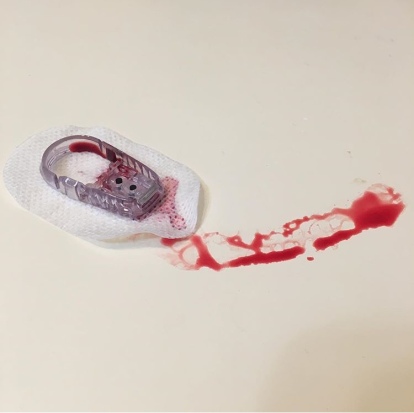
I placed the new Dexcom G6 sensor on my abdomen, hovering my index finger above the large orange insertion button. I pressed it, exhaling as I felt the minute needle pierce my skin’s surface. I looked down, and started to rub the adhesive in circles to make sure it was stuck, when I saw blood. Not just a drop, but a decent-sized pool forming beneath the sensor. Before long, just about the entire surface of the white adhesive was soaked in red.

Yeah, this was going to be a no-go.

It’s pretty rare for me to experience blood at the site of a Dexcom sensor. If I had to put a number on it, I would say less than 10% of my insertions draw blood. An even smaller amount – like, 2% – have caused me to bleed as much I did in the scenario described above. But I know I’m not alone in my bloody sensor experiences – it’s something that many other T1Ds who use a Dexcom have gone through.

There’s a bit of debate, though, that I’ve noticed in the past on Twitter threads and Instagram posts. What to do with a bleeder? Keep it and assume that it’ll read blood sugars normally? Or change it immediately and call Dexcom for a replacement?

Are bleeders readers? Or does it depend?

1B278EF4-8498-4968-81F9-9134870F3C1E
Do you think that bleeders are readers?

I’m going to go with…it depends.

Obviously, in that situation I described in the opening of this post, I decided that it wasn’t a good idea to keep the sensor on my body. There was too much blood and I didn’t trust that it would adhere well to my body. I didn’t know how long it would take for the blood to stop (only a few minutes, but still), and I couldn’t be sure that it wouldn’t mess up my readings. On top of that, I wasn’t trying to stain my clothing, if I could help it.

So in that circumstance, I did change my sensor right away, and was glad that the second try resulted in a much cleaner, blood-free insertion. I called Dexcom, explained what happened to the customer support representative, and got a replacement sensor mailed to me.

However, just about any other time I bleed upon a sensor insertion, it tends to be a minuscule amount of blood. I usually don’t even notice until it’s time to replace the sensor, and there’s a bit of dried blood left on the site. Other times, I’ll see small beads of blood forming underneath the spot where the transmitter snaps in. And there’s been a couple of occasions that I’ve bled a fair amount and been totally unaware of it until I caught my reflection in the mirror and noticed the blood staining the white adhesive. And in all of those cases, I’ve kept the sensor on for the full ten days, without noticing any discrepancies in my readings.

All that considered, in my inexpert opinion, I think that bleeders usually are readers and that they’re safe to continue wearing. Of course, there will be exceptions, like when there’s just too much blood to salvage the sensor. But every time I’ve kept using a bloody sensor, I’ve had the same amount of success with its functionality…so yes, I think that for me, bleeders are indeed readers.


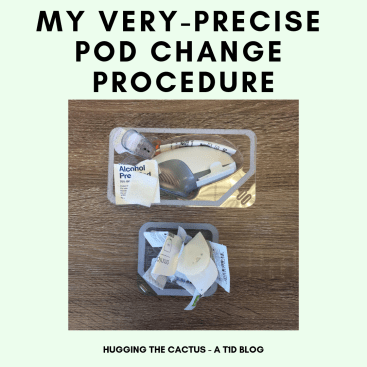
Favorite Things Friday: My Very-Precise Pod Change Procedure

One Friday per month, I’ll write about my favorite things that make life with diabetes a little easier for me.

Not too long ago, it occurred to me that I am very, very, very, very, very strict about following a specific protocol every three days when I change my pod. In fact, it rarely deviates, but when it does (due to circumstances beyond my control), it throws me off track, like, a lot…which is why the way I do it is my favorite way.

my pod change procedure
Detritus from a typical set of site changes.

What’s so precise about my pod change procedure? Let me walk you through it…

Step 1) The numero uno thing I do, a half hour before I start my procedure for real, is remove a vial of insulin from the refrigerator. I’ve always been told that it’s important to let the insulin reach room temperature for at least 30 minutes before I start the pod change process. My mother was the one who told me that this step is crucial, because years ago, she’d heard from a representative at Insulet that room temperature insulin works best with pods for whatever reason.

Step 2) Once my insulin has reached room temperature, I set myself up at the island in the kitchen to go through the rest of the process. I make sure I have a totally clear area and ample lighting before I start on step #2.

Step 3) Next, I take an alcohol swab and wipe the top of the insulin vial that I’m drawing insulin from, and then I wipe my new site.

Step 4) Before even touching my PDM, I grab my syringe, stick it into the vial, and suck up the amount of insulin I’ll need for the next three days. This is usually somewhere between 100 and 150 units.

Step 5) This is where I deactivate my old pod, and jab at the buttons on my PDM to start the new pod activation process. The only reason why I get insulin into the syringe first is to minimize the amount of time I spend without a pod on my body. You might be surprised to learn that a short period of time without insulin can make a difference on blood sugar levels, but that’s just the way it is.

Step 6) I fill the new pod with insulin and hit a button to get it to start priming. During the priming period, I use an adhesive wipe around the new pod’s site to help it stick better to my skin.

Step 7) I finish up the process of removing the pod’s needle cap, then the adhesive stickers. I apply it with care to the new site and put pressure on it as I wait for the cannula to inject itself under my skin’s surface. And then I’m good to go!

Of course, I can’t always follow these steps as I’ve outlined them above. And while it messes me up a bit, and I usually have to take a little longer to change it, I roll with the punches and get it done. For instance, when I last visited Disney World, I had to change my pod in one of the park’s dimly-lit family restrooms with my mom using her outstretched hands as my mini work surface…far from ideal, but it was what it was.

Like all things associated with diabetes, I guess that I take comfort in keeping a routine, even with something as minor as a pod change.

Spare a Rose this Valentine’s Day

So Valentine’s Day is tomorrow. Perhaps you loathe the holiday of love and celebrate it solo, or choose to use the day to express your gratitude for your close friends, in the style of Parks and Recreation’s invented holiday, Galentine’s Day.

If you’re in a relationship, you might have an extravagant, candle-lit, five-course dinner planned with your loved one. Or maybe you’ll keep it a bit more simple and say “I love you” to your sweetheart, with a thoughtful card, box of chocolates, and a dozen roses in hand.

Whether or not your scenario includes a dozen roses, though, consider this:

What if you received 11 roses in your bouquet, instead of 12? What if you knew that a rose was spared because the value of that flower helped support a child living with diabetes in a less-resourced country?

I bet you wouldn’t mind getting one less rose in that case.

SquareTag

This Valentine’s Day, please consider sparing a rose as part of your celebrations. Life for a Child is a nonprofit charity that created the Spare a Rose campaign. They’re able to support nearly 20,000 young people living with diabetes by using donations to buy them insulin, syringes, clinical care, diabetes education, and more. Anyone who’s familiar with diabetes realizes that access to care, education, and resources is critical to living a healthy and normal life. No one would want to deny another, especially a child, from having to forgo these resources because of the financial burden associated with them.

Spare a rose and save child this Valentine’s Day.

A Pod Failure Won’t Foil my Fun

I had just zipped up my coat when I heard a faint, high-pitched beeeeeeeeeeep emerging from somewhere in the vicinity.

My mom and I exchanged looks. “Uh, oh,” we said simultaneously.

“It isn’t me,” Mom said, patting her pod.

“It can’t be me, it sounds too far. Are you sure it’s not the refrigerator door that was left open?” I asked, as I unzipped and peeled off my coat.

She didn’t have to answer the question, though, because as I took my coat off, the beeping sound grew louder. I looked down at my abdomen and cursed. Yup, my pod had just failed.

I wasn’t totally surprised that it happened. The dry winter air was triggering excessive static electricity that weekend, and the sweater I chose to wear that day seemed to be charged with it. I couldn’t move my arms without hearing little sparks going off. If I was smart, I would’ve changed my top to one that was less filled with static. But I had somehow managed to convince myself that there was no way my pod could possibly fail due to my clothing choices.

I know better than that.

The real kicker in this situation is that we were obviously headed out somewhere – we were hoping to go to our favorite bar for a quick drink. But with the pod’s failure occurring at basically the most inopportune time, we were left with a three choices:

  1. Stay home. Take out the insulin, wait a half hour, and resign ourselves to the fact that it just wasn’t a good night to go out.
  2. Go out, but take a syringe and a vial of insulin with us. That way, I could give myself a shot, if need be, while we were at the bar. We could head home after the one drink and I could change the pod once we were back.
  3. Go out and take a total risk by leaving all extra diabetes supplies at home, and just wait until after we had our drink to change the pod.
a63d7919-5495-497c-a8f0-30f16dcf421e
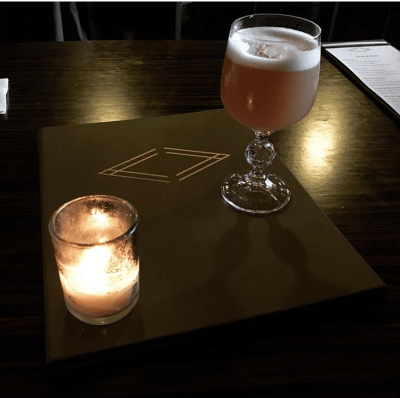
A cocktail by the candlelight.

I like living on the edge sometimes, but option #3 is just way too dangerous. So we went with option #2. If you’re wondering why we didn’t just opt to wait a half hour (insulin needs 30 minutes to come to room temperature before it can be put into a new pod), it’s merely because we didn’t want to stay out late. And yes, a half hour can make that much of a difference to me and my mom!

So we left the house with an emergency insulin vial and syringe in tow. And it’s amazing how much better it made me feel to know that I had both, just in case.

Fortunately, I didn’t need them. I monitored my blood sugar carefully during our hour-long excursion, drank plenty of water, and deliberately chose a lower-carb, whiskey-based cocktail that wouldn’t spike me. And I was able to enjoy every last sip of it before returning home and changing my pod soon after walking through the front door.

I do have to say, though, that under different circumstances, I’d absolutely make different choices. If we weren’t less than three miles away from the house, and if we’d planned on staying out for more than a single drink, then you bet your bottom dollar that I would’ve changed my pod before going out. But in this situation, I made the decision that felt right for me, and felt comforted by the fact that I had backup supplies in case I needed them.


5 Tips for T1Ds Dining Out

Nothing beats home-cooked meals. But it is nice to go out to eat after a long workweek or to celebrate a special occasion. It’s a good way to unwind and socialize.

And like many other things, it’s also a little bit more complicated when you have type 1 diabetes. Not every T1D might feel the same way as I do, but there are times when I feel worried about going out to eat. Specifically, I start asking myself questions like, “Will there be a decent variety of lower-carb choices on the menu? Have I had this kind of cuisine before, and can I accurately predict how it will impact my blood sugar? Can I order what I actually want to eat without worrying about the carb content? Will the portion sizes be too small or too big? How long will it take for my meal to arrive, and does this mean I can safely pre-bolus for it?” Sadly, those are just a few of the questions that come to mind before some restaurant excursions.

5 tips for t1ds dining out

That’s why I like to remind myself of the following five tips. They’re pretty common sense, but then again, they’re also key for me to enjoy a meal out guilt-free and in a way that works best for my diabetes.

  1. Cut down on carbs, as needed. I’ve learned that one of the best ways to make sure my blood sugars cooperate during a dinner out is to try to reduce my carb intake as much as possible. After all, most restaurants don’t have nutritional information readily available for diners to consult. As a result, it’s impossible to know every single ingredient that could be in a given dish, let alone their carbohydrate content. So that’s why I cut corners where I can. If I’m craving a burger, I order it and ask for it without a bun. I substitute fries or other starchy sides for a salad or seasonal vegetables. If I notice that a pizzeria can make a cauliflower crust instead of a normal one, then I ask for it. I find that using this strategy helps me in just about any kind of restaurant. And if I find myself wanting to order something really high carb (which is rare), then I rely on tip #2.
  2. Ask for a doggy bag. Say I ordered pasta at a restaurant. At most places, there could be upwards of 80 or 90 carbs in that one dish, which is just too much for me to consume in one meal. So I make a plan to eat half of it and bring home the rest. It’s a tried-and-true technique that works for anyone who’s trying to watch what they eat, not just people with diabetes. It’s a win-win because I can still order that carb-y dish, but I don’t have to worry about potentially taking too much or too little insulin to cover it. Fewer carbs in one sitting means less room for error.
  3. Load up on veggies. I incorporate as many vegetables as I can into my meals at restaurants. In addition to subbing sides, I also will focus on eating those if they come with an appetizer. For me, it’s all about filling up on the healthy stuff so I don’t leave the restaurant with too much food guilt.
  4. Share with your table mates. Whether I’m with a large group or just part of a pair, I almost always offer to share appetizers or desserts as a subtle form of portion control for myself. Who doesn’t love splitting an order of nachos or a slice of cheesecake? It’s a great way to start off or end a meal out that involves minimal guilt or blood sugar concerns.
  5. Order drinks with care. I’m very careful when it comes to choosing drinks that have zero carbs, or at least very few carbs. More often than not, I stick with water or unsweetened iced tea with lemon to accompany my meals. But when I choose to drink alcohol at a restaurant, I try to order a glass of wine or lower carb cocktails. I tend to have better luck with those, because I can more accurately predict how they’ll affect my blood sugar, if at all. I do like beer and order it from time to time, but I limit myself to no more than two – any more than that and I push my luck by running the risk of experiencing high blood sugars.

But arguably my most important, unofficial sixth rule is to remember to enjoy myself. There’s no sense in stressing too much about what my blood sugar might or might not do (unless there’s extenuating circumstances, then I totally pay it proper attention). I like to bear in mind that no matter how my blood sugars may react to certain foods, I still have to eat. Why not appreciate every aspect of the experience?

The DOC: The 24/7 Support System I Never Knew that I Needed

I’ve lauded the DOC (Diabetes Online Community) time and time again for connecting me with individuals globally who are also affected by type one diabetes. And I don’t foresee an end to my desire to express gratitude for this amazing community, because over and over, members of it continue to blow me away with their words of encouragement and gestures of friendship.

My latest wave of gratefulness was spurred when I arrived home from work on Monday to a cheerful, Tiffany-blue envelope waiting patiently for me to open it. It was a delightful little package from my friend Sarah, who I “met” via Instagram over the summer. Besides diabetes, we share common interests in fitness, wellness, our pet dogs, and bright colors, among other things.

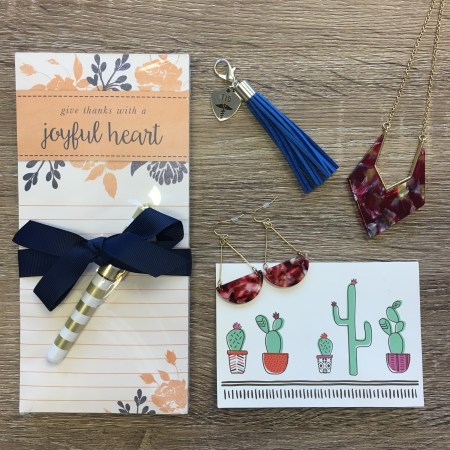
Sarah went out of her way to mail me a few goodies (shown in the picture), including a cute T1D key chain and an adorable cactus card with a message of support written inside. I was incredibly, pleasantly surprised by all of it. It wasn’t about the material items for me (though they are totally my style, and I can’t wait to make use of them). It was more so how she took the time to put it all together for me, cleverly incorporating some of the things that introduced us to one another in the first place, that really blew me away.

57D80F3D-2B6D-4B8D-9027-41219C9DFD0B
Sweet trinkets from a sweet friend!

It got me thinking about the larger diabetes community I’ve met and harvested friendships with in the last several years. And as hard as it is for me to properly describe the level of richness, knowledge, and support that those friendships have given to me, it’s beyond easy for me to say that I am infinitely thankful for all of them, and I hope that in return, I am able to offer at least a fraction of the same to others.

With all that said, it’s even more mind-blowing to me that I resisted this community for such a long time. For the first 14 years or so that I lived with diabetes, I rejected the notion that I needed peer support to help me manage the emotional and physical aspects of diabetes. I turned down offers to go to diabetes camp. I didn’t interact with the only two other diabetics in my school’s district because I feared social isolation. In some situations, I even pretended that I didn’t have diabetes, because my yearning to be normal like everyone else overpowered my need to make my health a priority.

That’s why I don’t think it’s a coincidence that things started to turn around when I met other T1Ds my age. That marked the point where I could have open, honest conversations with others who were going through similar life events at the same time as me, without the judgments or criticisms I may have had to endure if I had those same conversations with family or doctors. While I know that I need to give myself and my personal growth some credit for improving how I manage my diabetes, I would be remiss if I did not also attribute some of that credit to the members of the DOC who have made meaningful contributions to my life and my outlook on it.

It’s funny that something special in the mail made me contemplate all of this, but Sarah’s thoughtful package to me is a tangible representation of how connections within the DOC have changed me for the better.

Thank you, Sarah, and another big thank you to those of you in the DOC that I have met, as well as those I have yet to meet.

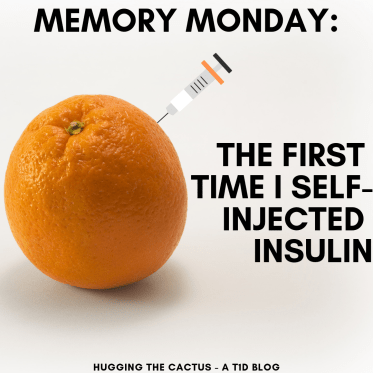
Memory Monday: The First Time I Self-Injected Insulin!

One Monday per month, I’ll take a trip down memory lane and reflect on how much my diabetes thoughts, feelings, and experiences have unfolded over the years. Today, I remember…

…the first time I self-injected insulin and how absolutely terrified the mere thought of doing so made me.

Since I’ve never really minded needles that much, you’d think that self-injecting would be a cinch for me. That couldn’t be further from the truth, at least for the first few times that I had to do it.

It goes back to one endocrinologist appointment when I was nine, maybe ten years old. My doctor and my parents were talking about how I was reaching an age where I should start to take on a little bit more responsibility in terms of my diabetes care. I don’t remember whether my endo or my parents suggested it, but one of the two parties said that a good starting place would be to start giving myself my own insulin.

Initially, I protested. I hated the idea. But I warmed up to it when my parents reassured me that they would check the syringe for me before I stuck it into my skin. At this point in time, I’d practiced drawing up my own insulin dosages. I’d pass the syringe along to my mother or father for the actual injection. So I had the first step in the process down pat, and it only made sense for me to put two and two together and do it all independently.

Since I was hemming and hawing over the prospect, though, my endo had the brilliant idea to practice on my father with a saline injection right then and there, given that he was willing for me to do it. As he rolled up his sleeve, I grinned wickedly (I was annoyed with him for some trivial reason that day) and waited while my doctor prepared the saline injection. As she brought it over, I panicked a little, and I must’ve asked two or three times whether it was actually safe for me to do this. Because even if I was irritated with him, for whatever stupid thing it was, I didn’t actually want to hurt him.

beechtownflorals

Once I was adequately assured that the injection would be harmless, I took the syringe into my hand, took a deep breath, and stuck it into my dad’s arm. I remember pushing down on the plunger slowly, and my dad sitting in the chair, totally composed and un-bothered by the sensation. When I took the needle out of his arm, I exhaled loudly, not realizing that I had been holding my breath the whole time. What can I say, it was a nerve-wracking feeling. It’s not every day that you learn how to inject yourself, or someone else for that matter, with a syringe.

Over the course of the next week or two, I practiced my new skill on oranges supplied to me courtesy of my parents. With each practice injection, my confidence grew and I realized that it wasn’t that scary. I would press the orange against my leg or my arm, pinch at its peel, and give it an injection of salt water – super quick, super easy.

In no time at all, I felt brave enough to give myself my first self-injection. Just like I did with my dad in the doctor’s office, I breathed deeply before plunging it into my leg, exhaling only when I was done. And I felt the satisfaction of having done it on my own, which was sweeter than I thought it would be.

Working up the courage to self-inject is just one example of many experiences I’ve had with diabetes and being afraid to try something new. Whether it was trying a CGM for the first time or transitioning to a pump, each new thing I introduced to my diabetes care and management routine scared the hell out of me at first. But just like I proved to myself that self-injecting was nothing to be afraid of, I’ve shown myself time and time again that new things for diabetes aren’t always so bad.