Don’t Tell Me How My Diabetes Affects Me…Please!

This post originally appeared on my blog at ASweetLife.org on August 8, 2016. I modified the title a bit by adding in the word, “please”…because a little extra kindness can work wonders! This particular blog post is still very relevant to how I feel when strangers make uninformed comments on my diabetes. The bottom line? If you don’t know me and my medical history with diabetes, then please, please, PLEASE avoid telling me how I should handle it. Much obliged!

I like to think that I am fairly tolerant of people asking me questions about my diabetes. From “What’s that thing on your arm?” to “What do glucose tablets taste like?”, I’ve heard quite the gamut of queries from friends and strangers alike over the years. More often than not, I try to provide honest and thoughtful answers to these questions and field follow-ups with patience.

I don’t respond well, though, when someone TELLS me something about my diabetes rather than ASKING me. It’s one thing if you’re telling me something that you know to be factually correct about diabetes as a whole, but it’s completely different if you’re telling me something about my diabetes as it pertains to me alone. And when I say “I don’t respond well” to that, I mean to say I keep smiling on the surface, but on the inside, I’m seething.

It’s been awhile since I’ve dealt with annoying assertions of this nature; unfortunately, this past week I had to grin and bear through two incidents in which I was being told what I should and should not do. (Note that I chose to not specify when and where each comment occurred, for my privacy and the privacy of others!)

Scenario One: At an undisclosed location, I’m helping myself to dinner. I add a cookie to my plate. A person in the vicinity says, “You shouldn’t be having that!”

This is a classic case of what you should never say to a person with diabetes. Most T1Ds will tell people that we can eat whatever we like, as long as we do so in moderation and remember to bolus for it accordingly. I was a little taken aback to hear this remark considering this person has known me since birth; therefore, they should realize I know how to take care of my diabetes by now. Initially, I was annoyed with this comment, but I decided to be graceful about it and say, “Yes, I can have that—I can eat whatever I like, within reason,” before exiting the room.
please, don't tell me how my diabetes affects me
Between the title and my post…this image is self-explanatory.

Scenario Two: At an undisclosed location, I’m cold, so I wrap myself in a blanket. A person in the vicinity says to someone else close by, “Molly has poor circulation because of her diabetes. That’s why she’s always cold.”

In the 18.5 years that I’ve had diabetes, I’ve never had someone tell me that it’s the reason why I get cold from time to time…just like anybody else might, whether or not they have a chronic illness. This comment really bothered me because I’ve had plenty of conversations with the individual about my diabetes, and I’ve never once linked it to my body temperature. Last time I checked, my circulation is perfectly normal. No doctor has ever told me that it’s poor. Plus, with air conditioners being put on full blast all summer long, I think it would be natural to get a little cold after sitting inside all day long without exposure to the sun’s warmth. I wish I had said something to put this person in their place, but wanting to avoid confrontation, I forced a smile and changed the subject.

In both of these situations, I probably wouldn’t have felt irritated if these comments were phrased at questions. Believe it or not, there’s a huge difference between telling me that my diabetes affects my circulation and asking me whether it does. Regardless of how diabetes-related remarks, queries, jokes, and references are phrased, though, I’ll still try hard to handle them with poise and a smile. I may internalize my frustration at the time of a bothersome statement, but it’s there and it does get to me.


The Amazing Flying CGM!

I reached into the front pocket of my sweatshirt. My tube of glucose was there, but nothing else…oh, shit.

My CGM receiver was gone.

“C’mon, pup, we’ve gotta find it,” I said to my canine companion, Clarence. He was all too happy to oblige as we sprinted back up the street to find my receiver.

It couldn’t have gone far…

My anxious eyes scanned all around our surroundings. Surely, my CGM’s bright pink case would pop against the dull browns, grays, and greens that painted the wet landscape.

Where WAS it?

Did I actually leave my house with it in the first place? Or was it still sitting atop my nightstand with my glucometer?

All I knew was that I’d better find it soon…or the chances of it getting run over by a car going at least 40 mph were very good.

cgm
Have you ever had your CGM (or any other diabetes device) take off in flight?

Not here, not there…

Really, Clarence, it’d be great if you could help me look for it rather than pick up sticks…

Dammit, what am I going to do if it’s gone for good…

“AHA!” I triumphantly said out loud as I spotted the neon pink rectangle, nestled on a patch of damp earth. I tugged Clarence, who was just focused on sniffin’ and walkin’ as a young puppy would be, over to where my CGM was lying face-down. It was almost like it was too exhausted to continue on our walk.

Or perhaps it had just wanted to leap free from the confines of my pocket and fly high…just as my blood sugar had that morning. Who knows. I was just glad to have found it. Reunited, I tucked it safely into a different pocket – a zippered one, this time – and continued my walk with my happy puppy.


Hello, 26…and Goodbye, Health Insurance

Well, today is my 26th birthday. As I alluded to a few months ago in another blog post, I’ve pretty much been dreading this particular birthday.

Love always wins.

Today’s the day I’ve got to switch health insurance carriers. I’m going off my parents’ plan and signing up for the employee plan offered by my company.

Am I nervous? Yes. Am I scared? Hell yes. But am I alone? Hell, no. I’m lucky enough to be able to say that I’ve got so many resources in my life – family, friends, the DOC –  who will help me navigate the confusing world of health insurance.

I’m also well aware that many, many other T1Ds have been in this position before me. While it’s impossible to forget the horror stories about people who have been unable to afford their medication due to a lack of insurance coverage, or who have a hard time paying for insulin and other diabetes supplies in spite of having health insurance, there’s so many more people who have found ways to make it work without having to sacrifice their health or general well-being.

So I’m going to focus on how blessed I am to have resources all around me, as well as a job that offers decent health insurance (or just a job, period…there’s plenty of jobless people out there who have double the hurdles to jump over compared to someone like me). Today, I won’t dwell on my fears and anxieties about health insurance. Instead, I’ll celebrate another year of life and enjoy the day.

T1D and Grocery Store Paralysis

Yellow roses, gallon-sized Ziploc bags, and iced tea. That was all I need at the grocery store. Three items. I should’ve been in and out in five minutes flat, but diabetes had other plans.

It was the morning of my cousin’s bridal shower and as one of her bridesmaids, I was running amok, getting myself ready and prepping like crazy for the party. As a result, it was the kind of morning that left me little time to consider my diabetes and how it might be affected by the day’s events.

I Volunteer To Drink!.png
It’s strange to feel such panic and confusion in a grocery store, of all places.

So I didn’t really think twice about having a bagel for breakfast. Normally, I avoid bagels because eating one tends to make my blood sugars run a little high several hours after consuming it. But a bagel was a quick and easy breakfast on such a busy morning. After devouring the cinnamon bagel smothered in cream cheese (hey, if I was going to indulge on a carb-heavy breakfast, I wasn’t about to skimp out on the spread for it), I got a phone call from my aunt, who asked me to run to the grocery store before I made my way over to her house for final bridal shower set-up.

She gave me a very short, very manageable list of three items to get at the store, so I was certain that it would be fast trip. Once I was showered, dressed, and finished with my make-up and jewelry, I loaded up my car with various decor for the party and headed to the grocery store. I parked in a spot far away from other cars so I could pull out of the parking lot easily, and hoofed it into the store.

I’d just loaded my basket with 18 yellow roses (the only 18 yellow roses in the store, in fact), when my CGM started blaring my low alarm from within my backpack. I was surprised – I figured there was no possible way that I’d go low because of the bagel.

And that’s when what I’ll call “T1D paralysis” hit me.

I froze. I couldn’t remember which aisle I might find plastic Ziploc bags in, let alone that I should grab some glucose tablets from my backpack to correct the low. It sounds ridiculous, but truly, I felt paralyzed and panicked as the alarm went off again, this time more urgently as my blood sugar was tumbling down faster than I could’ve predicted.

By some miracle, I did eventually snap out of it (after what felt like 3 hours but was probably only about 5 minutes). Shaking, I found the plastic bags I needed and zoomed over to an express checkout lane, babbling nonsensically to the cashier as he rang me up. I booked it to the car, cursing myself for parking so far away, and collapsed into the driver’s seat. It was only then that I remembered I needed something for my blood sugar, so I fished a box of raisins out from my purse and wolfed them down.

I sighed as I sat there in the car, waiting for my blood sugar to come back up. Three items at the grocery store was all I needed. But what I wound up with in addition to them was a scary feeling of helplessness – completely and utterly immobilized in a setting in which I was the only one I could rely on to help myself – that freaked me out. I don’t know whether it was the abnormally carb-y breakfast or the stress of party preparations, or some combination of the two, but I do know that this sensation isn’t something I want to encounter again any time soon.


Why I Refuse to Quit Carbs

This is an original post I wrote that was published on Hugging the Cactus on January 26, 2018. I am republishing it now because there’s been some buzz on the Diabetes Online Community recently about different diets people with diabetes “should” and “shouldn’t” follow…and this sums up my feelings on being told what choices I should make when it comes to my own health!

Recently, a random person on the Internet criticized my choice to incorporate carbohydrates in my daily diet. Thanks for the unnecessary judgment, stranger!!!

I’m not really upset about the comment, though, because it prompted me to reflect on why I consume carbs.

Have a slice!
*Oprah Winfrey voice* I. Love. Bread.

For me, it’s about more than just enjoying (relishing, adoring) the taste of carb-heavy substances both starchy and sweet. Carbs also help me achieve balance in my blood sugars. For instance, I find that consuming a serving of carbohydrates at dinnertime keeps me steady as I move through the evening hours. Say that I’m eating grilled chicken with a side salad for dinner. That’s a good meal by itself, but I like to complement it with a carb like half a cup of mashed potatoes or brown rice. I’ve noticed that the carbs kick in more slowly when they’re consumed with minimal or zero-carb foods, thanks to the power of the glycemic index.

The glycemic index is, in short, a measure of how quickly the carbohydrate content of foods will affect blood sugar levels. Since learning about it in college and subsequently researching the glycemic indices of various foods I eat, it’s been an immensely useful tool in determining the makeup of my meals throughout the day. Knowing the glycemic index of a wide array of foods also helps me figure out the timing of my insulin doses; in turn, preventing crazy spikes or crashes after eating.

I can’t shortchange carbs for the fact that they literally save my butt sometimes, too. When I’m experiencing a low blood sugar, nothing BUT carbs will bring me back up to a normal level. Whether it’s carbohydrates from healthy fruits or straight-up candy, it’s giving my blood sugar the surge it needs to keep me going. Like many things in life, it’s a matter of moderation – making sure I don’t consume TOO many carbs when I’m experiencing a low.

If you’re someone who thrives on low carb, high fat diets, that’s great! I know that many people find this to be a successful method in achieving target blood sugars. But for me, my tried-and-true technique of balancing carbs, fats, and proteins is always going to be my ideal strategy. Just because that’s what works for me doesn’t give anyone a right to criticize me for it. I’m here to live my best life, as we all should try to do. Shouldn’t we encourage one another to thrive, instead of judging?

The answer, if you didn’t realize, is YES.

How Working From Home Affects my Diabetes

Diabetes is a creature of habit. It rarely appreciates disruptions in its expected routine…so when they happen, it likes to make its displeasure known.

This probably explains why I’ve dealt with a number of diabetes curve balls since I started working from home (as opposed to an office) full-time.

I’ve been working remotely, 40 hours per week, for just about a month now. This was a choice I made as I prepared to move from Massachusetts to Virginia. I like most things about my job, from the people I work with to the skills it has helped me develop. But I don’t particularly love that my job forces me to be a self-described “cubicle rat”. When I work in the office, I’m parked at my cubicle for a solid portion of the day. As a semi-fidgety person, this was a tough reality for me to swallow nearly five years ago when I started my job. However, I was able to adapt to the old ball-and-chain that is my desk, and learned to break free from it every once in awhile. Before long, I discovered that getting up every 60-90 minutes to either wander into the kitchen for a drink, walk up the stairs to another floor in the building, or in nice weather, stroll around the building in laps, were all excellent ways to cope with my desire to move as well as keep my blood sugars at bay.

So that’s close to five years of having a very specific routine that my diabetes and I were used to…no wonder it was pissed off when I changed things up.

You are a rare gem.

Working from home affects my diabetes in ways that I expected and others that caught me off guard. First, the things that didn’t surprise me: I knew that I would likely be even more sedentary at home than in an office. I’m not walking across a parking lot, up a set of stairs, and down a long hallway just to set up my desk each day. All I’m doing is walking five feet into the living room in order to power on my laptop. So there’s a lot less daily movement, and I’ve had to work hard to incorporate as much of it as possible because my diabetes responds incredibly well to exercise.

I also knew that my relationship with food would change a bit. Since I was living with my parents before the move, I was lucky enough to have 99% of my food preparations done for me by them (thank you for feeding me, Mom and Dad). Not only would I need to take care of cooking my own food in this new situation, but I would also need to become responsible for making smart choices and stocking the pantries with healthful things…because when you work from home, ALL the food is available to you. And since there aren’t any coworkers nearby me to chat with and take my mind off snack time, it’s much easier for me to just traipse through the kitchen whenever the heck I want and eat a gratuitous number of chips, crackers, cheese, and any other sort of goodies I can find. I don’t like admitting it, but I don’t always bolus for said snacks…making it that much more of a struggle for my blood sugars.

But what I didn’t know about working from home and how it might impact my diabetes is that there’s an emotional side to it that almost certainly comes into play. The first few weeks of my move were absolutely draining. I was homesick and trying to adjust to this strange, new place at the same time, and honestly, I think it was all a little too much for my diabetes to deal with at once. There were three straight days in which I had to fight hard to get my blood sugars to come down from stubborn highs, and there was another string of days in which I felt like I had to eat everything in the kitchen just to keep my numbers up. Between the numbers that my blood sugars represented and my emotions, each day felt like a seesaw and I wasn’t sure what to expect next.

What took me by surprise the most, though, about my new work arrangement was how quickly I acclimated to it. By the end of week two of working remotely, I had a routine – with a few fluctuations here and there – that I’ve since tried to stick with: waking up around 6:30, exercising, showering, getting dressed, eating breakfast, logging onto work, working for 4 hours, eating lunch, taking a break to do household chores/errands, working for another 4 hours, then logging off for the day. So far, I’ve found that following this pattern helps me move around as much as I did when I worked in the office, and it establishes a flow that my blood sugars and diabetes can follow. I’ve also, for the most part, remained mindful of the foods I eat during the working hours, after making mistakes with a bag of pretzels and banana chips in the first couple of weeks.

Even though my diabetes wasn’t happy with remote work in the beginning, I think I’ve arrived at a place in which it’s coming to terms with it…and, I daresay, warming up to the concept.

Every Last Drop

27 units. That’s exactly how many units of Humalog were left in my pod, and I had no choice but to literally throw them away. My pod was expired – it had been for 8 hours – and to my knowledge, 8 hours after a pod expires, it will cease working entirely.

I kept the pod on those 8 extra hours because I couldn’t bear the thought of wasting insulin.

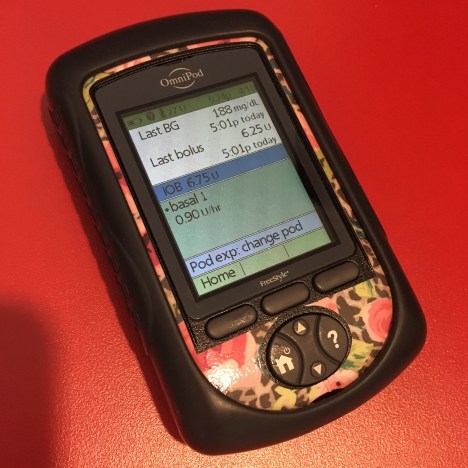
IMG_2075
27 units and no choice but to throw all of them away.

It’s a strange, messed up game that I played. I was taking a bit of a risk by wearing my pod for so long after it expired. After all, it’s just a piece of technology, and it can sometimes be difficult to know whether or not it’s working properly when it’s brand new, let alone within the window of expiration. But this is the game that I have to play, along with so many other people with diabetes, because insulin is precious.

Insulin keeps us alive.

Insulin is a need, not a want.

Insulin is exorbitantly expensive, so much so that it ranks #6 on a listing of the 10 most expensive liquids in the world.

With that in mind, tell me…would you feel comfortable throwing away even one single unit of it?

One could argue that maybe I could’ve tried to extract the 27 units from the old pod and reuse it in a new one – but to me, that’s an even more dangerous game to play. I have no clue whether that’s safe, or if there’s too much risk involved with germs and cross-contamination. Maybe I’m just paranoid, but when it comes to my health, I have to be.

So as much as it pained me to be unable to use every last drop of insulin, I made the only viable choice for me and disposed of 27 units of Humalog.

27 units, 16 units, 3 unit, 1 unit…no matter what the quantity is here, every last drop of insulin is invaluable.

When will we see change? Is it really too much to ask for insulin to be affordable to all?

Hot Yoga: A New Win for my Diabetes

Normally, if you asked me if I would willingly go into a 105 degrees Fahrenheit room for 90 minutes for a workout, I’d say ohh HELL nawwww before you had the chance to finish asking your question.

I’m not someone who has a passion for exercising. I tolerate it. I try to do it daily for two very important reasons: 1) It keeps me in shape and 2) it helps me manage my blood sugars better. Otherwise, there’s very little about exercise that I actually enjoy. I’m not a fan of feeling out-of-breath for long periods of time. I have a love-hate relationship with the post-workout soreness that floods my body after a particularly intense session. And I definitely cannot stand sweating – on just about any given day, I’d rather be freezing cold and wearing layers of clothing than dripping in sweat.

All that said, though, I willingly participated in a fitness class called Bikram yoga…which is also known as hot yoga because you’re in a temperature-controlled room heated exactly to 105 degrees for the duration of the workout. For 90 minutes, you slowly move through 26 poses, and that’s that.

I wasn’t worried about the latter; it was the former that had me sweating (both literally and figuratively). I wondered whether I’d be able to tolerate the heat for a full hour and a half. I also had concerns about my diabetes devices – would I be sweating so much that they would fall off? Would they be able to stay safely in the room with me, or would the heat be too extreme for them? And how would my body and blood sugars respond to the hot yoga, anyways?

I knew the only way to get answers to my questions was to show up for class and find out for myself.

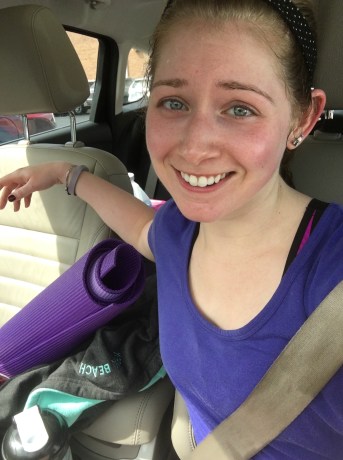
IMG_2171
Me, post-class, dripping in sweat in my car. Next time, I’m bringing a change of clothes.

And that’s exactly what I did. I went to a morning class with my stomach empty and my backpack full of diabetes supplies. My blood sugars tend to respond better to exercise when I don’t have any food in my system or insulin on board, so I made it a point to wait to eat my breakfast after yoga instead of before. But I still wasn’t entirely sure if or how my blood sugar might react to a brand new kind of workout, so I wanted to be armed with several different low snacks. I felt fairly confident about its stability, though, as I headed into the class sitting pretty at 110 mg/dL.

In addition to extra diabetes supplies, I also thought to bring with me some water that I’d filled and frozen the night before the class so I could stay hydrated throughout it with water that was sure to be extra refreshing in the heat.

Even though I had all this stuff with me, I chose to leave most of it in a cubby outside the studio, save for my CGM receiver, a tube of glucose tablets, and my water bottle. I didn’t want to take any chances with my cell phone, PDM, or glucometer and expose them to the heat – I have firsthand experience with an overheated cell phone, and while it does eventually cool back down its own, overheating my devices is not something I’d actively seek to do. I was taking a bit of a risk with the CGM receiver, but since I have the Dexcom app on my cell phone, it’s not like I’d be at a huge disadvantage if something were to happen to my receiver.

So with my gear in hand, I stepped foot into the yoga studio…and immediately started sweating. Yes, that quickly! It was a heavy, stifling, and moist heat – the exact kind that I hate the most. I started to question whether I had the endurance to even sit in this heat for 90 minutes, let alone move seamlessly through yoga poses in it. In the minutes before the class began, I sipped water slowly and told myself that above everything else, I needed to listen to my body throughout the class. I started to feel better as I reassured myself that it would be perfectly acceptable to walk out should I start to feel light-headed, low, queasy, or anything else abnormal.

Fortunately, though, an exit plan wasn’t needed as I made it through the full class! That’s not to say it wasn’t challenging or extremely sweaty – seriously, my body was so covered in sweat that it looked like I’d just come out of a swimming pool – but I proved to myself that I could do it. And the best part was that my blood sugar behaved beautifully: As a reminder, it was 110 mg/dL at 8:30 A.M. Class started at 9 and lasted until 10:30 A.M. I was home by 11 and when I checked my blood sugar there, I was at 118 mg/dL. I couldn’t have asked for better pre-, mid-, and post-workout blood sugar levels.

Was it scary to try this new, moderately intense exercise? Yes. Was I concerned about my diabetes before, during, and after the class? Yes. But was it all worth it? I’d say yes. I overcame my fears and was met by blood sugar success, making hot yoga a diabetes win in my book.

Is it Possible to Eat Pizza Without Encountering Blood Sugar Problems?

My short answer to that question is YES. Yes, it’s absolutely possible to eat pizza – and just about any food, in my opinion – without experiencing turbulent blood sugars.

It all just comes down to serving size, timing, and method of insulin delivery. Piece of cake, right? (Or should I say, piece of pizza?)

Have a slice!

Well, it really isn’t THAT simple. Other factors include the exact type of pizza (Is it gluten-free? Are there toppings? Is the crust thick or thin?), whether or not other food/drink is being consumed with it, whether exercise or inaction will follow in the hours after eating it…truly, there’s all that (and more) that people with diabetes need to think about when eating any type of food.

But what’s different about pizza is that it has a particular combination of fat and carbohydrates that can make it a tricky food for people with diabetes to figure out how much insulin to take and when to take it. It’s a little easier for those of us who have insulin pumps, because we can utilize the extended bolus (or square wave) feature that allows us to give a certain percentage of a mealtime bolus at once, and select a time later on to receive the rest of the bolus.

If that last sentence didn’t make any sense, here’s an example of what I mean:

It’s dinnertime – 5:30 P.M. I have two slices of pizza that I plan on eating. One’s plain, the other has BBQ chicken on it. I figure that there’s 50 grams total of carbohydrates in the two slices of pizza. My blood sugar before eating the pizza is 130 mg/dL. I put that number into my pump, and also input 50 grams of carbs. My pump wants me to take 8 units of insulin to cover the pizza. Instead of administering the full 8 units at once, I hit the “extend” option and opt to take 75% of the dose now, and the remaining 25% an hour and a half from now. So I get 6 units of insulin at 5:30, and 2 units at 7:00. This extended bolus typically has the power to prevent my blood sugar from crashing and spiking hours after eating said pizza, and in turns, saves me from dealing with a massive headache and questioning why I ever ate pizza in the first place.

Granted, an extended bolus isn’t the end-all, be-all. It relies heavily on me and my ability to count carbs correctly and time my boluses perfectly. But I have had fantastic success using it, particularly in a recent situation in which I ate two large slices of whole wheat pizza, a side salad, and a bit of pita bread without spiking beyond 160. I can’t say whether it was the whole wheat crust that helped me out (maybe it has a lower carb count compared to regular crust?), or if it was just supremely accurate calculations on my end, but it really doesn’t matter to me in the end…because I know that I can eat and enjoy pizza – and again, virtually any food – without my diabetes ruining it for me.


Why Online Communities Aren’t Always the Best Source of T1D Support

Before I jump into this post, let me make this unequivocally clear: The DOC (Diabetes Online Community) has been an incredible source of support, advice, and education to me ever since I discovered it (roughly seven or eight years ago). This post isn’t necessarily about the DOC; rather, it was inspired by a recent experience I had with a totally different online community. But what I’m about to say here can be applied to just about any kind of virtual support group in existence…

In addition to the DOC, I consider myself a member of a few other online communities. One of them is focused on fitness. (I’m not going to specifically name the group here, mainly because I’d like to maintain its privacy as well as the privacy of its members.)

Anyways, said group was formed to provide members with a place to post about their respective fitness journeys. Members are encouraged to post daily about their workout routines, nutrition plans, and any emotions that might arise as they work toward building a healthy lifestyle. It’s common for members to interact with one another and show support when someone is struggling, as well as applaud victories big and small as they’re met. Unsurprisingly, negativity and criticism aren’t welcome in this group, as it can be detrimental to the goals that each member has for himself/herself.

Thanks for the love!

In keeping with the spirit of the group, I posted a photo a few weeks back of myself (making a grumpy face) after a particularly challenging cardio workout session. In the caption, I wrote: “Excuse my pissed off expression…I had to cut cardio fix short because my blood sugar was getting too low. Only worked out for about 20 minutes this morning. I really wanted the full one cuz I treated myself with food just a tad too much yesterday…but I don’t totally regret it because it reminded me that I just don’t feel good when I snack unnecessarily. I’m always struggling to remember to only eat when I’m hungry or if my blood sugar is low, not because I’m bored or emotional. I know one day I’ll fully accept this and practice it!”

I wasn’t seeking sympathy or anything, I was just being honest with the other members of the group and channeling a bit of my frustration. Regardless, a few people did comment on the post with some reassuring words, like “you’ve got this”, “thank you for sharing”, and “one day at a time”, which I appreciated.

But what I did not appreciate was the comment thread that followed and involved myself and two other group members (my thoughts as I initially responded to this chain are denoted by asterisks):

Group Member #1: Oh no, be careful! Do u usually run low?
Me *Not wanting to dive into a long explanation*: I’m pretty well controlled for the most part, but exercise can make me go low sometimes! 
Group Member #1: do u have diabetes?
Me: yes, type 1 diabetes for 21 years now
Group Member #1: oh wow! Be careful!! Do u carry glucose tabs with you?
Me *Rolling my eyes as I respond, and adding a “haha” to keep it light*: of course! Haha I’ve had T1D for a very long time so managing it is second nature.
Group Member #1: okay good! Just making sure. Sorry, this was the pharmacist in me asking (an annoyingly cute monkey-with-hands-over-eyes emojis PLUS smiley face emoji followed this comment)
Group Member #2: The nurse in me wondered the same. 🙂
Group Member #1, responding to Group Member #2: haha! (followed by a stupid heart emoji)

What exactly is my issue with this thread? It starts with the “be careful”. It was probably an innocuous comment on the poster’s end, but I thought that me telling her that I’ve had diabetes for 21 years might signal that I know a thing or two when it comes to managing it. It also mildly irked me that she was qualifying her comments to me by saying that she was a pharmacist. That’s great and all, but that doesn’t make her an expert by any stretch of the imagination on diabetes…same thing to the girl who also chimed in by saying she was a nurse.

Now, you might be thinking that I’m overreacting to this whole thing – and part of me agrees, I’m sure that both girls just had pure intentions and wanted to offer support in their own ways – but if that’s the case, then this is a perfect example of how things can get misconstrued in an online setting. My interpretation of this thread is that both girls were trying to tell me that their expertise in their respective fields meant that they knew a good bit about diabetes, and rather than come off as supportive, the comments felt like show-offish (like, oh, look at me and how much I know!) and as if they thought I couldn’t take proper care of myself. Again, my interpretation may or may not be true, but it’s fact that we all need to be careful when choosing our words in situations like this. Even better, when something isn’t totally clear, we can choose to say nothing rather than chime in with a comment that might come off wrong or sounds misguided.

With that in mind, I now get why some people say that online support just isn’t for them. Personally, though I appreciate and like being part of online communities, this experience did teach me a lesson about being careful with my interactions in these spaces, and that I should always try to remember…it’s impossible to gauge tone/emotion in the comments section, and coming across as a know-it-all isn’t a good look on anyone.