One Friday per month, I’ll write about my favorite diabetes products. These items make the cut because they’re functional, fashionable, or fun – but usually, all three at once!
It never occurred to me that a product could make my diabetes supplies look pretty. But a couple years ago, when I noticed more and more members of the DOC talking about “Pump Peelz” on social media, I knew I had to check out the brand myself and see what the buzz was about.
Instantly, I learned why people love Pump Peelz so much: They create stickers that are designed to fit a wide variety of diabetes meters, glucose monitors, and insulin pumps. The stickers themselves come in all sorts of patterns and colors, and you can even make your own unique design using the tool featured on their website.
You might be wondering why someone with T1D wants to bother with decorating their pump or meter; after all, diabetes devices aren’t supposed to be glamorous. They have a sole purpose and that’s to help with diabetes care and management.
But there are so many aspects of diabetes that are just not fun. Between daily finger pokes, shots, doctor’s appointments, and more, I don’t think I need to spell it out for you: diabetes sucks. So that’s exactly why something like Pump Peelz is great – it injects a little personality and style into the most mundane objects.
This slideshow requires JavaScript.
My Pump Peelz have even resulted in others feeling comfortable enough to ask me about “that thing” I’m wearing on my body. This might make some people cringe, but I’ve welcomed these opportunities as ways for me to explain diabetes to other people. Usually, I’m able to help defeat some stigma about T1D and in return, others are receptive to what I have to say and ask thoughtful questions. Plus, stickers that feature some of my favorite characters, like Minnie Mouse, act as great icebreakers when I’m around small children. Instead of being afraid by the scary medical device attached to my body, they tend to show genuine curiosity and admiration for my taste in cartoons.
Pump Peelz makes skins for all sorts of diabetes devices, styles, and occasions. Check out their website to see what they’ve got in stock!
A holiday that promotes gratitude and eating…what’s not to love? As much as I enjoy Thanksgiving, though, I can’t quite say that my diabetes feels the same about it. Fortunately, I’ve developed a bit of a game plan as to how to handle diabetes when Turkey Day comes rolling around – here are my top 10 tips for making the most of a Thanksgiving feast with diabetes!
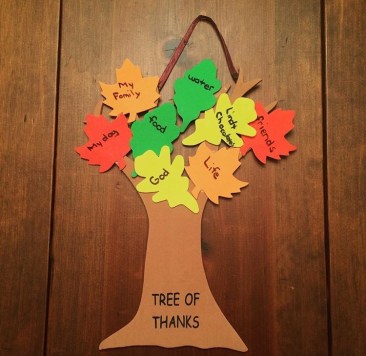
A tree of thanks I made many Thanksgivings ago – note my gratitude for Lindt chocolate, specifically.
10) Don’t skip breakfast on Thanksgiving morning. This helps me avoid over-eating when Thanksgiving dinner is served later in the day. Breakfast doesn’t have to be a huge thing, maybe just a bowl of oatmeal or a piece of fresh fruit – anything that will sate me for a few hours.
9) Volunteer to prepare a couple of dishes. If I’m going somewhere for the feast, I like to know what my host needs me to bring. If I have creative control over the dish, I prefer to make it something that I know won’t be too hard on my blood sugars, such as a side of veggies or a sugar-free dessert.
8) Familiarize yourself with what’s being served prior to sitting down for the meal. Before my family sits down to eat, I like to know what exactly we’re being served so I can plan accordingly. I can usually get away with strolling around the kitchen to get an idea, but sometimes the chef (my aunts or my mom) kick me out while they finish cooking dinner!
7) Don’t feel pressured to try everything. It all looks and smells so good, but I have to remind myself to use some restraint when piling my plate with Thanksgiving food. I’ll add staples like turkey and green beans (both of which are low-carb!) and take smaller portions of the heavy things, such as stuffing and potatoes.
6) If it’s necessary, extend my bolus. This all depends on what my blood sugar is before the meal, but sometimes, I’ll extend it in order to prevent lows or highs post-feast.
5) Check my blood sugar often. I’m not afraid to check my blood sugar as often as I need to throughout the Thanksgiving feast. I’d rather have an idea of where my blood sugar is headed than leave it to chance and guess incorrectly.
4) Go for a walk or organize another outdoor activity. The weather doesn’t always cooperate with this idea, but I’ve found that dragging my cousins on a 20-minute walk after eating helps my blood sugar and provides us all a chance to hang out while our uncles take control of the TV and our aunts chitchat over cups of coffee.
3) Wait a bit before having seconds or starting on desserts. I try to indulge a bit on the sweets at Thanksgiving, but I know that it never works out for me if I help myself to desserts too soon after consuming the main course. So I avoid the temptation by staying busy after eating dinner – my mom and aunts always appreciate an extra set of hands to assist with clean up!
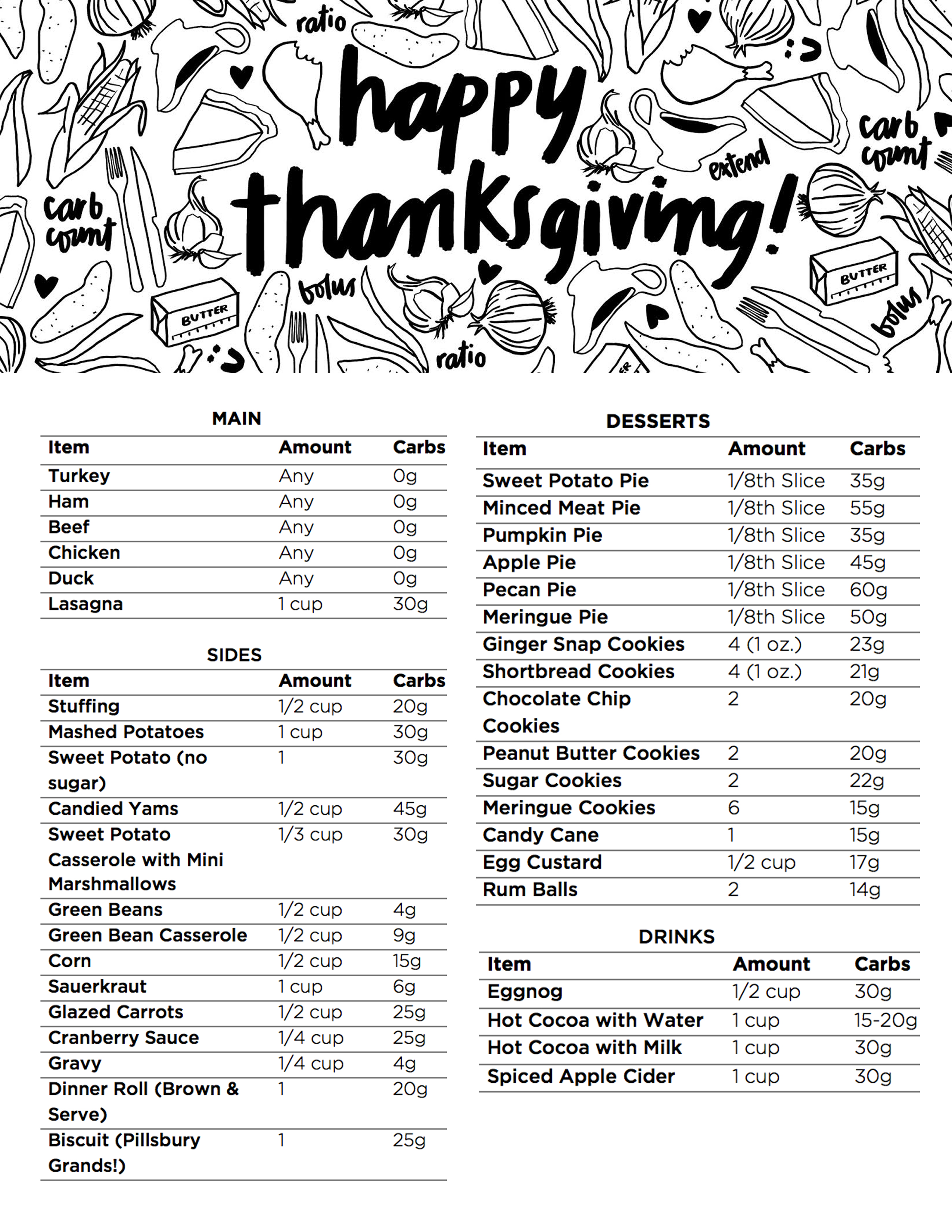
2) Look up carb counts if I’m struggling to come up with them on my own. Sometimes, I can’t quite determine how many carbs are in a serving of pumpkin pie – I’ll guess too low and end up high, as a result! But I know that there are tons of carb counting resources at the tip of my fingers, thanks to my smartphone. I rely on the MyFitnessPal app and the handy Thanksgiving carb chart from Beyond Type 1 to help me come up with complex counts.
1) Remember what the holiday’s all about: being thankful! Enjoy the day and time with loved ones! Whether you’re part of a large family like mine, a small one, or choose to spend the day with friends or a partner, just relish it for what you want it to be.
One Monday per month, I’ll take a trip down memory lane and reflect on how much diabetes technology, education, and stigma has changed over the years. Remember when…
…it took blood glucose meters a full 60 seconds to generate a reading?!
A full minute to get a blood glucose reading. That just seems crazy now, considering most meters can deliver a number in a mere 5 seconds. But growing up, it was all that I had to use. I remember being sent down to the school nurse every day in elementary school to test my blood sugar before lunch. I would pace around the nurse’s office as I waited to see my number, making a game out of it. Those 60 seconds felt agonizingly long as they cut into the amount of time I had to eat my lunch. It wasn’t fun.
By the time I reached middle school, I obtained a OneTouch Ultra Mini blood sugar meter, which I coveted. It took only 15 seconds to check my blood sugar, and it came in a rainbow of colors! Over the years, I collected different versions of the mini in pink, blue, and purple. And as time went on, the countdown went from 15 to 5 seconds – so checking blood sugar was quicker and easier than ever before!
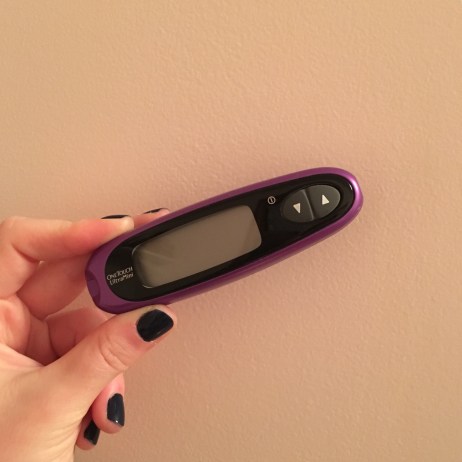
I kept one of the UltraMini meters – just in case.
These days, OneTouch meters are still my product of choice. I use the Verio IQ meter and I love how it lights up, allows data input, and tracks patterns. It serves as a reminder of the progress that’s been made in meter technology alone in the last 20 years!
My final post for College Diabetes Week 2017…already?!
Here’s the prompt:
What advice would you give a high school student with diabetes preparing for college?
I would tell a T1D high school student who’s bound for college that these next four years are going to be some of the most formative, exciting, and opportunity-filled years in their life. Don’t take them for granted!!! With everything that will happen in college, it’s beyond important to prioritize health. Take care of your mental and physical health as well as your diabetes. Self-care works wonders on all aspects of your health, so don’t deprive yourself of it.
Do things for you. Explore. Share with others. Seek support when you need it. You are NEVER alone and there’s no shame in asking for help from others. Remember that the people who love us want the best for us and often WANT to help us – they just don’t always know how they can do that. So tell them how they can show support for you. You and your support system will thrive as long as you’re willing to share with one another.
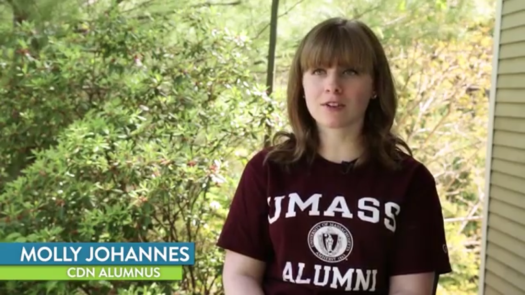
Hey, it’s me! Here I am giving some advice in a video featured on CDN’s YouTube channel.
Before I wrap up my blogging for College Diabetes Week 2017, I want to tell all students who are involved with CDN that they are amazing. I love seeing the various activities that CDN Chapters across the country are working on throughout the school year. These students are innovators and sources of inspiration – true assets to the diabetes community. Know that your work doesn’t go unnoticed! As a CDN alum, it makes me proud to see the national CDN and its dozens of Chapters flourish.
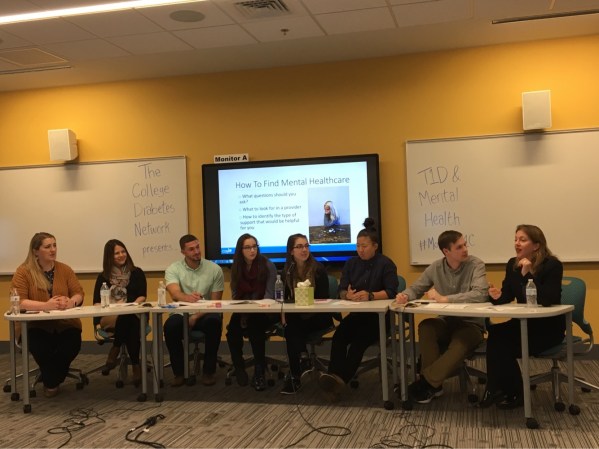
Last night, the College Diabetes Network hosted a Facebook Live that brought together a panel of young adults with T1D, psychologists, and special guests who discussed the mental health issues associated with diabetes. The conversation lasted just over an hour and a half, with viewers chiming in throughout to get their questions answered by the panel.
Missed the Facebook Live? Visit the College Diabetes Network’s Facebook page to watch the whole video.
The topics covered by the panel included depression, burnout, anxiety, ADHD, and disordered eating vs. eating disorders. Incredible stories, insights, and tidbits of advice were shared as the panelists opened up to viewers and honestly answered the questions that were asked.
Several responses from the panel stood out to me, and I’d like to share what was said and why it affected me…
On T1D as a psychologically and behaviorally demanding stress in your life:
The idea of perfectionism…and you have to be perfect at everything, and transitioning into having to go into college, get good grades, do well, and plan for a successful career…and having diabetes also be a factor is overwhelming and can cause people to go into a state of ignoring it. -Karly
I related to this because I’ve always tried to be a perfectionist, in all facets of my life. Karly’s take on diabetes being an unwanted, demanding, and additional stress factor resonated with me because I also view it as just another thing in life that I have to try to handle perfectly – which, of course, is impossible when it comes to a chronic condition with a mind of its own.
On the concept of lowering expectations and setting goals:
It’s less about lowering expectations and more about establishing expectations that are real…Also, the way that diabetes is taught, I personally think is absolutely incorrect. Patients and loved ones are taught that blood glucose can be controlled…and that it responds to an algebra equation…what your insulin to carb ratio and what your sensitivity factor is can land you directly into the target, but what we know is the target is a zone, not a bull’s eye. And we don’t teach it that way. -Ann
I loved how Ann phrased that part I put in bold – I grew up thinking that I had to have my blood sugars right on the money at all times. If it was higher or lower than say, 120, I was failing (this ties in with that perfectionist attitude I was just talking about). But to hear her acknowledge that this way of thinking shouldn’t be taught was validating to me.
On the fear and anxiety of losing control from low blood sugar:
During a workout…whenever I was making progress, it seemed like something just pulled me right back…because of that, I started training high, purposely. I would start training in the high 100s, to almost the 200s, which is not good at all…I had to become conscious of that…because of my fear of lows [and feeling like I’m about to die]…I intentionally made myself high. -Jiggy
Working out has always been a challenge for me, and my fear of lows during a workout is pretty intense. To hear that Jiggy responds to that in the exact same way as me made me feel not so alone.
On accepting mistakes and that you’re not perfect:
Remember that you were never meant to perform this function. Your body was meant to perform this function. You are trying to take over from something that your body was supposed to do for you…remember you’re a human being [who is] being asked to do something you weren’t supposed to do. -Will
Yes, yes, YES. Will could not have said it better. It’s important to remind yourself that it’s not easy to take over a job that your body is supposed to do for you automatically as a biological function. You just need to try to do the best that you can, and not beat yourself up when you don’t always get desirable results.
A major thank you to William Jennette, Karly Kroeten, Jiggy Yoon, Aaron Sherman, Heather Levy, Ellen O’Donnell, Ann Goebel-Fabbri, and Quinn Nystrom for volunteering their time to get together for this Facebook Live, as well as for being vulnerable for perfect strangers on the Internet. I know it’s not easy to share personal stories, but the integrity and eloquence displayed by each panelist made for a powerful live video.
The College Diabetes Network’s website contains a variety of information on how you or a loved one can cope with the mental health challenges of diabetes. Visit their page to access materials that help explain touchy topics, as well as additional resources.
Happy Thursday! Let’s shift the mood a bit from yesterday’s challenging post to a more upbeat one:
Share your triumphs! How have you tackled the challenges you’ve faced relating to diabetes and college? What did college and diabetes teach you as a person?
I wrote about how I excelled in college despite my diabetes last year, so this year I’m going to write about how I’ve triumphed in the “real world”. The major challenges I’ve tackled, and succeeded in, include:
Landing my first “real world” job. There’s many aspects to this accomplishment that make me proud: I’ve gained experience writing in a professional setting, I’ve been able to pay off my student loans, and I’ve thrived in this environment. But what I feel especially triumphant about is the fact that my diabetes has NEVER interfered with my job. I’m always able to turn in assignments on time and I’ve never had a bad hypo while at work. Diabetes is seldom my reason for not feeling well, and I’m fortunate to be working with a group of kind, caring, and inquisitive individuals who support me and my diabetes.
Overcoming my fear of traveling alone. Three years post-graduation, I’ve flown on more planes than I can actually count. I’ll estimate that I travel every other month, mainly for personal reasons, but the first time I did it alone was far from easy. My anxiety was through the roof and I was beyond paranoid, constantly rifling through my bags to quadruple-check that I had all my supplies and breathing shakily during take-offs. Rather than dwell on how nervous I used to be, though, I prefer to remind myself that I continue to travel in spite of all this.
Launching my own diabetes blog. This recent triumph is one that I’m especially proud of. I was incredibly hesitant for a long time to create my own blog. Many times, I had to remind myself why it was important for me to just go ahead and do it. These reasons include 1) I wanted to share a more personal side of my diabetes experience, 2) I hoped to reach a wider audience and foster more connections in the diabetes community, and 3) I desired a creative outlet through which I could share my story. Though it’s been scary at times to be so vulnerable on my blog, I’ve greatly enjoyed having one of my own and look forward to improving it in the future.
My 10-year Lilly medal is a tangible representation of my diabetes triumphs – next month, it’ll be 20 years!
Speaking of things to look forward to, I can’t wait to see what kinds of triumphs (both diabetes-related and otherwise) I’ll be able to claim this time next year!
Share the hardest thing about living with diabetes in college. Don’t be afraid to talk about the things that are taboo, like mental health or burn out!
Last year, I wrote about how lonely I felt throughout college – that is, until I found the CDN! This year, I’m going to focus on a more taboo topic, something that I’ve struggled with in the last few years: anxiety.
The more I think about it, the more I realize that my anxiety towards my diabetes manifested itself in college. I was more worried about severe lows than ever, even though I didn’t have to cope with many of them.
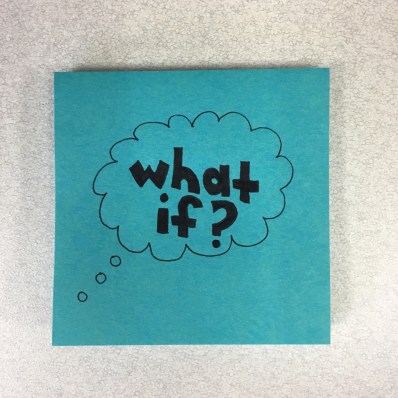
But one particular day, it seemed like my blood sugar simply didn’t want to stay above 80. I was terrified. I knew all the tricks in the book to fix it, but that didn’t stop me from fretting over the matter. My lows consumed my mind and I couldn’t focus on anything else. I began to think about the “what ifs” – what if my blood sugar doesn’t come back up? What if I need help? What if I’m alone? What if I pass out? What if???
I was absolutely frantic, forcing myself to eat 15 or so grams of carbs every hour just to keep level as I monitored the situation. I remember sitting in a 500+ person lecture hall for my psychology class with a T1D friend, who watched me anxiously test my blood sugar three times within 30 minutes. “You’ve got to calm down a bit,” she’d said. “Remember, it’ll take your body time to process all of the carbs.”
She was right, of course. And by the end of the day, I hadn’t experienced a blood sugar below 80 for a couple hours. It seemed like the episode was over. And I was fine.
That’s what I like to think about when I remember this certain episode. I was fine. As scared as I felt at points throughout the day, I took action to stabilize my blood sugar. I monitored the situation carefully and still performed my responsibilities as a student by attending classes. I was fine.
And I will be fine, despite my diabetes, because I’m determined to overcome the hardest parts of living with it.
The next prompt for College Diabetes Week 2017 is:
Share the impact that being involved with CDN has had on you!
This is my second time around responding to the College Diabetes Week blog prompts, but this doesn’t mean that I’m answering them in the exact same way. For instance, last year I wrote about how grateful I am for the friendships and connections I’ve made because of CDN, and how my involvement with CDN was my first true leadership opportunity.
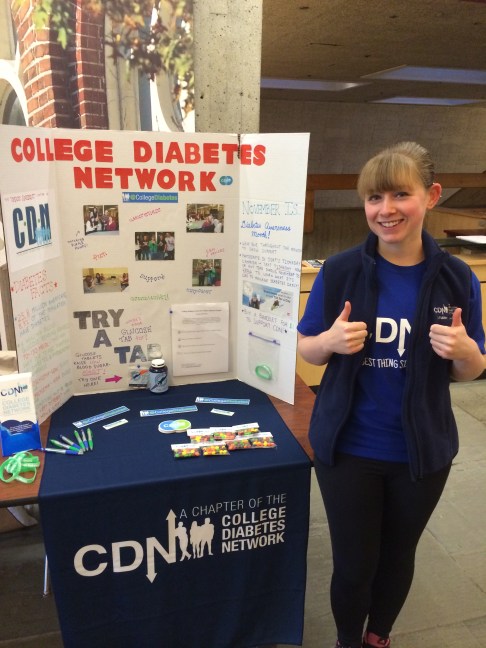
A college-aged Molly at a tabling event for the UMass Amherst Chapter of the CDN!
But this year I want to talk about how CDN has influenced my perception of persistence. We all know the phrase “persistence pays off”, but it never really registered with me until I got involved with CDN. I experienced firsthand how important it is to advocate for yourself and what you believe in when I was trying to get my Chapter registered at UMass Amherst. It was a major challenge, but I persevered despite of the obstacles I faced because I wanted to accomplish my goal. And I did.
As a result, I make an effort to give 100% of myself when I get involved in new projects. I find something that I’m passionate about and don’t give in until I see it come to fruition. This blog, for example, wouldn’t have happened unless I persisted to take risks.
CDN’s impact on me has been profound, and I look forward to see how it positively affects the lives of many other T1Ds for years to come!
Today marks the beginning of the 4th Annual College Diabetes Week! This week is hosted by my friends at the College Diabetes Network as a part of National Diabetes Awareness Month. They encourage people within the diabetes community to get involved and follow along throughout the week, whether you’re still in college or not! Stay tuned with the week’s activities by following the hashtag #CDW17 across various social media platforms. They will also be posting updates on their blog, so be sure to check that out, as well!
Throughout College Diabetes Week, I’ll be posting blogs that respond to prompts provided by the CDN. We’ll start with the Monday prompt:
Post a selfie or a picture of day-to-day life living with diabetes in college!
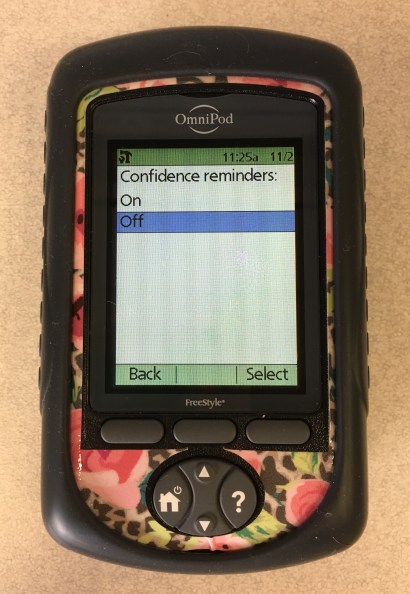
I may not be a college student anymore, but I still live an active lifestyle with diabetes. I felt that this image summed up my daily life with T1D fairly well:
This is an image of my PDM (Personal Diabetes Manager), with the “confidence reminder” menu open. Confidence is a major component of diabetes care. You have to be confident in your abilities to carb count, inject insulin, and respond appropriately to certain situations. You have to be confident in yourself and trust that you can take the best possible care of yourself. Some days that confidence is there, but others it’s not. And both are okay. Unlike the “confidence reminder” option, diabetes isn’t something that you can choose to turn on or off. Daily life with diabetes is constantly trying, and confidence levels will vary.
This is why I chose to visually represent confidence in my snapshot of my life with diabetes.
For the first two weeks of Diabetes Awareness Month, I’m responding to prompts provided by Beyond Type 1 on Twitter (and I’ll post a couple longer responses here). Today’s prompt encourages us to give a shout out to a healthcare provider who has made a difference in our lives. I’m not disclosing the name of my endo for privacy purposes, but that doesn’t diminish the amount of gratitude I have for her.
Dear Endocrinologist,
Thank you.
Thank you for always listening to me during our appointments.
Thank you for making me feel heard and never laughing at the problems I brought up that I thought were stupid or embarrassing.
Thank you for never making me feel bad about my A1c.
Thank you for reminding me that my A1c is just a number, and I’m worth more than what that value represents.
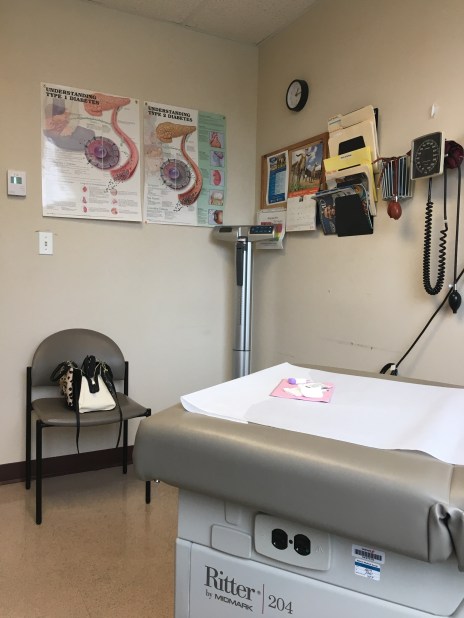
Waiting for my endocrinologist at a recent appointment
Thank you for motivating me to take better care of myself after every appointment I have with you.
Thank you for being patient with me.
Thank you for inspiring me to try new technology, and not judging me when I used to express my fears about abandoning the known for the unknown.
Thank you for asking me questions, in an effort to make sure you fully understood my thoughts and feelings about my health.



 Hugging the Cactus