The CGM Experiment: Comparing the Dexcom G5 to the G6

I have the extremely good fortune of being one of the first people in the world to receive the Dexcom G6, the latest in continuous glucose monitoring (CGM) technology. After spending almost two years eagerly anticipating its FDA approval, I could scarcely believe that I finally had it in my hands when it first arrived a few weeks ago.

I am partway through my second-ever G6 sensor, so I’ve had enough time to come up with some initial opinions on the system as a whole compared to the G5.

Let’s start with what I knew going into the first insertion of the G6. I knew that the transmitter would have a sleeker profile than the G5. I also was aware that the insertion process would be much more streamlined – all I would need to do is push a button and it would be on my body.  Plus, the G6 required 0 finger sticks or calibrations, could be worn for 10 consecutive days, and would no longer block acetaminophen (Tylenol) like its predecessors did. So far, me and the G6 were off to a solid start.

Then, it came time for me to actually put it on. Rather then end my current session with my G5, I decided to leave it on so I could see how accurate it was compared to the G6.
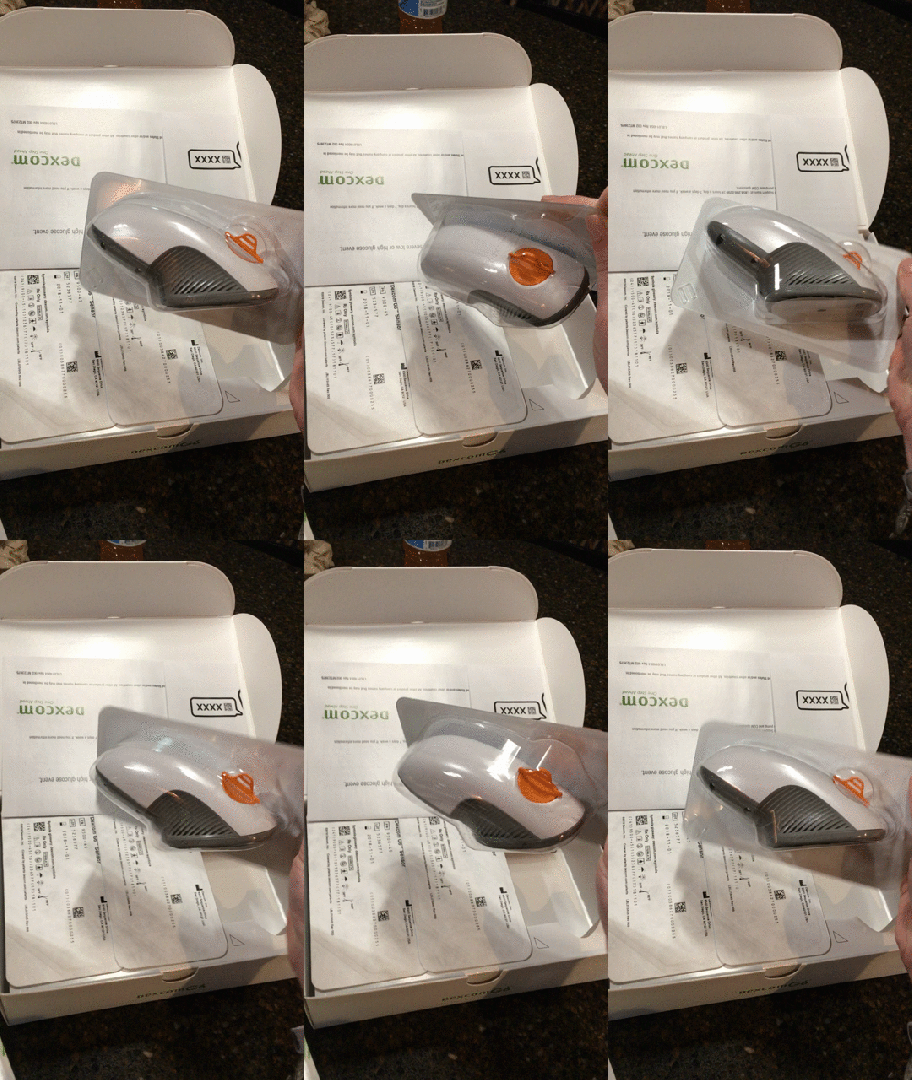
5af0f7d2789dd724634597

I was amazed by how easy it was to insert the G6. All I had to do was input a 4-digit code located on the sensor into my receiver. Once the code was accepted, I peeled the adhesive off the sensor, placed the system on my abdomen, folded the orange safety clip until it snapped off, and pushed the big orange button. I cringed when I did it for the first time; truthfully, I was prepared for it to hurt. It made a ka-shunk sound as the sensor inserted itself into my skin, and I…didn’t feel a thing. I marveled at how ridiculously comfortable it felt as I snapped the sleeker transmitter into place. I pressed one more button on my receiver to get the sensor warmed up, and that was it. Once two hours elapsed, my G6 system would be fully operational and could determine my blood sugar without requiring manual calibrations.
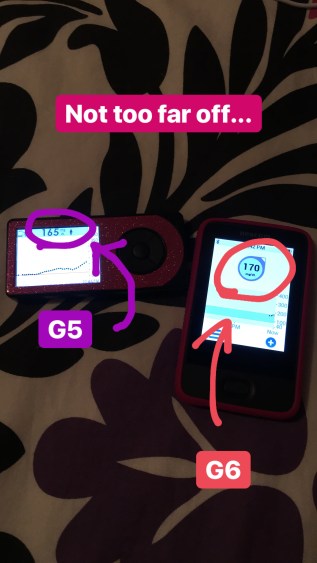
IMG_6655

While it felt great to know that I didn’t need to worry about calibrating my new device, I was more interested in seeing how well it matched up with my G5.

And I was a little let down…at least, I was in the beginning.

Initially, I was not impressed at all by the G6’s reports. They matched pretty damn closely with my G5. I was beginning to wonder whether the technology really was that excellent, and then my G6 proved to me that it was, indeed, kind of a big deal.

That moment came when it caught a low blood sugar sooner than my G5. I was feeling the early signs of a low, so it wasn’t much of a surprise when it alarmed. But what was particularly neat to me was that it was able to tell me that a serious low blood sugar (below 55 mg/dL) was oncoming in the next 20 minuets or less. In other words, it knew that I needed to treat my blood sugar right away to prevent a more urgent hypoglycemic event. That predictive feature was definitely a pleasant surprise.

As I wore my first G6 sensor for a few more days, it seemed to adjust better and better to my body. As evidenced in the above picture, it proved to be spot on when I compared it to the blood sugar readings I got from my meter. There’s absolutely still a bit of the classic CGM lag, as it takes about 15 minutes or so to catch up to what’s actually going on in the body, but that was to be expected.

I’m already on second sensor and I think it’s safe to say that I’m sold on the G6. But I don’t think that any product comparison/review is complete without a list of pros and cons, so here’s what I’ve come up with:

Pros of the G6 (compared to the G5)

  • Slimmer transmitter profile
  • 0 fingerstick calibrations (which I really loved when I didn’t have to wake up in the middle of the night to calibrate a sensor I inserted before bed)
  • Predictive low feature
  • Modern touchscreen receiver
  • Absolutely painless and foolproof application – honestly, it was THAT good that it might win me over from the G5 if that was the sole difference between the two

Cons of the G6 (compared to the G5)

  • Clunky applicator – as many other members of the DOC have noted, the system is comprised of a lot of plastic. Probably not very environmentally friendly. I wish it was possible to recycle it somehow
  • Automatic expiration after 10 days – with the G5, you could restart a sensor after a week had elapsed, and in theoryyou could use the same single sensor more than once for a few weeks in a row. The G6 automatically shuts down after 10 days, so you’re forced to put on a new sensor. This medical device is already pretty expensive, and you could at least get your money’s worth with the G5
  • No super noticeable improvement in blood sugar reporting capabilities

The bottom line is that the G6 is unquestionably an upgrade in diabetes technology. It requires fewer blood sugar checks and allows for greater discretion with its smaller size. The G6 is far from perfect, but it’s still a valued component of my diabetes toolkit. I’m excited to continue on this journey with it and discover just how much it helps me take the best possible care of myself.
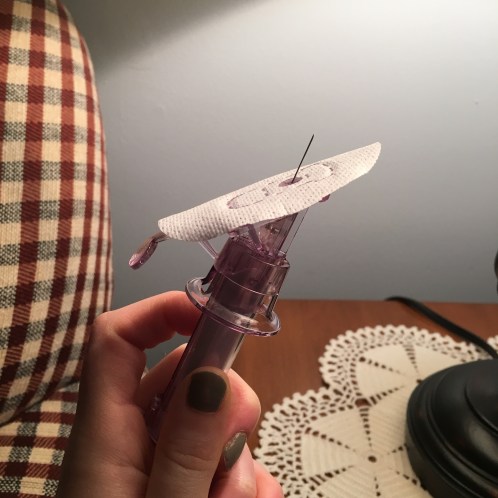
So THAT’S How Long and Sharp the Dexcom G5 Insertion Needle is…

IMG_6621

Oh, I cringe just looking at that.

This is a rare photo of the Dexcom G5 insertion needle. Yikes! I only captured it because somehow, my last sensor change with the G5 went awry and I wound up being unable to use this particular sensor. Before I threw it away, though, I played with it a bit to see if I could get a closer look at the needle that helps secure the sensor to my skin.

Obviously, the mission was accomplished. Even though I was slightly horrified by the needle’s pointy length, I was also relieved to know that it would be the last time it would puncture my skin. That’s because I knew my G6 was on its way and that one of the major improvements to it was making the whole process painless. Little did I know how true that would be until I put my first G6 sensor on…

In a couple days, I’ll *finally* publish a post that reveals my initial thoughts on my brand-new Dexcom G6. I’ll compare it to my experience with the G5 and share whether I think the G6 is worthy of all the hype it’s received.


What It’s Like to Wear a Medical Device 24/7

A question I’m often asked is: “Can you feel your CGM or insulin pump on your body?”

The simple answer to that is: usually, no. It’s something that you just get used to. You grow accustomed to seeing a lump underneath your clothing. You adjust to putting clothes on (and taking them off) carefully to avoid accidentally ripping a site out. You acclimate to showering without being completely naked.

And, of course, you get used to the questions from strangers asking about that device stuck to you.

But the more honest answer to that question would be that there are times that I feel it more than others. For example, sometimes I forget where I’m wearing my pump until I hit it against something (I’m a major klutz who constantly runs into doorways and trip over things, almost always managing to catch my pod on whatever it is), resulting in pain at the site and a curse word or two to fly out of my mouth.

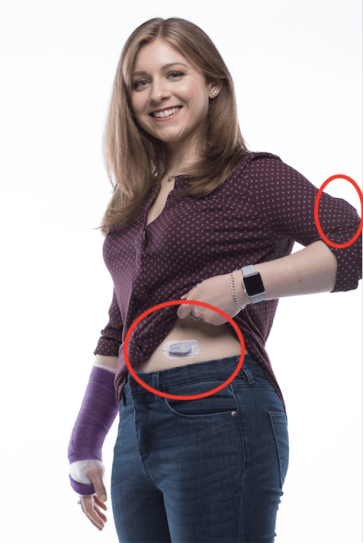
Circled Devices
My OmniPod (on my arm) and my Dexcom (on my stomach) are stuck on me 24/7.

I feel it the most, though, when people stare. Whether unconsciously or purposely, people do ogle at it in very not subtle manners. Which makes me feel extremely uncomfortable. It’s worse when they don’t even ask me what it is – I’d rather have a chance to use it as a teaching moment than to have someone walk away not knowing what the device does. This tends to make swimsuit season a little less welcome for me. Nothing will stop me from donning a bathing suit at the beach or by the pool, and I do so as much as possible in the summertime. But it’s just not as fun when I’ve got to cope with lingering looks, especially when I’m an admittedly insecure person in the first place.

So it’s a more complex question to answer than you might realize. Wearing a medical device 24/7 is humbling. It keeps me alive. I’m privileged to have access to it. I’m grateful for the ways it’s improved my life. I’m always wearing it, but it’s not at the forefront of my mind – unless it chooses to make its presence known by alarming, or I’ve got people blatantly checking it out. It’s kind of like diabetes itself. It can make you feel a gamut of emotions, but no matter what, it’s always there. It’s just a part of me, and I can deal with that.

A Good Diabetes Day

I’ve blogged plenty of times about my “bad” diabetes days – you know, those posts that I talk about stubborn blood sugar that won’t come down/up, or how technology refuses to cooperate, or how I’m feeling intense diabetes burnout.

This made me wonder about the “good” days. Besides my blood sugars looking so perfect that I question whether my pancreas has magically started to produce insulin again, what sets those days apart from the “bad” (and plain, old, ordinary days)?


The answer likely varies among people with diabetes, but let me describe my version of a darn good diabetes day:

  • Going to an endocrinologist appointment first thing in the morning and discovering that your A1c has dropped nearly half a point, down to 6.7. YAAAAAAS!
  • Being told by said endocrinologist that you’re doing an amazing job, and passed all other blood work tests with flying colors – I was most thrilled with my HDL cholesterol (the good kind) levels, which have gone up due to my current exercise regimen. And she said I lost a couple pounds, to boot!
  • Coming home from work to a package from Dexcom containing the brand new G6 receiver, transmitter, and sensors. I can’t remember the last time I was so excited about a delivery!
  • Topping it all off, my blood sugars throughout the day weren’t too shabby.
ezgif.com-video-to-gif.gif
Dancing excitedly with my new Dexcom G6! My puppy couldn’t understand what the hullabaloo was all about.

It’s days like that that make me feel validated – like all my hard work is worth it. It isn’t easy to manage diabetes every moment of every day, so when the diabetes stars align like this, it feels…wonderful.

My Involuntary Hiatus from the CGM

Currently, I’m on a break from my CGM for an unknown length of time.

This temporary split wasn’t mutual; rather, it was due to a series of coincidences that occurred much to my chagrin. The short version of the story is that my CGM transmitter died a week earlier than I had anticipated. I thought it would be pointless to order a replacement since I was expecting the new Dexcom G6 to arrive at my house before the transmitter expired. When I learned there was a delay that would cause me to wait a little while longer, I realized I didn’t have much of a choice to go ahead and order a replacement G5 transmitter. After all, it was fly blind without my CGM for just a few days versus the possibility of missing out on that data for weeks.

fullsizeoutput_75dThe choice was obvious, and as I write this, my G5 replacement transmitter is on its way to me.

Though there’s comfort in that fact, I feel weird not having my CGM data available to me. It’s kind of nice to be wearing one less medical device on my body, but that’s really the only benefit of being without my CGM. The information it provides to me is invaluable, and an involuntary break from it makes me feel uneasy. I’m constantly reminding myself that I managed diabetes just fine for the first 15 years I had it without a CGM’s aid, which does offer a small amount of comfort. But it also reminds me how important the CGM has become in my daily care choices. Twenty-four hour, real-time updates of my blood sugar help me live a life less interrupted by my diabetes, something that’s extremely difficult to give up after 20 relentless years of dealing with it.

You really don’t know what you’ve got until it’s gone – even if it is only for a short period of time.

I’ll make the most of this situation. It will at least help me get in tune with my body’s signals when my blood sugar is high or low, which is definitely not a bad thing. And it makes me appreciate something that not every person with diabetes is lucky enough to have access to: serving as a humbling reminder of my fortunate circumstances.

Instagram vs. Reality

What does Instagram vs. reality mean?

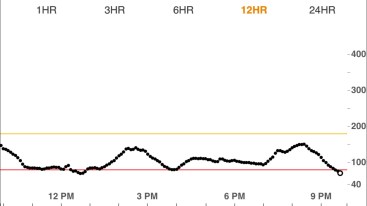
It’s best explained using pictures. Take the following, for instance:

The first image is basically the ideal Dexcom graph. It depicts steady, on-target blood sugars for hours.

It makes the image next to it look that much uglier. The second picture shows blood sugar that rose rapidly over a short amount of time and flattened out at a level so high that it exceeds the Dexcom maximum number.

Instagram: The social networking site that promotes flawlessness. You scroll through a feed and see images that convey society’s notions around perfection. And it’s annoying. The rational part of you knows that, surely, the stunning blonde swimsuit model on your feed probably has cellulite, only you never see it because it’s airbrushed and filtered away. That’s why it’s equally unrealistic to share nothing but the “perfect” blood sugars with the diabetes community. Diabetes is FAR from being sunshine-y and unicorn-y all the time.

The reality: Diabetes is up-and-down, mentally and physically. It’s not always going to behave the way you want it to, even if you’re doing all the right things and trying your best. That’s why I like sharing the good and the bad – it makes the victories that much sweeter, and the less-than-triumphant moments more educational.

So This Just Happened…

Capture

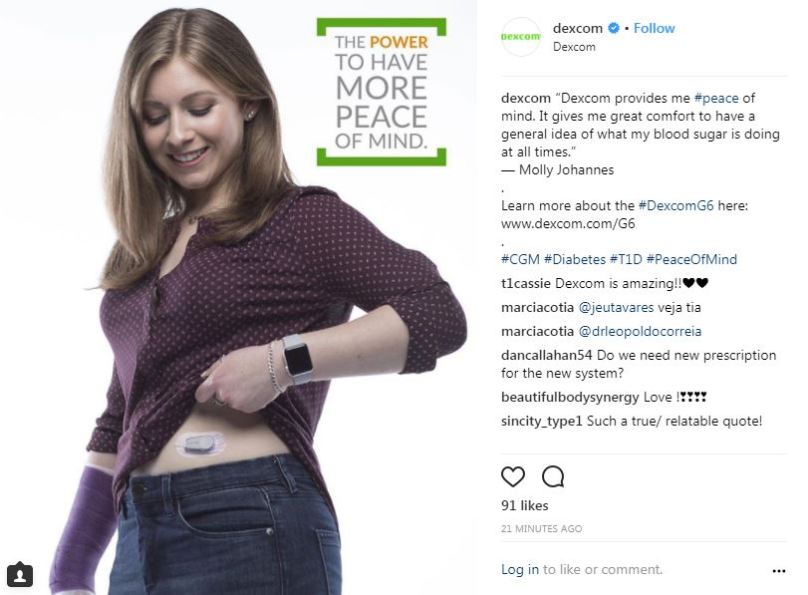
Whoa! It’s incredibly surreal to see myself on Dexcom’s Instagram feed, but there I am! Shout out to my T1D buddies who messaged me the day this appeared and made me feel like a rock star!

Glamour shots aside, this quote really does capture how I feel about Dexcom. It’s truly one of the most powerful tools in my diabetes care kit. In addition to helping me improve my blood sugars by giving me crucial data, my CGM also provides me peace of mind because it does a lot of extra work for me – saving me a lot of time and energy.

This just makes me even more excited to get my hands on the Dexcom G6, which is bound to make life with diabetes even easier! I have the feeling that I’ll get one sooner rather than later…

Fantastic News! Dexcom G6 is Approved by the FDA

The official announcement has appeared across all sorts of social media in the last 48 hours, but I thought I’d say something about it here, too…

The FDA approved the Dexcom G6, the new and improved version of their Continuous Glucose Monitor (CGM) system!

This is particularly exciting, because the G6 comes with many new and exciting features:

  • 10-day wear (as opposed to seven days)
  • Slimmer and smaller sensor
  • Easy-to-use inserter
  • Zero calibrations necessary – the system does not require manual blood sugar inputs

Visit the Dexcom website to read about all of the details. And as more information comes out about its availability, stay tuned…

…because you may recognize a familiar name and face along the way!


Waiting for the Shift in Numbers

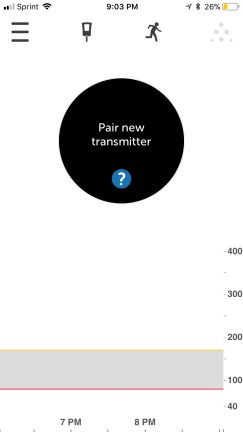
Call me crazy, but sometimes, I find myself staring at my Dexcom app in anticipation of catching the numbers changing.

It might be because I’m hoping for a change (coming down from a high, coming up from a low). Or it could be because I find a strange satisfaction in receiving real-time data of my blood sugar levels. Whatever, so be it: I’m a diabetes nerd!

I remember this particular example bringing me happiness, because I’d been hovering pretty close to my high limit (170 mg/dL) for a couple hours. So watching that three-point shift happen reassured me that I was going to come down. And sure enough, 15 minutes after capturing these screenshots, I was going down closer to my target of 100.

When it comes to diabetes…it’s the little things, right? Am I the only one who likes monitoring my CGM this closely, every once in a while? Or am I just weird?

Maybe don’t answer that last question…

Memory Monday: 1st Generation Dexcom CGMs

One Monday per month, I’ll take a trip down memory lane and reflect on how much diabetes technology, education, and stigma has changed over the years. Remember when…

…Dexcom CGMs made their debut?

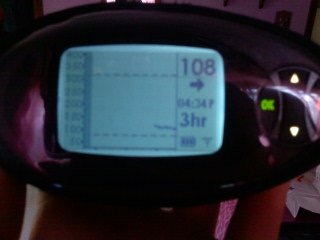
It was just over ten years ago that the Dexcom SEVEN CGM System launched. I didn’t actually know more about it, though, until a couple years after the fact. That was when my endocrinologist encouraged me to sign up for a week-long trial run with this new technology to see how I liked it.

023E152D-A6FF-4555-80F0-67764C9523BB
Then: The Dexcom SEVEN CGM System

I didn’t like it, I LOVED it. I quickly became obsessed with the ability to monitor my blood sugar levels at all times. But it’s funny to think back to how bulky and just plain different that first-generation system was compared to today’s sleek and highly functional models.

A few key differences between now and then:

  • Size. The first CGM was large. It was roughly the size of my OmniPod PDM, which might not seem so significant, but it is when measured up against newer CGM models.
  • Display. The screen on my first CGM was very simple. No colors, no frills – just readings of my blood sugar. That was all fine, but I have to say that I’m a fan of color-coordinated blood sugar reports (red for low, yellow for high, gray for in-range numbers). In a weird way, it motivates me to keep my graph as gray as possible.
  • Distance restrictions. I hated that I had to keep my first CGM so close to me at all times, or else run the risk of losing data! It was hyper sensitive and my readings would be lost if I left the same room as the CGM for more than a couple of minutes. My CGM is now able to pick up readings from much farther away – sometimes, even when I’m downstairs and it’s upstairs.
  • Sounds. My memory is a little foggier on how the sounds compare between old and new Dexcom CGM generations, but I do recall the beeps and vibrations being far more aggressive and annoying on older models.
  • Smartphone access. This might be one of the biggest and best changes – the ability to download an app on your smartphone that can replace a Dexcom receiver. How awesome is that? Plus, if you choose to do so, you can invite family and friends to monitor your blood sugar along with you, which can be helpful in certain situations. Cell phones are so ingrained into society, so this move was brilliant on Dexcom’s part.
IMG_4180
Now: Dexcom data, on my iPhone!

All these improvements have made me a member of Team Dexcom for life. It’ll be neat to see what they come up with next to help make the lives of people with diabetes easier and better.