T1D and Cosmetics: My Thoughts on Jeffree Star’s “Blood Sugar” Palette

One of my many interests is makeup: shopping for it, applying it, experimenting with it. I love that it helps enhance certain features of my face, and nothing makes me happy quite like a glittery eye shadow palette or a fresh tube of bright lipstick.

A dear friend of mine shares this slight obsession with all things related to cosmetics/skincare/beauty products. Often, she’ll text me when she scores a good deal on a high-end product, and I’ll message her with details on my new favorite facial mask, and we’ll bask in our delight together.

So I wasn’t too surprised when I got a text from her a few weeks back that showed a picture of a new eye shadow palette she discovered online. She captioned the photo: “If this palette isn’t on your radar it needs to be. Just for the title.”

Here’s the palette she was talking about:

61f2a931-4142-4b80-950d-b7fd79d0f75b.pngdef9fa2c-a465-4bb3-b66d-f04c9f03071d.png


Nope, your eyes aren’t playing tricks on you: This palette is called “blood sugar”. My first reaction was OMG I NEED TO BUY IT. I was curious to see if it was created with T1D in mind, so I did a little more research on it.

Jeffree Star, a well-known makeup maven and cosmetic creator, is behind this particular palette. According to a video posted on his YouTube channel, and in Star’s own words, the palette got its shape and its name because:

I was very inspired by like doctor medical boxes. I’m very into the medical field in general. I love reading books and watching documentaries on Netflix. I am just very into that whole thing…”

So right away, I understood that this palette was NOT created with diabetes in mind. But I wonder whether it would’ve behooved Star to have done a little more research before naming some of the shadows in the palette…

I don’t take issue with “glucose”, “blood sugar”, “prick”, or “ouch” being the names of a few of the shades; however, I don’t think it was particularly wise to use “coma” as a shadow name. Yes, coma! In this context, it could be misconstrued, for sure.

As I watched his palette reveal video, I kept waiting for Star to offer up some sort of legitimate medical knowledge that might explain his reasoning for naming the colors comprising the kit. But no such luck. I couldn’t help but scoff by the time he reached the color he dubbed “coma” – he talked about how he wanted the stamp in the eye shadow pan to be the “medical symbol” (which is more formally known as the caduceus). The fact that he so easily (and seemingly carelessly) glamorized a coma AND the symbol that graces most medical IDs by naming a rich maroon-hued eye shadow after both…is something that just leaves me scratching my head.

Now I’m not someone who is necessarily “politically correct” at all times, and I don’t think I’m being oversensitive by having a negative reaction to this beauty product. Needless to say, I didn’t end up purchasing the palette, because I don’t want to support something that I find somewhat insulting and ignorant.

Jeffree Star is obviously extraordinarily talented and makes beautiful cosmetics, but I think he should consider a different approach the next time he gleans inspiration from something (such as the medical field) that he isn’t well-versed in.
Memory Monday: The First Time I Met an Endocrinologist that I Didn’t Like

One Monday per month, I’ll take a trip down memory lane and reflect on how much my diabetes thoughts, feelings, and experiences have unfolded over the years. Today, I remember…

…the first time I met a diabetes doctor (endocrinologist, or endo for short) who I didn’t like. At all.

I knew right off the bat that we would be a bad fit, because he started the appointment by sharing his own blood sugar with me (as he was also a T1D). “Oh, I’m 136 right now…that’s a bit high, so I’m going to take insulin for it.” He reached for his insulin pump and I stared at him, nonplussed. Since when was 136 a “high” blood sugar? Why was he sharing this with me? If his own target blood sugar range is so narrow, then what the hell is he going to think of me when he reviews my own data?

C0E4AC20-C524-432B-8F8C-8161C2F776CD
The face I make when I think about that awful appointment and the negative thoughts it gave me about my A1c.

The appointment only went downhill from there. At this point in my life, I was a brand-new college freshman, and my diabetes was simply no concern of mine. So my blood sugars and A1c weren’t great.

And I got scolded for it.

Throughout the entire appointment, I felt judged. I held back tears at points because I felt that I had to explain myself to this guy, that I had to somehow get him to understand that the transition to college hadn’t been easy on me, and that’s why my A1c was high. But I couldn’t get the words out. Instead, I sat there, numb, as he lectured me on what I should and shouldn’t be doing to take care of my diabetes. He kept insisting that I go onto a pump, which at that time, was totally scary to me – a non-option. He was so adamant that I got frustrated and shut down towards the end of the appointment, nodding and smiling tightly at his words.

I’m certain that I cried on the way home from that appointment out of frustration over how it went. I didn’t feel motivated to take better care of myself; instead, I felt rotten. I realized that just because someone is a doctor, it doesn’t mean that they necessarily know how to convey messages about health to patients. In other words, not everyone has an appropriate bedside manner.

Fortunately, that was the first and last time I saw that doctor. He moved to a different practice weeks after I saw him. My next endo appointment was with my current doctor, and seven years later, it’s one of the healthiest doctor/patient relationships I’ve ever experienced. When I look at it that way, it was worth experiencing the worst in order to get the best.

Why I Decided to do a 3-Day Cleanse (and How it Impacted my Blood Sugars)

No carbs. No dairy. No meat. No processed foods. Strictly vegetables, fruits, and shakes for the next three days. 72 hours – I could do it, right?

Last week, I completed a 3-Day Cleanse. My goal was that it would help me feel a little bit refreshed after a couple weeks of nonstop gluttony. I figured it’d help reset my system and make me feel less bloated and tired. I didn’t want to do a typical “cleanse” though, the kind that forces you to stop eating any and all food and stick with juices. That’s why I did this particular program – I would be eating real foods on a regular basis throughout all three days. The bonus was that it would be foods I’m familiar with and are generally low carb, which could only mean good things for my blood sugar.

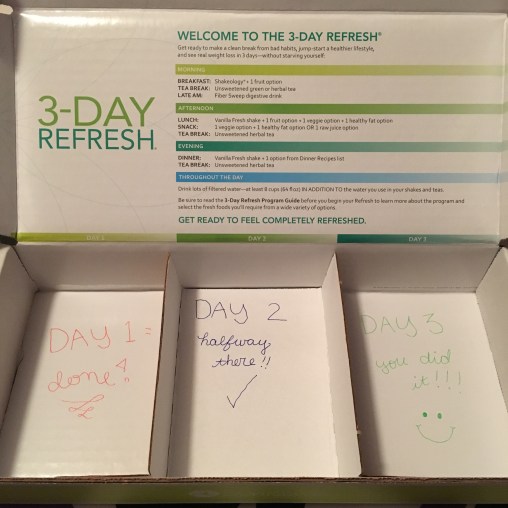
My routine for all three days would follow this format: Wake up, drink a glass of water, blend a shake together with one serving size of fruit. I’d have a cup of herbal tea one hour after breakfast, and one hour after that, I’d have a fiber-filled drink. Lunch would consist of another shake, one serving of vegetables, one serving of fruit, and one spoonful of hummus. I’d have an afternoon snack of baby carrots and one spoonful of almond butter with another cup of herbal tea an hour after consuming the snack. Dinner would be one last shake, one cup of vegetable broth, and a spinach salad with olive oil and lemon juice drizzled on top. I could have a final cup of herbal tea any time in the evening.

5A4A1ADE-4D94-4BDE-BA41-FA1453340655

I didn’t expect to learn as much as I did throughout the program, but those three days taught me a lot about how the things I put into my body impact not just my blood sugar, but my state of mind. Here’s what happened during my cleanse:

  • Day 1 – This day was by far the easiest to complete. Despite dialing back the amounts and types of foods I was consuming, I didn’t feel hungry at all – everything sated me. I was really enjoying watching my Dexcom CGM graph because it barely budged. I stayed right around 90-110 mg/dL for most of the day, probably because I was eating minimal carbs. Fewer carbs means less room for error, and this concept was definitely cemented into my mind by the end of the cleanse. I went to bed with a slight headache at the end of day 1, but a smile on my face. This would be a breeze!
  • Day 2 – My CGM sensor went kaput by mid-morning, and I was PISSED about it. I wanted the ability to continue tracking my blood sugars on this cleanse, and suddenly it was no longer available to me (because oh-so-conveniently, it was my last sensor in stock). Fuming over my CGM situation, I started feeling slight pangs of hunger shortly after having my fiber drink. I ate lunch as soon as I could after that, and spent much of the rest of the afternoon fighting a headache and dreading going home to see – not eat – my mom’s delicious home cooking. On the brighter side of things, my digestion seemed to be improving already and I felt a bit less bloated.
  • Day 3 – I went from “Oh, this cleanse will be a breeze!” to “OMG THESE ARE THE LONGEST THREE DAYS OF MY LIFE GIMME REAL FOOD AGAIN BEFORE I HAVE A MELTDOWN” in less than 48 hours. That’s gotta be a new record. I distracted myself as much as I could from my misery by burying myself in my work, which helped to a degree. But I couldn’t fight the lightheaded sensation that seemed to grip my entire body. I was confused by that – I though only eating real, plant-based foods would eliminate crummy feelings. Maybe I was experiencing a sort of withdrawal as my body got used to this new diet? I can’t confirm that, but I suspect that after a few more days, I likely would’ve felt much better…or hungrier. I’ll leave it to speculation because there is no way I’m doing this again any time soon. But MAN, am I proud of myself for completing the cleanse without cheating, not even once.

So if I felt THAT miserable toward the end of the cleanse, then why am I glad that I did it? Mainly, I’m astonished at how much easier it was to maintain my diabetes and “desirable” blood sugar levels in that three-day time period. Even without my CGM, I was still getting great results. It reinforced something that I already knew: that the body will react accordingly to the quantity and quality of foods that are used to nourish it. It made me realize that perhaps I should toy with cutting down my daily carb intake and upping my veggie/fruit/protein consumption to find out whether that positively impacts my blood sugar in the way that I think it will. This doesn’t mean I’m starting a low-carb or keto diet; rather, I’m simply going to follow a more thoughtful one.

To sum it up, this three-day cleanse/torture act/lesson (whatever you want to call it) helped make my understanding and appreciation of food much stronger, which makes it worth it in my book.


5 Ways that Hot Weather Affects Diabetes

The summer heat seems to be here to stay in Massachusetts. We’ve experienced several weeks of soupy, high-heat weather that *almost* makes me long for cooler, autumnal days…but not quite, because that just means winter (and snow – blech) is right around the corner.

Truly, I do enjoy the summertime. To me, summer is about trips to the beach, ice cream consumption (and lots of it), barbecues with family and friends, long walks in the neighborhood, and endless outdoor adventures. Aside from all of those lovely things, summer also means that it’s time to be a little more diligent when it comes to my diabetes. That’s because hot weather can play some cruel tricks on a T1D’s body. What do I mean by that? Here’s five ways diabetes can be affected by hot weather.

  1. Dehydration can lead to high blood sugar. Everyone knows that it’s important to stay hydrated when it’s hot out, but it might be less common knowledge that dehydration can directly affect blood sugar. There’s a scientific explanation for this: If not properly hydrated, the body sees an increase in blood glucose concentration because blood won’t flow as easily to the kidneys, making it difficult for the kidneys to get rid of excess glucose in urine. The best way to prevent this, naturally, is to drink plenty of water and monitor blood sugars.
  2. Sunburn can drive up blood sugars. I’m very familiar with how a sunburn can result in higher blood sugars; in fact, just last week I was dealing with a particularly gnarly sunburn on my thighs and belly that not only made my numbers higher, but also really hurt. My skin was literally damaged, so the stress from the injury lead to retaliation from my blood sugar. Luckily, it only lasted about 48 hours, but those couple of days were challenging as I dealt with sticky highs that were practically resistant to insulin. And for the record, I DID apply sunscreen – numerous times – when I was at the beach. Next time, I’ll seek shade under the umbrella.
  3. Sweat can make it difficult for devices to stick. I don’t know a single medical device that’s immune to prolonged exposure to moisture/water, but that doesn’t prevent me from spending as much time as I can outdoors/at the beach/by the pool in the summer. Thank goodness for Skin-Tac wipes and medical adhesive tapes that help preserve my precious pods and sensors!

    86499DC7-6F88-4A2F-AE0B-57E4F27B91E7
    “Sun-kissed skin so hot/We’ll melt your popsicle…and your insulin” – Katy Perry (with some help from Molly Johannes)
  4. Insulin can overheat. There’s a reason why insulin vials come packaged in cartons with directions that specify what temperature insulin should stay at in order for it to be safe to use. Insulin can spoil easily when it reaches a certain temperature, so it’s important to store it in a cool place when the weather’s warm. I alternate between a mini portable cooler (that can hold 3 vials of insulin) and a pouch from FRIO – both do an excellent job at keeping my insulin cool.
  5. Low blood sugars can occur more frequently. Summertime is prime time for outdoor activities that result in higher energy expenditure. So it’s no wonder that blood sugar tends to plummet in hot weather. Looking at it on the bright side, it’s an excuse to eat even more ice cream – but it also means that monitoring how I feel and checking blood sugars often is that much more important.

Regardless of the diabetes challenges it may cause, I love summer weather, and I know I’ll miss it the moment the first snowflake falls this year.

Reflections on my Recent Endo Appointment

Last week, I wrote about some anxiety that I was feeling the day before I was due to see my endocrinologist. Now that the appointment has come and gone, I feel like I understand the reasons why I was so nervous…

  • Reason #1: Some part of me must’ve known that my A1c has gone up over the course of the last three months – it rose half a point, much to my dismay. I confessed to my doctor that I’ve been a little careless, particularly in the last month or so, when it comes to carb counting and healthy eating. Luckily, she wasn’t critical of me, but I almost wish that she’d reprimanded me in some way. It would’ve been the talking-to that I felt I deserved.
  • Reason #2: My endo permanently switched locations: She’s now based at the medical center that I used to go to when I was seeing a pediatric endocrinologist. I hadn’t been back there in about eight years, and boy, it brought back some unexpected emotions. I must admit that I had to hold back tears as I walked into the building. I don’t know why all the feelings hit me so hard, but I suspect that it might have been because of the flood of memories that flowed through my mind. It also symbolized the journey I’ve been on in just the last eight years of life with diabetes, in which I:
    • Transitioned from injections to a pump.
    • Stopped using Lantus.
    • Started using a Dexcom.
    • Improved my A1c/overall health significantly.
    • Decided to become a more active member in the diabetes community.

Those are some major changes, and the magnitude of them practically knocks me               out as I think about the last 20 years I’ve had with diabetes.

321BFD12-49FF-4818-9804-EB280EAAE830
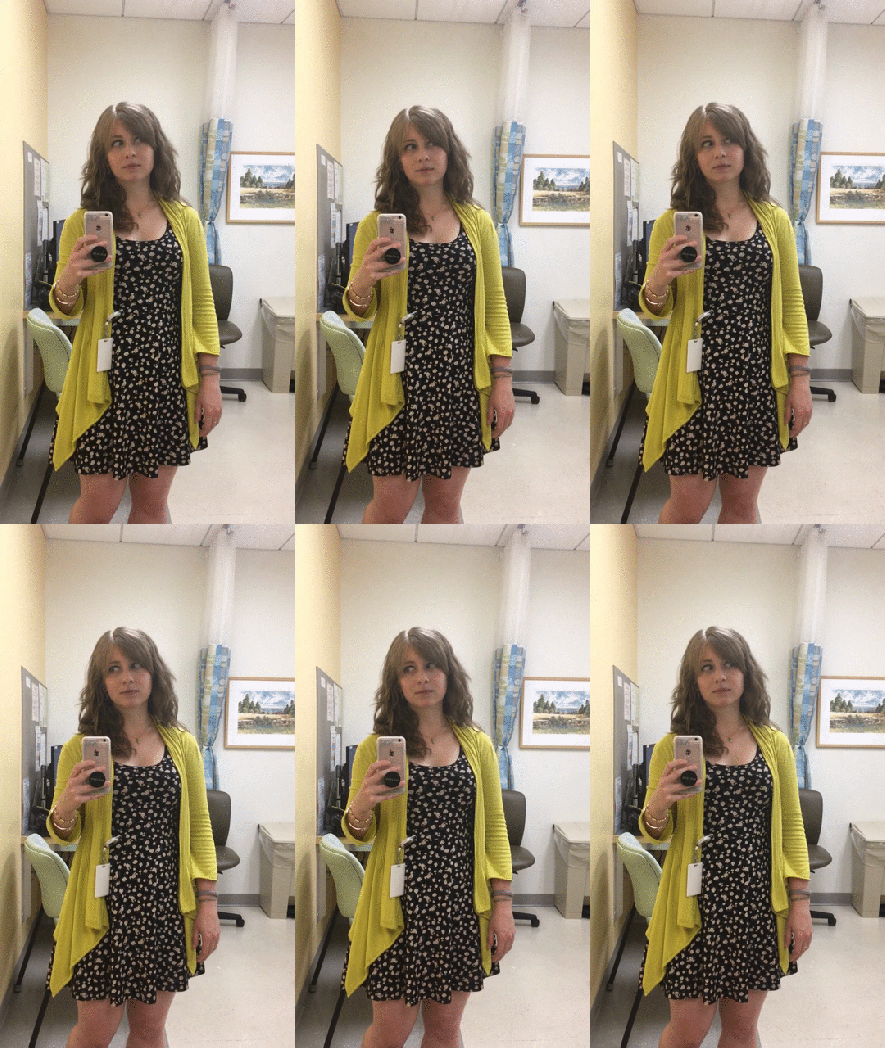
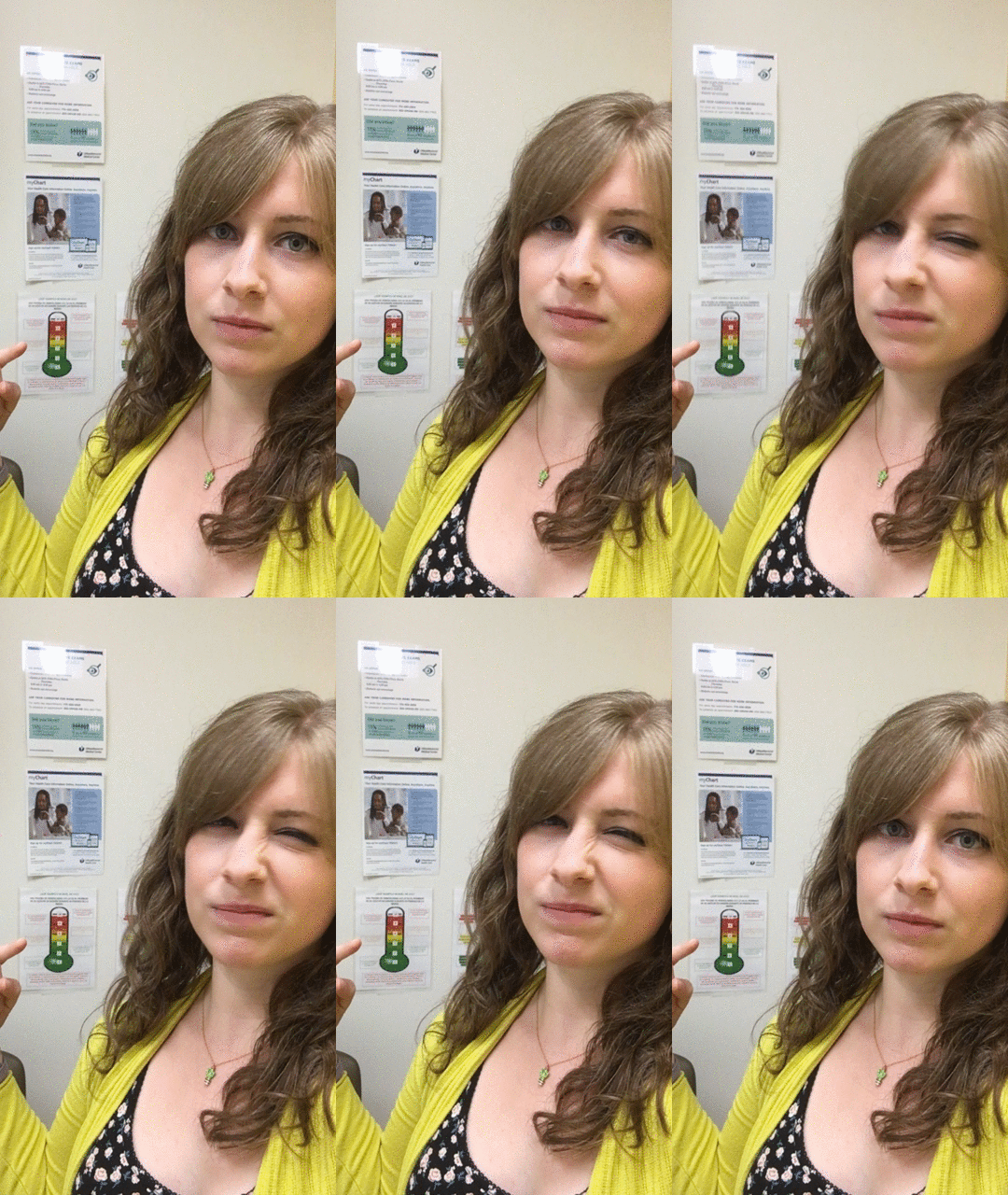
Just making some awkward faces while I wait for my doctor. Also, I love that the exam room has a full-length mirror in it: It’s perfect for taking pictures/killing time while I wait!
  • Reason #3: I was meeting all sorts of new people, which is very nerve-wracking to an introverted extrovert like myself. I was used to the receptionists and nurses at the old location. I got to know them and vice versa. It made going to appointments a little easier. At this new/old location, though, I don’t know a soul except for my doctor. A reassuring smile or light conversation would’ve placated me on this visit, but perhaps those things will come in time.

Anyways, now that I’ve had time to think about the emotional aspects of this appointment…I’m going to switch gears and start doing the things that I need to do and that I am capable of doing in order to get my A1c back to where I want it. I know that I’ll get there. As my appointment wrapped up, I looked my endocrinologist in the eyes and promised her that the next time she saw me, I’d be down more than half a point. And I intend to fulfill that promise.


Favorite Things Friday: My Verio IQ Meter

One Friday per month, I’ll write about my favorite diabetes products. These items make the cut because they’re functional, fashionable, or fun – but usually, all three at once!

One of the most crucial components of a T1D toolkit is the glucometer, also known more simply as the meter. This little device instantly measures blood sugar levels in a person with diabetes: stick a test strip in the meter, poke a finger, and wipe a drop of blood on the test strip in order to get a blood sugar check within seconds from the meter.

Ideally, a meter is used multiple times a day by a person with diabetes – the exact number depends on how often they prefer to check their levels. Personally, I check my blood sugar five or six times each day, so I’m using my meter fairly frequently. As such, it’s always been important to me that I have a meter that is accurate, user-friendly, and compact.

Fortunately, I found all of that with my Verio IQ meter.

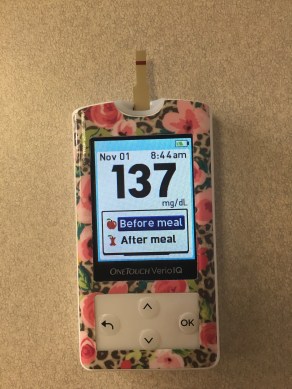
IMG_4393
I can’t imagine checking my blood sugar with any other meter.

The slim, bright white device fits nicely into my Myabetic case, making it easy to tote around with me everywhere. It’s pretty trusty and generates results commensurate with my CGM. It doesn’t run on batteries; rather, it can conveniently be recharged every 10 days or so. But my favorite feature of my meter is the back light: If I need to wake up in the middle of the night to check my blood sugar, I don’t have to switch on the lamp that sits on my nightstand. Rather, I merely stick a strip into the meter and it lights up on its own, making it easy for me to see where to wipe my drop of blood. After five seconds elapse, bam, my blood sugar reading pops up on the screen in bold numbers.

I can’t remember exactly when I started using my Verio IQ – definitely prior to college – but I’ve stuck with it for at least eight years now because it works so well for me. When I got onto the OmniPod three years ago, it never even crossed my mind to give up my Verio in favor of using the PDM to check my sugars. It might seem crazy to others that I carry around one superfluous device, but it’s what works for me.

Dexcom Delivered When I Needed it Most

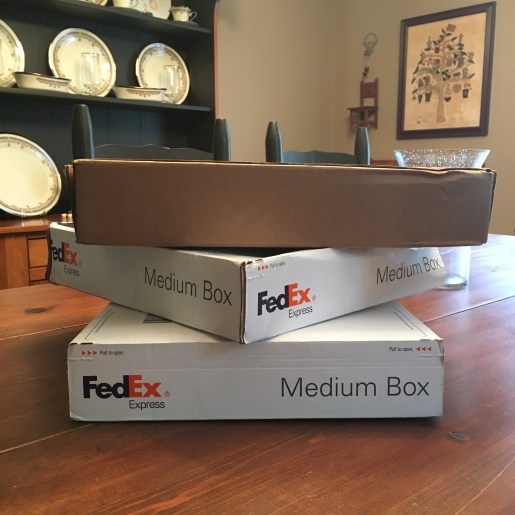
Last week, I received not one, not two, but FIVE packages in the mail. No, I didn’t go overboard with some online shopping – it was all deliveries from Dexcom to help me get my CGM up and running again.

You might be wondering: Why were there so many packages? In theory, I just needed a couple of replacement sensors and a new transmitter – couldn’t it all go in one box? Well, I wound up getting a little more than just the aforementioned supplies…

79D46312-CF33-4E28-834E-9CDE7608BFEE
Not pictured: another two boxes I received from Dexcom. Not sure why they couldn’t send everything in one large box, but beggars can’t be choosers.

That’s because I had the stupendously (emphasis on the STUPID-sounding part of that word) great idea to power up my old G5 CGM while I waited for my G6 materials. I had a few G5 sensors leftover from before I made the transition to the G6, and to my knowledge, I had a working G5 transmitter. So I followed the procedure to get my G5 going: I inserted a G5 sensor (ouch!), snapped the transmitter into place, and started the warm-up on my G5 transmitter.

But something was…off. The Bluetooth icon was blinking in the upper left-hand corner, and I couldn’t see how much time had elapsed in the two-hour warm-up period. At a loss as to what to do next, I left the receiver on overnight to see if it would ever pick up a signal from my G5 sensor/transmitter, to no avail.

That’s when I made the “fatal error” of shutting the system down and trying to restart it. This triggered the G5 receiver to enter a reboot cycle that wouldn’t stop. Any time I pressed the circular home button, the system would buzz and the screen would light up, as if it was about to start working. After 45 seconds or so, the screen would go black again. There was no way to interrupt this reboot loop – even sticking a paper clip into the tiny hole in the back of the receiver wouldn’t correct the faulty software.

So now, not only was my G6 out of commission, but my G5 was a goner, too.

After a few phone calls to Dexcom technical support, I had answers as well as supplies sent my way. I learned that there’s a known error with the G5 system that causes the reboot cycle to launch. I should have waited longer for the G5 transmitter to connect with the Bluetooth on my receiver (i.e., I should’ve waited for the Bluetooth icon to stop blinking), but it wasn’t necessarily my fault for having a device with a known software issue. I would receive a new G5 receiver because my old one was still under warranty, as well as a G5 replacement sensor. I would NOT get a G5 transmitter, because I’m convinced the battery on the current one is still good, but I was informed that once a transmitter is activated, the battery keeps going until it runs out of juice. Interesting. That means that it could, in theory, stop working any day now, because the transmitter was activated and last used in April 2018.

Hopefully, I’ll never have to get another G5 transmitter because I’ll be able to rely on my G6 from here on out. It gives me comfort to know I have backup G5 supplies, but I’m pretty much married to my G6 at this point. Dexcom kindly sent me the required new transmitter for the G6 system, which arrived on Thursday of last week. I got a return kit for the old G6 transmitter the previous day, and on Friday, my new sensors came in along with a return kit for my defunct G5 receiver.

Sure, it was a lot of packages to sort through in the mail. And it was mildly frustrating that I had to wait two days between getting my new G6 transmitter and compatible sensors. But the most important thing is that I’m now reconnected to my G6 and feeling thankful that Dexcom delivered when I needed it most.


What to do When Diabetes Technology Fails (at the Worst Possible Time)

This past Saturday afternoon, my Dexcom G6 sensor stopped working. It wasn’t sending data to my smartphone app or my transmitter, so I was forced to fly blind…at a party with tons of people I’d never met before, an impressive food spread, and few beverage options other than beer from a keg or spiked punch.

Definitely not a good time for my Dexcom sensor to go kaput, especially considering I was getting on a plane the next day and didn’t have a backup. And I wouldn’t get my hands on a fresh sensor for a couple more days, when I would return home from my adventures in Washington, D.C. and Nashville, Tennessee.

So yeah, it was pretty much the worst timing ever for my heavily-relied-upon diabetes technology to fail.

How did I handle it? It might sound incredibly obvious, but…I just reverted back to life before a CGM, meaning that I tested my blood sugar much more often than I do when the ol’ Dexcom is up and running. At the aforementioned party, I sucked it up and pulled myself away from conversations to check my numbers every so often with my meter. I still participated in barbecue and beer consumption, but I dialed it back because I couldn’t be sure of what direction it would send my blood sugar in, or how quickly it would happen.

As for the rest of my trip, and my travel days, I remained diligent. I’d test and correct as needed approximately every two hours. I set alarms for the middle of the night so I could be certain that I wasn’t too high or too low. I went back to relying on sensation – was I feeling thirsty because my blood sugar was high? Was my shakiness a sign of an oncoming low? It surprised me how easily I slid back into those routines, but I guess that after so many years of practicing them, it makes sense that I was still in tune with my body.

393F3AB0-9B48-4E65-BA9F-8EBDFB3622AD
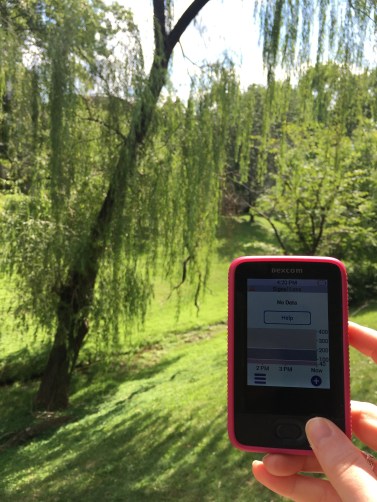
No data…no problem.

And, perhaps most shocking of all, I remained pretty calm about the whole situation. Normally, it’d send me into a panic and I’d chide myself over and over for not having a backup sensor. But, really, I carry around enough diabetes junk – adding a clunky sensor insertion device into the mix sounds excessive. After all, the sensors are supposed to WORK for the full ten days that they guarantee. It gets exhausting, having to anticipate technology failures when they should never happen, so I shouldn’t be upset with myself for not carrying more than the essentials.

The lesson in this experience, I think, is to be unafraid to depend on my intuition. I literally grew up managing my diabetes with hardly any technological aid, and I can do it again now in a heartbeat as long as I trust myself and the process.

Three Things I Learned about Myself after Running a 5K

I recently ran in my first-ever 5K race. In the weeks leading up to the race, I experienced a variety of emotions – particularly self-doubt – that made me question whether I could really do it. Would my diabetes cooperate the morning of the race? Should I eat a big breakfast before running, or go into the race fasting? How would I handle correcting a low blood sugar while running? What about a high blood sugar? Was I even competent enough to run?

All of my diabetes anxieties aside, I’ve always hated running. HATED it. I played field hockey every fall when I was in high school, and we were required to run a timed mile before the start of each season. I dreaded this mile because I usually wound up finishing the mile last, or close to last – my asthmatic lungs and negative attitude helped ensure that I would give up running halfway through and resort to walking a sluggish, defeated pace.

So like I explained in a recent blog post, making the decision to go through with this 5K wasn’t easy. But I wanted to take on the challenge and prove something to myself.

AND I DID IT!!! I’m pleased to say that I completed the race on a gorgeously sunny Saturday morning along with hundreds of other runners. I was totally proud of myself for accomplishing this goal, especially since I had less than a month to train for it. Plus, I learned a few things about myself after participating in the race:

  1. I should have more faith in my ability to manage my diabetes. I spent so much time dwelling on the “what ifs” (a bad habit of mine) regarding what my diabetes might do during the race that my stomach was doing somersaults as I approached the start line. But as soon as I turned my music up and started running with everyone else, my doubts vanished. And better yet, I was absolutely fine throughout the race. I didn’t eat anything beforehand and went into it with a blood sugar of 142, and I stayed pretty steady for most of the 3.1 miles (I did start to spike soon after crossing the finish line, but I’m certain that was because of the adrenaline). I simply did what I’d been doing during my past month of training, and my experimentation with fasting vs. non-fasting paid off.
  1. I’m a lot more determined than I realized. I’ll admit that there were a few points throughout the race when I wanted to give up. I was breathing hard and my legs were starting to ache, but not once did I stop running and slow down to a walk. I pushed myself to keep going, even though I didn’t want to, and my determination helped me achieve my personal best running time.
  2. I’m ready to train for future races. This experience awakened something in me that wants more challenges. I’m still not in love with running, but I think I am a fan of trying things out of my comfort zone. I want to continue to get faster and stronger so I can try tougher races and physical tests. It’s almost like it’s an outlet for me to tell my T1D that it can’t stop me – that I’m stronger than it no matter how hard it tries to knock me down.

My One-Month Dexcom G6 Review

My first month on the Dexcom G6 went by so quickly. The G6 entered my life during a particular hectic period: between a trip to Vegas, my 25th birthday, family gatherings, and work obligations, May was marked by constant activities…which made me that much more grateful to have my G6.

Before I continue with this review, I’d like to note how I got priority access to the G6. Approximately one year ago, I applied on Dexcom’s website to be a “Dexcom Warrior”. Basically, this just means that I filled out a form with my information and some background on my diabetes story. I didn’t expect anything to come of this; if anything, maybe I’d be contacted for someone to write a bio piece about me.

Fast-forward to January 2018: I receive an email informing me that I’ve been selected to participate in a Dexcom marketing campaign. There weren’t too many details other than that a shoot was taking place over two days in Atlanta, Georgia in February and that Dexcom would pay for my flight and hotel if I gave them my time that weekend. I was thrilled to receive the offer and gladly accepted. And I’m grateful I got to have such a unique, fun experience.

I didn’t learn until several weeks later that my participation in the marketing campaign would allow me to receive early access to the G6. In other words, I was going to be one of the first in the world to try this technology. My head is still spinning from that fact, and it’s not something that I take lightly. I understand that I’m fortunate to have access to it, and in return for this special privilege, I am putting as much truth and transparency as possible into my reviews of it.

Onto my one-month evaluation…new observations include:

  • The whole 10-day automatic shutoff thing bothers me a little more than it did in the beginning. There’s no workaround, so I’ve got to know exactly when my sensor is going to expire so I can have a fresh one on hand. This can be irritating, especially when *life happens* and I forget about changing my sensor.
  • The adhesive seems to be one thing that has made zero improvement (but it’s not like it’s gotten worse, it’s the same). I think the surface area of it is a little smaller? But it’s held up fairly well for me for the full 10 days. I’ve only had to use OpSite FlexFix tape on it once, and that was on the ninth day.
  • I am LOVING not having to calibrate the receiver after the two-hour warmup period. My blood sugars automatically start getting recognized by the receiver after the two hours have elapsed, and it’s awesome.
9A60AC29-96C0-4DD5-98B9-5D8A501F4294
A view of the G6 mobile app.
  • I’m still experiencing an utterly painless application. I’ve yet to try a site other than my abdomen, though. I don’t think a different site will hurt more, though I’m curious to see if readings are less accurate.
  • Speaking of readings, I’d say that they’re within the ~15 point range compared to the blood sugars my meter reports. Not bad at all.
  • The battery on the receiver is kind of weak. I have to charge it at least twice per week, which is slightly annoying. But I also have the G6 app downloaded on my phone, so it’s not a huge deal if the battery on my receiver depletes completely.
  • The G6 app works well. Aesthetically speaking, it’s clean and modern looking, and very easy to read. It works better for me than the G5 app did, but I had a myriad of issues going on with it that affected my user experience.

I’m pretty satisfied with my G6 experience so far. I’m hopeful for the future – perhaps it’ll be possible to extend a sensor’s lifespan or easily recycle the chunky plastic applicators.

But I’m interested in questions you might have – are you still wondering about something regarding the G6 that I haven’t addressed? Please let me know. I’d be happy to provide insight.