Drinking and Diabetes: Lessons Learned in College

This post initially appeared on Beyond Type 1 on May 19, 2016. I wanted to republish it here because I will be exploring this topic further in November, which is National Diabetes Awareness Month. Stay tuned!

In September 2011, I started college at the University of Massachusetts Amherst. I’ll never forget the range of emotions I felt when my parents dropped me off: anxious, excited, anxious, scared, anxious, curious … and did I mention anxious?

A reason why I was so nervous was that going off to college represented my first true taste of independence. I would be a full 90 minutes away from my parents, who have acted as key teammates in my diabetes care and management over the years. It wasn’t like I was starting this academic and social pursuit freshly diagnosed; after all, I’ve had diabetes since I was 4 years old. Growing up with it made me accept it as my reality early in life, and I never really minded it. It started to become a worry, though, when I was hit with the realization that I had to immerse myself in an unfamiliar environment, away from my parents and healthcare team who knew me and my diabetes best. I wondered, “Can I do this?”

Fortunately, my schedule was so full, so quickly, that I barely had time to dwell on my concerns. I attended my classes, bonded with my roommate, established a diverse friend group, experienced the culinary offerings of the dining halls, stressed over homework assignments, and tried new group fitness classes at the gym, among other things. Best of all, my newfound friends didn’t seem to mind my diabetes at all — they asked me endless questions and thought nothing of it when I whipped my insulin pen out in the dining halls to bolus for meals. Establishing a routine helped with my diabetes management and before long, I started to feel more comfortable with this whole college thing … except for one aspect of it.

Alcohol: It’s a taboo concept in the diabetes world, but certainly not on college campuses. Before I left for college, my parents and I did talk about drinking and social pressures, but we didn’t have an in-depth discussion about diabetes and drinking. The main takeaway was a tacit understanding that safety should always be my number one priority.
Molly-Johannes_4-300x300
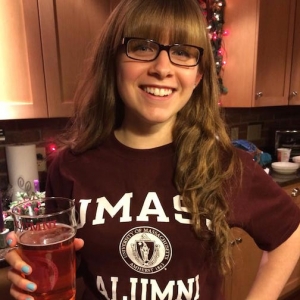
Diabetes won’t stop me from enjoying the occasional drink – I just need to imbibe carefully.

I’ll admit that among the various other activities I participated in freshman year, an occasional party at which alcohol was present was part of the gamut. One particular party stands out in my memory because it taught me, more than words from my parents or my endocrinologist could, just how important safety is when it comes to drinking and diabetes.

I ventured to an off-campus party with a group of friends one Saturday night. It was a stereotypical college party: loud music, lots of people, long lines to use the one bathroom in the house. For the first couple of hours that we were there, we were having a great time meeting new people and drinking a bit. As I was sipping on my beverage, I helped myself to some of the tortilla chips, the communal appetizer laid out for party-goers (clearly, no expenses were spared for this shindig!).

I was stupid and didn’t monitor how many chips I was eating or how much I was drinking. Instinct told me to test my blood sugar and I discovered that I was high—much higher than I anticipated. I started rifling through my purse for my Humalog pen when it hit me that I never packed it.

This story could have ended much differently, but I’m happy to say that I was just fine by the end of the night. I told my friends what was happening. Instead of expressing disappointment over leaving the party, they were super understanding and insisted on escorting me home to make sure I could get my medication. Before long, I was back in my dorm and administering insulin. Once I started to come down, I went to bed and woke up at a normal blood sugar the next morning.

What exactly did I learn about drinking and diabetes that night? A few important things:

  • Always have all of my supplies with me when I go out and indulge in a drink or two. This means I would triple-check, from that point onward, to make sure I had my meter, insulin, test strips, glucose tablets and everything else I might possibly need.
  • Check my blood sugar before, during and after drinking to maintain healthy levels.
  • Set an alarm or two before bed so I can wake up and check my blood sugar.
  • Go out with a supportive group of friends — even though I was panicking that night over my hyperglycemic blood sugar, I felt comforted by my friends’ presence and support.
  • Refuse drinks if I don’t want them. I’ve never felt pressured to drink, even when everyone else around me is. As long as I’m having fun, my choice to not drink doesn’t matter.
  • Research carbohydrate content of alcohol so I know how to account for different drinks. I also have done my homework, so I know that different alcohols affect my blood sugar at different rates, if at all.
  • Avoid sugary drinks. They’re often not worth it, and it’s easy for me to replace certain mixers with diet or sugar-free drinks.

I learned a major lesson that night. Since then, drinking has become an occasional social activity for me that I no longer fear due to my preparedness and openness on the subject. I understand that drinking and diabetes sounds scary and forbidden, but this is why it’s important to talk about. Discussing it with family, friends, and your healthcare team can help you feel reassured over how to handle it. Now, I can confidently raise a glass of dark beer or red wine (my personal favorites), knowing I can enjoy a drink safely despite my diabetes.
Memory Monday: That Time I was Bullied for Having T1D

One Monday per month, I’ll take a trip down memory lane and reflect on how much my diabetes thoughts, feelings, and experiences have unfolded over the years. Today, I remember…

…when my alleged “best friend” picked on me for having diabetes. It sucked.

Let me recount this tale by saying first that this was many years ago – I think it was in third or fourth grade. Since my grade school days, I’ve made much smarter choices when it comes to my social circles.

But back then, I didn’t really know any better. I just wanted to be friendly with everyone.

I digress…

Back in elementary school, we were awarded fitness “medals” for being able to complete a series of exercises in physical education. These medals were really just flimsy little patches that you could sew on to a backpack, but nevertheless, I wanted one very badly. But no matter how hard I tried in gym, I just couldn’t complete as many reps as it took to earn a medal. I was always just shy of the threshold, much to my frustration.

I’ll never forget when my “best friend” told me that there was a very obvious reason as to why I couldn’t, and would never, earn a medal:

It’s because she has diabetes, she can’t do anything right with that!

In that moment in time, I was too dumbstruck by the stupidity of that comment to tell her that she was wrong. I was also incredibly hurt by her words, and they haunted me for many years after they were so callously said to my face.

IMG_3978
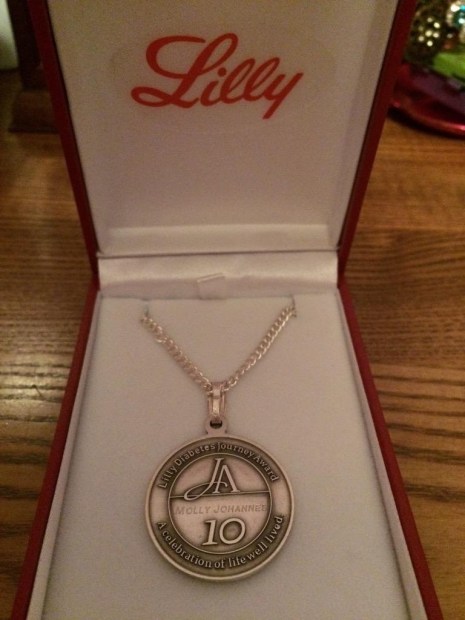
My Lilly medal means more to me now than a stupid grade-school medal ever could.

Now, as an adult reflecting on it, I wish I had told her that diabetes could never stop me from doing anything. I wish I told her that she was in the wrong for saying what she said, and I wish that she could see all that I’ve accomplished over the years in spite of my diabetes.

But most of all? I wish I could thank her for that comment – because as mean as it was, it gave me something to think about on the days when I just want to quit because of diabetes. Her words serve as a reminder to me that I can and will succeed at anything I set my mind to, diabetes and all.

T1D and Emotional Support: The Best Support Comes from my Online Community

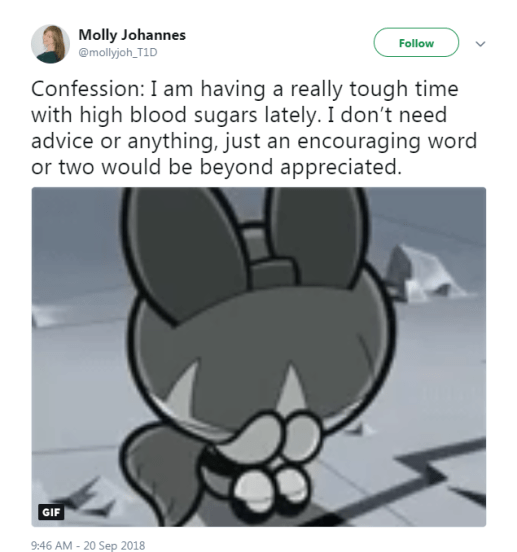
Yesterday, I admitted something via Twitter:

Capture

Without going into a ton of detail, I’ve had higher-than-normal blood sugars in the past week or two. Nothing super alarming, but enough for me to notice and feel discouraged about this new pattern. And enough for me to feel that I needed to tell someone about it.

But why post this on Twitter, and not tell my family or my friends? I chose Twitter as my outlet because my network there is composed primarily of people with diabetes. They’re the ones who completely understand where I’m coming from. That’s not to discount my family and friends – they know me and my diabetes well, and I know that I could reach out to any one of them whenever I need to – but truthfully, sometimes it’s easier to talk to people who know exactly what I’m experiencing. I don’t have to explain myself as much, and it’s understood immediately that my feelings are valid and warranted. And just the acknowledgment, the “hey, I’ve been there, too” or the “I know what that’s like”, is all I really need.

I was blown away by the responses I received on Twitter. Many people took the time to reply to me, and I continued to receive tweets for hours throughout the day. Each message encouraged me and motivated me, and some even applauded me for admitting my troubles to my Twitter network. I also received a couple of really great GIFs; in particular, the beaming cactus put a big old grin on my face.

So thank you, DOC, for being there for me when I needed to be lifted up. I’ll keep you all updated as I try to figure out what’s going on, but for now, thank you for reinvigorating me and for caring. No words can truly express my gratitude, but damn, this community is incredible.

I’m reminding myself, and you, that I’ve got this – and you do, too.

My Blood Sugar is None of Your Business

This post originally appeared on my blog at ASweetLife.org on December 6, 2013. Even though that was nearly five years ago, my feelings on this haven’t changed – I strongly prefer to keep my blood sugars to myself.

Sometimes, I find myself getting angry and annoyed when others look at my blood sugar.

“256? Is that good or bad?”

“Oh man, you’re 61? You need to take some insulin right now!”

By making these seemingly innocent comments, people manage to simultaneously violate my privacy as well as sound ignorant.

I don’t have these feelings because I am ashamed of my diabetes. I don’t know what life is like without it, so I’ve had many years to come to terms with the impact it has on me on a daily basis.

1B5917BC-BCF2-4DF0-A8A0-E8A0DDC42086
The text in this post may be a few years old, but I felt that I ought to update it with a recent boomerang of how I feel when people try to look at my bg.

Rather, I think it’s more of a defense mechanism. When I see my friends or family craning their necks to look at the number on my meter, I tend to prevent them from seeing by cradling my hands around the meter or lifting it up so I am the only one who can read it. That way, I can react to my blood sugar on my own terms without having to worry about how someone else feels about it. I appreciate that I’m surrounded by people who genuinely care about my health, but just because my loved ones are aware of my diabetes doesn’t make them experts. In some instances, my friends have been so concerned about a slightly hypoglycemic blood sugar that they kept a closer monitor on my sugars than I did for the next couple hours. I hope I don’t sound ungrateful for their support, but my goodness, it’s tiring to have to deal with multiple reactions to my own blood sugars. I’m the one who has to deal with them, and that’s enough for me to handle at any given time.

On that note, I think that my defensive nature applies to myself, not just others. I am protective of myself because I like to test my blood sugar and analyze my feelings and what actions I should take once I know the number. When I can focus on this on my own, I have a greater understanding of how my body reacts in certain situations and what kinds of preventive or corrective measures I need to take in the future.

I guess what I’m wondering here is whether or not any other people with diabetes also feel this compulsion to keep their numbers private. Am I being too sensitive? Is it natural for me to want to tell others that my blood sugars are none of their business?

T1D and the Workplace: Feeling Envious of Coworkers with Professional Pancreases

I’m envious of people with functioning pancreases.

It goes without saying, but they don’t have to worry about all the things that PWD have to worry about. They can live life with a little more spontaneity. They don’t have to do as much math. They don’t have to lug around test kits and glucose tablets and strips and needles and whatnot at all times. They don’t have to hide their emergency snack stashes from their coworkers – well, okay, maybe they do, depending on some office environments.

They don’t have to worry about minute things, like “is my pod going to start beeping” or “is my blood sugar going to go low or high” during a very important meeting with a very very high-up executive.

EEE38767-FD48-471B-B93B-FF79827F5B8C
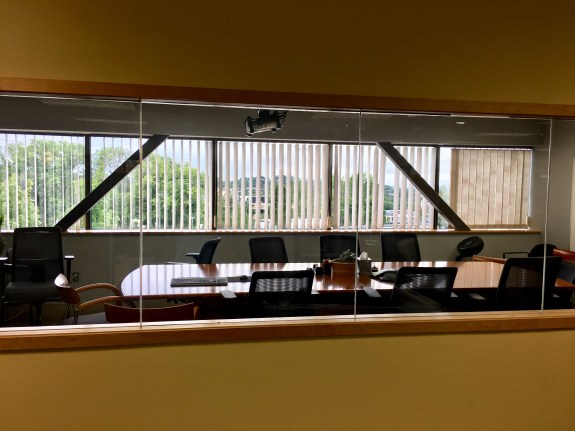
Conference room or anxiety-inducing room?

I’m envious of my coworkers, who were able to just sit there and listen to the executive speak when he made a special visit to the office last week. I was as attentive as I could be throughout the nearly 90-minute meeting, but I was definitely a bit anxious in there without any of my devices. I’d left them all at my desk to avoid awkward questions from the executive. I’m sure he wouldn’t have minded their presence, had he known they were medical devices, but still…I just didn’t want to deal with it.

I’m envious that a meeting is just a meeting to some people, but for a person with diabetes like me, it can trigger fear and concern and a gamut of other emotions regarding blood sugar/diabetes issues in the workplace alone – forget other social situations.

It goes to show that diabetes is never far from my mind, even in situations when I really want or need it to be. I wish my diabetes knew how to act more professionally.

But I guess from practically the beginning, my diabetes – or shall I say, my pancreas – was unprofessional. After all, my pancreas quit on me only four years into the job.

What a lazy jerk.


Favorite Things Friday: My Secret Snack Stash at Work

One Friday per month, I’ll write about my favorite things that make life with diabetes a little easier for me.

So, I’m going to cross my fingers and hope that none of my coworkers read my blog…because then my secret snack stash at work will become not-so-secret, and that could mean trouble for me when dealing with future low blood sugars. That being said, if you’re reading this and you work with me…stay away from the stash!!!

As I was saying…

I love having a snack stash stored away in one of the drawers at my cubicle. I like to stock it with snacks that have varying carbohydrate counts: more carbs for lower lows, and fewer carbs for the not-urgent lows. The items may vary from time to time, but usually, I keep the drawer filled with the following snacks:

  • Mini Lara bars (10 carbs)
  • Mini boxes of raisins (11 carbs)
  • Fruit snacks (all kinds, ranging from 10 carbs to 21 carbs)
  • Peanut butter crackers (15 carbs)

Sometimes, I’ll even add a jar of glucose tablets (which contains 50-60 tabs) to the lot. Glucose tablets are far less tempting to munch on then, say, a cracker pack, so when I’m dealing with a raging-hunger kind of low, it helps to have the tabs within reach because they prevent me from over-treating.

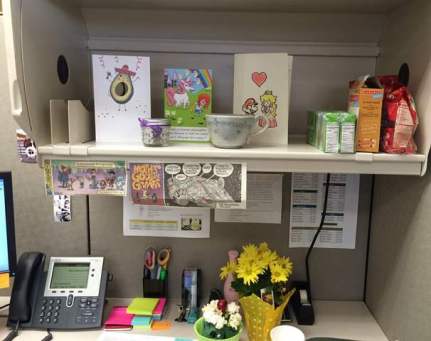
My-desk-at-work-low-snack-stash-in-the-upper-right-hand-corner.
In order to throw off coworkers (who are most definitely, probably not reading this post), I’ll share an image of my old snack CORNER. I’ve upgraded to a drawer now.

And when all else fails and my snack stash is depleted, at least I’ve got access to a fully-stocked Coca-Cola machine in my office suite, as well as a vending machine filled with all sorts of confections in the building’s basement.

But let’s be real here…who can possibly exercise enough self-control to stop eating a package of Skittles when low blood sugar comes ’round?

I’m Right, You’re Wrong: Debating with T1D

I found the diabetes online community (DOC) a few years ago – or perhaps it found me – and to this day, I’m incredibly grateful for it. It’s introduced me to new friends and it’s always been a reliable source of information. Whether I’m lamenting a low blood sugar at 2 A.M. or asking if anyone has advice on a pod problem at 2 P.M., odds are I’ll have someone reaching out to me within minutes in some form or fashion. That kind of on-the-fly support is invaluable.

That being said…the DOC is not always a perfect safe haven.

A9C03A36-6350-4D4F-A23F-E76A67DE4AFA
When it comes to diabetes, there shouldn’t be a “right” or a “wrong” side. T1D is hard enough.

In fact, if there was one thing I could change about it, it would be to make it a judgment-free space: because all too often, people are unfairly judged for how they choose to manage their own diabetes.

I’m not saying that people aren’t entitled to opinions. Of course they are! But what happened to respectfully disagreeing with people?

I’ve seen situations like the following across different social media platforms:

  • People getting attacked for following low/medium/high-carb diets
  • People getting criticized for sharing “good” and “bad” blood sugars/A1cs
  • People getting judged for dealing with diabetes burnout – as well as people getting judged for sharing their diabetes triumphs
  • People getting discouraged from posting only the pretty parts of diabetes

We can’t keep doing this to each other. Just because a certain diet or T1D management strategy works out well for one person, doesn’t mean that it will work the same for another. That’s because diabetes is not a one-size-fits-all condition.

And we shouldn’t be judging one another for our differences. In fact, our differences can teach us so much more than our similarities can. We should celebrate one another for living with diabetes: doing the best we can, day after day, whether it yields “ideal” or “not ideal” results. Because it’s damn difficult to manage, and anyone who says otherwise is being judgmental.

We can learn and grow from one another, which is pretty powerful, as long as we refrain from this “I’m right, you’re wrong” attitude.


My Top 10 Diabetes “Yes!” Moments

This post originally appeared on my blog at ASweetLife.org on August, 3, 2015. But it’s one of my favorites that I’ve ever written, and I needed the reminder that diabetes isn’t all doom and gloom – in fact, it can bring bright spots and moments of triumph!

10. Finding a new, yummy snack that doesn’t skew blood sugar

I love cheese, veggies, and deli meats, but sometimes I get sick of turning to them when I’m looking for a low-carb snack that won’t make me skyrocket. That’s why I love discovering new, lower-glycemic index foods that taste great without triggering any CGM alarms.

Perfect BG Meme9. CGM and meter matches

Twins! It may be trivial, but I find it reassuring when the blood sugar that my meter reports happens to be exactly the same as the one on my CGM. It’s all about that accuracy!

8. Treating well for…well, treats

Speaking of accuracy, it can be ~hella~ tough to bolus after devouring a giant plate of nachos or a generous slice of cake with ice cream. The mental carb calculator might go a little haywire in the process of figuring out just how many grams of carbohydrate are in a given amount of “bad” food, but when you get it right, it feels so damn good.

7. Joining the Century Club

When I was a little kid and my blood sugar was 100 mg/dL, I would draw little fireworks next to the result in my logbook as a sign of my success. While I may no longer do that, I still feel happy when I reach the 100 mg/dL reading that I find pretty perfect. Definitely worthy of a meter advertisement!

6. Painless site changes

Oh my gosh, CGM changes and pod insertions can HURT. In fact, almost every time I change my pod I let out a little squeal of agony, whether it really was painful or not. So whenever I hit a sweet spot with a site change, it’s pure relief and makes the process less stressful.

5. Correcting accurately for a hyper

It’s not fun to have a hyperglycemic blood sugar. For me, it affects my mood by taking me from glad to grouchy within seconds. And don’t get me started on all the water/diet coke I down, resulting in endless bathroom trips! When I reverse a high by delivering a correction bolus that takes me back down to a better reading like 108 mg/dL, I feel that much better mentally and physically.

4. Conversely, correcting accurately for a hypo

Along the same lines, low blood sugars are so disorienting. I can’t stand feeling shaky, dizzy, and sweaty all at once. And it can be irksome to be forced to eat when you don’t necessarily want to. That’s why I take great pleasure in fixing a low with the bare minimum of carbs, which usually results in a near-perfect blood sugar reading later.

3. Seeing a doctor who just gets it

Over the last 17 years, I’ve seen my fair share of doctors – some I’ve loved, some I’ve loathed. Currently, I’m fortunate to have an endo who truly understands me and my needs. She listens, she cares, she doesn’t blame me diabetes mistakes. While I still don’t love having to see a doctor every three months, she makes it much more bearable.

2. Meeting other T1Ds

Talk about people who “just get it”! The only T1Ds I knew growing up were two immediate family members. When I went off to college, this completely changed and I connected with many other T1Ds. Suddenly, it was normal to whip out my meter or a syringe whenever needed, and conversations about carbohydrates were common.

1. Improved A1c results

A1c MemeThis. One of the ultimate victories! I’ll never forget how good I felt when my A1c dropped a whole point, marking major personal progress. An improved A1c is a true sign of your effort being worth it when it comes to your diabetes management. #FTW!

What’s Worse than High or Low Blood Sugar?

High blood sugar and low blood sugar are both incredibly draining. One turns me into a grump who can’t drink enough water and the other turns me into a shaky, sweaty, slurring hot mess who can’t string a simple sentence together. Needless to say, neither situation is fun.

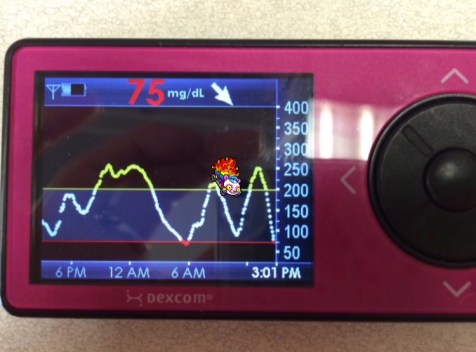
But there’s one even worse than that: the roller coaster situation. It’s best illustrated using a CGM graph like this:

7594B528-CBC7-43AD-8A55-CF1600A950D6
I added the little graphic of psychedelic teddy bears riding a roller coaster – it seemed to illustrate my point well. 

It’s what I use to describe blood sugar that won’t level out to my target range. It just goes up, up, up, and falls dramatically – just like an actual roller coaster – once the high is corrected. And boy, does that drop down take my breath away.

But then wait, there’s more! After the crash and the inevitable need for lots of sugar (and fast) is satisfied, the blood sugar soars back up again, leaving me frustrated as I take another bolus to fix it…

…only for it to happen again. And again.

Get me off this ride!

When I’m stuck on these blood sugar roller coasters, it’s mentally and physically exhausting. I question my every action over and over again as I try to do the “right thing” and make my numbers level out, only to end up berating myself for getting into this situation in the first place.

I’ve never been a fan of roller coasters in real life – they make me a combination of anxious and nauseous that I’ve dubbed “nauxious” – but I’d rather ride one that goes upside down than experience the T1D roller coaster situation again any time soon.

T1D, the Common Denominator

I know a lot of people who have type 1 diabetes. And I consider many of them friends of mine.

You know what’s so cool about that? It’s that diabetes was merely the common denominator, something that we knew we shared, but not the sole reason for friendship. Diabetes provides a launching point into which we can find other shared interests: from TV shows to travel destination wish lists, the conversations we have don’t often linger on diabetes. But even when they do, it’s nice to talk about anything-and-everything diabetes with people who speak the same T1D vernacular.

77521CF5-A5CE-4103-9BE3-A4DA1DB4881C
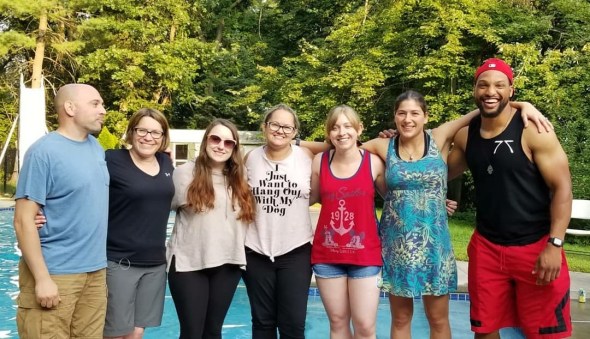
I’d met half of these people prior to this event, and I became fast friends with the other half, thanks to our common denominator: diabetes.

Case in point: An end-of-summer pool party I attended a few weeks ago that introduced me to a handful of T1Ds. Sure, we started off talking about things like medical research experiences and CGM trials, but then we moved on to the other topics we cared about and really got to know each other. It proved to me, for the umpteenth time, that it’s just so dang special that something as shitty as diabetes can bring so many good things into my life, including friendships with some marvelous human beings.