Diabetes Self-Care: Massaging Away my T1D Stress

Sometimes, you just gotta treat yo’self. (Parks and Recreation, anyone?)

One of my favorite ways to do that is through massage. I can’t think of a more relaxing way to unwind from various sources of stress than massage. Especially when your shoulders and neck are so tense that it feels as though they’re permanently knotted up.

So I went for a one-hour massage a couple of weeks ago to see if I could successfully take a mental break from everything while addressing my muscle tension. And I’m so glad I did that for myself. Plus, it didn’t hurt that my massage therapist was super attentive when it came to my diabetes.
IMG_7138
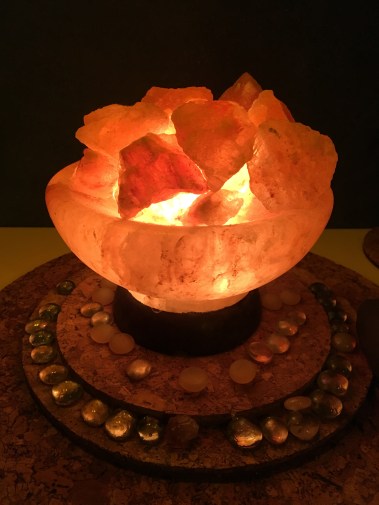
What makes for a good spa experience? Himalayan rock lamps, calming music, and silent diabetes devices.

I explained to her that I was wearing a tubeless pump on my lower back, and that she should feel free to massage around it. I also mentioned that if she happened to hear anything buzz or beep during our session, she should just disregard it – if my pump or CGM alarmed, I’d take care of whichever device that was going off at the end of the session.

The massage therapist couldn’t have been more reassuring. She let me know that she previously worked as a physical therapist and had experience in the field for more than 10 years. As a result, she’d seen just about everything over the course of her career – an insulin pump and a glucose monitor were nothing.

That short conversation before the start of the session really helped it start off on the right foot. I felt much better knowing that she wouldn’t be freaked out by my devices. My openness to talk about my diabetes also inclined her to ask me if it affected certain parts of my body more than others, and if she should be sensitive to that throughout the session. I appreciated her attentiveness, and she asked follow-up questions throughout the massage to ensure I was getting the best experience possible.

Not only did I leave feeling like a million bucks, but I also left feeling glad that my CGM and pump stayed silent throughout the one-hour massage: allowing me to truly free my mind from diabetes, even if it was just for a short time.
Dad Appreciation Post

Father’s Day was yesterday, but as I did the day after Mother’s Day, I want to use today’s blog as an opportunity to express my appreciation for dads: Namely, my own father.

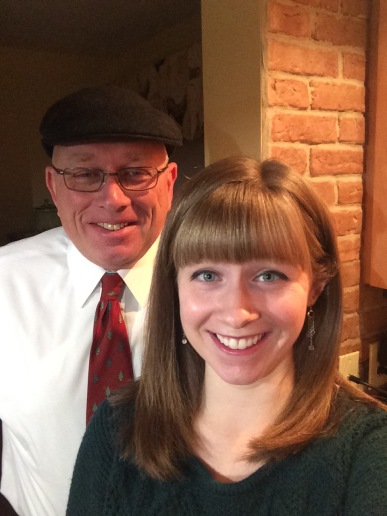
Besides being the family patriarch, my dad is a firefighter/EMT. He makes his family feel safe with his emergency preparedness knowledge and skills. He also deals with his diabetic wife and daughter on an almost-daily basis, which warrants, at the very least, a ginormous golden trophy with his name engraved on it in fancy script.

18DF9F6C-8133-4E60-9EF3-F89103EA0C66
A dad and his daughter.

That’s because he sees the ugly side of diabetes from time to time. The side that causes blood to spurt out of mom’s abdomen when she removes a pod that struck a vein. The side that causes me to lash out, because my blood sugar won’t seem to come down from a sticky high, no matter what I do. The side that causes mom and I to lose sleep, because we’re treating another middle-of-the-night low blood sugar. The side that forces mom and I to be prepared for any and every possible diabetes scenario that could occur while traveling. The side that causes us to cry, because we just can’t deal with diabetes today.

And he’s there through it all.

He’s there to apply pressure and gauze to the bloody site. He’s there, feeling just as upset as I am, because he just wants my blood sugar levels to come back down, too. He’s there to make sure mom and I have enough glucose tablets or juice to bring our levels back up. He’s there, keeping us calm as we pack for our next trip and taking care of all the travel arrangements. He’s there to comfort us when we need him to, and he hates that we live with diabetes – probably even more than we do.

He’s the kind of guy who says he’d trade his pancreas with us in a heartbeat if it meant we wouldn’t have to live with diabetes anymore.

He’s the kind of guy I’m proud to call my dad.

Thanks, Dad, for helping me handle my diabetes over the years, and supporting every venture (diabetes and otherwise) that I pursue.

Three Things I Learned about Myself after Running a 5K

I recently ran in my first-ever 5K race. In the weeks leading up to the race, I experienced a variety of emotions – particularly self-doubt – that made me question whether I could really do it. Would my diabetes cooperate the morning of the race? Should I eat a big breakfast before running, or go into the race fasting? How would I handle correcting a low blood sugar while running? What about a high blood sugar? Was I even competent enough to run?

All of my diabetes anxieties aside, I’ve always hated running. HATED it. I played field hockey every fall when I was in high school, and we were required to run a timed mile before the start of each season. I dreaded this mile because I usually wound up finishing the mile last, or close to last – my asthmatic lungs and negative attitude helped ensure that I would give up running halfway through and resort to walking a sluggish, defeated pace.

So like I explained in a recent blog post, making the decision to go through with this 5K wasn’t easy. But I wanted to take on the challenge and prove something to myself.

AND I DID IT!!! I’m pleased to say that I completed the race on a gorgeously sunny Saturday morning along with hundreds of other runners. I was totally proud of myself for accomplishing this goal, especially since I had less than a month to train for it. Plus, I learned a few things about myself after participating in the race:

  1. I should have more faith in my ability to manage my diabetes. I spent so much time dwelling on the “what ifs” (a bad habit of mine) regarding what my diabetes might do during the race that my stomach was doing somersaults as I approached the start line. But as soon as I turned my music up and started running with everyone else, my doubts vanished. And better yet, I was absolutely fine throughout the race. I didn’t eat anything beforehand and went into it with a blood sugar of 142, and I stayed pretty steady for most of the 3.1 miles (I did start to spike soon after crossing the finish line, but I’m certain that was because of the adrenaline). I simply did what I’d been doing during my past month of training, and my experimentation with fasting vs. non-fasting paid off.
  1. I’m a lot more determined than I realized. I’ll admit that there were a few points throughout the race when I wanted to give up. I was breathing hard and my legs were starting to ache, but not once did I stop running and slow down to a walk. I pushed myself to keep going, even though I didn’t want to, and my determination helped me achieve my personal best running time.
  2. I’m ready to train for future races. This experience awakened something in me that wants more challenges. I’m still not in love with running, but I think I am a fan of trying things out of my comfort zone. I want to continue to get faster and stronger so I can try tougher races and physical tests. It’s almost like it’s an outlet for me to tell my T1D that it can’t stop me – that I’m stronger than it no matter how hard it tries to knock me down.

I Get by with a Little Help from my Friends (Diabetes Edition)

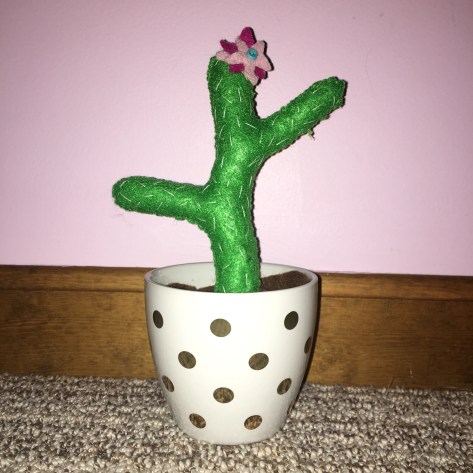
Let me introduce you to Nelly Needle:

F9013708-EC39-480A-9C5A-438CD3B59B68
A cactus filled with needles that don’t prick is my kind of cactus.

This adorable cactus-in-a-cup was handmade for me by one of my dear college friends, Emma. She made it for me for my birthday and I nearly cried tears of gratitude when she gave it to me. I felt the same way when another college friend, Kira, sent me a box for my birthday that contained a thoughtfully-chosen book and a cute little cactus pin that now adorns my meter case.

Emma and Kira, as well as our other friends from college, probably don’t realize how nervous I was to explain my diabetes to them when we first met. All my friends from back home had known about my diabetes growing up; as a result, it’d been a very long time since I had to open up about it to brand new people. I worried that they wouldn’t accept it or would treat me differently after learning about it.

I’m happy to say that I couldn’t have been more wrong. Within the first few days of my freshman year of college, I found the group of people that I wanted and needed to have in my life. They were not only accepting of my diabetes, but genuinely curious about it. They peppered me with questions that I was pleased to answer and marveled at my ease with injecting myself in the middle of the dining commons. To this day, they still express interest and desire to learn about diabetes, which means more to me than words can express.

The cacti I’ve amassed over the last few months, courtesy of my friends, serve as daily reminders that I 1) have some really incredible and supportive friends and 2) should always remember to embrace diabetes for what it is, needles and all.

Four Factors that Impacted my Diabetes in Las Vegas

Recently, I returned from a trip to Las Vegas with my best friends in the universe. It was awesome to take a vacation with them, especially in a place that’s virtually a playground for adults.

Before I went on the trip, I knew to expect some sort of disruption with my diabetes care and management routine. I did as much as I could to prepare myself for every potential scenario, from packing extra snacks and supplies, to asking the DOC how I should account for a sudden change in time.

While my preparation really did help, I still encountered the unexpected when it came to my diabetes on the trip. Four factors in particular come to mind…

  1. The heat – At first glance, this is a no-brainer. I’ve been to many hot climates on vacation, so it isn’t news to me that intense sun can make blood sugar go low quickly. We were literally in the middle of the desert, so I knew it would be important for me to watch my numbers closely, as well as keep myself hydrated. But I think the fear of going low all the time was a little too strong, which meant that I was running a bit higher than I’d normally like for most of the vacation. My paranoia about drinking plenty of water, though, was not a joke. I pride myself on being good about staying hydrated, but I struggled to keep up with the dry desert heat. I can’t help but wonder: If I’d been better about drinking water, would it have benefited me during some of the stickier high blood sugars? Speculation can only get me so far now; however, all signs are pointing to probably yes.
  2. The strip – The Las Vegas strip is less than five miles in length, but the whole stretch of it, marked by hotels, stores, casinos, and ginormous flashing lights, feels incredibly long. Nevertheless, my friends and I naively believed that we could skip taking taxis and walk all over the place. For the most part, we could, but it was definitely dicey when we walked nearly a mile and a half from the Cosmopolitan to the Rio one evening. It influenced my blood sugar in a positive way – the exercise brought my levels down to a nice and stable place – but that didn’t mean it wasn’t scary to walk practically on the highway at nighttime.
  3. The alcohol – I’m well aware of the fact that different kinds of alcohol can have different affects on blood sugar. To minimize blood sugar swings, I stuck with the less-sugary options as much as I could (i.e., opting to order a rum or whiskey with diet coke), only getting fancier drinks when I was consuming fewer carbs at mealtime. For the most part, this strategy worked well and proved to me that a little extra thought can go a long way when it comes to deciding how to treat yourself. But it also reminded me why I don’t have weekends like this often – it’s exhausting enough to take care of myself on a daily basis without alcohol being a factor. Throw it into the mix and I’m watching my blood sugar so carefully that my CGM’s battery is drained in half the time it normally takes to zap it.
  4. The pizza – The scientific answer to the reason why pizza is tough on blood sugar involves the glycemic index and some fairly complex calculations…boring! All you really need to know is that it takes a long time for pizza to have an affect on blood sugar due to its high fat-to-carb ratio. As a result, it tends to be a “treat” food for me that I only indulge in every once in a while. But when in Vegas…you have as much of it as possible. Pizza was one of the quickest and easiest food options for me and my girlfriends throughout our trip, so we ate it multiple times. I don’t regret a single cheesy, delicious bite…but I am slightly remorseful for not doing a better job bolusing for it. The first time we had pizza, I didn’t give myself enough insulin. The second time, I gave myself too much and went low, though that may have happened because I didn’t finish both slices like I thought it would. The bottom line? I didn’t realize that pizza would be a dietary staple on this vacation, and I’ll probably refrain from eating so much of it on future vacations.
IMG_6890
A slice a day does not quite keep blood sugar at bay. But it’s tasty as hell.

Despite the diabetes curveballs I encountered, I enjoyed my trip to the fabulous Las Vegas. I managed the challenges as best as I could without letting them interfere too much with what I wanted to do. Plus, it helped that my best friends were with me the entire time. I have to give them credit for making the most of my diabetes difficulties, too. For instance, I felt badly about sidelining them in the Bellagio on our last night there due to a low blood sugar that crept up on me after walking (the strip!) and over-bolusing (the pizza!), but they really rolled with the punches and made the most of it. In fact, I’m pretty sure they experienced their favorite people-watching moments while we sat and waited for my sugar to come up (I got a kick out of the weird people coming in and out of the lobby, too, but was slightly more focused on raising my number).

Thank you, Kortney and Roshani, for accompanying me on an incredible girls’ trip and for being my best friends in the world. Maybe Las Vegas 2020 needs to happen – now that we know to expect, perhaps my diabetes will be a more cooperative travel companion the next time around!

Mom Appreciation Post

I know Mother’s Day was yesterday, but mothers deserve more than a Hallmark-card holiday in order to be adequately recognized. (They also deserve more than just this blog post; however, I can only express my admiration for moms using my words.) Let me explain my appreciation for moms.

All of the mothers I know, especially my own mom, work tirelessly to support their families in multiple ways. This is especially true of mothers of children with diabetes. They spend so much time counting carbs, losing hours of sleep, injecting insulin, attending doctors’ appointments, and dealing with difficult diabetes emotions all on top of normal mom duties. And many of the diabetes moms I know work(ed) full-time jobs, to boot!

IMG_4673
My mom is so wonderful that Chewbacca (yes, the famous Wookiee) embraced her admiringly within the first few seconds of being in her presence.

I think my mom is particularly amazing because she did all of the above, all while managing her own diabetes, too. Now that I’m an adult, I can’t help but marvel over how she did it all with such capability, humor, and unconditional love. I’m blessed to have an incredible mom who taught me what it means to be a dia-badass.

I love you, Mom!!!


What It’s Like to Wear a Medical Device 24/7

A question I’m often asked is: “Can you feel your CGM or insulin pump on your body?”

The simple answer to that is: usually, no. It’s something that you just get used to. You grow accustomed to seeing a lump underneath your clothing. You adjust to putting clothes on (and taking them off) carefully to avoid accidentally ripping a site out. You acclimate to showering without being completely naked.

And, of course, you get used to the questions from strangers asking about that device stuck to you.

But the more honest answer to that question would be that there are times that I feel it more than others. For example, sometimes I forget where I’m wearing my pump until I hit it against something (I’m a major klutz who constantly runs into doorways and trip over things, almost always managing to catch my pod on whatever it is), resulting in pain at the site and a curse word or two to fly out of my mouth.

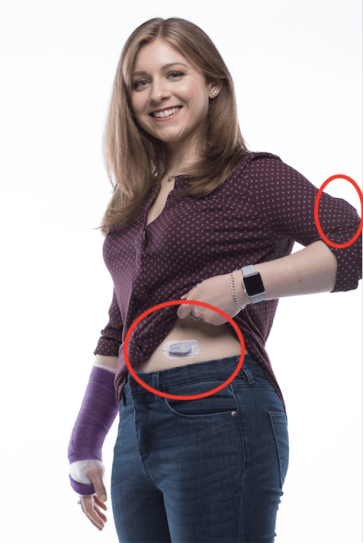
Circled Devices
My OmniPod (on my arm) and my Dexcom (on my stomach) are stuck on me 24/7.

I feel it the most, though, when people stare. Whether unconsciously or purposely, people do ogle at it in very not subtle manners. Which makes me feel extremely uncomfortable. It’s worse when they don’t even ask me what it is – I’d rather have a chance to use it as a teaching moment than to have someone walk away not knowing what the device does. This tends to make swimsuit season a little less welcome for me. Nothing will stop me from donning a bathing suit at the beach or by the pool, and I do so as much as possible in the summertime. But it’s just not as fun when I’ve got to cope with lingering looks, especially when I’m an admittedly insecure person in the first place.

So it’s a more complex question to answer than you might realize. Wearing a medical device 24/7 is humbling. It keeps me alive. I’m privileged to have access to it. I’m grateful for the ways it’s improved my life. I’m always wearing it, but it’s not at the forefront of my mind – unless it chooses to make its presence known by alarming, or I’ve got people blatantly checking it out. It’s kind of like diabetes itself. It can make you feel a gamut of emotions, but no matter what, it’s always there. It’s just a part of me, and I can deal with that.

A Good Diabetes Day

I’ve blogged plenty of times about my “bad” diabetes days – you know, those posts that I talk about stubborn blood sugar that won’t come down/up, or how technology refuses to cooperate, or how I’m feeling intense diabetes burnout.

This made me wonder about the “good” days. Besides my blood sugars looking so perfect that I question whether my pancreas has magically started to produce insulin again, what sets those days apart from the “bad” (and plain, old, ordinary days)?


The answer likely varies among people with diabetes, but let me describe my version of a darn good diabetes day:

  • Going to an endocrinologist appointment first thing in the morning and discovering that your A1c has dropped nearly half a point, down to 6.7. YAAAAAAS!
  • Being told by said endocrinologist that you’re doing an amazing job, and passed all other blood work tests with flying colors – I was most thrilled with my HDL cholesterol (the good kind) levels, which have gone up due to my current exercise regimen. And she said I lost a couple pounds, to boot!
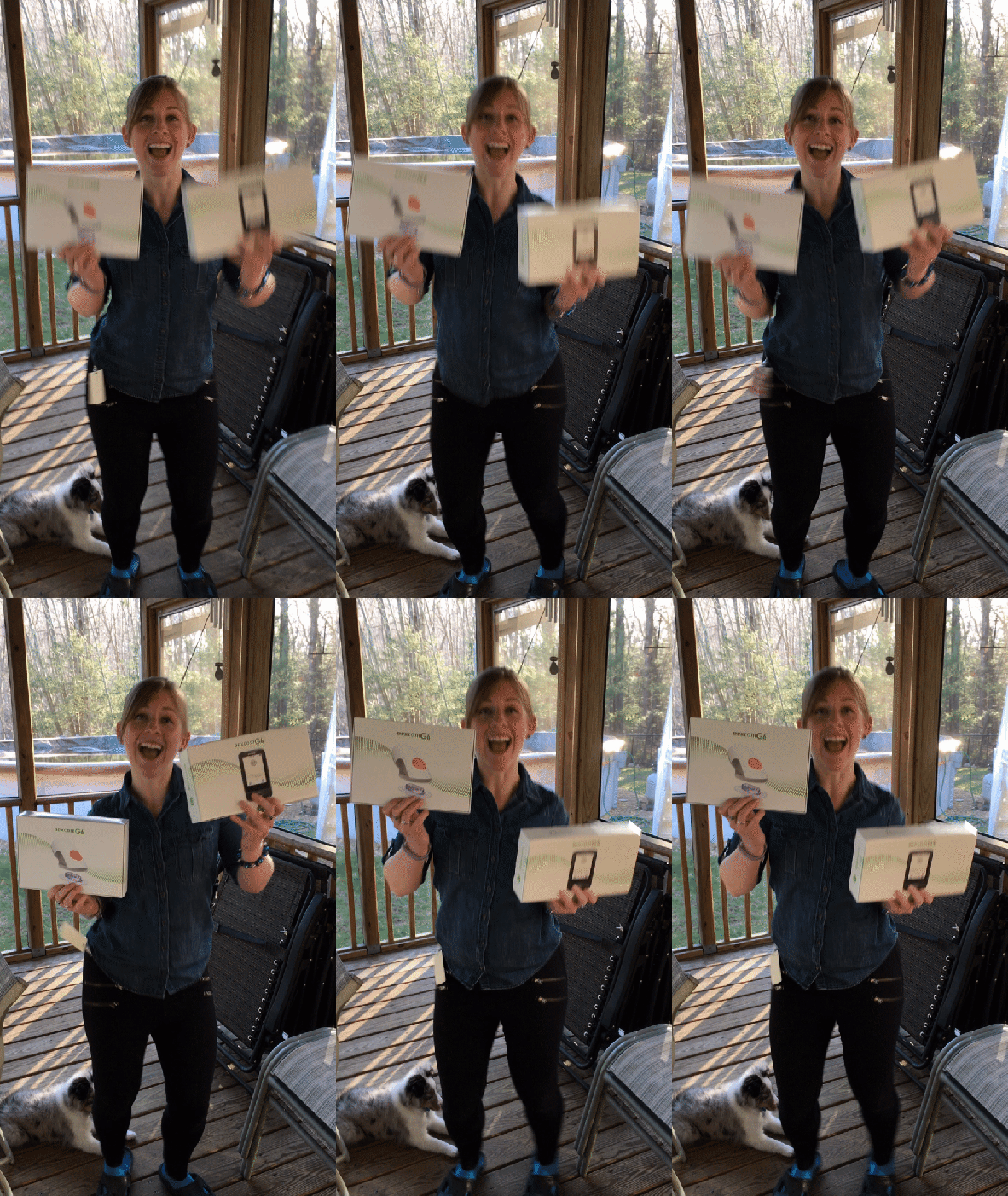
  • Coming home from work to a package from Dexcom containing the brand new G6 receiver, transmitter, and sensors. I can’t remember the last time I was so excited about a delivery!
  • Topping it all off, my blood sugars throughout the day weren’t too shabby.
ezgif.com-video-to-gif.gif
Dancing excitedly with my new Dexcom G6! My puppy couldn’t understand what the hullabaloo was all about.

It’s days like that that make me feel validated – like all my hard work is worth it. It isn’t easy to manage diabetes every moment of every day, so when the diabetes stars align like this, it feels…wonderful.

Banana, No Bolus

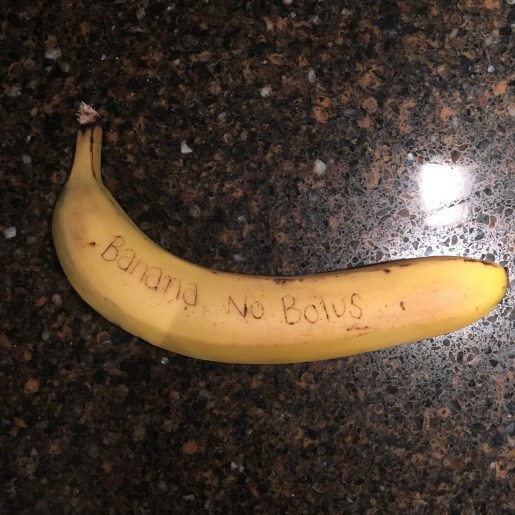
I ate a banana the other day without needing to correct for it. My blood sugar prior to eating it was 96 mg/dL. I sensed and oncoming low, and trusting this instinct, I decided to skip bolusing (taking insulin) for it. Two hours later, I was 108 mg/dL.

How did I do it?

Did my pancreas suddenly start working again?

Was it a low-carb banana?

Was sorcery involved?

I’ll explain how it happened; no, my pancreas didn’t suddenly decide to start secreting insulin; no, because low-carb bananas aren’t even a thing; and sadly, no, though I do wish I was well-versed in real-life wizardry and/or witchcraft.

IMG_6602

It happened because I was running around like a maniac that entire morning. High activity levels can do a number – that is, lower the numbers – on a diabetic’s blood sugar. Between walking my dog, playing with him some more outside, and running errands, I scarcely had a chance to catch my breath from the time I woke up until noon. It was still mildly surprising, though, since bananas are a notoriously high-carb and fast-acting food. I’d expected to be at least 50 points higher from the initial blood sugar.

I was pleased with this outcome, but I still think that the voodoo magic – ahem, science – behind diabetes is just plain weird sometimes.


How Raising a Puppy is Like Dealing with Diabetes

“Aw, she’s so cute! What’s her name? What kind of dog is she?” The woman stooped down to the ground to take a closer look at Clarence, my 12-week old Shetland Sheepdog – who is a boy.

I patiently answered her questions, knowing she wasn’t really paying attention. After all, she was totally distracted by my adorable little pup.

The man who accompanied her – undoubtedly her partner – was chattier. He looked at me, almost condescendingly, and said something about how this must be my first dog.

Nonplussed, I said, “Actually, this is my family’s third Sheltie. The last time we had a puppy like Clarence here, I was practically a baby myself.”

“Well, you know, I noticed that you’re buying puppy pads. You really shouldn’t do that if you want to get your dog housebroken, it’ll only encourage it to go indoors.” If I thought he was bordering on condescending before, he was definitely laying it on thick now.

IMG_6382

I hastily responded by telling him how the puppy chow that Clarence is eating is salty, and the high salt intake results in frequent puppy puddles in the kitchen. It’s virtually impossible to ensure that Clarence is outside every single time that he has to pee, so the puppy pads have been a huge help. I trailed off, wondering why I had felt the need to provide this stranger with an explanation that wouldn’t matter to him.

The man shrugged, clearly unimpressed by this answer, and walked away.

Upon reflection, this mildly irritating encounter turned into a bit of a metaphor for what life with diabetes is like. People you don’t know bombard you with questions about it. You answer as best as you can, hoping that your replies help these inquisitive folks understand diabetes better than they did before. But this ray of hope is quickly dimmed when the questioners run out of things to ask and begin to tell you how you should manage your diabetes. It’s baffling when it happens because you didn’t ask for advice, but you somehow get an earful of it every damn time.

So I guess in this way, diabetes is a little like raising a puppy. There will be highs and lows, good days and bad days. And unsolicited advice will be dished to you by strangers, even though nobody knows your diabetes – or your dog – the way that you do.