Carbs, Christmastime, and a Conundrum

I can’t believe Christmas is just a couple of days away!

It feels like the Christmas season just started, but really, I’ve had visions of sugar plums dancing in my head a whole lot longer than 23 days now.

Not just sugar plums, though. Christmas cookies. Homemade caramel sauce. Spiked hot chocolate. Reese’s trees (and bells, and nutcrackers, and any other shape Reese’s comes in)…
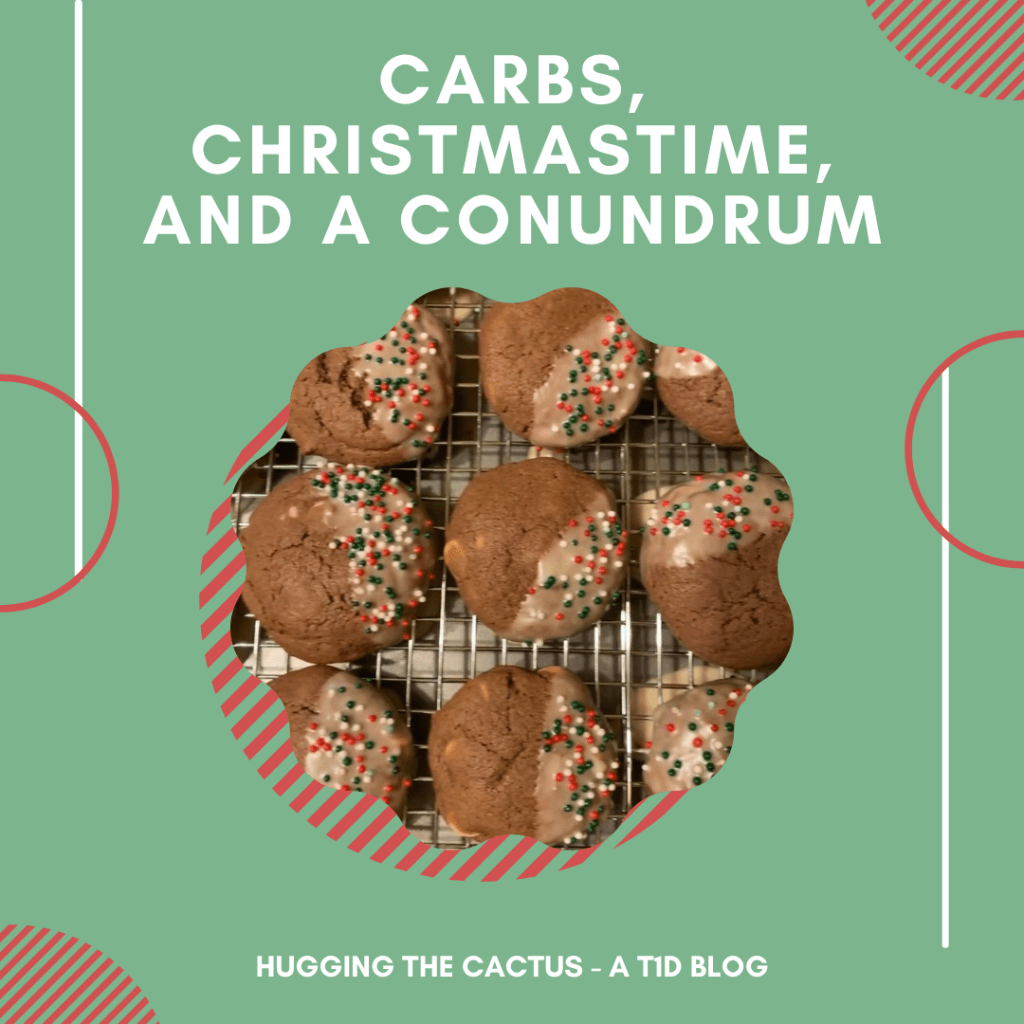
Conundrum: I love baking. I love Christmas cookies. I love tasting Christmas cookies that I’ve baked. As such, the above image of my Irish cream cookies is very tempting to me.

Needless to say, I feel like my sugar consumption is at an all-time high lately, no doubt due in part to the endless array of seasonal treats that seem to be readily available to me. This is partially my fault – I always have a stash of Reese’s in my home, and baking is one of my favorite hobbies (I feel obligated to try my creations before doling them out to friends and family, y’know, for quality assurance purposes). I should know better because I am very aware of the fact that I have little self-control, but said self-control is completely lacking lately.

So my conundrum is: Do I consume all the carbs this Christmastime and just have a “IDGAF” attitude about it? Or do I go ahead and enjoy all the delicious, carbohydrate-laden sweets of the season with minimal guilt?

I think the solution lies somewhere between those two extremes.

I won’t deprive myself of carbs, but I’ll be deliberate in how I go about eating them. I’ll pre-bolus so sugary spikes won’t appear as often in my Dexcom graphs. I’ll look up carb counts when I can. I’ll enjoy things in moderation, eating one treat at a time or sharing with others when I can so my carb intake gets automatically halved. And I won’t stop baking – it’s one of the things that brings me joy in life, so I know better than to cut out that entirely.

Besides, the Christmas season is so fleeting. I should indulge a little here and there and remind myself that it’s not just about the carbs and blood sugar spikes that cookies cause…it’s also about the holiday traditions associated with cookie baking and the memories made when eating them (and all the carbs). That fuzzy feeling makes me feel a whole lot better about my carb conundrum; coupled with my plan on how to approach carb consumption, I’m actually looking forward to eating many more Christmassy confections over the next few days.
An Ode to Reese’s Cups

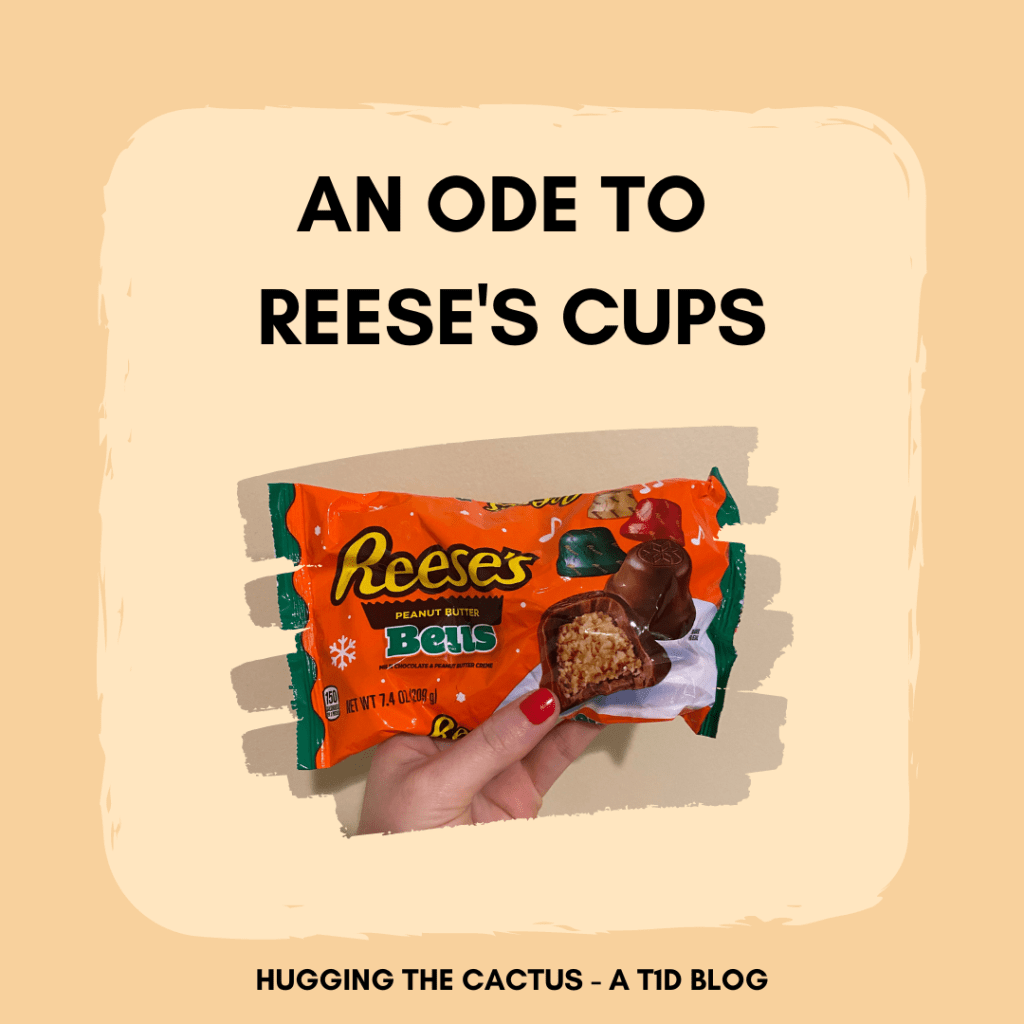
There is no doubt about it: My favorite candy in the entire world (in fact, one of my favorite foods ever) is the utterly irresistible Reese’s cup.

Something about the combination of smooth, salty peanut butter and sweet milk chocolate speaks to my very soul – or perhaps it’s more accurate to say my taste buds. I know that I’m not the only one who feels so passionately about Reese’s (in any shape or form) – in my immediate circle, it’s the candy of choice of my mom, my boyfriend, several coworkers, and countless of other T1Ds that I know in the community.

Oh Reese’s, how do I love thee? Let me count the ways.

Besides the impeccable taste, what is it about Reese’s that is so appealing to people with diabetes, specifically? I pondered this as I had a conversation with one of my coworkers who does not have T1D. She mused that it could be because of the higher protein/fat content of Reese’s compared to other candies, which could make it easier to bolus for. I found myself agreeing with this notion – Reese’s doesn’t cause major spikes to my blood sugar, unlike Skittles, Sour Patch Kids, or Gummi Bears. The peanut butter in a Reese’s probably causes it to have a lower glycemic index, meaning it takes longer to process in the system. And according to the very little research I’ve done, nutritionists tend to agree that Reese’s are a relatively smart candy choice for those reasons, and in spite of their higher sugar content.

Beyond this, though, I honestly don’t know why so many people with diabetes that I know rank Reese’s as their number one candy. But I do know this: We’re definitely right about it being number one. And I can get behind any excuse to eat more Reese’s – bolusing properly for every one that I have, of course.

So it was with zero shame that when I recently picked up my 90-day supply of insulin from the pharmacy, I also added 3 bags of seasonal Reese’s shapes to my basket…they are absolutely worthy of me using that insulin on in the coming weeks!

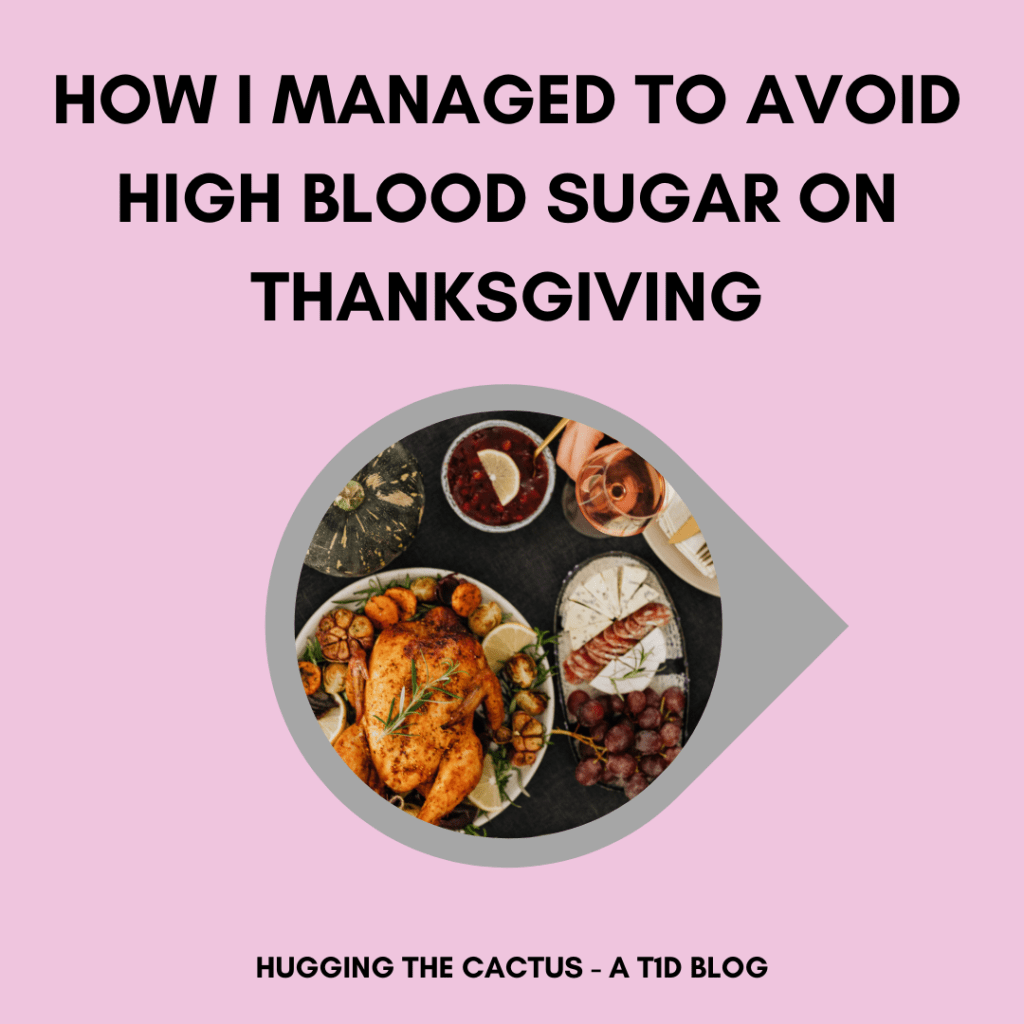
How I Managed to Avoid High Blood Sugar on Thanksgiving

2021 marks the most triumphant Thanksgiving celebration of my life.

No, it wasn’t because of the accolades that my tasty apple bourbon pie received (though that was for sure among the highlights of the day). It was because, for the first time in recent memory, I avoided high blood sugar the entire day. I got up to 164 at one point, but that was a brief high point in an otherwise wonderful day of smooth blood sugar sailing.

How the heck did I do it?!

Good blood sugars all Thanksgiving-day-long makes for an extra grateful Molly.

Well, for starters, I did my best to follow the tips I outlined in this blog post. But I figured it would be helpful to describe exactly how I went about following these tips and to explain what did and didn’t work. So here’s the method behind my blood sugar success:

  • I started out my day with a walk and an English muffin for breakfast. The exercise made me feel slightly better about all the calories I’d be consuming later in the day, and the small breakfast kept my appetite satisfied until I sat down for my first real meal of the day. I knew exactly how many carbs were in that English muffin, too, which helped me not only dose for it perfectly but also kept my blood sugar steady in the low 100s right up until mealtime.
  • For my first Thanksgiving meal of the day (yes, that’s right – I was lucky enough to attend two feasts), I kept the portions on my plate small and mostly carb-free. I had a bit of turkey, a scoop of brussels sprouts, carrots, and a few pieces of cubed sweet potato. By my estimation, I had no more than 25 or so carbs on the plate, but I bolused for just under that amount because my CGM was alerting me to an oncoming low.
  • There was only an hour and a half between my first meal and my second, and I knew I was going to load up on carbs for my second meal. So I took my next bolus a few minutes before sitting down for food in order to give my insulin a head start. I loaded up my plate with all the good stuff – more turkey, mashed potatoes, stuffing, a roll, etc. I calculated that I was consuming at least 60 carbs (though I definitely ate more than that) and chose to wait an hour or two after dinner before taking more insulin because I was drinking wine and didn’t want to run the risk of the alcohol/insulin combo making me go low.
  • After the second meal, I spent the next couple of hours assisting with cleanup and chatting away, eyeballing my CGM every so often to ensure that my blood sugar wasn’t skyrocketing – and feeling very proud when it didn’t!
  • The final food event of the day was dessert at a relative’s house. Even though a few hours had lapsed between then and the second meal, I wasn’t as keen as I usually am to hit up the dessert table because there were far too many yummy looking options in front of me. I knew there was no way I could try every single item, so I settled for the two things I wanted the most: a pie of my pie and a cannoli. This time, I was aggressive with my insulin intake, bolusing for about 45 carbs for both desserts (I cut a smaller slice of pie and wound up splitting the cannoli with my boyfriend). I also decided to set a temp basal increase out of fear that my complex carbs from earlier in the day would catch up to me later in the evening.
  • Fortunately, my proactiveness worked like a charm and I actually went a little low by the end of the day! I couldn’t believe how well I finally executed my own advice.

All of that, and I didn’t even have any exercise after dinner or dessert. But I felt 100% in control the entire time because I chose exactly what I wanted to eat, I was familiar with all of the foods, and I didn’t make it a priority to consume as many pieces of pie as I possibly could. It felt awesome and it made me that much more grateful for the fact that I was surrounded by the people I love all day long.

And now that it’s December, I’m especially excited to see repeat success during the holiday gatherings happening throughout the month!

My Top 10 Tips for Managing T1D at Family Gatherings

A version of this blog post originally appeared on Hugging the Cactus on November 23, 2017. I’ve decided to share it again today (with some slight updates) because I felt like I needed a reminder as to what a successful game plan looks like heading into a food-centric holiday! Read on for more…

Holidays that are centered around gratitude and eating…what’s not to love? As much as I enjoy the holidays, though, I can’t quite say that my diabetes feels the same about them. Fortunately, I’ve developed a bit of a game plan as to how to handle diabetes when family feasts come rolling around – here are my top 10 tips for making the most of eating-centric holidays with diabetes!

The only thing missing from this picture is the massive pre-bolus that I’ll likely be taking before sitting down at a major meal.

10) Don’t skip breakfast in the morning. This helps me avoid over-eating when dinner is served later in the day. Breakfast doesn’t have to be a huge thing, maybe just a bowl of oatmeal or a piece of fresh fruit – anything that will sate me for a few hours.

9) Volunteer to prepare a couple of dishes. If I’m going somewhere for the feast, I like to know what my host needs me to bring. If I have creative control over the dish, I prefer to make it something that I know won’t be too hard on my blood sugars, such as a side of veggies or a sugar-free dessert.

8) Familiarize yourself with what’s being served prior to sitting down for the meal. Before my family sits down to eat, I like to know what exactly we’re being served so I can plan accordingly. I can usually get away with strolling around the kitchen to get an idea, but sometimes the chef (my aunts or my mom) kick me out while they finish cooking dinner!

7) Don’t feel pressured to try everything. It all looks and smells so good, but I have to remind myself to use some restraint when piling my plate with food. I’ll add staples like turkey and green beans (both of which are low-carb!) and take smaller portions of the heavy things, such as stuffing and potatoes.

6) If it’s necessary, extend my bolus. This all depends on what my blood sugar is before the meal, but sometimes, I’ll extend it in order to prevent lows or highs post-feast.

5) Check my blood sugar often. I’d rather have an idea of where my blood sugar is headed than leave it to chance and guess incorrectly.

4) Go for a walk or organize another outdoor activity. The weather doesn’t always cooperate with this idea, but I’ve found that dragging my cousins on a 20-minute walk after eating helps my blood sugar and provides us all a chance to hang out while our uncles take control of the TV and our aunts chitchat over cups of coffee.

3) Wait a bit before having seconds or starting on desserts. I try to indulge a bit on the sweets, but I know that it never works out for me if I help myself to desserts too soon after consuming the main course. So I avoid the temptation by staying busy after eating dinner – my mom and aunts always appreciate an extra set of hands to assist with clean up!

2) Look up carb counts if I’m struggling to come up with them on my own. Sometimes, I can’t quite determine how many carbs are in a serving of pumpkin pie – I’ll guess too low and end up high, as a result! But I know that there are tons of carb counting resources at the tip of my fingers, thanks to my smartphone.

1) Remember what the holiday’s all about: being thankful! Enjoy the day and time with loved ones! Whether you’re part of a large family like mine, a small one, or choose to spend the day with friends or a partner, just relish it for what you want it to be.

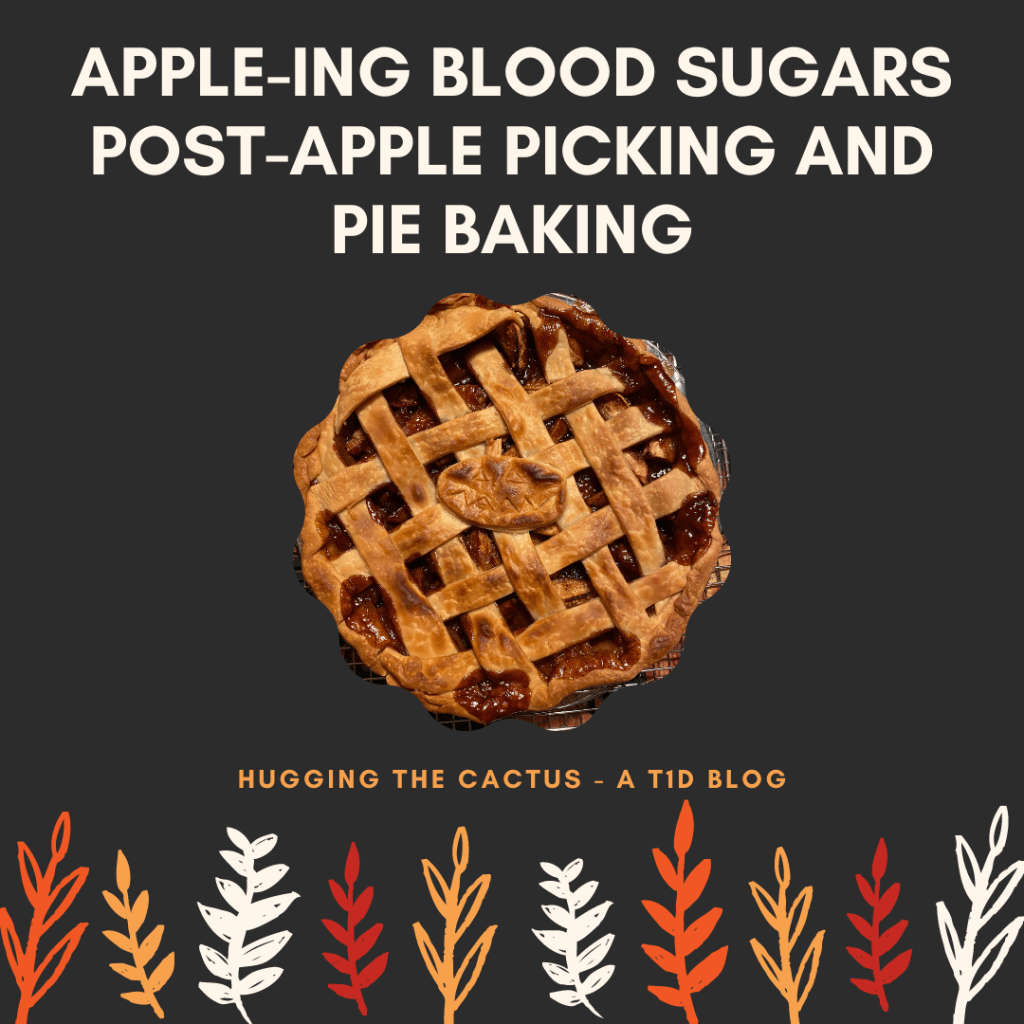
Apple-ing Blood Sugars Post-Apple Picking and Pie Baking

I’m gonna forewarn you now – this blog post is gonna have a bushelful amount of puns. If you don’t find that appealing, then it might be fruitful for you to walk away now – I’ll seed you out.

OKAY JUST KIDDING, I actually think I used up all of my good apple puns in that opening paragraph. I can’t think of any evercrisp ones at the moment…

For real, I’m done now (at least for the time being).

So the title of this blog post (and all the ridiculous puns) will indicate to you that I recently went apple picking! And turned some of those apples into yummy pies!

But that’s not all, folks – I did both of those activities, in addition to actually eating slices from those pies, while maintaining excellent blood sugars!!

Pictured above: the brown sugar bourbon apple pie that is the best kind of apple pie I’ve ever had, hands down.

To this day, I still don’t really understand the sorcery that must’ve been at work in order for me to accomplish such a feat. I have a theory when it comes to the apple picking – I was walking all around a large orchard for like an hour, on a quest for the most perfect apples possible – and all that roaming up and down the rows of apple trees kept my blood sugar levels steady, even as I sampled upwards of 10 different types of apples (and I even had to eat an entire apple as I exited the orchard because my blood sugar was, in fact, beginning to dip). So that helps to explain why my blood sugars were so good when I was picking the apples.

But with the baking and eating of the pies…I have no idea how I dodged a high blood sugar. My boyfriend and I made the most decadent apple pies we could think of – one had a peanut butter crumble topping and the other was a brown sugar bourbon apple pie with an ooey gooey caramel sauce. Surely, I thought as we chopped apples, folded ingredients together, and did latticework with our crusts, my blood sugar is gonna suffer when we dig into these pies later tonight.

Much to my utter befuddlement and delight, though, my blood sugar never rose above 150, even after I had two decently portioned slices of pie with caramel sauce generously drizzled over them.

Maybe I nailed the carb counts. Maybe I know my body’s reaction to pies – which I only ever eat at Thanksgiving, normally – better than I thought I did. Who knows, but there’s one thing that’s for sure…

I was happy to my core over my delicious pies and sweet blood sugars!

The 1 A.M. Cupcake

Zzzzz…huh? What’s that? I was sleeping so deeply…

Oh, I’m low.

Dazed, I roll out of bed and suddenly become aware of how hot I am. Beads of sweat are rolling down my back, making my pajamas stick to my skin. I look at the number on my Dexcom – there isn’t one.

It just says LOW.

I grow more alert and turn to my test kit to do a fingerstick check and verify my Dexcom reading. My meter says that I’m 44.

And suddenly, I’m feeling that low. I need sugar, stat. I could open the bottle of glucose tabs conveniently perched on my nightstand, chew 5 or 6, and then get settled into bed and fall back asleep relatively quickly. But the desire to get downstairs and eat the contents of my kitchen strikes, even though it’s 1 A.M. and eating too much at this time of night wouldn’t be good for either my blood sugar or my sleep hygiene.

Ignoring my more rational side (as well as my glucose tabs), I grab my phone, my meter, my PDM, and my bathrobe and stumble down the stairs in the dark. I turn on the ceiling fan in my living room in a desperate attempt to cool down faster before I walk into the kitchen.

My eyes fall on a cupcake sitting innocently on the counter.

This isn’t a picture from this particular incident – nobody wants to see me when I’m this low – but this is one of the cupcakes that I’d made. Violet always wants me to share.

I don’t think twice – I tear the wrapper off and three bites later, it’s gone.

I collapse on the couch, directly under my ceiling fan. I am a sweaty mess. This low is hitting me hard. I put the TV on in a futile attempt to distract myself while I wait for the cupcake to kick in, but instead of paying attention to what’s on the screen, all I can feel is gross for choosing to eat a damn cupcake at 1 in the morning instead of doing the “right” thing and treating my low from the comfort of my bed with glucose tabs.

20 minutes later, I start to feel chilly. I’m no longer perspiring and I feel all of my low symptoms subside. I’m better, so it’s time to head back upstairs and try to fall back asleep.

I toss and turn for a bit, cursing diabetes and its middle-of-the-night low blood sugar curveballs, and the stupid 1 A.M. cupcake that my diabetes somehow convinced me to eat to treat a low instead of waiting to have it at a time that I could actually enjoy it.

Diabetes strikes again, I think as I drift back to sleep.

A Human Garbage Disposal

Sometimes, I feel like I am a human garbage disposal.

It’s not everyday, but there are occasions in which I want to eat anything and everything within arm’s reach like it’s the last meal or snack that I’ll consume for days. When I’m experiencing a low blood sugar, I’m especially likely to inhale food as if I’m a living Hoover vacuum…or as I’ve come to think of it, a human garbage disposal.

There’s no doubt about it: Diabetes has totally screwed up my relationship with food. I’ve written about this previously. I’m also just as sure of the fact that my relationship with food has gotten worse as I’ve grown older, a phenomenon that I blame on numerous factors such as the natural process of aging, social media, and society’s constant scrutiny of how women’s bodies “should” look. Add my diabetes into this mix and I feel like trash about my body and harvest negative feelings towards food (despite also loving food).

I definitely blame my diabetes for ruining my relationship with food.

So yeah, a human garbage disposal – with diabetes, no less – feels like an accurate way to describe me and my relationship with food.

Don’t get me wrong – this isn’t a “pity me” post. Not at all. This post is more so me…trying to understand what can be done to repair my relationship with food. Because I think if I can repair it, then I can start seeing positive outcomes on my blood sugar and start to strengthen my own sense of self-love. These are important things, you know, and I’ve hit a point where I’m just tired of feeling so damn negative about my diabetes, food, and my body all the time.

I might feel like a human garbage disposal lately, but “human” is at the forefront of that phrase. I’m human, I make mistakes, and my relationships with my diabetes, my food, and my body are bound to ebb and flow over the years.

At the end of the day, I think it’s just a matter of making peace with that.

How I Learned the Importance of Carb Counting

This blog post was originally published on Hugging the Cactus on April 6, 2018. I’m reposting it today because most people know that carb counting is important to a person with diabetes, but they might not understand exactly why. This post features an example that demonstrates all too well the negative implications associated with neglecting to carb count. Read on to learn how I figured out the importance of carb counting…the hard way…

One recent evening, I was rummaging through the kitchen pantry and noticed a bag of “veggie stix” stashed away, waiting to get opened. The sight of the bag instantly brought back memories of a time I was blatantly irresponsible with my carb counting and insulin dosing…

I learned the hard way that neglecting to count carbs can lead to scary high blood sugars…

…It was my junior year of college. I had plans to meet with a friend for dinner at seven o’clock. While that’s a standard suppertime for many people, it was kind of late for me. So that explains why I decided to treat myself to a snack a couple hours before it was time to go, just to hold me until I had my meal. My snack of choice? A bag of veggie stix just like these were sitting in the kitchen of my on-campus apartment. I thought I’d help myself to a few, believing (naively) that I had enough self control to know when to stop shoveling them down my gullet. That’s right, instead of doing the right thing and counting out a bunch before stowing the bag away, I was blindly consuming handful after handful without dosing for a single stick.

I can’t even use the defense that these veggie stix are strangely addicting – they really are, they taste a little like those potato sticks that used to come in cans – because I knew what I was doing wasn’t good for me. I just didn’t care. I had munched my way through half of the bag when it dawned on me that it would probably be smart to stop myself from eating more. I rolled up the bag, returned to my room, and did some homework until it was time to meet with my gal pal.

Little did I know that my blood sugar was rising to potentially dangerous levels.

I didn’t find out how high I was – over 400 mg/dL – until I reached the sandwich shop and had a plate full of chicken pesto carb-y goodness waiting to be consumed. My face must’ve shown my shock, because my friend asked me if I was alright. I quickly explained to her my mistake, and took an extra large bolus to cover my food and correct my blood sugar. Once that was done, I somehow managed to stop panicking long enough to enjoy the dinner with my friend, even though I couldn’t eat a bite of mine until an hour or so after injecting my insulin.

Although it sucked to go through this, I’m kind of glad that it happened because I learned a major lesson from it: ALWAYS count my carbs. It doesn’t matter if I WANT to be lazy or pretend that my diabetes doesn’t exist, I HAVE to hold myself accountable. It may be mentally draining and a bit of a nuisance, but it’s my own health here. It’s up to me, and me alone, to manage it.

And by the way, I did just help myself to the above bag of veggie stix. I had exactly 24 pieces, which equals exactly 5.4 grams of carbohydrates – a much smaller amount than what I ate that one night five years ago.

My Close Encounter with the Keto Diet

Remember that time that Oprah Winfrey did a Weight Watchers commercial and proclaimed loudly and proudly before the cameras that she loves bread? (If you don’t know what I’m talking about, here’s the link to the ad with a little doctoring done to it – it is worth a watch.)

Well, I can relate to Ms. Winfrey – except my obsession with carbs extends beyond bread. I love cake, candy, chocolate, pizza, pasta, sushi…and just about every other carbohydrate-laden food that exists. So while I think it’s awesome that many of my peers with T1D choose to follow low or close to no-carb diets, that’s not the kind of thing that works for a girl like me: I’m happy managing my diabetes in tandem with a moderate carb intake. But that’s not to say that I don’t eat lower carb sometimes or that I don’t have an interest in the principles of the keto diet, just because it’s so restrictive.

At least, that’s what I used to think about it.

Would my love of carbs prevent me from trying out aspects of the keto diet?

When my boyfriend decided to go on the keto diet back in May (he’s had experience with it before), I was simultaneously impressed with his dedication to it, but also a little worried. We have dinner together a few times each week and since I wanted to show him that I support him 100%, I knew that I’d have to change up my cooking so it adhered better with the dietary guidelines of keto.

So for the last two months, I’ve had a lot of exposure to the keto diet, and this is what I’ve learned about it:

  • It’s not as restrictive as I thought it would be. I figured that eating strictly keto meant that the only food groups we could eat were meats/proteins, fibrous vegetables, and cheese. That wasn’t 100% true. While we stuck to proteins and vegetables for most dinners, we also had plenty of snacks that kept things fun and interesting. I developed a mild addiction to cheese crisps and chicharrons (otherwise known as pork rinds). I also had a lot of fun trying different keto dessert options out there, including cookies, ice creams, and peanut butter cups (the latter being my absolute favorite).
  • Snacks can get expensive. One of the keto peanut butter cups that we ate cost $10 for a bag of 7. That’s an insane price. When you factor in the cost of other more expensive grocery items, like beef jerky or nuts, things add up quickly, which is definitely a downside to the keto diet.
  • My blood sugars tended to respond well when I ate keto…for the most part, anyways. Eating keto dinners was mostly great for my blood sugar and it stayed relatively steady more often than not. On the occasions it didn’t, it was because I was trying to bolus for the amount of protein or the negligible amount of carbs in the veggies I was consuming at dinner, and I would go low as a result. There’s an art to bolusing on the keto diet, for sure, but since I was half-assing it (really quarter-assing it) and not following it all the time, I never got a grip on how to account for minimal carbs.
  • Keto can inspire creativity in the kitchen. The best thing I made, ate, and loved throughout my experience with the keto diet was cauliflower crust pizza. I found the best recipe for it that was so easy to make and yielded delicious results. I always assumed that cauliflower pizza crust would be too difficult to make or not satisfying in the same way that pizza is, but that isn’t accurate at all. I grew to appreciate the challenge that keto presented me to come up with new things to eat that were tasty and filling, which I didn’t expect but liked.

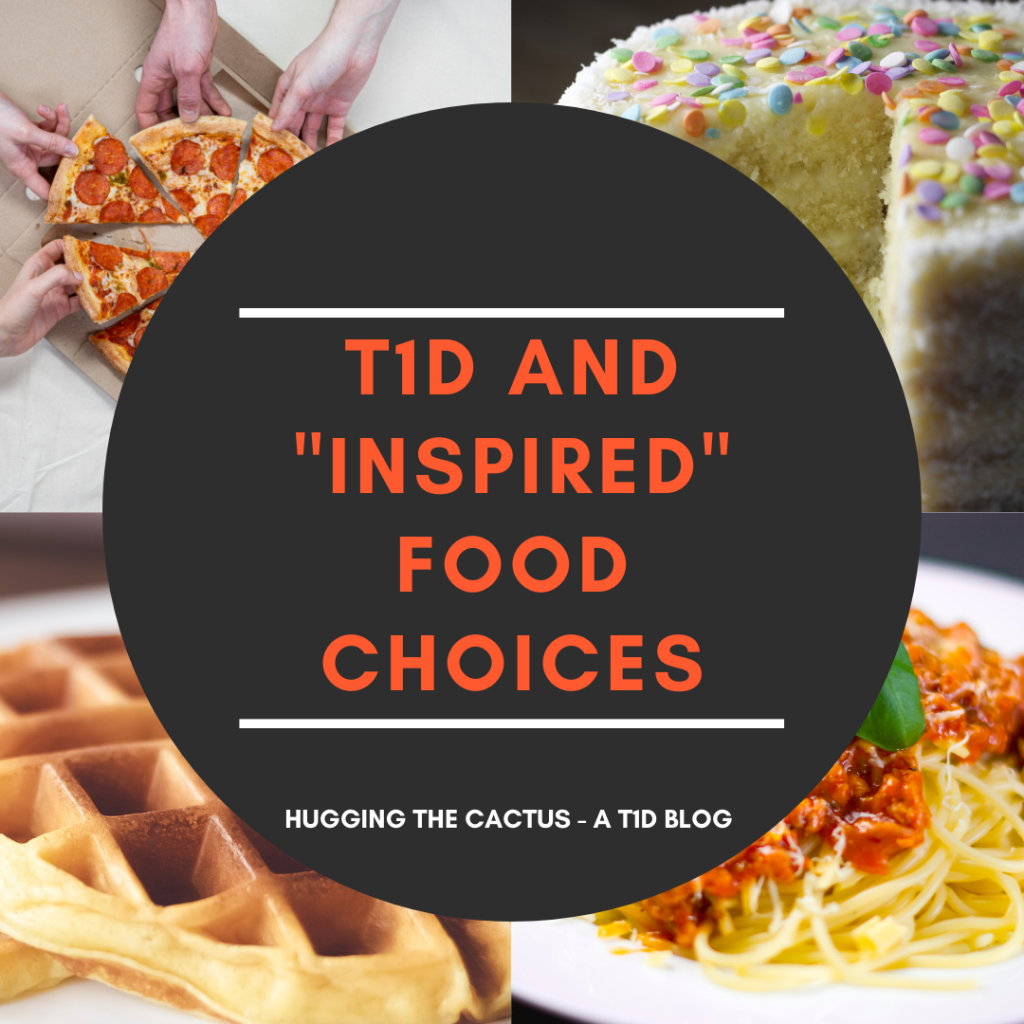
T1D and “Inspired” Food Choices

There’s no doubt that T1D directly affects my relationship with food.

Sometimes, I eat whatever I want with zero guilt. Other times, I painstakingly count not just the carbs, but every single macro of any morsel that meets my mouth. And more often than not, I fall somewhere between those two extremes.

But no matter what, my relationship with food is exhausting and probably one of the most inconsistent relationships I’ve ever had in my entire life.

It’s also a relationship that causes me to make what I’m calling “inspired” food choices.

Diabetes certainly impacts my food choices…especially when it comes to blood-sugar spikers like pizza, pasta, waffles, cake, and more.

Choices like eating dessert before dinner because my blood sugar is low.

Choices like only eating low- or no-carb foods because my blood sugar is high.

Choices like timing my meals down to the minute because I know that my body functions best when I eat regularly.

Choices like keeping snacks in my purse, my overnight bags, my car, and miscellaneous other locations because I never know when I might need food on the fly.

Choices like restricting my eating because a low blood sugar made me binge on food one day, and the guilt carried over to the next day.

Maybe “inspired” isn’t the right word to describe my food choices here. There’s so many more that could apply: weird, strategic, healthy, unhealthy…the list is limitless.

Just like the number of “inspired” food choices that my diabetes triggers.

Good, bad, and everything in between, though, the first step in making changes to my relationship with food is acknowledging the flaws in it. While I admit that I’m not sure what the next step is, I do know that I’m feeling determined to finally establish a guilt-free relationship with food.

Diabetes already takes too much from me…I refuse to let it continue to make my relationship with food negative.