Diabetes Data Overload

I’ve always been a words girl – never a big fan of numbers. So isn’t my T1D ironic, being that it’s an illness ruled by numbers?

Think about it. PWD have a ridiculous number of…numbers to be concerned about on a daily basis. Between blood sugar checks, insulin dosage calculations, carbohydrate counting, basal rate testing, and more, there’s a lot to take into account.

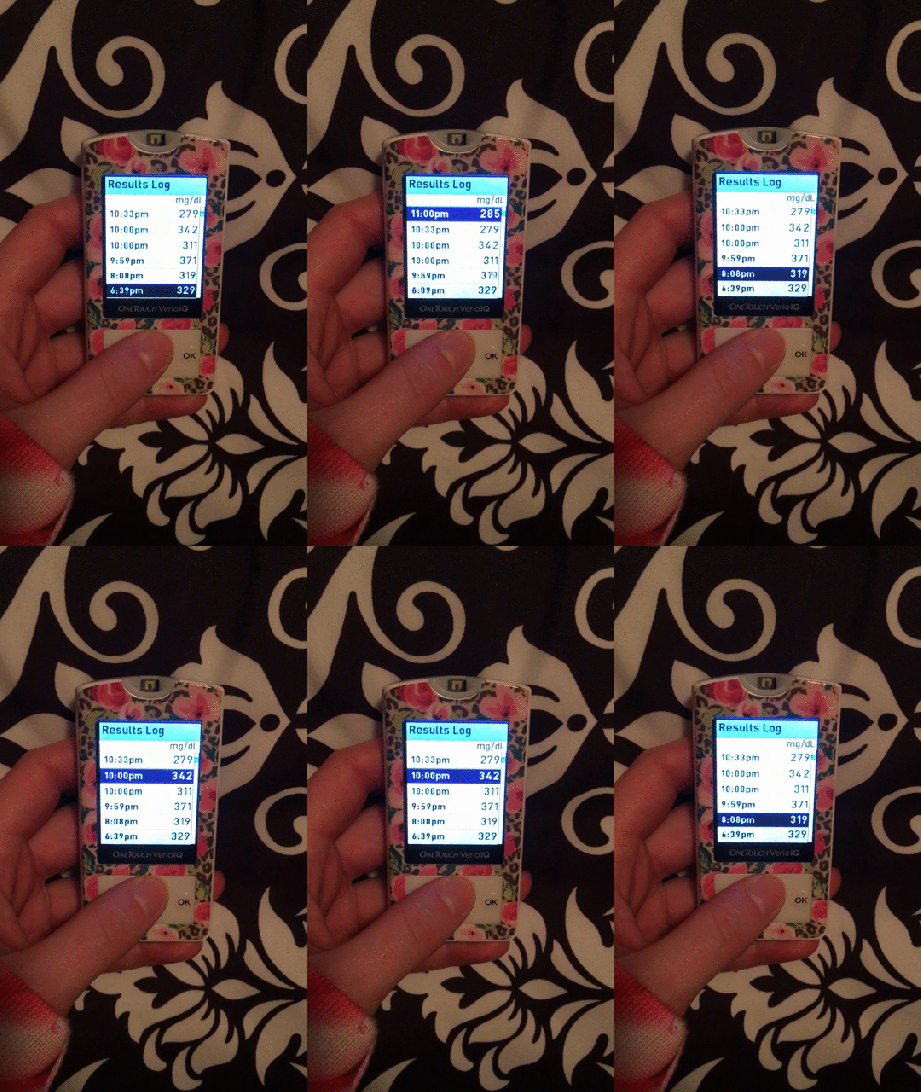
And as time has gone on and technology has evolved, it seems like these numbers are constantly accessible on an endless volume of devices. I can determine trends using my Dexcom CGM – using either my mobile app or my sparkly pink receiver. I can scroll through my record log of blood sugars on my meter. I can find out how much insulin I took in one day using my OmniPod. I can even download several weeks’ worth of blood sugar graphs from my Dexcom by simply hooking it up to a computer.

It’s information overload.

As much as I love having the ability to access all of this data, it’s also too much to swallow at times. I could drive myself nuts looking through days’ worth of graphs and logs to figure out why I was inexplicably high at 3 o’clock in the morning one day, but I can also just chalk it up to a fluke and better spend my energy worrying about my blood sugar in the present (as opposed to the past).

The point is, it’s exhausting to have my life dictated by all this data. I wish I could take a break from it sometimes, but then again, it’s helped me become more accountable for my own health. And I can still express my hatred for numbers by using my love of words, so it’s not all that bad.

Does Cold Weather Affect Diabetes?

Shout-out to Diabetes Social Media Advocacy (DSMA) for prompting me to write a post about this!

Often, I tell people that anything can affect diabetes. Factors like exercise and stress may seem obvious, but more subtle variables include the weather.

The winter season began less than a month ago, but it’s already been a brutal one for much of the country. In New England, we’ve had more than a foot of snow, subzero temperatures, bitter wind chill, and a surplus of ice glazing over all outdoor surfaces.

58E267DF-932A-4CCB-B9BC-D98EA252DAF7
Winter weather looks pretty, but it sure can be a pain in the ass.

Besides being unpleasant to experience, harsh cold weather like this also has a bit of a negative impact on my diabetes. How? There’s a few different ways.

Cold weather limits (or increases) the types of physical activity I can do. Snowstorms make it difficult to travel, so more often than not, I’m stuck at home during wintry weather events. This means I get less movement in, which has an adverse affect on my blood sugars. I rely on getting a certain level of exercise daily, so I have to be creative when it’s snowing in order to meet these requirements. On the flip side, depending on how much snow falls, I need to shovel the driveway. This is a highly strenuous activity that can make my blood sugar drop in 15 minutes or less. As a result, I’ve got to be careful and plan accordingly when a blizzard is in the forecast.

Cold weather impacts the foods I consume. Let’s be real, when it’s freezing outside and you can’t go anywhere, healthy eating isn’t really a priority. Nothing is as comforting as a home cooked meal, whether it’s chili or chicken pot pie. And a hot chocolate is a wonderful pick-me-up post-shoveling. But the problem is these foods are heavy, rich, and laden with carbs. I have to work harder in the cold weather to attain balance with my eating and resist the temptation to fill up on starchy, satisfying food.

Cold weather affects my insulin intake. This ties into the aforementioned points, because if I’m moving less and eating more, then I naturally need to compensate for this with higher insulin dosages. I get frustrated, because it seems like I have to deal with more high blood sugars this time of year. But I know if I keep these factors in mind, it’ll help keep the highs at bay and prevent me from under-dosing.

Cold weather can sway my mood. The winter blues is a real feeling this time of year. It’s much harder to feel motivated to keep up with exercise routines or other healthy habits when the weather’s got me stranded at home. I combat it by staying busy and keeping a routine as much as I can. And when I fall off the wagon, I acknowledge that it’s okay, dust myself off, and get right back on it.

Even though cold weather brings additional challenges with it, the season is fleeting. Before I know it, spring will be here along with better blood sugar.

What it Feels Like to Have Low Blood Sugar

Diabetes evokes curiosity for those who are not familiar with it. I’ve been asked many questions over the years – can you eat sweets, does it hurt when you give yourself shots, do you have to protect your pump from water, just to name a few – all relatively easy-to-answer, yes-or-no questions. But every now and then, someone will ask harder questions. And one that I’ve struggled to answer in a succinct manner is: What does it feel like to have low blood sugar?

There isn’t really a simple answer. I guess my textbook response is to rattle off a list of common hypoglycemic symptoms: shakiness, dizziness, sweating, slurred speech, weakness. But I know that other PWD experience slightly different symptoms, such as feeling cold instead of sweaty, or drastic changes in personality. And there are even some PWD who don’t experience any symptoms due to hypoglycemia unawareness.

So how exactly do I response to a question like that, one that’s more loaded than it appears?

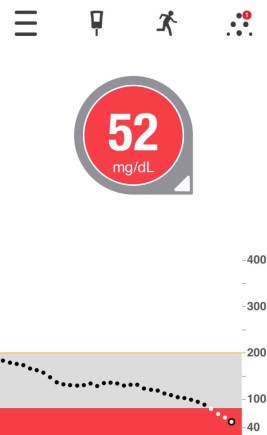
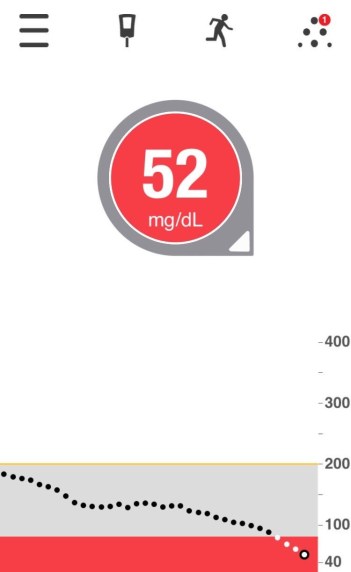
lowbg
A graphical representation of a sudden low – I guarantee I was not feeling great when this one hit.

I could tell the asker to imagine feeling simultaneously ravenous and disoriented. I could tell them to picture walking into the kitchen and feeling like inhaling the entire contents of the pantry – that’s how intensely your body craves sugar.

I could tell them to think about what it’s like to wake up in the middle of the night drenched in sweat. It might seem like a reaction to a nightmare, but it’s the body trying to convey a message that is, by some miracle, supposed to be grasped by someone who was just trying to get a solid night’s sleep.

I could tell them to envision feeling like energy is sapped out of every pore in the body abruptly, with little warning.

I could tell them that sometimes, it results in pure panic, particularly when no fast-acting carbohydrates are on hand or when no one is around to help you.

I could tell them that low blood sugar is one of the biggest sources of anxiety for many PWD, that it causes a deeply rooted fear. That it can sometimes lead to a PWD making unhealthy choices just to avoid a low from happening in the first place.

I could say all of this to anyone who asked me this question – and I still don’t think it would completely convey what it’s like to have low blood sugar.

How would you describe it to someone asking you about it? Would you use the terse medical explanation, or would you try to talk about how it really feels?

Leave your responses in the comments – I’d like to know how you handle this. And if you thought this was an interesting post, let me know. I’m thinking of doing a series about how I answer the more complicated diabetes-related questions I’m asked.

The Cookie Conundrum

Merry Christmas, dear reader! I hope you enjoyed a wonderful holiday yesterday. Thank you for your continued support of my blog. I’m looking forward to continue writing in the new year! Enjoy this new blog post about my favorite food weakness this time of year.

Hi, my name is Molly, and I have an addiction to cookies.

Not just any kind of cookies, though – Christmas cookies, to be exact. I think my obsession with them truly took shape when I was in eighth grade. That’s when my aunts, cousins, and I gathered for our first annual Christmas cookie swap, a joyous occasion during which we spend an afternoon sampling cookies we’ve baked. It’s just as glorious as it sounds.

Unless you’ve got diabetes, of course.

D38B3F51-F358-4ABA-8778-9291ED7F7073
Bags and baskets filled with sweet little sugar bombs (A.K.A. cookies!!!)

I say that because it seems no matter what I do, my blood sugar always ends up high after partaking in the cookie consumption. And I’ve tried many different strategies to combat it, including:

  • Pre-bolusing
  • Breaking cookies in half to cut down on the carb intake
  • Running a temp basal rate
  • Exercising pre- or post-swap, depending on my blood sugar

I’m fully aware that I don’t HAVE to eat the cookies – I could go to the swap and watch everyone else try them and plaster a fake grin on my face – but honestly, how miserable does that sound? I fully believe that just because I have diabetes, it doesn’t mean that I should deprive myself. And as a disclaimer, I’m not sitting there wolfing down cookie after cookie like I’m the Cookie Monster: My family sets out just enough so that each person can try one cookie from all participating bakers. So usually, accounting for all the cookies I split in half, I eat approximately 6-7 whole cookies (which vary in size but are typically no larger than 3-4 inches in diameter). All that said, I still account for at least 45 grams of carbohydrates when I bolus for the cookies, which should have me covered…

…in theory, anyways.

Hence, my cookie conundrum, which occurred yet again when I participated in the 2017 swap. I spent a solid few hours in the late afternoon and early evening battling blood sugars in the high 200s and low 300s, which proved to be extra challenging without my CGM’s aid (I had to remove it because the dreaded ??? appeared and wouldn’t go away for several hours). But I handled it: I managed to get my numbers back down, try an array of fabulous cookies, and spend an afternoon with my wonderful family members.

Cookie conundrum overcome, if you ask me.

The Emotional Roller Coaster (Otherwise Known as High Blood Sugar)

I tested three times in the span 60 seconds the other night.

Why?

High blood sugar.

That was the culprit. For five hours, I was high – over 300 mg/dL, to be exact. I still can’t quite explain how it happened. I didn’t eat more than my usual amount of carbohydrates at dinner. I didn’t deviate at all from my mealtime routine; the only thing that maybe affected this was the fact that I had to change my pod that night.

But still. It was maddening, sitting there and watching my blood sugar climb and stick to the 300s. I did everything I should do to correct it: increase my temp basal, take corrective boluses, drink water, refrain from eating. And yet, the high persisted. All I wanted to do was go to sleep, but I was afraid to. Yes, afraid to get the rest that my body needed! That’s what diabetes does sometimes – it instills fear that you can’t shake until those numbers change the way that you need for them to. It’s paralyzing; it’s helplessness in its purest form.

It’s why I ended up stacking my boluses that night, even though I knew it might not be a smart call. But I was so stuck in the high 200s and low 300s. What else was I supposed to do? I even tested THREE times in 60 seconds because I thought that my meter was wrong. I desperately wanted it to show that I was coming down, and felt tears sting my eyes when I realized it wasn’t. I had no choice but to wait some more, so I made myself comfortable in bed and watched the Gilmore Girls (because a nonstop dialogue and excellently obscure pop culture references are good for the soul). I could only get semi-absorbed in Lorelai and Rory’s back-and-forth banter though, because my mind was otherwise occupied by the nagging high blood sugars.

AE7904C6-733F-468F-9901-454AD509D4F9
I couldn’t help testing over and over again, hoping for any sort of positive change.

Finally, I saw that I was coming down to the mid-200s shortly before 11:30 P.M. I decided it was safe to close my eyes. But I didn’t dare do so until I set an alarm for about an hour from then, just so I could continue to monitor my blood sugar. I woke up when it blared, and let out a massive sigh of relief when my CGM showed I was floating down to 150 mg/dL.

I fell back asleep only to wake up again, two hours later: This time, it was because of a low blood sugar. I tested, saw that I was 67, and corrected it. But falling asleep wasn’t as easy this time around. Again, I felt fear – what if I continued to drop down? What if I corrected too much? I was so emotionally exhausted and consumed by the feeling that it took me well over an hour to drift back to sleep.

When I woke for work the next morning, I was 148. The evening’s episode was over. But my head was spinning as I did my best to analyze what I could and should have done better.

And this is when I told myself to stop. I had to stop beating myself up and going over every choice I made. I had to remind myself I did the best I could in that moment, and that should be enough. It is enough.

I pick myself up, dust myself off, and move on.

Memory Monday: 60-Second Meters

One Monday per month, I’ll take a trip down memory lane and reflect on how much diabetes technology, education, and stigma has changed over the years. Remember when…

…it took blood glucose meters a full 60 seconds to generate a reading?!

A full minute to get a blood glucose reading. That just seems crazy now, considering most meters can deliver a number in a mere 5 seconds. But growing up, it was all that I had to use. I remember being sent down to the school nurse every day in elementary school to test my blood sugar before lunch. I would pace around the nurse’s office as I waited to see my number, making a game out of it. Those 60 seconds felt agonizingly long as they cut into the amount of time I had to eat my lunch. It wasn’t fun.

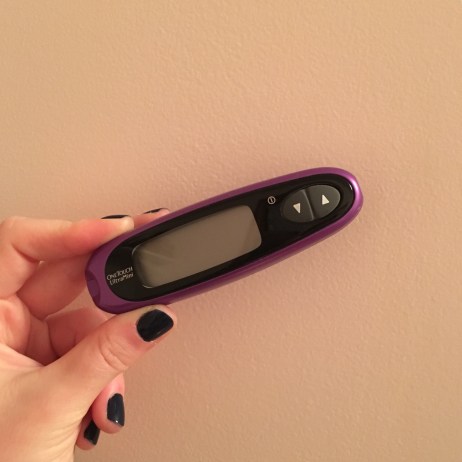
By the time I reached middle school, I obtained a OneTouch Ultra Mini blood sugar meter, which I coveted. It took only 15 seconds to check my blood sugar, and it came in a rainbow of colors! Over the years, I collected different versions of the mini in pink, blue, and purple. And as time went on, the countdown went from 15 to 5 seconds – so checking blood sugar was quicker and easier than ever before!

A8CE576A-36C9-4C8A-AB0C-35B14E48B46B
I kept one of the UltraMini meters – just in case.

These days, OneTouch meters are still my product of choice. I use the Verio IQ meter and I love how it lights up, allows data input, and tracks patterns. It serves as a reminder of the progress that’s been made in meter technology alone in the last 20 years!

What’s your blood glucose meter of choice? Why?


French Fries are Evil

Last week, my mom and I both rediscovered the reason why we usually order side salads with burgers or sandwiches served in restaurants: french fries. They’re tasty, carb-y, salt bombs that wreak havoc on our blood sugar. We’re both convinced that our indulgence in fries at dinner was responsible for the dramatic spikes, followed by sharp plummets, that interrupted our sleep overnight and made us understandably grumpy the following morning.

Here’s the timeline of what happened:

6:30 P.M. – Dinnertime. Ordered a chicken pesto sandwich with a side of sweet potato fries. I thought I’d be safe as long as I didn’t eat all of my fries, and if I left behind half of the bun. This certainly helped, but my carb counting was either severely off or the high amount of fat that I consumed threw my blood sugar for a loop.

7:30 P.M. – Blood sugar holding fairly steady around 160 mg/dL. Maybe restraining my carb consumption worked, after all!

9:00 P.M. – Eh, not so much. I’m seeing a diagonal arrow pointing up, indicating that I’m slowly creeping into the 200s. I’m not pleased.

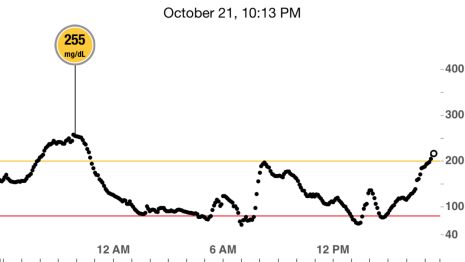
10:13 P.M. – Yep, topping out at about 255 mg/dL. Gross! I take some insulin and wait for it to kick in.

IMG_4313
This is as high as my blood sugar got after eating the evil french fries…

11:30 P.M. – I feel relieved, I’ve come down to below 180 mg/dL and I can now go to sleep. I’m not dropping fast and I suspect that, due to the insulin I have left on board, I’ll level out around 130 mg/dL overnight.

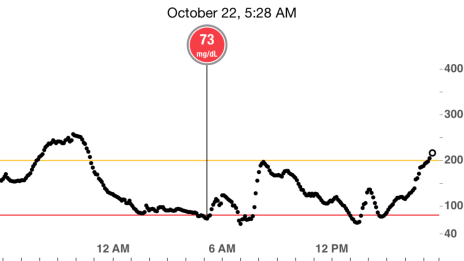
5:28 A.M. – Ah, a blissful five and a half hours of sleep before my diabetes said “LOL nope” and woke me up. I’m feeling shaky, so I roll over to check my CGM. Sure enough, I’m below my low limit (which is set at 80). My symptoms match my Dexcom graph, so I pop three glucose tablets into my mouth and plop my head back down on my pillow. I should be okay until I get up in a few hours.

IMG_4314
…and this is one of the multiple low points I hit in the wee hours of the morning.

7:00 A.M. – Except nope! My CGM’s alarms and my low symptoms wake me up again. I’m frustrated, because it’s beyond annoying to wake up at the same time I normally do for work on a Sunday morning, and especially since it’s because of my diabetes. I reach for a granola bar that contained 22 grams of carbs (way more than I needed for my correction) and wolf it down. I toss and turn for the next hour. I can’t fall back asleep because it feels like my CGM won’t stop alerting me to what my blood sugar’s doing. It’s almost 8:00 A.M. when I decide to take a small bolus, because I definitely over-corrected for the last low.

9:30 A.M. – I get up for real and start my day. Miraculously, I test my blood sugar and it’s 148 mg/dL. I thought it would be worse but I guess the single unit of insulin I took did its job.

This is a night in the life of a PWD. This is what it’s like to have a chronic illness that doesn’t sleep. This is what it’s like to feel out of control of your own body.

And this is why I think french fries are evil – because they’re fatty, slow-releasing but high carb little jerks.

Why it’s Worth it to Work Out Your Ratios

It’s not easy to figure out the insulin-to-carb ratio and basal rates that work best for you. In fact, it involves commitment, communication with your diabetes care team, and solid carb counting skills. But the work is so, totally worth it, because your blood sugar readings can look like this:

These 12- and 24-hour graphs were the result of me kicking it into high gear with my diabetes management in recent days. I can’t explain how awesome it felt to achieve graphs like this. Yes, I dipped a little lower than I would have preferred a few times, but the main accomplishment here is that I avoided the sticky highs that were frustrating me in the afternoons and in the middle of the night. Just looking at those smooth, nearly straight lines overnight brings a smile to my face.

I’d like to note that I did this WITHOUT making any special changes to my diet. In a single day, I ate fairly high carb for a PWD: around 30 grams of carbs at breakfast, another 30 at lunch, and between 40 and 50 at dinner. And depending on what my blood sugar is before bed, I’ll have another small snack, between 10 and 15 grams of carbs. So I think the main factors at play that lead to these beautiful graphs are 1) I bolused for my meals 10-20 minutes before eating them, 2) I ate the right balance (for me) of carbs, fats, and proteins, and 3) My insulin-to-carb ratios are spot-on at this time.

As long as I continue to put forth the right amount of effort, I think I’ll continue to have graphs like this. Of course, I know I’m going to slip up from time to time – occasions during which meals are a little more difficult to predict, or periods in which I experience higher stress levels – but this is okay. I constantly remind myself that diabetes is not something that can be completely tamed, no matter how hard I try. I accept that mistakes will happen along the way, and the best thing I can do is to learn from them to avoid making the same ones in the future. This acceptance, combined with perseverance and a willingness to always learn more about how my body reacts to certain foods and events, will help me meet my blood sugar goals on a more regular basis, which makes it an incredibly worthwhile pursuit.

Hypoglycemia Strikes Again

I rolled over onto my stomach and groggily opened my eyes. I checked the time – 1:30 A.M. I felt beads of sweat form on my forehead and back. I kicked my blankets off my body just as I heard my CGM vibrate: five urgent, successive buzzes, a grating sound. I knew what it meant without looking at the screen. My blood sugar was low, and I had to do something about it.

lowbg
Low blood sugar is never fun, but especially when it happens in the middle of the night.

Blindly, I groped around in the dark, my arm hanging off my bed as I searched the floor for my purse. Once I located it, I rummaged through the inside, looking for a miniature box of raisins that I knew would boost my blood glucose up. I found them and ate them quickly, sitting upright in bed. As I chewed, I registered the sensation that occurs once in a blue moon with these middle-of-the-night lows…

…Raging hunger.

It’s that feeling that you have when your blood sugar gets below a certain point.

That feeling of utter starvation.

That feeling that deprives you of good common sense.

That feeling that forces you to get out of bed, even though the rational part of your mind just wants you to go back to sleep.

Damn it. I’ve succumbed to it, again.

It’s not like this happens every time I have a low at ungodly hours of the morning. In fact, it probably only happens to me four or five times throughout the year. Maybe because I fight against it so hard, since I know that it’ll lead to nothing but high blood sugar and regret.

These thoughts cross my mind, but it’s fleeting. I make my way down the stairs, pausing to grab my bathrobe to keep me warm (the sweating will stop soon and it will be replaced by nonstop chills). Hey, at least I have enough logic at this moment in time to remember the BATHROBE of all things!!!

I turn the light on in the kitchen, blinking rapidly to clear the sleep from my eyes. And then I raid the cabinets.

Fistfuls of Smart Food popcorn are devoured one minute, and in the next, I’m swallowing spoonfuls of crunchy peanut butter (my dear, delicious vice). I take a pinch of Parmesan from the fridge and a tiny tower of Toasteds crackers to complete my smorgasbord. I wash it all down with sparkling water and remove myself from the kitchen before I can do any more damage.

I don’t know what’s more sad – the fact that I gave in to these carnal hunger pangs even though I knew my blood sugar would be fine after having the raisins, or that my snacking was absurdly out of control for 1:30 in the morning. Truly, the knowledge that I must’ve consumed close to 400 calories – roughly how much I eat at lunchtime each day – was disgusting to me.

I could blame it on my lack of self-control. I could blame it on the early morning hours and my sleepy state. I could blame it on the peanut butter for being so addicting.

But instead of beating myself up for a snack attack in the witching hours, I’ll just accept it happened and blame it on the hypoglycemia for striking me when I was vulnerable. It happened, it’s over, it’s time to move on and try harder next time.