Hot Yoga: A New Win for my Diabetes

Normally, if you asked me if I would willingly go into a 105 degrees Fahrenheit room for 90 minutes for a workout, I’d say ohh HELL nawwww before you had the chance to finish asking your question.

I’m not someone who has a passion for exercising. I tolerate it. I try to do it daily for two very important reasons: 1) It keeps me in shape and 2) it helps me manage my blood sugars better. Otherwise, there’s very little about exercise that I actually enjoy. I’m not a fan of feeling out-of-breath for long periods of time. I have a love-hate relationship with the post-workout soreness that floods my body after a particularly intense session. And I definitely cannot stand sweating – on just about any given day, I’d rather be freezing cold and wearing layers of clothing than dripping in sweat.

All that said, though, I willingly participated in a fitness class called Bikram yoga…which is also known as hot yoga because you’re in a temperature-controlled room heated exactly to 105 degrees for the duration of the workout. For 90 minutes, you slowly move through 26 poses, and that’s that.

I wasn’t worried about the latter; it was the former that had me sweating (both literally and figuratively). I wondered whether I’d be able to tolerate the heat for a full hour and a half. I also had concerns about my diabetes devices – would I be sweating so much that they would fall off? Would they be able to stay safely in the room with me, or would the heat be too extreme for them? And how would my body and blood sugars respond to the hot yoga, anyways?

I knew the only way to get answers to my questions was to show up for class and find out for myself.
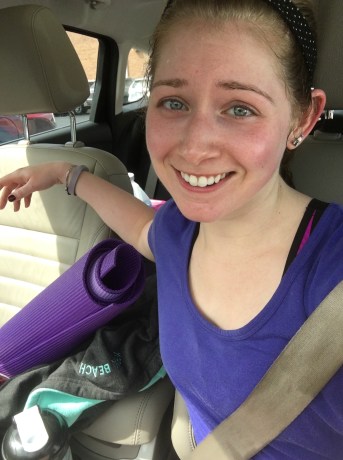
IMG_2171
Me, post-class, dripping in sweat in my car. Next time, I’m bringing a change of clothes.

And that’s exactly what I did. I went to a morning class with my stomach empty and my backpack full of diabetes supplies. My blood sugars tend to respond better to exercise when I don’t have any food in my system or insulin on board, so I made it a point to wait to eat my breakfast after yoga instead of before. But I still wasn’t entirely sure if or how my blood sugar might react to a brand new kind of workout, so I wanted to be armed with several different low snacks. I felt fairly confident about its stability, though, as I headed into the class sitting pretty at 110 mg/dL.

In addition to extra diabetes supplies, I also thought to bring with me some water that I’d filled and frozen the night before the class so I could stay hydrated throughout it with water that was sure to be extra refreshing in the heat.

Even though I had all this stuff with me, I chose to leave most of it in a cubby outside the studio, save for my CGM receiver, a tube of glucose tablets, and my water bottle. I didn’t want to take any chances with my cell phone, PDM, or glucometer and expose them to the heat – I have firsthand experience with an overheated cell phone, and while it does eventually cool back down its own, overheating my devices is not something I’d actively seek to do. I was taking a bit of a risk with the CGM receiver, but since I have the Dexcom app on my cell phone, it’s not like I’d be at a huge disadvantage if something were to happen to my receiver.

So with my gear in hand, I stepped foot into the yoga studio…and immediately started sweating. Yes, that quickly! It was a heavy, stifling, and moist heat – the exact kind that I hate the most. I started to question whether I had the endurance to even sit in this heat for 90 minutes, let alone move seamlessly through yoga poses in it. In the minutes before the class began, I sipped water slowly and told myself that above everything else, I needed to listen to my body throughout the class. I started to feel better as I reassured myself that it would be perfectly acceptable to walk out should I start to feel light-headed, low, queasy, or anything else abnormal.

Fortunately, though, an exit plan wasn’t needed as I made it through the full class! That’s not to say it wasn’t challenging or extremely sweaty – seriously, my body was so covered in sweat that it looked like I’d just come out of a swimming pool – but I proved to myself that I could do it. And the best part was that my blood sugar behaved beautifully: As a reminder, it was 110 mg/dL at 8:30 A.M. Class started at 9 and lasted until 10:30 A.M. I was home by 11 and when I checked my blood sugar there, I was at 118 mg/dL. I couldn’t have asked for better pre-, mid-, and post-workout blood sugar levels.

Was it scary to try this new, moderately intense exercise? Yes. Was I concerned about my diabetes before, during, and after the class? Yes. But was it all worth it? I’d say yes. I overcame my fears and was met by blood sugar success, making hot yoga a diabetes win in my book.


Is it Possible to Eat Pizza Without Encountering Blood Sugar Problems?

My short answer to that question is YES. Yes, it’s absolutely possible to eat pizza – and just about any food, in my opinion – without experiencing turbulent blood sugars.

It all just comes down to serving size, timing, and method of insulin delivery. Piece of cake, right? (Or should I say, piece of pizza?)

Have a slice!

Well, it really isn’t THAT simple. Other factors include the exact type of pizza (Is it gluten-free? Are there toppings? Is the crust thick or thin?), whether or not other food/drink is being consumed with it, whether exercise or inaction will follow in the hours after eating it…truly, there’s all that (and more) that people with diabetes need to think about when eating any type of food.

But what’s different about pizza is that it has a particular combination of fat and carbohydrates that can make it a tricky food for people with diabetes to figure out how much insulin to take and when to take it. It’s a little easier for those of us who have insulin pumps, because we can utilize the extended bolus (or square wave) feature that allows us to give a certain percentage of a mealtime bolus at once, and select a time later on to receive the rest of the bolus.

If that last sentence didn’t make any sense, here’s an example of what I mean:

It’s dinnertime – 5:30 P.M. I have two slices of pizza that I plan on eating. One’s plain, the other has BBQ chicken on it. I figure that there’s 50 grams total of carbohydrates in the two slices of pizza. My blood sugar before eating the pizza is 130 mg/dL. I put that number into my pump, and also input 50 grams of carbs. My pump wants me to take 8 units of insulin to cover the pizza. Instead of administering the full 8 units at once, I hit the “extend” option and opt to take 75% of the dose now, and the remaining 25% an hour and a half from now. So I get 6 units of insulin at 5:30, and 2 units at 7:00. This extended bolus typically has the power to prevent my blood sugar from crashing and spiking hours after eating said pizza, and in turns, saves me from dealing with a massive headache and questioning why I ever ate pizza in the first place.

Granted, an extended bolus isn’t the end-all, be-all. It relies heavily on me and my ability to count carbs correctly and time my boluses perfectly. But I have had fantastic success using it, particularly in a recent situation in which I ate two large slices of whole wheat pizza, a side salad, and a bit of pita bread without spiking beyond 160. I can’t say whether it was the whole wheat crust that helped me out (maybe it has a lower carb count compared to regular crust?), or if it was just supremely accurate calculations on my end, but it really doesn’t matter to me in the end…because I know that I can eat and enjoy pizza – and again, virtually any food – without my diabetes ruining it for me.


A Sudden Case of Dawn Phenomenon?

“Dawn phenomenon” is not a phrase that’s used to describe someone who wakes up each morning with a certain vigor and urge to immediately start enthusiastically dancing (even though it does kind of sound like it should describe that).

No, “dawn phenomenon” as I know it, and as many other T1Ds know it, is a term that describes an abnormal early-morning blood sugar spike, usually occurring within the first hour or so of a person with diabetes waking up.

And it seems to be something that my body is dealing with lately, much to my annoyance.

Thanks for the love! (1)

Since I moved to Virginia, my overnight blood sugars have been pretty stellar. I think this is mostly due to the fact that I’ve cut back on my pre-bedtime snacking, though it might also be a result of some anticipated changes in my blood sugar patterns because of the move. Whatever the case may be, I won’t complain about waking up to blood sugars within 80 to 100 mg/dL most mornings. It’s a great way to start the day, and since I begin most of my days with a fasting workout, it’s an even better feeling to know that my blood sugars won’t – or shouldn’t – fluctuate for the duration of my exercise. Rather, my CGM graph will stay nice and flat while I workout, and I don’t need to worry so much about what my blood sugar is doing for that period of time.

But another trend has emerged since my move to Virginia, and that is…you guessed it, dawn phenomenon. I’ll still wake up with excellent blood sugars and workout first thing, but the only difference is that now, my CGM shows my blood sugar slowly but steadily climbing up while I workout.

I’m trying to make sense of this sudden change, and I’m reacting to it by pre-bolusing for breakfast as often and for as long as possible (which just means that I take insulin that both corrects my blood sugar and covers my breakfast, then wait at least 20 minutes before eating anything). Mainly, I’m just hoping that it’s short-lived. Whether or not dawn phenomenon becomes a new normal for me, it is a good reminder that diabetes has an agenda of its own sometimes. I could have the exact schedule, with the same meals at the same times every single day with the same activity levels, and diabetes could still decide to throw me for a loop with a random low or high blood sugar.

It’s just up to me to figure out how to handle it.

8 Things I Hate About High Blood Sugar

High blood sugar, high bg, hypergycemia, sky high…whatever you want to call high blood sugar, it doesn’t change how I feel about it. I hate it. My loathing of high blood sugar is probably not unique among other T1Ds – I’m sure most would agree that it’s the worst – but on a recent and particularly bad day of high blood sugars, I started thinking about why I hate being high so much and it turned into this blog post…which turned into a very cathartic thing for me to write.

8
What do you hate about high blood sugar?

What are the eight things that I hate about high blood sugar? Here they are, from least to most detestable:

8. It makes me thirsty.
This reference may be lost on some of my readers, but to those who get it, it’ll be wildly funny (or at least it will be in my mind): *Parched Spongebob Squarepants voice* “Waaaaaaaaater! I neeeeeeeeed it!” When my blood sugar is high, I basically turn into that shriveled-up version of Spongebob that appeared in the episode in which he visits Sandy the squirrel’s treedome for the first time. He doesn’t realize that, being a mammal, Sandy doesn’t depend on water like he does to be able to live/breathe. Hence, he struggles throughout the episode to stay hydrated. I bet that if he were dealing with a high blood sugar at the same time, his desperation for water would become much more dire…because let me tell you, I simply cannot drink enough of it when my blood sugar is above 200. This results in many trips to the bathroom, and as I’m sure you can imagine, it’s pretty annoying.

7. It turns me into a major grump.
Nothing kills a good mood quite as swiftly as high blood sugar…I don’t like admitting it, but I tend to snap at people when my blood sugar’s elevated. So really, it’s a lose-lose situation for everyone.

6. It’s a weight on my shoulders.
If my blood sugar is high, I can’t help but wonder what I did wrong to make it so. Did I miscalculate my carbs? Should I have given myself more insulin? Should I have timed my exercise better? Is my insulin pump work properly? The list of questions and possible answers are practically endless, and it weighs heavily on me when I’m dealing with an inexplicable high.

5. It’s disruptive.
When my blood sugar is high for a prolonged period of time, I can’t focus on anything else but that. I’ll do anything and everything I can to take my mind off it and just let my corrective insulin dose go to work, but I can’t help but worry. This can be especially disruptive when I’m trying to get work done at my desk job, or when I’m trying to enjoy a night out with friends. It can suck the joy out of any situation, and that can be incredibly disheartening.

4. It doesn’t get along with exercise.
High blood sugar is weird, because sometimes it cooperates with exercise, and other times it reacts very badly to it. I find that if I workout at 250 or below, my blood sugar responds wonderfully to the movement and it’ll drop my blood sugar down to a better level much faster than insulin. But if I dare to workout above 250, then things can go terribly wrong and my blood sugar will go up even more. I learned that lesson the hard way in college, when I went to a high-intensity spinning class…I was so nervous about going low in the middle of the class that I overcompensated with a pre-workout snack. So over the course of the class, my blood sugar shot up to 300 due to the strenuous exercise coupled with the extra carbs. Not fun.

3. It makes my CGM wail.
I appreciate the alarms on my CGM, but NOT when they go off over and over and OVER again. It feels like my CGM is judging me for being high and it couldn’t be more obnoxious…and I just want to throw my device across the room to get it to shut up.

2. It prevents me from eating when I’m hungry.
I don’t always want to eat when my blood sugar is high, but occasionally, high blood sugar coincides with mealtimes and I end up staring longingly at food while I wait for my blood sugar to stabilize at a better level. Depending on when the high happens and how badly I wanted to eat some food, I can get very hangry (angry AND hungry), which is never a good state of mind to be in.

1. It’s stubborn.
The worst part about high blood sugar is that sometimes, it feels like it takes FOREVER for it to come back down. During the waiting period, anxiety, irritation, and anger are all emotions that can manifest themselves within me. And it sucks. The mental games that high blood sugar can play with me are straight-up cruel, and since a high can be so damn stubbornly slow to respond to insulin, it makes it that much harder to handle…which is why, I can say with 100% certainty, that I hate high blood sugars with a bloody passion.

Fearful and Falling in Target

What do they pump into the air at Target? Is it Afrezza or something? Because that seems like the only logical explanation for the phenomenon that seems to occur to most other fellow T1Ds when we step into a Target store.

Low blood sugars tend to happen at Target. Also known as “Target lows”, they can occur at any Target, big or small, no matter how long or short the shopping trip.

I experienced one last week. And it was severely exacerbated by the fact that I was visiting one in my new city for the first time by myself.

You are a rare gem.
Damn you, Target, for making my blood sugar go low during basically nine out of ten visits.

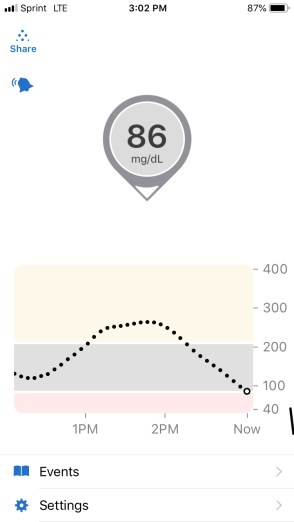
As you can see from my CGM screenshot, my blood sugar was definitely not low – not even close to it. I was in the mid-250s by the time I headed to the store, which is absolutely NOT where I like to be. But I didn’t take a correction bolus or even raise my basal insulin temporarily, because I guess I just had that feeling about my Target trip. I didn’t bother checking my CGM again after I parked, figuring that I’d do my best to make it a quick trip with minimal purchases.

Forty minutes (I’d been aiming for 20) after I’d stepped into the store and one semi-full cart (oops) later, I started feeling panicky and gasp-y. I told myself no, no, no, I wasn’t going low, I was just maybe reacting strangely to the scent of all the cleansers in the aisle I was occupying. I could deny it all I want, but in the back of my mind, I knew that I needed to pull my cart over, dig through my backpack, and locate my CGM so I could at least be informed of what my blood sugar was doing.

fullsizeoutput_d6b
Honestly, Target and all other retailers should just make glucose tablets free to any shoppers who are having a low moment.

So I did just that. Upon checking my Dexcom app and seeing that down arrow, I practically started hyperventilating. That’s when the following series of thoughts flew through my mind:

Okay, just get to the checkout…

Ugh, why is there only one open?! Guess you’ll have to self-checkout on low brain. Great…

OMG, Molly, you know you can only scan one item at a time…go faster!

You are NOT going to go down in this Target. Not today!!!

By some miracle, I successfully purchased my items and booked it to my car. Once I loaded everything inside, I suspended my insulin and shoved three glucose tablets into my mouth at once, chewing them so fast and furious that it probably deserved its own movie by the same name…(oh, but that’s taken *tee-hee*).

Normally, I would wait for my blood sugar to come back up before even thinking about driving home…but this wasn’t exactly a normal situation. I was on my one-hour lunch break from work, and I was rapidly approaching the 59-minute mark. The rational part of my brain (the way, way, super-far-back part) knew that I would be okay after about 15 minutes or so, but I was just so stressed about being alone in a strange city and wanted nothing more than to return to the safety of my apartment, pronto.

Of course, I had no idea how to actually get home – I needed my GPS to get to and from Target, and I’m sure I’ll need it to get basically anywhere for the foreseeable future – so I plugged my address into my phone’s GPS app.

And yet I STILL managed to take a wrong turn or three as I anxiously drove back to the apartment.

Less than 15 minutes later, I was parked and my shopping bags and I were inside my apartment. And that’s when I fell apart, feeling stupid for letting the low happen and getting lost on the way home…and feeling extra dumb for crying so hard about it.

Yeah, methinks that I’ll be running a temporary basal reduction the next time I plan a Target trip. I don’t want to be fearful and falling again any time soon.


How Moving to a New State Impacted my Diabetes

A few short days ago, I made the move from Massachusetts to Virginia…and just as I predicted, the whole process has been emotionally draining. I’ve cried more times than I can count. I’ve busted my butt trying to get settled as quickly as possible. I’ve been eating poorly as a way to cope with my emotions. And my blood sugars have been all over the place as a result…again, just as I predicted, but still a bit disheartening.

I knew to expect some diabetes turbulence from the get-go. After all, a seven-hour car ride doesn’t exactly bode well for anyone’s blood sugar. But surprisingly, the drive to Virginia was probably when my blood sugar was most stable. I was snacking a little (okay, a lot) on the drive because it gave me something to do other than cry and talk unintelligibly to my boyfriend (my trusty driver) and it was far from healthy snacks…think fast food breakfast sandwich, Reese’s cups, and trail mix. Could’ve been worse, could’ve been a whole lot better. I think that because I was well aware of the high carb content of my snacks of choice, it motivated me to stay on top of my blood sugars and give myself micro-boluses as needed.

So that was all well and good.

Then came the actually moving-in process.

You are a rare gem.

Box after box and bag after bag were transported from the car, up three flights of stairs, and down a long hallway. It’s no wonder that I went a little low from all that back-and-forth, though I did think that riding the elevator as needed would’ve prevented too much of a drop. And if I could go back in time, I’d like to address the day that I took off from work to do the bulk of my unpacking and adjust my temporary basal settings to something like a 50% decrease for six hours or so. That’s because as I sorted through clothing, emptied boxes, and organized all of my possessions, my blood sugar just did not want to stay put at a comfortable level. Over the course of the very long day that I spent unpacking, my blood sugar dropped low enough that I had to stop what I was doing to eat three times. It felt like I was constantly stuffing my face with food, which was frustrating and the last thing I wanted when all I desired was to get settled.

That’s the physical component of moving – a lot of labor; more specifically, lifting, tidying, hanging, folding, unfolding, and if you’re me, cursing.

But there’s an emotional side to it, too, that I would guess affected my blood sugar just as much as the physical aspect did.

I’ll be honest: Tears were shed. Anxiety felt like it would swallow me whole at points. Doubts ran through my mind as I wondered whether I was strong enough to be so far away from family and friends. I was feeling – and am still feeling, TBH – so many different emotional swings that I am fairly certain that I can blame my blood sugar swings on them.

I’ve said it before and I’ll say it again: I know I need to give myself time to adjust. I’ve got to take it day by day, hour by hour, moment by moment. I need to let myself feel the way that I feel and remember to be kind to myself, especially where diabetes is concerned.

It just helps to write it all down.

Molly, Meet Metformin

You may have read the title to this post and said to yourself, “Met-WHAT?”

Metformin is the new medication I’ve started taking (along with my typical insulin) to help regulate my blood sugars.

Maybe you didn’t make it all the way to that second sentence; instead, maybe you just Googled Metformin to learn more about it. And you probably immediately got confused, because the Google search results explained that Metformin is a medication normally prescribed to people with type 2 diabetes. You know that I have type 1, though, so what gives? Why am I taking this new pill?

You see, for about a year or so, my endocrinologist has been gently encouraging me to try Metformin. She expressed concerns over the fact that I’ve had diabetes for more than 20 years, and in that span of time, I’ve had to take a lot of insulin. Like, an incalculable amount. And while that insulin helps to keep me alive, there’s also risks associated with it. Namely, she explained to me that there’s research that indicates that people with type 1 who rely on large amounts of insulin have a higher risk of developing cancer later in life.

ClearanceYard Sale

Whoa. The “c” word. Something I never thought I’d hear during a doctor’s appointment. If you know me personally at all, then I’m sure it’s not hard to imagine that I pretty much shutdown at the mention of “cancer”. Almost immediately, I panicked and asked why she thought this research was worth mentioning. She said that it was part of her reasoning for wanting me to start Metformin. The idea is that it would make my insulin more effective, and ultimately decrease the amount of insulin I need each day. She went into a little more detail, mentioning that the only side effects tend to be nausea/upset stomach – and that’s when I stopped listening. I politely told her that I didn’t think Metformin was a wise option for me at that time, and later that day, when I took to Twitter to ask other T1Ds what they thought, I gained swift validation that I’d made the right decision: Other T1Ds with Metformin experience told me that the stomach issues they had when taking it were miserable and that they wouldn’t recommend giving it a try. Plus, I consulted with my T1D pharmacist aunt, and her opinions matched those of the other T1Ds on Twitter. So that was all I needed to hear to feel at peace with my choice to not take Metformin.

In fact, it was enough for me to turn my endocrinologist’s offer down during our next two or three appointments. I was relieved that she never pushed me to try it, but there was a small part of me that wondered whether I should give it more serious consideration. Maybe I should let her talk me into a little, rather than brushing it away and using fear as my excuse.

So we did talk about, during my most recent visit with her earlier this month. She gave me some more compelling reasons to consider taking it. Not only could I reduce my insulin intake, but it might also help me with some preexisting digestive issues I’ve had since childhood. When I asked her about the negative side effects on the stomach that I’d read about online, she told me that she would only prescribe me the “extended release” version of Metformin, which had a much lower (if any) chance of inducing nausea or any less…desirable gastrointestinal disorders.

This news definitely perked me up. We discussed a plan for introducing Metformin to my body: Start by taking one pill daily after dinner. Increase by one pill each week until I’m at four pills per day, the limit. At any point in time, I could message her with questions if I started to notice low blood sugars in the evening.

I felt reassured by this logical plan, as well as her explanations of the benefits of Metformin. So I bit the bullet and I’m in my first week of incorporating it into my post-dinner routine. I can’t say that I’ve noticed even the slightest difference, which isn’t a bad thing. I imagine that will change as my dosage increases.

I intend to blog about this new journey with Metformin; not just for the sake of keeping track of how it affects me, but to also help inform other T1Ds who may have been or may be in the same situation that I was. We’ll just have to see how it goes, but for now, rest assured that I’ll be honest in my writings about my Metformin experience. At this moment in time, I can’t help but feel hopeful that down the road, I’ll be glad I made this decision when I felt ready for it, as opposed to when I was fearful of it.

Aim for an A1c of…What?!

All my life, I’ve been told that I should do what I can to keep my A1c levels between 6 and 6.5. This is the “ideal” range, the sort of long-term goal I should bear in mind on a daily basis.

So when my primary care doctor suggested that an A1c of 7 to 8 might be a more realistic, sustainable, and healthy zone, my jaw dropped to the floor.

He explained his reasoning for saying such a thing: Since people with diabetes obviously have different needs when compared to people without diabetes, it’s not entirely logical to expect a person with diabetes to maintain an A1c that they might have with a functioning pancreas. He said that as time goes on, it could affect cognitive abilities.

And then he said that this was the range that would be recommended to a person with type 2 diabetes – there’s no new research that indicates any difference in desirable A1c levels for a person with type 1 diabetes, so, as my doctor said, I should continue to aim for 6 to 6.5.

This was such a WTF moment for me, for a couple of reasons.

eb0ed848-712c-4a3f-9ed2-646696324953
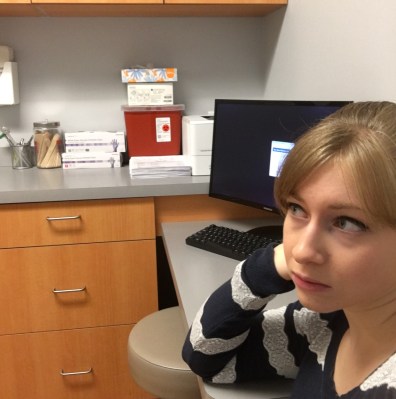
Does anyone else feel super awkward taking selfies in exam rooms? Does anyone else even take selfies in exam rooms?!

One being that I had NO IDEA why he was saying this to me. He built up this whole explanation as to what the “new recommended A1c” is, only to inform me at the very end that it was only safely applicable to people with T2D at this time. Was he confused? Did he forget that I have type one for a minute there?

The other reason I was flabbergasted by this little discussion was that we hardly ever go into detail when it comes into my diabetes. In fact, he didn’t even ask me when my last A1c test was, or any questions regarding my insulin pump/CGM. He just asked the standard “how is your diabetes” question, to which I replied with a super-lengthy, not-at-all vague response: “good”. He did put orders in for the standard array of tests that I take for each annual physical, which would inform him of my blood sugar at that moment in time, as well as my current A1c. But it was nothing that I’d be talking to him about during that appointment because the results wouldn’t be available until late in the day. So yeah, I found the whole thing to be pretty bizarre and mildly misleading.

Coincidentally, I’ll be seeing my endocrinologist in a few weeks, and let’s be real here: She’s the one doctor who can best advise me when it comes to diabetes treatments and protocols. So I’ll be sticking with her recommended A1c range for me, which I have a feeling won’t be any different from what I’ve been told all these years with diabetes.

My New Low Blood Sugar Symptom

In the last 21 years of diabetes, my low symptoms have been pretty predictable and easily recognizable: shakiness, sweating, dizziness, and sluggishness are all signs that I need some sugar, stat.

But lately, I’ve started to experience one brand-new and totally weird low blood sugar symptom. I’ve decided to dub it “fuzzy tongue”.

Love always wins..png
“Fuzzy tongue” or “terrycloth towel tongue” is now one of my low blood sugar symptoms.

I don’t know how else to describe it other than that it feels like my tongue and lips are covered in a terrycloth towel as my blood sugar starts to fall to a certain level, usually 75 mg/dL or lower. Simultaneously, it’s a numb and tingly sensation that feels so disorienting and makes the process of chewing glucose tablets or drinking juice a little more difficult, because it feels weird to eat or drink when my entire mouth feels like it’s covered in cloth.

In fact, the first time it happened, I took to Twitter to ask the rest of the DOC if there was anyone else who had experienced something like that before. And I was comforted by the many responses I got back that assured me that I wasn’t alone in feeling this strange symptom:

“Yes, from certain lows. Sometimes I feel like my [whole] body is buzzing and fuzzy, if not fizzy. Other times, it’s like my body says, “BTDT! Got the glucose tabs! Move on!”

“YES! This is a new symptom for me too (after 17 years of treating lows)..Thought I was allergic to honey the first time.”

“This is a common one for me. Tongue and lips. I hate it”

“Sometimes I get tingly lips or tingly fingers!”

“That’s almost exclusively how I can tell that I’m low”

“YES! If it’s a prolonged low, I get tingly lips and tongue. It’s super weird and really uncomfortable.”

“I get more of the tingling/partial numbness in the lips (‘fuzziness,’ I suppose) that some have described. Usually this occurs with a bad low (under 50 mg/dL).”

Those are just a few of the replies that my initial tweet received. I found these particularly interesting, though, because one person identified it as a new symptom, too, and others implied that it’s always been an indicator of low blood sugar that’s more likely to occur with “bad” lows. In addition to helping me feel a bit more normal about the discovery of my new low symptom, I also found this to be an example of the ways in which the DOC is uniquely unified. To an outsider, this whole Twitter thread probably makes zero sense and comes across as bizarre. But to someone part of the DOC, it’s just another conversation that brings T1Ds trying to get to the bottom of a ‘betes mystery together.

So even though “fuzzy tongue” is uncomfortable, I’m glad to know I’m not the only T1D who’s felt it…and I’m very glad that my body has found another way to alert me to a low blood sugar, especially since it’s a way that makes me want to correct it more quickly than ever before.