
Two Different Lists Lead to the Same Conclusion

I like lists. I like them so much because I like to pretend to be an organized person who always has tasks to complete (the former is definitely false, while the latter is pretty much absolutely true). I also like lists because making one feels like an accomplishment in itself, and who doesn’t like feeling accomplished?

Freedom is the atmosphere in which humanity thrives. Breathe it in.
What can I say, I’m a list girl. (But not a hand model; that’s definitely not my perfectly manicured hand in the above photo.)

So I must admit that I felt pretty damn good about myself after making these two diabetes-related lists, because not only do they pull weight as blog post material, but they also help me understand something about me and my diabetes. So here they are:

List of things I should do on a daily basis for my diabetes:

  • Check my blood sugar using my meter 6-8 times per day (upon waking up, before I go to sleep, before I eat a meal, and in-between meals to make sure I’m on track)
  • Change my lancet (LOL)
  • Look up carb counts for every meal using apps and/or nutritional facts
  • Monitor my Dexcom carefully and do fingerstick checks when I disagree with it
  • Take a correction bolus for every blood sugar that’s over 150 mg/dL
  • Eat plenty of fruits and veggies AND drink plenty of water

List of things that I actually do on a daily basis for my diabetes:

  • Check my blood sugar whenever the heck I feel like it; after all, my Dexcom is usually accurate
  • Change my lancet only when I remember, which is like…once or twice a month
  • Eyeball my plates of food and make “educated guesses” on carb counts
  • Monitor my Dexcom OBSESSIVELY – sometimes even every 5 minutes, depending on the situation – and freak out when it doesn’t match my fingerstick checks
  • Take a correction bolus for blood sugars that are 200+ only
  • Eat what I’d like (which, in addition to fruits and veggies, is a wide variety of things) and drink probably not quite enough fluids

When I compare these two lists, I come to the same conclusion: I am lazily in control of my diabetes. I know exactly what my current routines are and just because they aren’t the “right” ones, it doesn’t necessarily mean I’m doing anything “wrong” in terms of my diabetes care and management. Sure, I’m not doing anything the textbook way, and I admit that I’ve gotten a little lazy with things like carb counting and correction bolusing, but so what? The important thing here is that I can recognize the areas where I need and want to improve.

For starters, I’d like to stop depending so much on my Dexcom. I want to learn to check it less – maybe take it out half as often as I do now – so I can strengthen my ability to recognize low and high symptoms. I’m also hoping to use measuring cups and nutritional information more often to make better informed decisions when it comes to how much insulin I give myself at mealtimes. It’ll add a few extra steps to my day, but these are habits that I followed for a long time and that are worth reintroducing to my routine.

As far as everything else goes, I’m not going to sweat them too much…of course, it will be nice if I remember to change my lancet more frequently and be more proactive about correcting high blood sugars, but really, these are matters of minor concern. I think I make my best diabetes progress when I take things one step at a time, so that’s just what I’m going to do.

The Emotions of a Low Blood Sugar

This post was originally published on Hugging the Cactus on October 8, 2018. I decided to re-up it today because I think we could all use a little reminder that diabetes is different for everyone. Remember…your diabetes may (almost always will) vary.

Previously, I’ve written about what it feels like to have low blood sugar. While many people with T1D feel the same symptoms as me when they experience a low, there are even more who experience a wider variety of emotions and sensations.

Renza, a T1D Twitter friend of mine, did a little investigating into how others would describe what it’s like to have a low blood sugar. She sent a tweet that read:

friends. I’m crowdsourcing (again). If you had to use ONE WORD to describe how hypos/lows feel to you, what would it be. Go!! #Hypoglycaemia

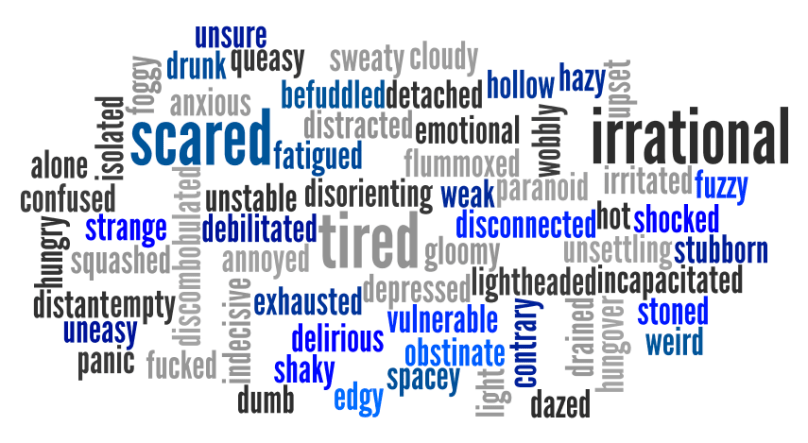
She received nearly 100 responses, which I’ve compiled into the below graphic.

Capture

Looking at this word collage is a bit startling because it represents the vast array of feelings associated with low blood sugar. Most of them are negative. A handful of them start with the prefix “dis”, which describes something with an opposing force. A couple of them relate to feelings associated with eating. And just about all of them can be summed up as sensations that I wouldn’t wish on anyone.

To me, this graphic serves as a stark reminder that diabetes is more than just a chronic illness that affects the body: It affects the mind, too.

Yes, I Can Eat Those Christmas Cookies

A32CC557-4EF6-4459-AA32-4D86E63AB8F9

Check out that spread. You’re looking at an assortment of nine different kinds of Christmas cookies, all baked fresh by my mom, aunts, and cousins for our annual cookie swap this past weekend. And I can attest to the fact that each of them were effing delicious.

Now, if you’re thinking that people with diabetes can’t or shouldn’t eat cookies, sweets, or carbs in general…I’m here to (gently) tell you that you’re wrong. It’s a myth, a grain of utmost untruth, that people with diabetes cannot have carbohydrates of the sugary or starchy varieties. It’s fake news, y’all!!!

The FACT of the matter is that people with diabetes don’t have limits on what foods they’re able to eat. But there are matters of condition and preference to take into consideration here. First and foremost, carbs MUST be counted before they’re consumed. This is crucial because it determines how much insulin a T1D must inject. And then things like personal taste, diet, and comfort levels come into play that account for the variations in eating habits among people with diabetes. And that is the reason why you’ll meet some who are low carb, high fat followers, some who do not consume gluten, and others who do not exclude any particular food group from their diet.

I’ve written a bit about this before, so why am I repeating it again? Because it’s worth knowing and accepting that everyone is different. Bodies respond differently to different stimuli, including the foods and insulin we put into them. And whatever works best for someone should be unconditionally tolerated, not judged, by others.

So if I want to eat a bunch of Christmas cookies as part of my Christmastime celebrations, then here’s my friendly reminder that I can – and you bet your bottom dollar that I did, and was very grateful for insulin after doing so.

This slideshow requires JavaScript.