T1D and “What If?”

For me, my type 1 diabetes, anxiety, and the phrase “what if” go hand-in-hand. Or maybe in this case, it should be sweaty-nervous-palm in sweaty-nervous-palm.

In the past, I’ve written about how I believe there is a direct connection between the way my anxiety manifests itself and my diabetes. There’s no denying that the two are related. But another thing that ties the two together in a neat, worried package are these two simple words…”what” and “if”.

Of course, those two words are often followed by a series of other words that turns everything into a full question that is born from my anxiety. The questions all follow the same formula: What if X, Y, or Z happens? Questioning whether something will or will not happen will inevitably trigger me to convince myself that a less-than-desirable scenario will occur, leading me to slowly spiral as I ponder how I can possibly handle said less-than-desirable scenario.

Not following me here? I’ll give you an example. Take my incident last week when I mistakenly gave myself 10x more insulin than I intended to take (10 units versus 1 unit). When I was processing the gravity of that mistake, I asked myself, “What if I’d given myself 100 units? What if I’d been alone when all this happened?”, causing me to think about how much more dire that situation would’ve been and sending chills down my spine. It’s not fun to go down a path like that, yet for much of my life I’ve forced myself to face many “what if” scenarios that have never even happened because my anxiety lead me to that line of thinking.

After 24 years of T1D, though, and living all of my years with anxiety paralyzing me every now and then, I’m trying harder to challenge the “what ifs” and stop allowing them to rule my life, not just my perception of my diabetes.

“What if…”

I guess this is my public declaration, or vow, or affirmation, or whatever you’d like to call it that I want to be better about knocking those “what ifs” out of my way when I feel as though T1D or my anxiety are limiting me. I’m hoping to stop thinking about diabetes as a condition in which I’m held back by “what if” scenarios or one that aggravates my anxiety; instead, I want to have it be more autonomous and separate it from the negative thinking that all too often interferes with my everyday life. I’m just tired of thinking about diabetes with a “worst-case” mindset, so what if…what if I take back control of the “what if” and say “what if I have a really great diabetes day today? or “what if I know more about managing diabetes than I previously thought I did?”

Changing the overall tone of those what ifs sounds like hard work, but it also sounds like worthwhile work. So I’m challenging myself to do it, stick to it, and think…what if I could change how I feel about my diabetes and anxiety, and grow to love them for how they’ve made me stronger, more independent, and brave?

What if, indeed.
Why Backup Supplies are Important to a T1D

“It’s better to have it and not need it, than to need it and not have it.”

Growing up, this mantra was frequently repeated by my mother regarding my diabetes supplies. More often than not, I’d roll my eyes at the saying – not because I was annoyed with her, but because the prospect of carrying extra supplies “just in case” felt very inconvenient. My purse/backpack/overnight bag would already be crammed to maximum capacity, so squeezing in backup needles or insulin was practically impossible. But typically, I’d cave and make it all work somehow, because the fear of not having something essential when I was away from home was strong enough.

I’ve kept up this practice in my adulthood, as overnight travel and increased distance from home have become more common. And I was reminded why it’s a good idea very recently.

I was staying at a friends’ place for the night. They live about 45 minutes away from my house, which isn’t far, but it was far enough for me to want to make sure I had extra supplies. I definitely did not want to have to make that drive twice in one night, and I knew it wouldn’t even be a realistic option, because chances were good that I’d be drinking alcohol – it was game night, after all.

Capture
If you have T1D, always be prepared.

Pizza, beers, and laughs were had, and before we knew it, it was one in the morning. We all headed off to bed, and just as I do every night, I checked my blood sugar before I got totally settled.

I was wicked high – the mid-300s, actually.

I was worried, because I thought I’d been on top of my blood sugar for most of the night. I gave myself an extended bolus for the three slices of pizza I ate, limited my beer intake (too many carbs), and kept a watchful eye on my CGM. While I did know that my blood sugar was climbing, I thought that I was staying on top of it with correction doses. Apparently not.

No matter, I figured. The best I could do was take more insulin, drink some water, and try to relax a bit before bed. I didn’t want to sleep until I knew my numbers were coming down, but I also knew that my willpower to stay awake was fading. So I set an alarm on my phone to wake up in an hour and check my blood sugar again.

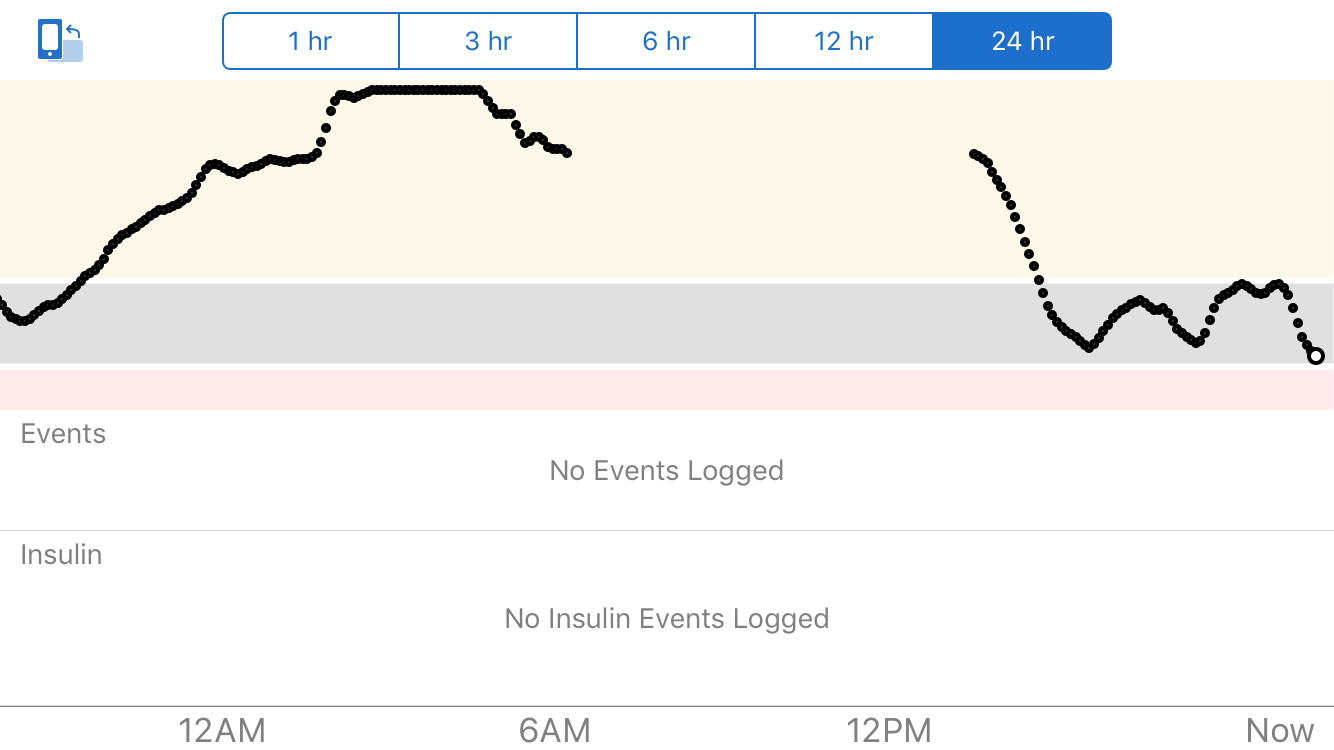
When I did, I was 377! I couldn’t believe it. I followed the same process again – bolused, drank water, set an alarm to wake up in another hour – and hoped for the best. But when my alarm blared again at 3 A.M. and I discovered that I was STILL stuck at 377, something told me that there was more to the story here. I lifted up my shirt to check my pod, which should’ve been securely stuck to my belly…except it wasn’t. The end with the cannula was sticking up, revealing that the cannula was not underneath the surface of my skin.

I felt simultaneously pissed off and relieved. I was mad because I’d just changed my pod earlier that day, so it should not have come off so easily. But I was relieved because finally, I had an explanation behind the super-high, super-stagnant blood sugars.

And I was seriously relieved that I’d thought to pack my insulin, a spare pod, and an alcohol swab in my overnight bag.

So there I was, changing my pod at 3 A.M. Far from fun, but it was necessary. I even wound up giving myself an injection with a syringe – yet another diabetes supply that I don’t really need to carry but had stowed away in my kit (just in case) – to ensure that my system had insulin in it to bring my blood sugar back down.

From there, it was a long night (morning!) as I set numerous alarms for the next few hours to wake up, check my blood sugar, and bolus more as needed. I couldn’t rely on my CGM for readings, because guess what? It got torn right off my arm as I tossed and turned in bed. Go figure, right? (I didn’t have a backup sensor because the CGM is one thing that isn’t exactly necessary. It makes life a helluva lot easier, but for a single overnight trip, an extra sensor wasn’t needed.)

4F83304E-8212-46EF-8223-A7D47CE2CD0C
What a long night…

I probably only got three hours of sleep that night, and I was pretty damn defeated looking at a shitty CGM graph the next day. But you know what? The whole incident serves as a stark reminder that it’s important to ALWAYS have backup supplies: You never know when you might depend on them.