
When my pod fails, it’s pretty obvious due to the fact it’ll emit a long, loud, impossible-to-miss BEEEEEEEEEEEPing sound. (Said sound tends to inspire immediate rage, but also relief because at least my device is letting me know that it’s not working properly.)
What’s less obvious is when a pod is malfunctioning, and the beeping sound doesn’t get triggered. In this context, I define “malfunctioning pod” as a pod that’s leaking insulin, or a pod that appears to have deployed the cannula correctly into my skin, but somehow it’s become dislodged.
Both of those scenarios are infuriating because they’re much more difficult to discover.
But lately, I’ve found myself dealing with both – more than likely, it’s just totally random, but it also may be due in part to the fact that I sometimes have more trouble with pods in the summertime. Heat and humidity don’t always bode well for my pod’s adhesive, and my pods have fallen victim to peeling up and off my body as a result of my sweaty summertime skin.
Since I’ve got recent experience with both types of malfunctioning pod as described above, I decided to share my tips on how to identify (and then deal with) these phenomenons:
- Leaky pod: The first sign that my pod is leaking insulin is my blood sugar being higher than usual. If I’m bolusing for foods that I consume on a regular basis and seeing serious spikes afterward, I check my site by lightly running my fingertips around my pod, and then sniffing them to see if I can detect the pungent scent of insulin. It might sound kind of funny to go about it that way, but it really is the best way to confirm a leak as it’s riskier to just up and rip the pod off my skin to look for puddled insulin underneath. If I do smell insulin after my sniff test, then I will go ahead and change the pod – and double confirm my suspicions by looking at the leaky pod’s adhesive at that point in time. More often than not, the adhesive will be visibly wet around where the cannula is, and that is always a signal to me that the pod was indeed leaking and therefore responsible for my high blood sugars. And on a very rare occasion, a leaky pod will be obvious before it even goes on my body (as shown in the below photo), making it much easier to handle as I can address it before it starts to negatively impact my levels.
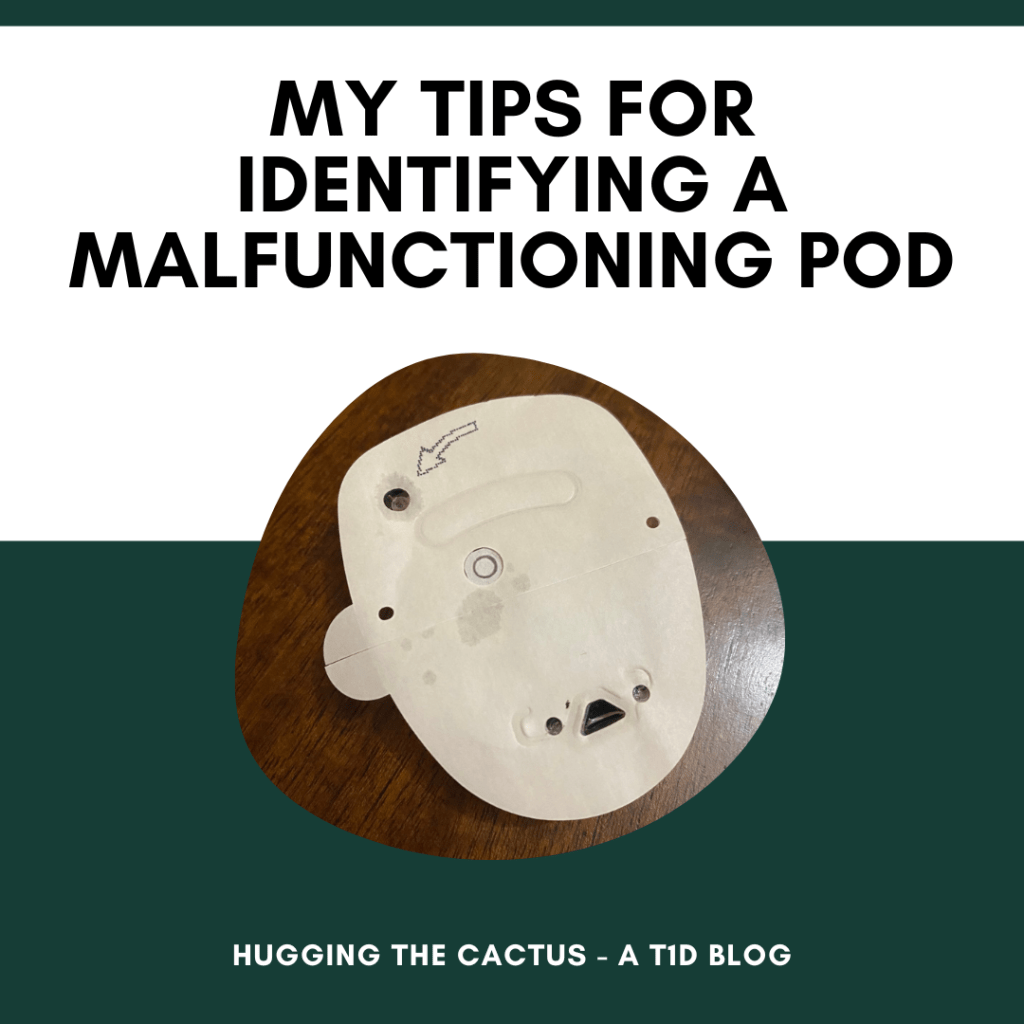
- Dislodged cannula: You would think that I would immediately know if a cannula was no longer poking my skin, but honestly, it’s difficult to tell when it gets jostled out of place! And it’s even harder to figure out if the adhesive surrounding the pod is fully intact. So what are the signs of this happening? Well, high blood sugar is the main one, but I’ve also realized that itchy skin is another. It’s strange and I don’t have an explanation for it, but when my cannula is on the cusp of ejecting (or already has), my skin gets super itchy. If I’m experiencing that itchy sensation and my adhesive has already begun to peel around the edges, I don’t even question going through with a pod change, as I’m almost always able to visually confirm that my cannula is out of place. When I don’t have that visual guidance, it’s much more of a crapshoot and I still almost always end up changing my pod in an attempt to stabilize my blood sugar levels. After removing it, I can sometimes see that the cannula was bent at a funny angle or something to that effect, but I don’t always get that verification. In that instance, I just chalk it up to a fussy pod and then do my best to move on from it.
The big takeaway here? More often than not, my pods work exactly as they should. Every now and then, though, I have to deal with one that malfunctions – whether it’s a total failure or one of the other situations I described above. I’ve found that when I’m in doubt or suspicious that my pod isn’t working right, then it’s best to troubleshoot within reason before making the judgment call to change it. I’d much rather have to change my pod prematurely in order to maintain in-range blood sugars than deal with 3 full days (the lifespan of one pod) filled with highs and frustration.









 Hugging the Cactus