Drinking and Diabetes: Lessons Learned in College

This post initially appeared on Beyond Type 1 on May 19, 2016. I wanted to republish it here because I will be exploring this topic further in November, which is National Diabetes Awareness Month. Stay tuned!

In September 2011, I started college at the University of Massachusetts Amherst. I’ll never forget the range of emotions I felt when my parents dropped me off: anxious, excited, anxious, scared, anxious, curious … and did I mention anxious?

A reason why I was so nervous was that going off to college represented my first true taste of independence. I would be a full 90 minutes away from my parents, who have acted as key teammates in my diabetes care and management over the years. It wasn’t like I was starting this academic and social pursuit freshly diagnosed; after all, I’ve had diabetes since I was 4 years old. Growing up with it made me accept it as my reality early in life, and I never really minded it. It started to become a worry, though, when I was hit with the realization that I had to immerse myself in an unfamiliar environment, away from my parents and healthcare team who knew me and my diabetes best. I wondered, “Can I do this?”

Fortunately, my schedule was so full, so quickly, that I barely had time to dwell on my concerns. I attended my classes, bonded with my roommate, established a diverse friend group, experienced the culinary offerings of the dining halls, stressed over homework assignments, and tried new group fitness classes at the gym, among other things. Best of all, my newfound friends didn’t seem to mind my diabetes at all — they asked me endless questions and thought nothing of it when I whipped my insulin pen out in the dining halls to bolus for meals. Establishing a routine helped with my diabetes management and before long, I started to feel more comfortable with this whole college thing … except for one aspect of it.

Alcohol: It’s a taboo concept in the diabetes world, but certainly not on college campuses. Before I left for college, my parents and I did talk about drinking and social pressures, but we didn’t have an in-depth discussion about diabetes and drinking. The main takeaway was a tacit understanding that safety should always be my number one priority.
Molly-Johannes_4-300x300
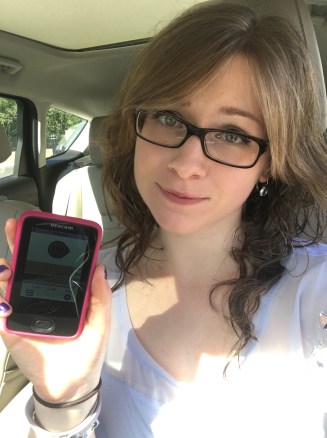
Diabetes won’t stop me from enjoying the occasional drink – I just need to imbibe carefully.

I’ll admit that among the various other activities I participated in freshman year, an occasional party at which alcohol was present was part of the gamut. One particular party stands out in my memory because it taught me, more than words from my parents or my endocrinologist could, just how important safety is when it comes to drinking and diabetes.

I ventured to an off-campus party with a group of friends one Saturday night. It was a stereotypical college party: loud music, lots of people, long lines to use the one bathroom in the house. For the first couple of hours that we were there, we were having a great time meeting new people and drinking a bit. As I was sipping on my beverage, I helped myself to some of the tortilla chips, the communal appetizer laid out for party-goers (clearly, no expenses were spared for this shindig!).

I was stupid and didn’t monitor how many chips I was eating or how much I was drinking. Instinct told me to test my blood sugar and I discovered that I was high—much higher than I anticipated. I started rifling through my purse for my Humalog pen when it hit me that I never packed it.

This story could have ended much differently, but I’m happy to say that I was just fine by the end of the night. I told my friends what was happening. Instead of expressing disappointment over leaving the party, they were super understanding and insisted on escorting me home to make sure I could get my medication. Before long, I was back in my dorm and administering insulin. Once I started to come down, I went to bed and woke up at a normal blood sugar the next morning.

What exactly did I learn about drinking and diabetes that night? A few important things:

  • Always have all of my supplies with me when I go out and indulge in a drink or two. This means I would triple-check, from that point onward, to make sure I had my meter, insulin, test strips, glucose tablets and everything else I might possibly need.
  • Check my blood sugar before, during and after drinking to maintain healthy levels.
  • Set an alarm or two before bed so I can wake up and check my blood sugar.
  • Go out with a supportive group of friends — even though I was panicking that night over my hyperglycemic blood sugar, I felt comforted by my friends’ presence and support.
  • Refuse drinks if I don’t want them. I’ve never felt pressured to drink, even when everyone else around me is. As long as I’m having fun, my choice to not drink doesn’t matter.
  • Research carbohydrate content of alcohol so I know how to account for different drinks. I also have done my homework, so I know that different alcohols affect my blood sugar at different rates, if at all.
  • Avoid sugary drinks. They’re often not worth it, and it’s easy for me to replace certain mixers with diet or sugar-free drinks.

I learned a major lesson that night. Since then, drinking has become an occasional social activity for me that I no longer fear due to my preparedness and openness on the subject. I understand that drinking and diabetes sounds scary and forbidden, but this is why it’s important to talk about. Discussing it with family, friends, and your healthcare team can help you feel reassured over how to handle it. Now, I can confidently raise a glass of dark beer or red wine (my personal favorites), knowing I can enjoy a drink safely despite my diabetes.
Memory Monday: That Time I was Bullied for Having T1D

One Monday per month, I’ll take a trip down memory lane and reflect on how much my diabetes thoughts, feelings, and experiences have unfolded over the years. Today, I remember…

…when my alleged “best friend” picked on me for having diabetes. It sucked.

Let me recount this tale by saying first that this was many years ago – I think it was in third or fourth grade. Since my grade school days, I’ve made much smarter choices when it comes to my social circles.

But back then, I didn’t really know any better. I just wanted to be friendly with everyone.

I digress…

Back in elementary school, we were awarded fitness “medals” for being able to complete a series of exercises in physical education. These medals were really just flimsy little patches that you could sew on to a backpack, but nevertheless, I wanted one very badly. But no matter how hard I tried in gym, I just couldn’t complete as many reps as it took to earn a medal. I was always just shy of the threshold, much to my frustration.

I’ll never forget when my “best friend” told me that there was a very obvious reason as to why I couldn’t, and would never, earn a medal:

It’s because she has diabetes, she can’t do anything right with that!

In that moment in time, I was too dumbstruck by the stupidity of that comment to tell her that she was wrong. I was also incredibly hurt by her words, and they haunted me for many years after they were so callously said to my face.

IMG_3978
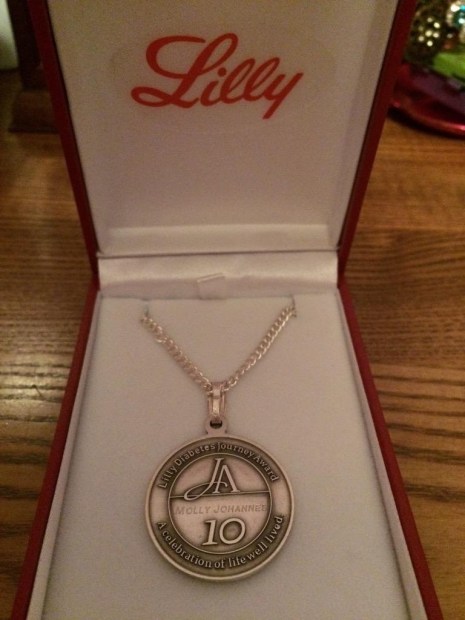
My Lilly medal means more to me now than a stupid grade-school medal ever could.

Now, as an adult reflecting on it, I wish I had told her that diabetes could never stop me from doing anything. I wish I told her that she was in the wrong for saying what she said, and I wish that she could see all that I’ve accomplished over the years in spite of my diabetes.

But most of all? I wish I could thank her for that comment – because as mean as it was, it gave me something to think about on the days when I just want to quit because of diabetes. Her words serve as a reminder to me that I can and will succeed at anything I set my mind to, diabetes and all.

Walking to End Alzheimer’s

Type 1 diabetes sucks. It’s a chronic illness that is incredibly demanding, both mentally and physically. But it’s got nothing on Alzheimer’s disease.

I know this from experience because I watched my grandmother (and her sister) suffer through it.

I don’t have many memories of my grammy pre-Alzheimer’s, but by all accounts, she was an amazing woman. She raised six children alongside her loving husband. She was an active member of her community, working as a secretary for the Department of Public Works, a teller for the local bank, and a clerk at the neighboring city’s hospital. She was devoted to the local church and played the organ for it, and enjoyed singing. By the time she passed, she had eleven grandchildren and three great-grandchildren.

grammy
My beautiful grammy.

Alzheimer’s will never take away the contributions she made to the lives of her family, friends, and community, but it took away her ability to tell me stories, firsthand, about these experiences.

It took away her independence.

It took away her mind.

It took away her life.

Some facts about Alzheimer’s: It is the most common cause of dementia. It is a degenerative disease of the brain characterized by many symptoms, such as memory, language, problem-solving, and other cognitive skills. The most mundane activities, like walking or swallowing, cannot be performed by an individual in the final stages of the disease. As a result, they require 24/7 care until succumbing to the devastating disease.¹

In 2018, nearly 6 million Americans of all ages are living with Alzheimer’s. Every 65 seconds, another person in the United States develops the disease.²

I knew my grandmother when she was in the more severe stages of Alzheimer’s, and it was not easy to watch her experience them. It was even harder to watch how it affected her husband and children.

I wouldn’t wish it on anyone, just as I wouldn’t with diabetes.

This November marks nine years since my grammy passed away. She is missed every single day, but one way that my family celebrates her life and fights back against Alzheimer’s is by participating in the Walk to End Alzheimer’s. On September 15th, we’ll be partaking in our (sixth, I believe) Walk as Team Mary’s Little Lambs – a team name inspired by Grammy’s first name. I like to think that it’d make her smile.

The Walk is an emotional event for us in general, but especially when we hold up pinwheel flowers that represent our promise to remember, honor, care, and fight for those living with Alzheimer’s and their caregivers. Imagine how powerful it is to see the colorful pinwheels lifted into the air, with each color having a distinct meaning:

  • Blue for a Walker who has Alzheimer’s/dementia
  • Yellow for a Walker who supports or cares for someone with Alzheimer’s/dementia
  • Purple for a Walker who has lost someone to Alzheimer’s/dementia
  • Orange for a Walker who supports the cause and the Alzheimer’s Association vision of a world without Alzheimer’s

Just like with diabetes, imagine how incredible it’d be if one day, there was a white flower lifted into the air: a flower that would signify a cure.

If my grandmother’s story moved you, or if you want to show support for someone you know affected by Alzheimer’s/the cause, please consider donating to the Walk to End Alzheimer’s. You can use this link here, or click on the widget in the right sidebar of my blog – it’s the very first one listed. All donations advance the care, support, and research efforts of the Alzheimer’s Association. Thank you in advance, and thank you for taking the time to read this deeply personal blog post.

For more information on Alzheimer’s disease, visit www.alz.org. I recommend reviewing the report on their website, 2018 Alzheimer’s Disease Facts and Figuresto learn the most up-to-date statistics on the disease.

¹¯² Alzheimer’s Association, 2018

Endo Appointment Anxiety

I’m feeling anxious about my appointment with my endocrinologist tomorrow.

I don’t know why. I like my doctor very much: She’s always encouraging, pleasant, and helpful. The only thing I’d change about our appointments is to slow them down a bit; sometimes, she whips through them so quickly that I forget to ask her the questions floating around in the back of my mind.

Could it be that I’m worried about my A1c test? Possibly. I don’t know whether my A1c has gone up or down in the last three months. I have stretches of time in which my blood sugar behaves the way I want it to, but I also experience clusters of days here and there of complete diabetes chaos. In the last month, for instance, there were a few too many circumstances in which my blood sugar was above 300 mg/dL. Each time, I’d correct the high, only to either experience 1) a sudden drop resulting in a low or 2) several hours of prolonged high blood sugar because it was taking the insulin a long time to take effect.

815A7B61-EDD2-4804-B8D0-D8760D19A26A
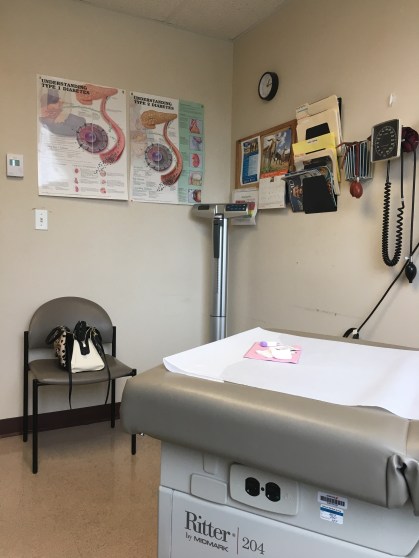
I love that there are posters about “understanding” diabetes on the wall – it’s too complex to break down into a few bullet points.

Now that I’m thinking about it, maybe those scattered, wicked-high blood sugars are the reason why I’m anxious about this appointment. I know that my doctor will probably ask me about them, and I’m going to have to admit to her that a combination of emotional eating, lack of carb counting, and general carelessness resulted in those highs. I know that she won’t judge me, but…I can’t help but judge myself for causing the blood sugar swings. The rational part of me is aware that it’s unhealthy to blame myself for occasional slip-ups, but the goodie-two-shoes, Miss “Perfect Diabetes” part of me is shaking her head in shame and disappointment.

If nothing else, this is a prime example of how diabetes can be an absolute (warning: foul language following) mind fuck.

What Went Wrong During my Recent Visit to the Eye Doctor

You want to know what went wrong during my annual eye doctor’s appointment last week? Just about everything, that’s what went wrong!

Okay, that’s being over-the-top dramatic. Nothing life altering happened, thank goodness. But the appointment started out on the wrong foot when I had to wait more than an hour to be seen by the doctor. Let me tell you, there is nothing pleasant about waiting in a room that hasn’t been updated since about 1982, with ancient stacks of National Geographic as the sole source of entertainment.

Anyways, after an agonizingly long hour and change, I was finally called in to see the doctor. He started the appointment asking the usual slew of questions: How are you? How are your eyes? (My answer to both was a short, but still polite, “good”.) Then he asked the annoying question: Is your diabetes under control?

I hate that – the “under control”. It makes it seem as though diabetes can be tamed 100% of the time, like it’s a savage beast that just requires domesticating in order to live a normal life. But I answered it anyways, knowing he wouldn’t care to hear why his word choice was bothersome. “I’m doing well,” I said, my eyes wandering over to the doorway. I couldn’t understand why he’d chosen to leave the door open – the hallway to the waiting room was very short, and based on what I’d heard when other patients went in to see the doctor, everyone in the waiting room would be able to hear the entire doctor-patient interaction. Definitely not cool in my book, but instead of confronting the doctor about it, I opted to speak in a much quieter tone of voice than normal. At this point, I just wanted the appointment to be over.

BE183505-1A74-4C0D-B051-C3E9BAC9BED7
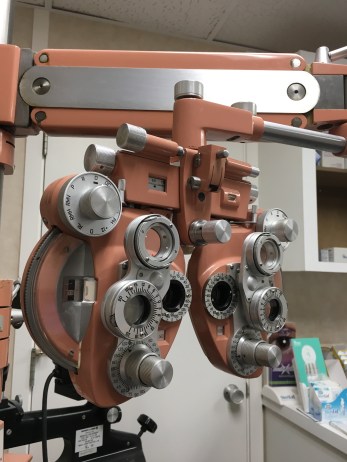
QUIZ TIME! Is this A) a medieval torture device OR B) a phoropter? (It’s B, which is the legitimate name of this piece of ocular equipment. Who knew?)

He spent 15 minutes running the standard eye tests (read the chart in front of you, does this setting make it better or worse, etc.), then dilated my eyes. I was sent back to that horrid waiting room for another 20 minute while the dilation took effect. When he called me back in to give my dilated pupils a final inspection, the following exchange happened:

Doctor: You know, I saw a patient the other day who was diagnosed with diabetes at birth.

Me: Yeah, I know a couple of people who were diagnosed as babies. It’s awful.

Doctor: Even though he’s had it his entire life, he doesn’t take very good care of it. He’s got diabetic retinopathy now. *shuffles paperwork*

Me: *Fidgeting uncomfortably in the chair, waiting for him to add to that. A long 20 seconds elapses before he finally says…*

Doctor: Fortunately, that’s not the case for you.

Um, WTF, Doc?! What’s up with that weird dramatic pause? Were you TRYING to freak me out? Mission accomplished, dude. But my oh my, such a sweet relief to hear that there is no diabetes in my eyes.

As I walked out of the building a few moments later, I couldn’t help but think about how this was a textbook example of how an appointment shouldn’t go. I left feeling an odd mix of emotions: disappointment with my doctor’s behavior as well as relief with his assessment that my eyes, at least, were proof of my well-managed (NOT under control) diabetes.

That Time I Asked Someone to Prove Their Diabetes to Me

It was not my finest moment.

Yes, I doubted someone when they claimed to have diabetes. But there was no ill intent! Let me explain.

I worked at a local movie theater for five and a half years. During that time, I was trained to work the concession stand, sell tickets at the box office, and clean theaters with the ushers. More often than not, I was happiest working in the box office – it was nice and quiet when there weren’t any lines of customers to contend with, but when there were, time flew by as I worked at a frantic pace to get through the line as fast as I could.

One of my responsibilities as a ticket seller was to check to see what people were taking into the theaters with them. Mainly, I was supposed to make sure that outside foods or beverages weren’t making their way into our theaters, for a few reasons: 1) to encourage customers to buy snacks/drinks at our concession stand, 2) to reduce the possibility of customers leaving behind terrible messes for the ushers to clean up, and 3) to help ensure the comfort of other customers – after all, no one particularly enjoys the sharp stench of raw onions or malodorous tuna fish sandwiches.

IMG_7014
You have diabetes? Well, prove it! (At least I didn’t ask the kid to take a shot or show me his pump. That would’ve been over the top.)

So I was merely following protocol on this particular day when I asked a teenage boy to throw away his mysterious styrofoam food container once he entered the lobby. He looked at me, unsmiling, and said, “I have diabetes, I can’t throw it away.”

It’d been a long afternoon dealing with irate customers and pesky teenagers, so I figured he was just being bratty and didn’t want to toss the food he’d clearly just purchased from the mall. This is when I retorted back with, “Oh, really? I have type one diabetes, myself. Do you actually have it, too?”

He nodded. His face was expressionless, which made me even more suspicious. If I’d been in his shoes, I probably would’ve been a bit more emotional/passionate about my need to keep my food with me. His poker face prodded me into asking this next question, which nearly seven or so years later still makes me feel ashamed when I remember it:

“Well, then, show me your medical ID or your meter, or some other diabetes supplies!”

Ugh, I can practically hear my defiant tone. I was so certain I was about to catch a fibber! Alas, the boy lifted his arm to show off the gleaming medical ID hanging from his wrist. Again, he was completely wordless and his face betrayed no emotion – and for a beat, I couldn’t say anything, either…though I felt the blood rushing rapidly into my cheeks as I found my voice again.

“Oh, I’m sorry for the inconvenience. You’re all set to take the food in with you,” I said in a tone much higher for me than normal. I’m pretty sure I smacked my hand to my forehead out of pure embarrassment as he walked away.

To this day, I still can’t help but cringe when I reflect on this interaction that couldn’t have lasted more than two or three minutes. I felt horrible about it, but I guess that the one good thing that came from it is that it taught me to be a little more compassionate when I witness situations like this. Rather than assuming the worst, I should try to see the other side of the coin and view things a bit more rationally.

So to that teenage boy, who I never saw again: Please accept my extremely-belated but utterly sincere apology for that exchange of words.

Diabetes and the Blame Game: Why it’s Harmful to Judge People with T1D

Here’s a little disclaimer: This post is highly personal. I’m going to dive deep here and talk about a few things that bother me when it comes to how others perceive T1D. My opinions are strong, but I’m entitled to them – just like you are.

“I can’t believe his blood sugar got that low. He really needs to have better control over his diabetes.”

“Why wasn’t she carrying a snack with her? That’s so irresponsible, she should know better!”

“They’re unhealthy. The way they manage their diabetes isn’t okay and it’s no wonder they go to the doctor so much.”

These are words that others have spoken about people with diabetes in my presence. While these thoughts and feelings aren’t necessarily about me, it doesn’t mean that I don’t take them personally.

Why do they bother me? Because they’re dripping with judgment.

It’s easy for someone who simply doesn’t understand diabetes to make assumptions based on a couple of observations they make about someone with diabetes. But just because it’s easy to assume things, it doesn’t make it okay.

Just because you see someone have a tough diabetes day, it doesn’t mean that’s what it’s like all the time.

Just because someone forgot to carry a low blood sugar remedy on them, it doesn’t mean that they always forget one.

Just because you know of someone who frequently visits the doctor, it doesn’t mean their diabetes is “out of control.”

Just because you blame someone for not taking “proper care” of themselves, it doesn’t mean that they don’t try their damnedest.

28276753_2470934019799402_3452392286696220057_n
I can do all the right things for my diabetes over the course of a day, and still have it go wrong. Blaming and shaming me for being a bad diabetic only makes matters worse.

That’s what’s so wrong about making assumptions about how someone manages his/her/their diabetes: It’s impossible for anyone to know the full story about that individual’s diabetes, because they are the one solely in charge of it. They know how it behaves 24/7/365. They know it better than their doctor, spouse, family, friends, and coworkers. And the funny (and by funny, I mean really shitty) thing about diabetes is that sometimes, you can’t predict what it’s going to do next. So you have to be prepared to roll with the punches at a moment’s notice. And you’ve got to be that prepared all the damn time: when you’re awake, asleep, traveling, exercising, working, and just plain living.

Sounds exhausting, doesn’t it?

So that’s why I think the blame game is especially cruel when it’s played to cast judgment on people with diabetes. We have the incredibly difficult task of taking care of something that most other people never have to worry about, and blaming someone for not “doing what they should be doing” is heartless and does nothing to help them.

I challenge anyone reading this to think twice before they jump to conclusions about how a person with diabetes takes care of themselves. Remember that just because you may have witnessed them going through a difficult diabetes experience, it doesn’t mean that it’s like that for them all the time, or that they aren’t doing everything they can to take the best possible care of themselves. The world is occupied by enough critics – do your part to be supportive, not shameful.

Three Things I Learned about Myself after Running a 5K

I recently ran in my first-ever 5K race. In the weeks leading up to the race, I experienced a variety of emotions – particularly self-doubt – that made me question whether I could really do it. Would my diabetes cooperate the morning of the race? Should I eat a big breakfast before running, or go into the race fasting? How would I handle correcting a low blood sugar while running? What about a high blood sugar? Was I even competent enough to run?

All of my diabetes anxieties aside, I’ve always hated running. HATED it. I played field hockey every fall when I was in high school, and we were required to run a timed mile before the start of each season. I dreaded this mile because I usually wound up finishing the mile last, or close to last – my asthmatic lungs and negative attitude helped ensure that I would give up running halfway through and resort to walking a sluggish, defeated pace.

So like I explained in a recent blog post, making the decision to go through with this 5K wasn’t easy. But I wanted to take on the challenge and prove something to myself.

AND I DID IT!!! I’m pleased to say that I completed the race on a gorgeously sunny Saturday morning along with hundreds of other runners. I was totally proud of myself for accomplishing this goal, especially since I had less than a month to train for it. Plus, I learned a few things about myself after participating in the race:

  1. I should have more faith in my ability to manage my diabetes. I spent so much time dwelling on the “what ifs” (a bad habit of mine) regarding what my diabetes might do during the race that my stomach was doing somersaults as I approached the start line. But as soon as I turned my music up and started running with everyone else, my doubts vanished. And better yet, I was absolutely fine throughout the race. I didn’t eat anything beforehand and went into it with a blood sugar of 142, and I stayed pretty steady for most of the 3.1 miles (I did start to spike soon after crossing the finish line, but I’m certain that was because of the adrenaline). I simply did what I’d been doing during my past month of training, and my experimentation with fasting vs. non-fasting paid off.
  1. I’m a lot more determined than I realized. I’ll admit that there were a few points throughout the race when I wanted to give up. I was breathing hard and my legs were starting to ache, but not once did I stop running and slow down to a walk. I pushed myself to keep going, even though I didn’t want to, and my determination helped me achieve my personal best running time.
  2. I’m ready to train for future races. This experience awakened something in me that wants more challenges. I’m still not in love with running, but I think I am a fan of trying things out of my comfort zone. I want to continue to get faster and stronger so I can try tougher races and physical tests. It’s almost like it’s an outlet for me to tell my T1D that it can’t stop me – that I’m stronger than it no matter how hard it tries to knock me down.

I Get by with a Little Help from my Friends (Diabetes Edition)

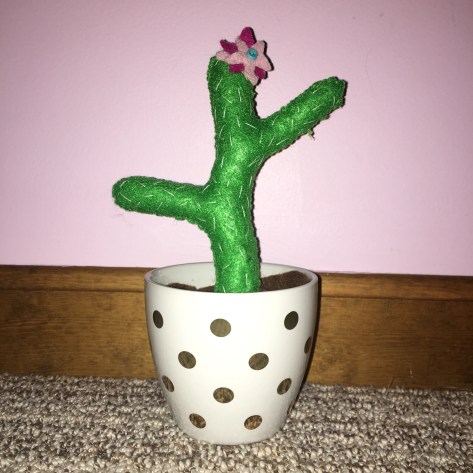
Let me introduce you to Nelly Needle:

F9013708-EC39-480A-9C5A-438CD3B59B68
A cactus filled with needles that don’t prick is my kind of cactus.

This adorable cactus-in-a-cup was handmade for me by one of my dear college friends, Emma. She made it for me for my birthday and I nearly cried tears of gratitude when she gave it to me. I felt the same way when another college friend, Kira, sent me a box for my birthday that contained a thoughtfully-chosen book and a cute little cactus pin that now adorns my meter case.

Emma and Kira, as well as our other friends from college, probably don’t realize how nervous I was to explain my diabetes to them when we first met. All my friends from back home had known about my diabetes growing up; as a result, it’d been a very long time since I had to open up about it to brand new people. I worried that they wouldn’t accept it or would treat me differently after learning about it.

I’m happy to say that I couldn’t have been more wrong. Within the first few days of my freshman year of college, I found the group of people that I wanted and needed to have in my life. They were not only accepting of my diabetes, but genuinely curious about it. They peppered me with questions that I was pleased to answer and marveled at my ease with injecting myself in the middle of the dining commons. To this day, they still express interest and desire to learn about diabetes, which means more to me than words can express.

The cacti I’ve amassed over the last few months, courtesy of my friends, serve as daily reminders that I 1) have some really incredible and supportive friends and 2) should always remember to embrace diabetes for what it is, needles and all.

Celebrating 100 Posts on Hugging the Cactus

I’ve officially reached the 100-post mark on Hugging the Cactus. Wow!!!

9B0DD466-77F6-441A-9ACB-5757091FAEC0
I can’t believe I’ve already reached this milestone!

This blog debuted on October 2, 2017. I’ve spent the last eight months writing new content as often as possible, meeting more people with diabetes (both in person and online), and focusing on my personal health and well-being. It’s been an awesome ride, and I can’t wait to keep on enjoying it.

As always, thank you for your continued support. Every click, tweet, comment, and visit means the world to me, and every share couldn’t be more appreciated. Thank you for reminding me daily why this blog is so important to me and why I should continue to share my story.

Here’s to the next hundred posts – and many more after that.