T1D Tests More Than Just Blood Sugar…

Turns out, living with type 1 diabetes means that I’m testing a whole lot more than just my blood sugar levels…

…I’m testing my memory, too – and rather frequently.

As a person with T1D, it’s on me to remember to do basic things like bolus for meals, be prepared with back-up supplies at all times, get prescriptions filled before I run out of anything, and so much more. More often than not, I pass these memory tests.

But naturally, I’m bound to fail one every now and then.

Case in point: I forgot where I left my PDM the other day. I had prepared my dinner and went to take a bolus for it when I realized that I couldn’t remember when or where I last saw it.
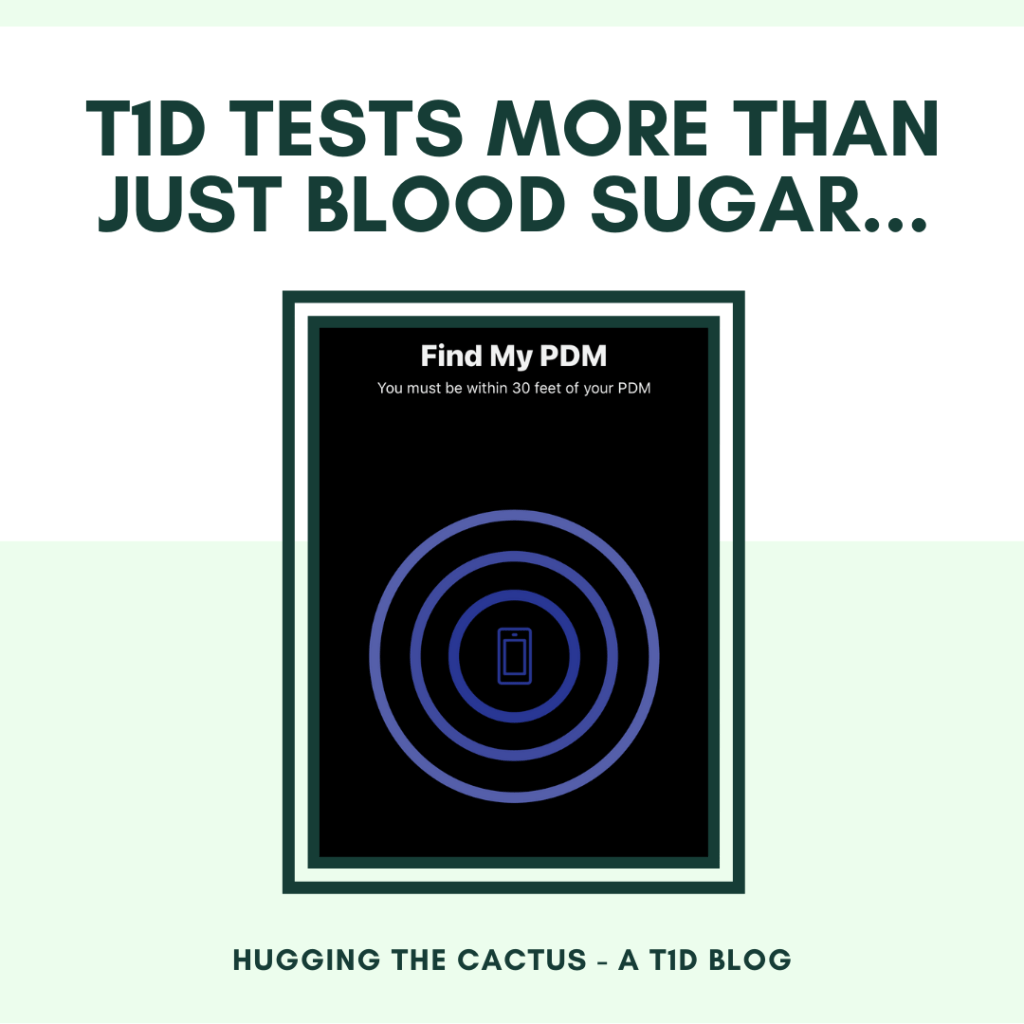
When the “Find my PDM” feature fails, there’s nothing to fall back on other than memory…and maybe a bit of luck, as well.

It was an infuriating scenario. I knew it was somewhere in my home. I hadn’t left the house all day, other than to take my dog outside to do her business. I spent the better part of a half hour wandering up and down the stairs, searching with an increased sense of franticness, for my PDM. The urgency to locate it only heightened when I tried to use the “Find my PDM” feature on the Omnipod Display app and it wouldn’t work. That was a first – up until this day, I’d always been able to use it to track down my PDM when I’d misplaced it. It showed no indication that it was going to suddenly start working again any time soon, so I gave up and was forced to retrace my steps in order to find my PDM…which was going to be difficult considering in the middle of my search, my Dexcom went off, alerting me to an impending low blood sugar.

Think, think, think…I could practically feel the wheels turning in my head as I tried to recall where I last saw my PDM. I’d bolused for lunch earlier in the day, most definitely. That much I knew. I had eaten lunch downstairs, so I surmised that I brought my PDM upstairs with me when I was done so I could have it nearby as I continued on with my workday.

I looked high and low, all around my bedroom, without success. That’s when it dawned on me that there was a slim chance that my PDM fell outside of my pocket when I took my dog out just before I’d made my dinner. So I ventured outside, sweat starting to bead on my forehead as I grew shakier from my low blood sugar. I scoured the parking lot and the lawn for my PDM and no dice. That was when I decided to head back inside, drink a juice box, and take a moment to really contemplate the time and place I last saw my PDM.

That’s when it hit me – it had to be on my bedroom floor, next to my bed, because I suddenly remembered how it had accidentally slipped off my bed when I’d placed it there after lunch! I raced back upstairs, feeling triumphant and relieved when I saw the PDM in that precise spot and could confirm that my memory had finally served me correctly.

Now, this might sound like some silly, random anecdote about how I had a forgetful moment. But to me, it actually demonstrates just how much a person with diabetes needs to remember to do on a daily basis. It’s so much more than the finger stick pokes or insulin injections – it’s a lot of accountability. It shows that diabetes tests a whole heck of a lot more than blood sugar…it tests patience, responsibility, and yes, in this particular situation, memory. This is why I think people with diabetes deserve recognition for dealing with these daily, innumerable tests as gracefully as we can.

The Forgotten Bolus

My friends and family have always complimented me for having a good memory.

What can I say? I have a knack for remembering names and faces. I’m slightly better than decent at keeping track of birthdays. And I’ve kept journals of some sort for most of my life, so I’m usually able to recall the date on which a certain event took place (or I can at least look it up fairly quickly).

But my memory can fail me sometimes, and it did just that the other day when I forgot to bolus for dinner.

I don’t think I’ve ever forgotten a mealtime bolus in more than 23 years of life with diabetes. I suppose there’s a first time for everything…

To give myself a little credit, I truly thought that I had bolused. I remembered picking up my PDM and entering my blood sugar and carbohydrate information, but I never actually hit the very important “enter” button that would start delivering my insulin.

Imagine my surprise, then, when I saw my blood sugar rapidly rising – I’m talking double “up” arrows here – approximately 20 minutes after I finished my dinner.

And at first, I decided to ignore it! I thought that my insulin just needed a little more time to kick in, so I waited. And waited. And waited. But when I saw that I was rising above 250 mg/dL, I figured I should increase my temp basal…perhaps my body just needed a bit more insulin than I anticipated.

That’s when I picked up my PDM and saw that I had zero units of insulin on board. Extreme confusion turned into extreme panic as I asked my mom if I could check her PDM – what if I had picked hers up instead when I bolused for dinner and mistakenly gave her the insulin that was intended for me?!

Thankfully, that wasn’t the case, and I slowly began to piece together that I simply forgot to hit the bolus delivery button.

Whoops.

Almost one full hour after finishing my meal, I was finally delivering my mealtime bolus and silently fuming over my high blood sugar that ended up lasting several hours. It was a completely avoidable situation that shouldn’t have happened, but at least one good thing came out of it: I don’t think I’ll be forgetting to bolus any time soon.

Looking Back on my First Diabetes Conference

This post was originally published on July 18, 2013, on the ASweetLife website. Since I’m away on vacation this week, and it also happens to be the week of the 2020 CWD FFL conference, I thought it’d be fun to look back on the diabetes conferences I’ve attended in the last seven years. I got very nostalgic when reading this old post – all the feelings that I had during that week rushed back at me. To this day, I feel so lucky that I got to go and meet so many amazing people with diabetes – many of whom have literally become my friends for life. Read on for my full conference experience…

Children With Diabetes Friends for Life Conference 2013: A First-Timer’s Report

I was the kind of diabetic child who refused to attend any sort of diabetes camps or events. I always told myself, I don’t need any diabetic friends. I can do this by myself. And I wasn’t exactly alone with my diabetes. My mother has type 1 diabetes, too. We’ve always had a diabetic partnership, and for most of my life that has been enough of a support system for me.

However, as years have gone on I have become more comfortable with the diabetic part of my identity, so much so that I joined the College Diabetes Network (CDN) last year, an organization whose mission is to empower and improve the lives of students living with type 1 diabetes through peer support and access to information and resources. Through CDN I started meeting other diabetics my age, and was blown away by how refreshing it was to chat with them about the daily challenges of living with diabetes as a college student. And thanks to CDN, I learned about an opportunity to apply for a scholarship to attend the Children With Diabetes Friends for Life conference in Orlando, Florida. The CDN team, Christina Roth and Jo Treitman, encouraged me to go for it. This past April I applied, and by May, I had received the news that I was chosen as a scholarship recipient. I was overjoyed.

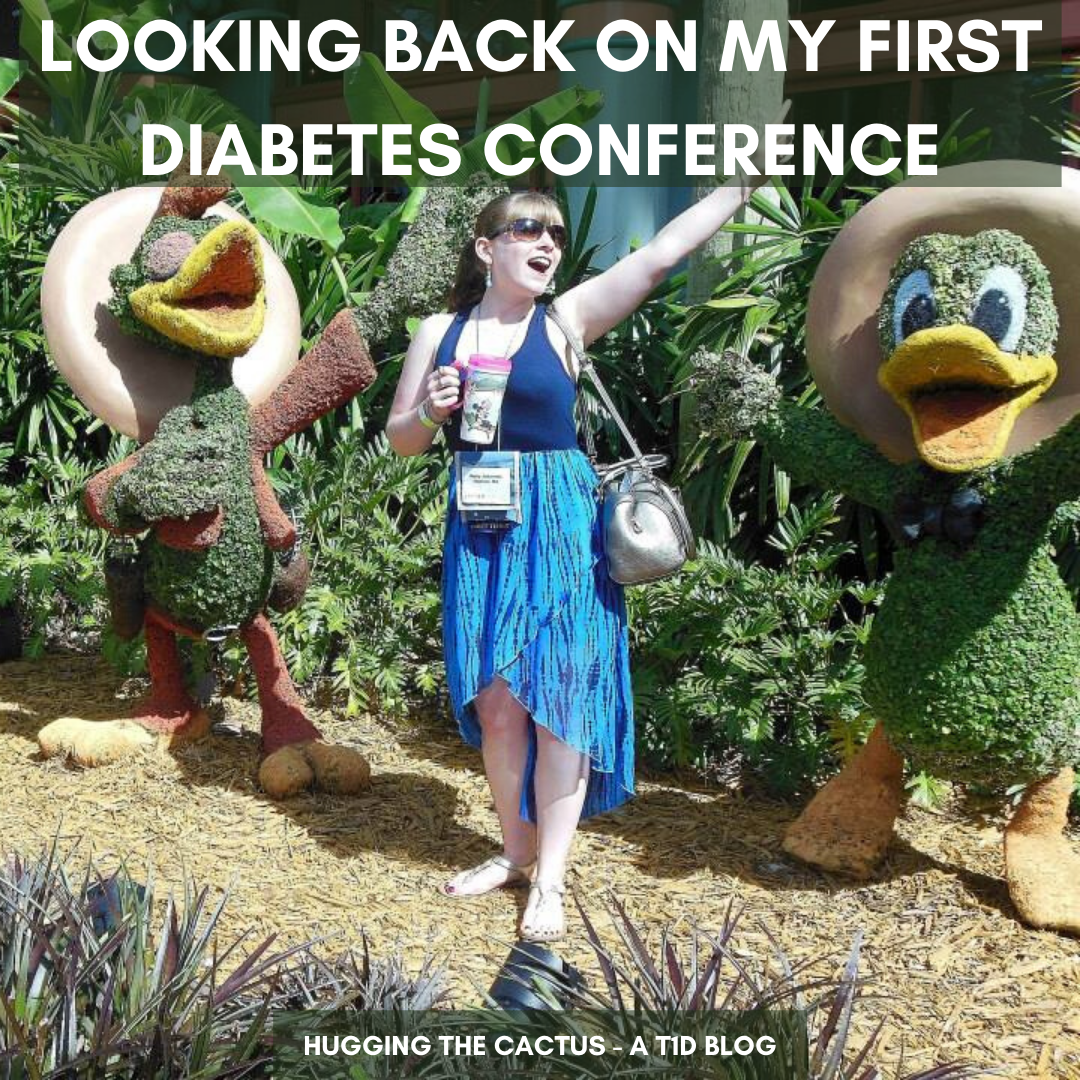
Looking Back on my First Diabetes Conference
I recreated my overjoyed reaction to receiving the scholarship almost immediately upon arriving to Disney. Here’s the photographic evidence.

Fast forward to July 10th, when I found myself sitting next to my father, the most wonderful traveling companion, on a plane. Our destination was the Coronado Springs Resort located in Disney World, where we would spend the next five days taking advantage of all the conference had to offer. I wasn’t sure what to expect. Would I meet other people my age? Would I enjoy myself? Would I benefit from the conference? I was anxious, to say the least.

My concerns were allayed once I registered and saw a lobby full of conference attendees. I did my best to absorb the sea of faces before me: all of those people had something gigantic in common with me. It dawned on me that I would get to know some of them well over the course of the next few days, and I couldn’t wait to start the process of making some friends for life.

Before I go on, you might be wondering what exactly happens at a Children With Diabetes Friends for Life conference. In short, families or adults with type 1 gather to spend time together. Participants are are divided into groups by age. I was sorted into the college-age group, which was for 18-22 year olds.

For the duration of the conference, attendees are encouraged to participate in workshops that address a large variety of diabetes topics, like the latest technology for diabetics, dating and diabetes, starting a family with diabetes, and creating diabetes blogs. I had the pleasure of meeting Jessica Apple and Michael Aviad at the diabetes bloggers session, as well as fellow bloggers Kerri Sparling and Scott Johnson. As a relatively new diabetes blogger, I found this workshop to be enlightening as I listened to the advice other bloggers had to offer. I’m excited to explore the intriguing realm of diabetes blogs and gain insight that I can apply to my own blog.

As far as the social aspect of the conference was concerned, I hit it off immediately with several people at the college dinner that was held on Wednesday night. Each person I spoke to had a different perspective on what it was like to be a young adult with diabetes. I was impressed by the clear resilience and independence of the students around me, and I was truly pleased to learn that diabetes wasn’t the only thing we all had in common. Thursday night proved to be fantastic, too. We attended the Friends for Life banquet and ball, which was a full-fledged party with food, music, and dancing. Then my newfound friends and I ventured to Downtown Disney and had a blast soaking up the magic of Disney World and exchanging stories – both diabetes related and unrelated.

One story that I heard at the conference particularly moved me. I was at Brandy Barnes’ workshop about Women and Diabetes – another excellent session – when a diabetic woman sitting next to me became emotional as she spoke about her young daughter with diabetes. She explained how she was dealing with guilt, as she felt responsible for her daughter’s diabetes. She feared the consequences this would have on her little girl later on in life. I felt a compelling need to reach out to this woman and let her know everything would be okay. I spoke to her briefly after the workshop, and explained to her that my mom and I are a diabetic duo, too. I told her that when her daughter grows up she’ll be grateful for her support, knowledge, and perspective as a fellow diabetic with a deeper understanding of diabetes. My mom and I can attest to how even though diabetes has tried to knock us down over the years, we’ve taken control of it and become stronger as a result. I gave the woman my e-mail and the address to my blog, and if she is reading this now, I want her to know that I meant what I said: everything will be okay.

Looking back now with the eyes of someone who attended the Children with Diabetes Friends for Life conference I can say that I regret – to a certain degree – not attending camps when I was younger. Being around others with diabetes has given me greater awareness of what it means to live with diabetes. Additionally, I am feeling more inspired than ever as a diabetic and a writer to put my story out there and do anything I can help and impact others, all while listening to and learning from what others affected by diabetes have to say about it, too.

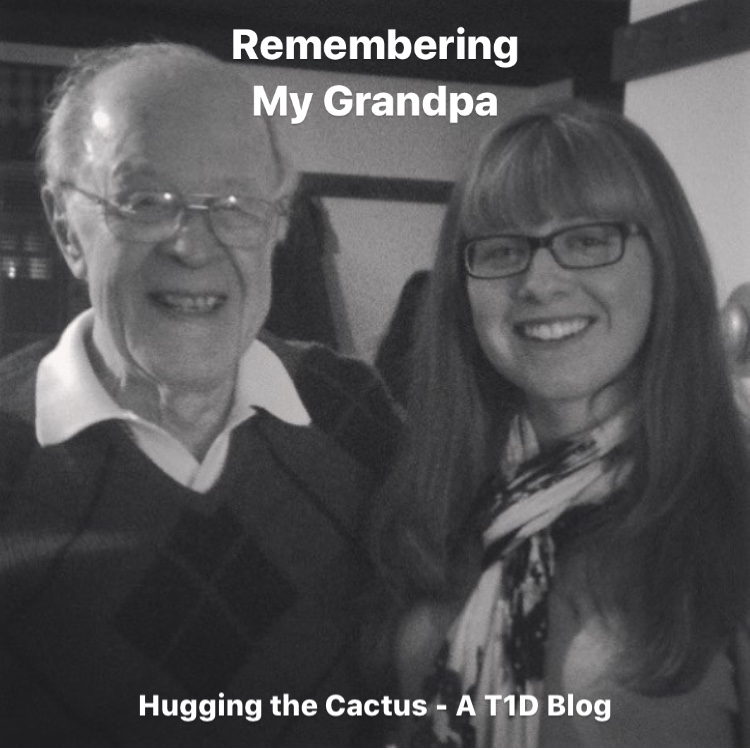
Remembering My Grandpa

Six years and one day ago, my maternal grandfather passed away. He was 87 years old and lived a very full life, but his passing felt sudden to all of his family members who simply believed that we had more time with him.

In the immediate days following his death, my parents, brother, aunts, uncles, and cousins experienced a wide array of emotions, as well as physical side effects from overwhelming grief. I had some of the highest blood sugars of my life during this time, and I also came down with some sort of fever that left me boiling hot one minute and head-to-toe shivering the next.

I remember that getting myself ready for his wake was a real process – I was collapsed on the floor just outside of the bathroom, waving a hair dryer not just on my head, but also all over my body because I felt so frigidly cold. Little did I know, my blood sugar was also well over 400, but even if I’d known that fact sooner, I probably wouldn’t have cared very much.

6917FE19-CAB8-4A7E-9E60-8CD0742F2BFE
A photo from my Grandpa’s last birthday with us.

Anyways, the intent of this post isn’t to remember a truly heart-wrenching period of my life. It’s to help me remember my grandpa, and catch him up on everything that’s happened since he left us. I thought it’d be most appropriate to do this in the form of a letter.

Dear Grandpa,

I have so much to tell you. But let me start with an apology. I’m sorry that I didn’t appreciate you more when I was younger. I’m sorry that I didn’t try harder to talk to you and hear your many stories firsthand. I always respected you throughout my youth and teenage years, as my parents instilled upon me early on to respect my elders. And even in childhood, I knew you were the elder to respect; after all, I was convinced that you single-handedly ended WWII. What’s more respectful than that? Anyways, I digress – the point is that I wish I made more of an effort to learn more from you and I’m sorry that I’ll never get a chance to make up for that.

You probably already know most of what I’m going to tell you. We lost Zuzu the same year we lost you, and I’m sure she’s with you in heaven now, but then we gained Clarence a couple of years ago and I think you would get such a kick out of him. There’s been a few more losses in our family, too, but many more gains of all kinds, and I know that in a way, you were there with us for those occasions and everything in between.

You also probably already know that since we lost you, I graduated college and started my career. Weird, right? I also started a blog about diabetes, and really, it’s become a much bigger part of my life than it ever was before. I would love to see your eyes widen in awe at our diabetes technology and how advanced it has become over the years. (I remember how amazed you used to be when we showed you our computers and early-model eBook tablets, I can only imagine your reaction to medical technology!)

As I sit here and type this and marvel at how much (and how little) has changed since you left, I remain grateful for the fact that you were a big part of our childhoods (“our” meaning my brother’s and my cousins’ childhoods, as well as mine). I also take comfort in the fact that just because you’re not physically here to witness all of this stuff, you’re here in our hearts and you’re with us in that manner for every step in our journeys. I know that when I’m having a tough diabetes day, you’re one of the guardian angels looking out for me and helping me recover from it.

And I also know that you’d be proud of me for what I’ve accomplished so far in life, and for me, that’s more than enough motivation to keep going, fighting, and working hard to beat diabetes and be successful in other arenas, too.

Love,

Molly

Memory Monday: My Lowest Low Blood Sugar

One Monday per month, I’ll take a trip down memory lane and reflect on how much my diabetes thoughts, feelings, and experiences have unfolded over the years. Today, I remember…

…the lowest low blood sugar that I ever experienced. So low, in fact, that I never actually found out how low it reached. Scary stuff.

lost in stockholm

Admittedly, my memory’s a little fuzzy when it comes to recollecting what exactly happened, but here’s what I remember: It was my sophomore or junior year of high school. I woke up in the morning and checked my blood sugar – or so I thought. In reality, I think I imagined checking my blood sugar, or perhaps I went through the motions of doing it without actually getting a reading.

Regardless, I made my way down the stairs and into the kitchen, where I encountered my mother. I told her that I wanted “special cake”.

I remember her looking at me with worried eyes and asking me what I was saying. All I can recall is that I asked for special cake two or three more times before getting totally frustrated with her. How could she not understand my request for Special K cereal?

That’s right, in my stupor, I thought I was saying that I wanted Special K cereal for breakfast. But I didn’t realize that my low blood sugar was causing me to slur so badly that my words weren’t coming out clearly.

I vaguely remember my mom’s panicked reaction as she figured out that I must be experiencing a low. I think she asked me what my blood sugar was, and when I couldn’t tell her because I didn’t remember, she knew it was time to force some orange juice down my throat. I was conscious for that, but it’s like it was erased from my memory – I have no recollection of drinking the juice or what the moments after that were like.

I wound up going to school late that morning, only to have to go home less than halfway through the day. My low “hangover” was so bad that I felt nauseous in my classes and couldn’t concentrate on the lessons.

Obviously, I fully recovered from the incident. Even though my memory is shoddy at best when it comes to remembering the whole experience, the mere fragments that I can recall are enough to make me scared to ever go through something like that again. It’s a reminder that diabetes can be terrifying, but living with it is a reality that I have no choice but to accept – fears and all.

Walking to End Alzheimer’s

Type 1 diabetes sucks. It’s a chronic illness that is incredibly demanding, both mentally and physically. But it’s got nothing on Alzheimer’s disease.

I know this from experience because I watched my grandmother (and her sister) suffer through it.

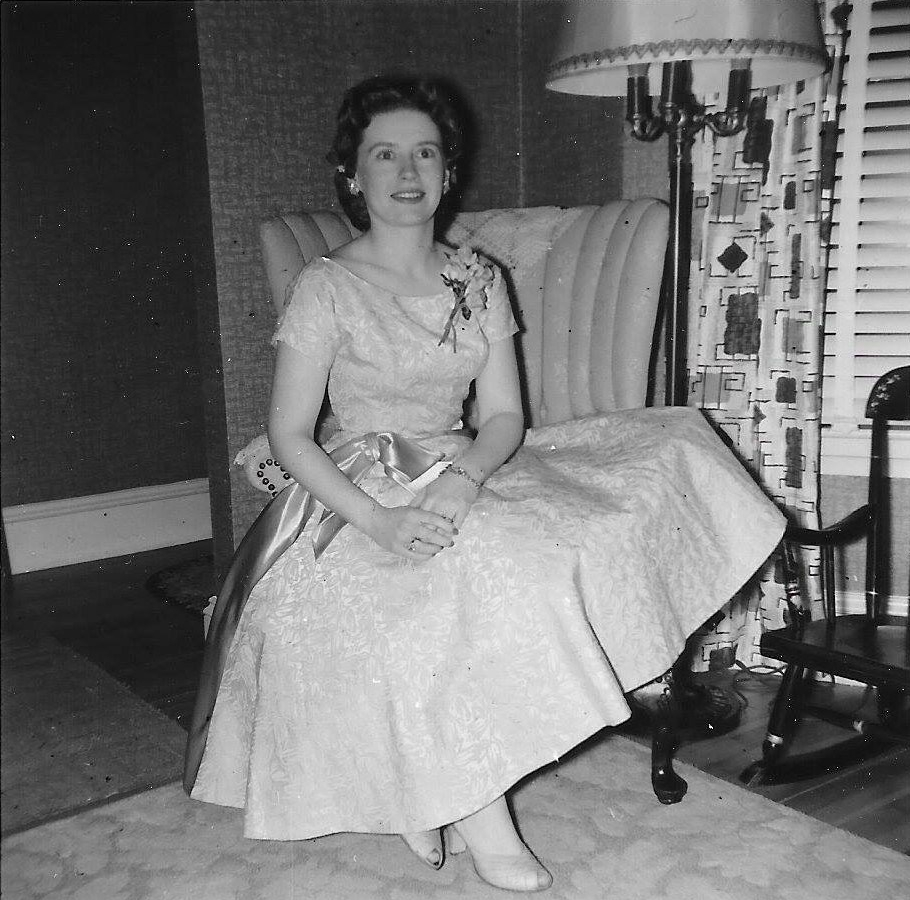
I don’t have many memories of my grammy pre-Alzheimer’s, but by all accounts, she was an amazing woman. She raised six children alongside her loving husband. She was an active member of her community, working as a secretary for the Department of Public Works, a teller for the local bank, and a clerk at the neighboring city’s hospital. She was devoted to the local church and played the organ for it, and enjoyed singing. By the time she passed, she had eleven grandchildren and three great-grandchildren.

grammy
My beautiful grammy.

Alzheimer’s will never take away the contributions she made to the lives of her family, friends, and community, but it took away her ability to tell me stories, firsthand, about these experiences.

It took away her independence.

It took away her mind.

It took away her life.

Some facts about Alzheimer’s: It is the most common cause of dementia. It is a degenerative disease of the brain characterized by many symptoms, such as memory, language, problem-solving, and other cognitive skills. The most mundane activities, like walking or swallowing, cannot be performed by an individual in the final stages of the disease. As a result, they require 24/7 care until succumbing to the devastating disease.¹

In 2018, nearly 6 million Americans of all ages are living with Alzheimer’s. Every 65 seconds, another person in the United States develops the disease.²

I knew my grandmother when she was in the more severe stages of Alzheimer’s, and it was not easy to watch her experience them. It was even harder to watch how it affected her husband and children.

I wouldn’t wish it on anyone, just as I wouldn’t with diabetes.

This November marks nine years since my grammy passed away. She is missed every single day, but one way that my family celebrates her life and fights back against Alzheimer’s is by participating in the Walk to End Alzheimer’s. On September 15th, we’ll be partaking in our (sixth, I believe) Walk as Team Mary’s Little Lambs – a team name inspired by Grammy’s first name. I like to think that it’d make her smile.

The Walk is an emotional event for us in general, but especially when we hold up pinwheel flowers that represent our promise to remember, honor, care, and fight for those living with Alzheimer’s and their caregivers. Imagine how powerful it is to see the colorful pinwheels lifted into the air, with each color having a distinct meaning:

  • Blue for a Walker who has Alzheimer’s/dementia
  • Yellow for a Walker who supports or cares for someone with Alzheimer’s/dementia
  • Purple for a Walker who has lost someone to Alzheimer’s/dementia
  • Orange for a Walker who supports the cause and the Alzheimer’s Association vision of a world without Alzheimer’s

Just like with diabetes, imagine how incredible it’d be if one day, there was a white flower lifted into the air: a flower that would signify a cure.

If my grandmother’s story moved you, or if you want to show support for someone you know affected by Alzheimer’s/the cause, please consider donating to the Walk to End Alzheimer’s. You can use this link here, or click on the widget in the right sidebar of my blog – it’s the very first one listed. All donations advance the care, support, and research efforts of the Alzheimer’s Association. Thank you in advance, and thank you for taking the time to read this deeply personal blog post.

For more information on Alzheimer’s disease, visit www.alz.org. I recommend reviewing the report on their website, 2018 Alzheimer’s Disease Facts and Figuresto learn the most up-to-date statistics on the disease.

¹¯² Alzheimer’s Association, 2018