5 Confessions of an Imperfect T1D

Newsflash: I’m not a perfect T1D. Shocker, I know!

Every so often, I like to remind myself that perfection is impossible, especially when it comes to my diabetes. But all my life, I’ve yearned for it in a hopeless pursuit. I agonized over essays before submitting them for grading in high school and college. I have a penchant for baking, which requires precision in order to be successful. And I’ve done virtually everything I can do to get and maintain “perfect” blood sugar levels at all times. Which of those named feats sound the most fruitless?

So to help remind myself that T1D shouldn’t be about perfection, I decided to compile a list of “confessions” about my not-so-perfect T1D tendencies. I think it’s important for me to share them here, since we are in an age of showcasing diabetes “wins” over “failures”: Straight, in-range CGM graphs, A1cs below 6%, balancing a social life with a career and family and other responsibilities ON TOP OF diabetes…these things should be celebrated, but we also shouldn’t forget about the lessons we learned along the way to help us get to these points of dia-winning. Plus, projecting an air of perfectionism at all times is just absurd and we all need a reality check sometimes, myself included.

The Missing PDM (and the Panic That Followed)
Remember Confessions of a Teenage Drama Queen? This post is like that except with more diabetes.

Here are my five confessions. Which ones can you relate to?

5. Sometimes, I conveniently “forget” that I have diabetes and snack freely on food that I shouldn’t, or that I should bolus for. It’s a bit irresponsible of me, but if I notice that my blood sugar is between 90 and 140 or so, I help myself to a little snack from the kitchen. It’s never anything too big; for example, I just ate a mini dark chocolate peanut butter cup because I noticed my blood sugar was 132. But it is almost always something that will make my blood sugar go up a bit, and I need to stop fooling myself into thinking that these snacks are “free”.

4. Until recently, I never had a stash of ketones test strips (out of pure laziness). Ugh, such a diabetes no-no. Someone slap me on the wrist. In my teenage years, though, I found that we’d stock up on ketones strips only for them to expire before I could use, well, any of them. So I thought to myself, why bother buying them if I can’t even get any use out of them? Luckily, I came to my senses just a few weeks ago and realized that it’s always better to be prepared, even if it means spending a few extra bucks unnecessarily.

3. Organization of my diabetes supplies is…lacking. On Instagram, people are constantly showing off their beautifully organized diabetes drawers and bags and pantries…and I have serious envy of their carefully curated supply stashes. I’d describe mine as something more like an organized mess. I’ve got my Dexcom G6 sensors stacked haphazardly in the closet because they don’t fit in my set of three plastic drawers that hold everything else in a total nonsensical manner. When it comes to diabetes, I’ve got higher priorities than organization, even though I do appreciate tidiness in general.

2. Self-control is not a concept that exists to me when my blood sugar is low. I know some people with diabetes who have restraint when their blood sugar goes low: They treat it with around 15 grams of carbohydrates and wait about 15 minutes to make sure that they’re headed in the right direction before doing or eating anything else. Wellll…that is not me, especially in cases when my blood sugar goes low in the middle of the night. I’m not proud of it, but every once in awhile, I’ll roll out of bed (no matter how early or late it is) and head straight to the kitchen to treat a low with cereal and peanut butter and cookies and anything sweet I can get my hands on. It’s not pretty.

1. I take extreme care when it comes to using my diabetes supplies in a sanitary and recommended way, but if there’s one thing I couldn’t care less about, it’s lancets. Ideally, lancets are disposed of and replaced on a routine basis. But…I just…don’t do that. Honestly, I don’t really remember the last time I changed my lancet. I definitely do it at least once a month (which might make some doctors squirm) and usually before I travel somewhere. I don’t know…when it comes to diabetes, there’s so many other things that take a much higher priority in my book. Plus, at least I do change my lancet multiple times throughout the year – I know of some other T1Ds who have ‘fessed up to doing it ONCE a year, on January 1st, and that’s it! God love ’em. I know I do for their blatant honesty!

The Missing PDM (and the Panic That Followed)

12:55 A.M. I wake up from a deep sleep to the sound of my CGM going off: My blood sugar had just gone above my high threshold. I silence the alert and reach for my PDM so I can give myself a small correction bolus. But it’s not in its usual spot on my nightstand.

12:56 A.M. I tumble out of bed and wander into the living room. Surely, I left my PDM somewhere out here. I dig through my backpack, check the coffee table, and look for it on the counter tops in the kitchen. I can’t find it in any of those locations.

12:57 – 1:00 A.M. I’m searching all over the apartment, like a mad woman now. I’m checking in between couch cushions, inside cabinets, and underneath furniture at a lightning-fast pace. My heart is beating rapidly as I wonder where the actual eff my PDM could be. I shake my sleep and bemused partner awake, fill him in on the situation, and enlist his help in the search. He only has a vague idea of what the PDM looks like (I have too many devices for him to be able to distinguish the difference between them) and isn’t much help, but he does offer a tip: Check the car.

1:00 – 1:03 A.M. I run down four flights of stairs and into the parking garage where my boyfriend’s car is parked. Maybe it fell out of my backpack on our way to trivia at a restaurant earlier that evening? I rifled through the passenger seat, checking underneath it and even in the backseat, but no luck.

The Missing PDM (and the Panic That Followed)
A post all about a terrifying 20-minute period in which my PDM was…MIA.

1:04 – 1:07 A.M. I practically break out in a cold, panicked sweat as I contemplate the possibility that I took my PDM out at the restaurant and it’s still there. I knew for a fact that I hadn’t used my PDM for anything since I’d eaten dinner hours before at the apartment, but it was worth calling the restaurant to see if they’d found anything. I called, knowing the odds of anyone answering at this hour were slim…only to be proven wrong! I was relieved when a man picked up, and I hastily explained to him the situation. I provided a description of my PDM and waited with bated breath while he searched the area in which my team had sat to play trivia.

1:08 – 1:11 A.M. Crushing disappointment crashes over me like stormy ocean waves as the man tells me, after a prolonged search, that he couldn’t find my PDM. I felt like I’d been punched in the gut. Numbly, I recited my contact information over the phone, thanked him for his time, and hung up. I was beyond panicked now. My boyfriend was asking me about a contingency plan and all I wanted to do was scream at him, my OmniPod IS my contingency plan!!!!!!!! I start formulating a plan to drive to the restaurant first thing in the morning to search the premises myself, as well as call Insulet and beg them to overnight a new PDM. Maybe I would just have to stick to manual injections the entire next day, though I had no idea what I’d do about long-acting insulin since the Lantus sitting in the fridge expired months ago.

1:12 – 1:14 A.M. My mind was in overdrive and I refused to give up right then and there. I was absolutely certain that I hadn’t taken my PDM out since my dinnertime bolus. But since I did go out that night, there were really only one of three places it could be: the apartment, the car, or the restaurant. It definitely wasn’t in the apartment, which I’d searched so thoroughly that it looked like a tornado had whipped through it, but it was worth searching the car one more time…just to be positive.

1:15 A.M. I make my way back down to the parking garage. I turn my cell phone’s flashlight feature on and scan the seats carefully, peeking under and over and around every possible surface…I didn’t see a damn thing. Defeated, I turned to close the passenger side door when, out of the corner of my eye, I saw a gray object wedged between the door would be when it was slammed shut and the seat. It was practically camouflaged, that’s how well it blended with its surroundings. It was…MY PDM!!!

“Relieved” doesn’t begin to describe how I felt. “Elated”, “victorious”, and “exhausted” are all better descriptors. I ran back up to the apartment, told my boyfriend, and breathed a deep sigh, glad that the entire episode had a happy ending. We settled back into bed, though I lay there staring at the ceiling for a long time afterwards. If I hadn’t double checked the car, my boyfriend would’ve just driven off to work the next day, both of us oblivious to the fact that my PDM was there. I would’ve wasted time trying to track it down at the restaurant and calling Insulet, and there probably would’ve been a lot more frustration felt and tears shed.

But thank goodness it didn’t come down to that.

The end results of the missing PDM episode was 1) losing a decent night of sleep, 2) feeling an urgent need to establish a better contingency plan, and 3) feeling an even more pressing need to install a tracking device in that damn PDM, stat…because that thing is just too easy to lose.

Favorite Things Friday: “The World’s Worst Diabetes Mom” by Stacey Simms

In this edition of Favorite Things Friday, I share a great new book that I just read: The World’s Worst Diabetes Mom by Stacey Simms!

Disclosure: I bought this book on my own and this review is unpaid. I am writing this to share an excellent book that was written by someone I consider a personal friend and wonderful diabetes advocate. This is my honest review of the book.

Hey, Cactus friends! Welcome to another Favorite Things Friday post. I’m really happy to write this one up, for a few reasons: 1) Stacey Simms is a terrific human being and I’m glad we met IRL for the first time a few years ago, 2) I enjoyed reading her personal experience with diabetes, and 3) I think this book is pretty important and I’d like to share the reasons why with you all.

Oh, and it’s also got an awesomely intriguing title that will definitely make you want to know why Stacey is publicly declaring that she’s the world’s worst diabetes mom…a bold statement, indeed!

F125A585-5942-4166-AE87-36F9C0EA457B
Me and my new book!

So I don’t know about you, but I had no idea until a few years ago that there are actually a LOT of diabetes books out there. Some are memoirs, others are guides. And there’s even some that address specialty subjects, like pregnancy and diabetes.

Stacey’s book is a fusion of a memoir and a guide. It’s all about her son Benny’s diabetes diagnosis and the lessons that she and her family have learned over the years. Each chapter focuses on a different topic – examples include going to diabetes camp, playing sports with diabetes, and vacationing with diabetes – and ends with a list of questions that readers can ask themselves to help them navigate these specific scenarios.

What I liked so much about this book is that I learned a lot from it: It’s not just for those who are new to diabetes. (I’ve had diabetes for more than 20 years and I am constantly learning new things!) My eyes were really opened to the perspective of a parent whose child was just diagnosed with diabetes. Not only did it help me understand the emotions my parents were probably experiencing throughout my childhood, but it also proved to me that loved ones who don’t even have diabetes go through a lot, too. They might not have to physically endure the pokes and prods or deal with the exact same feelings that those of us with T1D do, but that doesn’t mean that they don’t feel immense guilt or worry for us because they just want to do everything in their power to help ensure that we live normal, fulfilled lives. That’s an awful lot of pressure to put on oneself.

Stacey’s honesty and transparency with her family’s diabetes experience gave the book a powerful emotional punch. She owns up to all the times that diabetes has made her cry tears of sadness or yell from frustration. And refreshingly, she doesn’t shy away from sharing the past mistakes and less-than-ideal scenarios that her, Benny, and her family had to work through. I was appreciative of that because, like Stacey, I feel that there is too much of a focus on “perfectionism” when it comes to diabetes, especially these days. It’s an impossible standard that many of us set for ourselves when we should put more attention on the little victories we achieve along the way on our individual diabetes journeys.

In the final chapter of the book, Stacey shares more of her thoughts on the pressure to be perfect. The following is my favorite passage from the book:

After reading this book, you know I don’t believe in the pursuit of diabetes perfection. Even so, I’m still surprised at how many people expect it, who strive for it and feel guilt or shame because they feel they don’t measure up. We were lucky our endo told us right away that T1D management is just as much art as science. Over the years, I’ve come up with my own philosophy about Benny’s diabetes care: Don’t worry about perfect; go for safe and happy. Do I love my child? Am I doing my best? Is he happy? Is our endo happy? Yes. Then let’s keep working in that right direction.

I’ve shared that thought with parents who’ve then burst into tears. That’s not a joke. The realization that a happy, healthy child is enough can be a revelation.

By now, I’m sure you’re ready to pick up a copy of the book and find out from Stacey herself why she gave herself the “worst diabetes mom” moniker (because yes, I deliberately did NOT explain it in this post because I think it’s best explained by the author). You can pre-order a copy of the book here, and to hear more from Stacey, be sure to check out and subscribe to her podcast “Diabetes Connections”, available on the Apple podcast app, Android, and any other podcast app of your choice.

Losing Patience with Customer Support

The other day, I nearly LOST IT on the phone with an Insulet representative.

I’m not proud of it, but I also was not sure why this particular phone call was taking so long.

I was calling in regards to a pod failure – something I’ve had to call and report many times before, so I’ve become very familiar with how the usual phone call goes:

Me: Hi, I’m calling to report a pod failure.

Insulet Representative: Okay, could I have your first and last name, date of birth, and shipping address?

*I provide the information.*

Insulet Rep.: Thank you for verifying your information. Could you please tell me about the pod failure incident?

*I explain what happened with the pod failure. The rep will ask me a series of follow-up questions, such as where was I wearing the pod? How long was I wearing it before the failure? Did I notice anything unusual about the pod activation? Did I need to seek medical assistance for the pod failure? Typically, this is the list of questions I’m asked, and then I finish my call with the rep.*

Insulet Rep.: We’ll be sending you a replacement pod. We will send it via standard shipping, meaning it will arrive in 7-10 business days. Is that okay with you?

Me: Yes, thank you.

*And then after exchanging pleasantries, the call is over. Standard running time on the phone is about 6-7 minutes. No big deal at all.*

So imagine my surprise, and growing ire, when a phone call that should’ve only lasted a few minutes stretched just beyond 20 minutes.

on
I’m sure that all T1Ds can commiserate with me on this one…how many hours, and how much patience, have you lost due to customer support?

I still don’t really know why it lasted so long. The agent I spoke with was asking me WAYYYY to many follow-up questions regarding the pod failure, and what made it especially irritating was that I’d already explained every single detail surrounding the whole incident. It was like she was questioning my reporting abilities. Either that or she was really slow with taking notes, and maybe I was talking too fast for her? Who knows. All I knew was that I was calling in the middle of my workday, and I had to get this wrapped up ASAP so I could turn my full attention back to my work.

That said, it was difficult to stay patient, and I probably slipped up toward the end of the call. Actually, I totally slipped up, because my answers to her questions became very curt in my attempt to expedite the call…which didn’t work, by the way.

I felt a tinge of guilt for my brusqueness. After all, I used to be a customer service representative who spoke with her fair share of irate customers. I knew it would be appreciated if I at least said a sincere thank you before hanging up. So I did, and even though I wasn’t exactly proud of myself for losing my cool, I was glad that I could turn my attitude around in the end.

It’s kind of a metaphor for how I’m trying to handle my diabetes these days…allow myself to feel how I want to feel, but then go about handling whatever situation is in my way using a level head. Because that’s how to make things happen, IMHO.

Dealing with Diabetes When You’re the Maid of Honor

No, no, no. Not today diabetes. Dammit.

The morning of my cousin’s wedding, I woke up to a blood sugar of 237 after a night of fighting elevated levels. There was no rhyme or reason for the high blood sugar – I hadn’t eaten a single thing for 16 hours at that point, but I had changed my pod an hour or two before going to bed.

Why You Should Get a Flu Shot (If You Haven't Gotten One Already) (2)
When you’re the MOH and you also happen to have diabetes, you worry about a lot more than just your speech or your makeup.

WTF was wrong? Was the pod’s cannula bent? Was I high due to wedding day jitters? Would the highs persist all day?

These were the thoughts racing through my mind almost as soon as I woke up the morning of my cousin’s wedding.

I didn’t have time to worry about my MOH speech, or whether my hair would turn out the way I wanted to, or even to drink a celebratory mimosa while I got ready with the rest of the bridal party – I was too preoccupied by my elevated blood sugar.

All I could bother to think about was a potential solution before we all walked down the aisle.

Somewhere between applying my eyeshadow and having the 111th bobby pin secured in my hair (yes, it truly took 111 bobby pins to make my intricate braided up-do possible), I remembered “The Incident” from last year. I’d slept through a high blood sugar that, the following morning, refused to come down. As my frustration grew, so did the pain in my belly that lead me to the bathroom, where I came very close to passing out. One ambulance trip and ER visit later, I discovered that my pod’s cannula was bent, leaving me with no doubt that a pod malfunction was responsible for the whole ordeal.

With that memory vividly replaying in my mind, I made the executive decision to change my pod a couple hours before we were due at the wedding venue. And I can’t even begin to explain how happy I am that I listened to my intuition to do so. Upon removing it, I noticed blood at the site – not as bad of a sign as a bent cannula is, but a possible indicator of a problem. By the time we were in the venue’s bridal suite, my blood sugar was sitting pretty at 90 and I was finally able to focus on the beautiful, meaningful afternoon.

Sure, it was a stressful morning and far from an ideal situation, but I am extremely proud of myself for how I handled it. I didn’t panic the way I normally do. I didn’t shed any anxiety tears. I kept the issue pretty well-concealed from the bride, who shouldn’t have to worry about her MOH’s health on her special day. My calm approach paid off, and though it sucked to waste almost two days’ worth of insulin when I disposed the wonky pod, I knew I should pay closer attention to the fact that I did what needed to be done.

And even better was that my diabetes mostly cooperated with me the rest of the day. It didn’t stop me from delivering a fantastic speech with the matron of honor. It didn’t prevent me from enjoying some tasty wedding food, cake and all. It certainly didn’t keep me from tearing up the dance floor with my enthusiastic family. And it didn’t end my night early as I went out with my boyfriend, the newlyweds, and the matron of honor and her husband to a bar to shoot some pool and continue our celebrations.

Turns out that dealing with diabetes when you’re the maid of honor has a lot to do with keeping a cool head and living in the moment, two things that are so important to do in a variety of situations.

Hugging the Cactus Turns Two!

It feels like just 365 days ago that I was celebrating the first birthday of this blog…

Oh, wait. It feels like that because it WAS like that.

So here I am, 365 days later, on the second birthday of Hugging the Cactus.

HTC Birthday (1)
Is my blog’s second birthday a good excuse to eat a cupcake today? (The answer is YES.)

Wow!

The second year of this blog hasn’t been without its challenges. To name a few:

  • Technical difficulties. I’m still learning a lot about how to successfully run a blog. It seems like the blogging world changes on the daily, so it’s tough to keep up with such a fast-paced environment. It’s far from easy – so let me give a shout-out to all the bloggers out there. Whether you have a small following or legions of fans, kudos to you for keeping at it because it’s a lot of work.
  • Time trouble. This year has been jam-packed for me – a move to another state, several weddings, and a whole bunch of personal shit – so, to be perfectly honest, I haven’t been able to devote as much time as I’d like to this blog.
  • Diabetes drama. Of course a girl who runs a diabetes blog has a life filled with diabetes drama. Between navigating the intimidating world of health insurance and coping with diabetes that is constantly keeping me on my toes, sometimes I straight-up just don’t want to write about it because I’ve already spent too much time merely trying to handle it. I struggle with finding the balance between oversharing and holding too much back.

Through it all, though, I keep finding myself returning to this blog time after time. As I’ve shared before, I’ve definitely questioned why I bother with it, especially when it feels like blogging is a semi-irrelevant medium in this day and age of micro-blogging on Instagram.

But I’ve started to answer those questions of self-doubt that I’ve posed to myself.

I think, at the heart of the answer, that the reasons why I keep doing this blog is because it both pushes me to take better care of myself, as well as it forces me to seriously examine how I live my life with diabetes. (And it also brings me closer to other people with diabetes, but that’s a reason that I’ve placed on a pedestal of utmost importance many times before – my desire to connect with other people with diabetes will never not be there.)

It pushes me to take better care of myself because it provides an active record of my thoughts, feelings, and struggles with diabetes that I can consult.

It forces me to look at those records and see how I can address the issues I’m experiencing, or prevent old problems from happening again.

This blog serves as the ultimate T1D diary for me – by documenting my life with diabetes, I believe that I can improve my quality of life with it…which makes it incredibly worth doing, IMHO. And if I can connect with and help others along the way? Well, that makes it even more precious and special to me.

So, happy 2nd birthday, Hugging the Cactus. Here’s to another year of thriving with diabetes.

What the…BEEP!

Beeeeeeeeeeeeeeeeeeeeeeeeeeeeeeeep.

A long, unfaltering, high-pitched beep was emitting from something in the pharmacy. I saw heads turn in the vicinity as fellow customers, as well as myself, tried to identify the source of the noise.

I gulped. Could it be coming from me? Did my OmniPod fail right then and there as I was picking up my prescription?

WHAT THE...BEEP!
I wish an image could accurately portray just how annoying the beeping sound can be.

I anxiously dug through my backpack, my fingers searching for my PDM, until they met it. I pulled it out and prayed that all was well, that my pod was working as it should be.

A quick press of a button, and…I confirmed that my PDM and pod were, indeed, working properly. Simultaneously relieved yet still bemused by the noise, I put my PDM away while I scanned the area around me, determined to find out what was making a sound so similar to my OmniPod.

What was the culprit? Well, you know those little plastic boxes that drugstores encase things like razor blades in, to prevent theft? That was the thing emitting a blaring beep, in this situation. And like I’d initially assumed, it was coming from me: I was holding one of those boxes in my hand (because I was about to purchase razor blade replacement cartridges), and I’d unintentionally obscured the sensor that triggers the alarm to go off.

Whoops.

While it was nice to know that my insulin pump hadn’t failed on me, it was still somewhat embarrassing to discover that I was the cause of the ruckus, anyways.

Lesson learned: Keep those protective plastic cases in plain sight so I won’t have to misidentify what the beep is coming from.

WTF is CGM Sensor Soaking?

I saw an Instagram story a few weeks back that intrigued me.

In it, a friend of mine was talking about how she “soaks” her CGM sensors. Instantly, I was confused: What the heck did she mean by that? Soaks them in what, hot water or some other liquid?

HUGGING THE CACTUS - A T1D BLOG
Contrary to the connotation of the word “soaking”, this does not mean you’ll be submerging your CGM in any sort of liquid.

Within seconds, her definition of “soaking” became much clearer. “Soaking” a CGM sensor means inserting a fresh sensor hours before you intend to activate it. Rather than giving your sensor just two hours to warm-up, you’re giving it 4-6 hours so it can supposedly provide much more accurate readings immediately after the warm-up period has ended.

I was interested in this practice because I’ve definitely experienced sensors that were off for several hours post-insertion/warm-up. Sometimes, it even takes a full day for a sensor to start reporting accurate numbers, and I wouldn’t exactly call that efficient.

While I haven’t had the guts to actually try sensor soaking yet – I’d like to sometime in the near future – I’ve been doing some research on it so I’m fully prepared to try it whenever I’d like. Here are some questions I had about the process, and the answers I’ve found to them:

Q: Doesn’t this mean that you’re wearing two sensors at once?
A: Yes. But it’s only for a short window of time, until the old sensor expires and it’s time to activate the new one; in other words, for the full soaking period.

Q: How long should I let a new sensor soak?
A: According to what I’ve found online, it seems that 4 to 6 hours is the sweet spot for soaking. It’s basically doubling or tripling the built-in warm-up period that all sensors must go through, so I can see how this might contribute to improving immediate accuracy.

Q: How do I protect the new sensor if it doesn’t have a transmitter snapped in it for several hours?
A: The reason why I haven’t tried soaking yet is because I was worried about wearing a sensor that didn’t have a transmitter snapped in it. But I found some photos online of people who wore transmitter-less sensors with stretchy, self-adhesive wrap tape to protect the nook in which transmitters rest for the soaking period. It’s smart to protect that space, because in theory, it could be vulnerable to catching on clothing or other surfaces. Plus, tape like that is really easy to remove without damaging the sensor in the process.

Q: What changes about the sensor activation process when it’s finally time to start the new soaked sensor?
A: My research leads me to believe that nothing really changes at the end of the soaking period/when it’s time to activate the soaked sensor. All that will be needed is the sensor code so it can be properly activated within the receiver/Dexcom app. So the most important thing you can do at the very start of the soaking period is hold onto your sensor code/store it somewhere safe so you’ll be able to enter it at the end.

Q: So…why would anyone bother trying this again?
A: My understanding is that it all relates back to making sure a fresh sensor is as accurate as possible once it’s activated. I can’t tell you how many times I’ve put on a new sensor, only to discover a few hours after it has warmed up that it’s off by 40 or 50 points – and that just doesn’t cut it. So I don’t think there’s any harm in me giving sensor soaking a shot one of these days. I just have to remember to do it, and have the patience to wear three devices at once (my pod, the soon-to-expire sensor, and the new soaking sensor).

Have you tried soaking? If so, please drop a comment and let me know your thoughts on it – and be sure to tell me if I missed any key steps in my research!

A Farewell to my Endocrinologist

Well…the day I’ve been subconsciously dreading has finally arrived.

It’s time for me to part ways with my endocrinologist…the diabetes doctor that I’ve seen for the last decade…more than one-third of my life.

She’s moving onto new things, and I’m sad to see her go. She’s helped me tremendously over the years.

She’s seen me at my “diabetes worst”, when I was a college student who cared more about having a normal college experience than managing my diabetes.

She was the one who finally convinced me to quit MDI in favor of an insulin pump.

She’s one of the few medical professionals I’ve ever interacted with who treated me like an equal – she never made me feel “less than” or inferior to her.

In other words, I was pretty dang lucky to be her patient.

1DEBAFF4-E2F8-460B-8FDF-7330F4EBA07D
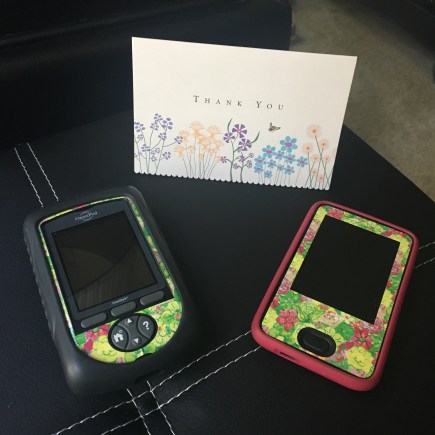
The “thank you” card that I plan on giving my endocrinologist, pictured with two devices I started using thanks to her.

I’m trying to take this forced change in stride. Maybe it will be good to meet with another endocrinologist. Maybe it will help me continue to improve. But I am allowing myself to feel a little upset and sorry over the situation; after all, it’s never fun to part ways with someone, especially when you had no say in the matter.

Guess what else I’m allowing myself to feel?

Gratitude.

I feel thankful for my endocrinologist, so I plan on giving her a card with the following message during our appointment tomorrow…because it’s important to me for her to know all the positive change she’s brought to my life:

Dear [Name Redacted],

I wanted to thank you for all that you have done to help me (and my mom and aunt) in the last several years. You have always motivated me to take better care of myself after every appointment I’ve had with you. I appreciate you for being patient with me, listening to my concerns, and inspiring me to try new technologies and treatments to improve my quality of life with diabetes. I don’t like having a chronic illness, but having a doctor like you around to help me deal with it means the world to a patient like me.

Wishing you all the best in your future endeavors!

Sincerely,

Molly

Ye Olde…Insulin Pump?

Sometimes, you just gotta have fun with diabetes.

Which is why I didn’t think twice before writing “ye olde insulin pump” on my pod before attending a renaissance faire last week.

9FE9715A-5BC5-4CAF-9729-5A0089D68B6C
Me, wearing a flower crown and showing off my ye olde insulin pump…just living my best life.

Yep, there I am, with my pod in full view, my Myabetic backpack slung on my shoulders, and turkey leg in hand. This is pretty much me in my full glory.

I could’ve let my diabetes get in the way of me enjoying the faire, especially because it’s been somewhat unpredictable lately, but I didn’t.

I ate what I wanted, drank some raspberry wine (much tastier than mead, IMHO), and socialized with friends.

I anticipated some people to notice or comment on my pod, which I actually wouldn’t have minded because maybe it would’ve been from another T1D or someone who is familiar with insulin pumps. But all day long, the only remark came from someone within my group, and we all had a chuckle over it…and that was it.

Which is perfectly fine by me, because even though my ye olde insulin pump and I weren’t trying to hide diabetes at the renaissance faire, it did give me a mental vacation from it for part of the day.

Huzzah to that, indeed.