27 Acts of Kindness

I didn’t publish a new blog post on Friday.

This wasn’t accidental. I deliberately neglected my blog because…my heart just wasn’t in it. Contrary to my blog a few weeks ago, I felt…I don’t know…kind of dumb about maintaining my blog through all this? Like, what’s the point of my silly little blog when the world is fighting a massive battle right now?

Maybe it’s foolish to feel that way, maybe it’s not. I don’t know. I moped about it for most of last week, and then spent some time seriously thinking about how and why I was feeling mightily blue about my blog.

And then I realized: I’m feeling a bit helpless. I want to help my loved ones and my community in any way that I can, but how can I possibly do anything productive from home?

I thought about it some more before the perfect idea came to me.

In exactly 27 days, I turn 27 years old. There’s nothing particularly special or exciting about this age, but I do have the power to make it a meaningful birthday celebration by doing 27 acts of kindness each day leading up to May 3rd.

hugging the cactus - a t1d blog
I can’t think of a better way to celebrate my birthday than to share a little love with the world.

I don’t know exactly what or how these acts of kindness will unfold over the next several weeks – I think that part of the beauty of the challenge is that I can go with what feels right as each day goes by – but I do know that I’ll document my experiences here. I’ll share what I do each day and I’ll do my best to make sure that each act is unique. And I’ll continue to publish posts regularly (my 3x per week schedule). Daily posts would be ideal, but I know myself and I know my real-world workload wouldn’t exactly accommodate that.

The only other thing you might be wondering about my challenge is…what the heck does it have to do with diabetes? That’s a valid question, considering this IS a blog about my life with type 1 diabetes. And my answer to it is that I will do as many diabetes-specific acts of kindness as possible. I imagine that in the next month or so, plenty of diabetes-related anecdotes will sneak their way into my posts, as they always do.

And finally, a clarification…I hope my challenge isn’t misconstrued as me trying to do something “noble” or “noteworthy”. I want to emphasize that this challenge was born out of pure frustration that I’ve felt over feeling like I’m unable to contribute to society right now when it so desperately needs all of the help that it can get. My heart and my head have been with ALL of the essential employees – my dad and my best friend are just two people in my life who can be counted among them – who are showing up to work each day and dealing with a number of hurdles during this unprecedented time.

All of that combined has really motivated me to take this on and make this upcoming birthday truly meaningful.


The Best (and Worst) Insulin Pump Infusion and CGM Sensor Sites

Like many other people with diabetes, I wear two devices on my body at all times: my insulin pump (my pod) and my continuous glucose monitor (CGM). And I’m often asked whether or not these little gadgets are painful.

Fortunately, the answer is that most of the time, they aren’t. I rarely feel it when my CGM sensor or my insulin pod’s cannula pierce my skin, which makes the whole experience of wearing them a lot more comfortable – and much less dreadful when it’s time to rotate sites.

Speaking of sites and pain, though, I admit that there are some sites that, for me, tend to work better than others. The following are the different locations I use for my pod and CGM sensors, in order of what tends to be best to the worst.

Add a heading
My stomach is my preferred spot for my pod AND my sensor.

Stomach: This is the site at which I have the best insulin absorption, so it’s a clear winner for me when it comes to my pod placement. I also find that it almost never hurts when I press up against the pod (e.g., when I roll over in bed in the middle of the night) when it’s on my belly. The same is true for my CGM sensors, which also seem to be the most accurate when they’re placed on my abdomen. I guess there’s a reason why the stomach site is the only one recommended by the FDA for the Dexcom CGM (which is what I use)!

Lower back: I have yet to try my CGM here, but I often place my pod on my lower back without issue. This site can be trickier to navigate because if I forget that my pod’s there when I’m getting dressed in the morning, I can come precariously close to accidentally knocking it off – and I have in the past. Plus, the pod can rub up against me in an unpleasant way when I’m working out; specifically, doing any sort of abdominal exercise on the ground. But it’s not something I can’t tolerate, and the insulin absorption in this location is just too good in general for me to pass over it altogether.

Upper arm: I wear my pod and CGM on my upper arms sometimes, but they don’t always adhere well for some reason. Getting dressed can be even more problematic for me if I forget that my sites are on my arms – I’ve totally ripped off pods and sensors when I’ve been taking off and putting on clothing. And for a long time, my CGM sensors would make me bleed when I inserted them in my upper arm. I never figured out why, and the problem seems to have gone away, but it definitely made me a little more wary about using my arms as a site (PLUS any devices I wear on my arms are highly visible, and I don’t always like it when people stare at them).

Thigh: Hands-down, the worst site for my pods are my thighs. For starters, wearing denim jeans – especially if they’re skinny jeans – are such a feat when wearing a thigh pod. The fabric pushes up against the pod in such a way that I prefer wearing dresses, skirts, or leggings for the three days that I have a thigh pod just so I can be more comfortable. And speaking of comfort, it’s tough for me to get into a cozy sleeping position when I have a thigh pod because I like sleeping on my stomach sometimes, and there’s just too much pressure up against my pod when it’s on my thigh. And for me, it seems that insulin absorption just isn’t great on my thighs (maybe because they’re on the muscular side). BUT, I will say…I recently tried a CGM sensor on my thigh for the first time and I didn’t hate it! The accuracy was good and it wasn’t in the way as much as a thigh pod (I keep wanting to type “tide pod”) would be. I’ve only had it on my leg for a few days now so I don’t know yet how the adhesive will hold up, but I’ll find out.

Spots I haven’t tried yet (but want to): On social media, I’ve seen people wear Dexcom sensors on their forearms (eek), upper butt cheek (tee-hee), and even on their calves. And pod placement can get even wilder with spots in the center of the back (HOW can people reach back there) and, um, the upper-breast area (one word: ouch). While I don’t think I’ll ever work up the courage to try some of those spots, I am curious about others.

The bottom line is, though, that the sites that work best for me might not work as well for you. (The same thing can be said for my worst sites.) But it is important to remember, above all, the importance of rotating sites…even though I’m clearly not a huge fan of pods on my legs, I’ll still suck it up and place them there because I know that I should be careful of scar tissue buildup.

It just makes the pod-and-sensor-change days that much more pleasant when I can move them from a disliked site to a favorite site, anyways.


A Diabetes Stream of Consciousness

I first heard the term “stream of consciousness” when I was in high school. My creative writing teacher used it in class one day when she asked us to start writing in our journals for 10 minutes straight – without stopping.

She described it as an opportunity to just let our thoughts flow out from our pens without interruption. Anything we wrote didn’t have to make sense…it was simply an exercise in just letting our writing be, in an unrefined and unapologetically honest kind of way.

hugging the cactus - a t1d blog
What would your diabetes stream of consciousness look like?

When I was struggling to write a blog post for today – because let’s face it, writer’s block is real – the stream of consciousness concept popped into my mind. And I started thinking about it in a diabetes lens, which resulted in this*:

Ugh there’s my alarm blaring again
let me reach for my phone and check my CGM data first thing
okay I will use this to bolus for breakfast what do I even want to eat today
okay let’s go ahead and just get the insulin pumping
input for 30 carbs even though I am not sure that I really want to eat 30 grams worth of carbs but whatever I’m sitting at home all day anyways so I may need any of the extra insulin that gets delivered
finally roll out of bed and make my way down the stairs and eat breakfast and do the crossword like I always do to wake my brain up some more
then set to work and work straight for the next two hours or so I forget exactly how long it was but then my CGM alarm interrupts my flow so rudely OMG why am I this high
okay I guess it’s time to take my lunch break a little earlier than I wanted but my blood sugar is too high and it will distract me further if I keep trying to work through it so I get up and do a high-intensity cardio workout for half an hour
and that does the trick, by the time I jump into the shower my blood sugar is coming back down
oh that’s so much better I sit back in my chair not too long after and get back to work and pause again only to have lunch
I make an egg with an English muffin and also eat a banana for “dessert” though I wish I could have chocolate boy am I craving chocolate lately or what
I pad my bolus with extra insulin because I seem to be trending higher lately which is obnoxious and then I settle in for an hour-long meeting and I’m relieved to discover I’m on mute when my CGM starts alarming again and I’m so fucking exasperated,
I’m high again and it’s probably because of the banana although I can’t really be sure so I start rage bolusing
BAM BAM BAM
get that insulin in my system puh-lease and then I work again for another couple of hours before it’s time for another break and
I go for a walk with my mom and the dog and we’re midway through our usual route when I start to feel those familiar signs of an early low blood sugar some shakiness and some general unease
sure enough when I get home I check my CGM (so many times that I check it throughout the day) and I’ve got a down arrow and I’m plunging into low territory quickly and FINALLY I can have some of that chocolate I’ve been wanting all day
YUM Cadbury eggs.

*I added punctuation and line breaks after writing for five minutes straight just to make this somewhat more readable.

What did I learn after doing this little writing exercise? Diabetes really dominates my mind from the moment I wake up. It is the reason behind just about every decision I make and I don’t really ever get a mental break from it.

But luckily, there’s chocolate for that.

Is Chia Seed Pudding REALLY Life-Changing for T1Ds?

“A Three-Minute Diabetes Breakfast That Changes Lives?”

Whoa, a life-changing breakfast? Sign me up!

Three years ago, that post was published on DiaTribe. I’ve come back to it every now and again with every intention of trying this amazing recipe myself, but it called for ingredients that I don’t usually have on hand.

I mean…chia seeds? Coconut oil? Those aren’t exactly pantry stables for me…and they probably aren’t for many other people.

But during a grocery store trip earlier this month (before things got really crazy), I finally remembered to pick up a giant pack of plain old chia seeds and decided to whip up the recipe.

As a simple Internet search informed me, I was free to play around with the ingredients I added to my chia seed pudding – really play around. Coconut oil wasn’t a requirement; rather, an add-in, and it turns out the only truly needed recipe components are chia seeds and a liquid of some sort. I’ve been using a combination of unsweetened vanilla almond milk and water, which suits my tastes just fine, though I’m sure that just about any other kind of milk out there would work well in this recipe, too.

This is what I added to my first batch of chia seed pudding (which made 4 servings):

  • 1/2 cup chia seeds
  • 1 cup of unsweetened vanilla almond milk
  • 1 cup of water
  • 3 tbsp. vanilla protein powder (I just kind of eyeball it when I add it in)
  • 1 tsp. vanilla extract (adds more flavor)
  • 1 tsp. cinnamon
  • 1/4 cup sugar-free syrup

I combined all the ingredients into a plastic container, gave it a good stir, and let it chill in the fridge for 4-6 hours before giving it a taste test.

And I was pleasantly surprised. It was definitely sweet and had an interesting texture going on – very pudding-like, but with a little something…else going on. I could almost compare it to bubble tea (a.k.a. boba or tapioca pearls).

When I prepped a bowl for breakfast the next morning, I added a little of whatever I had on hand, which was craisins, a bit of granola, and some shredded coconut. Now the challenge was…how do I bolus for something like this? And how would my blood sugar react over the next 3-4 hours?

Is Chia Seed Pudding REALLY Life-Changing for T1Ds_
Sure, it’s not the most aesthetically pleasing breakfast…but it sure does make my blood sugar happy.

I decided to bolus for the toppings, which I figured were about 15 carbs. Ultimately, though, I rounded up to 20 to pad my bolus since I really wasn’t sure how the chia seeds would affect me. (They’re loaded with fiber and even some protein, and sometimes it can be tricky to calculate accurate insulin dosages for high-fiber foods.)

I’m not exaggerating when I say I experienced an incredibly flat post-breakfast line on my CGM.

I was pretty wowed. There was ZERO rise after consuming the meal, and my blood sugar just…held out for hours afterward. So yeah, I’d say it’s pretty effin’ life-changing for THIS person with diabetes…

…except for one tiny caveat: I was hungry again just a couple of hours later. Perhaps I could’ve added more of the pudding to my serving, but it was probably over a full cup that was in the bowl…I had assumed that would be more than enough to tide me over until lunch. Then again, an easy fix could be to add more satiating toppings, like fresh fruit – which I’ve experimented with, and they make a great addition to the mix.

I’ve had chia seed pudding for breakfast many times now, and I’d say the final verdict is that I definitely like it, and my blood sugars seem to LOVE it. It’s probably not for everyone considering the texture is a little “different”, but I’m glad that I took a chance on this highly versatile recipe.

How to Hit Your Step (and Blood Sugar) Goals When You’re Stuck at Home

My diabetes has never liked it very much when I’ve stayed idle for too long.

Unfortunately, my diabetes and I don’t really have much of a choice these days other than to stay put – and I know that just about everyone else in the world is in the same boat.

So how do you hit your daily step goals when you can’t leave the house?

You get creative.

hugging the cactus - a t1d blog
With a little creativity, you can find tons of ways to stay active when you’re stuck at home – which will make your blood sugar and body happy.

And, in turn, your blood sugars will generally respond positively to any extra movement you get throughout the day…plus, with endorphins spiking (instead of bg levels), you can see a huge improvement in your mood. And who doesn’t need a mood booster right now?!

Here are the ways in which I’ve been getting 10,000 steps or more each day:

Taking spontaneous dance breaks. My mom and I are both working from home and sitting in front of our computers for long stretches of time Monday through Friday. To combat this, we’ve come up with a ridiculous but fun game called “DJ Dance Party”. It’s simple: Every couple of hours, one of us cues up music and we just dance around for the duration of the song. DJ Dance Party is a welcome reprieve from work, especially when it happens right after long conference calls!

Playing with pets. Our animals can get just as stir-crazy as we can, so by helping them combat boredom, we’re also doing ourselves a favor by getting off our butts. I play with my parents’ dog, Clarence, by chasing him around the house, throwing his toys at him, taking him for neighborhood walks, and kicking the soccer ball around in the backyard (weather permitting).

Dust off those old fitness videos. Do you have old Jane Fonda/Windsor Pilates/Jazzercise tapes or DVDs just laying around, untouched for years? Dig ’em out from wherever you’ve got them and give them a spin. It might feel silly, but then again you might also get a good laugh in addition to some exercise. I’ve done a few Zumba routines in the last couple of weeks because we have some old DVDs, and they’ve been surprisingly fun.

Hit up YouTube and other fitness platforms for free workouts. Personally, I pay for a subscription to Beachbody, which gives me access to countless workouts lead by professional personal trainers. I’ve used Beachbody workouts in lieu of going to the gym for about a year now and it has worked really well for me, but if I didn’t have the service, I know I could rely on YouTube – in fact, one search of the word “workout” on that platform brought up tons of results that vary in length and intensity. It’s a treasure trove!

Pace around when on conference calls. When I’m not attending a virtual meeting with a video chat component, I’m constantly walking around while I talk on the phone. And it honestly helps me become a more active participant in meetings, sometimes, because I don’t have the distraction of my computer monitors in front of me. I imagine this is the closest I’ll get to having a fancy-schmancy treadmill desk, but I don’t knock it because it works!

March in place while watching TV. Binge on all the TV shows and movies you want guilt-free and challenge yourself by marching in place in 15-minute intervals or at every commercial break. Steps rack up quickly this way, and it’s a go-to for me when I can’t get a walk in during the day.

So even though I’ve barely left the house, doing one, two, or a combination of these above exercises have guaranteed that I’ll meet my step goal each day. And they’ve also really come in handy after meals and long stretches of sitting, when my blood sugars are most prone to going up.

Staying at home has disrupted routines for most people, but it’s good to know that we can still control how much exercise we get in a day.

Consume ALL The Carbs!

See the title of this blog post? That’s basically my mantra lately.

Working from home (and never leaving the house, in general, except to walk around the neighborhood) has made me crave nothing but carbohydrates. Whether it’s in the form of biscuits, chips, chocolate, or cereal…I’ve been mowing down on many more carbs than I typically do.

I guess it’s the way I deal with stress and anxiety. Don’t get me wrong, I’m still eating plenty of fruits, veggies, and proteins…but I’ve also added an unnecessary amount of carbs into my daily diet. So I’m not totally trashing my body, but I am going through a little more insulin than normal. I’m also probably more apt to moving around whenever I can in order to combat higher-than-I’d-like blood sugars.

glac
Me with all my beloved carbs…and looking like I belong in the 90s with my Lisa Frank sweatshirt.

I can’t help it, I love carbs. They bring me comfort. They’re delicious. They come in so many iterations. But I don’t love how they make me feel (bloated, hyperglycemic, unhealthy, etc.). And I especially don’t love how they cause me to take more insulin than I prefer taking in a single day.

So I’m hoping that by admitting here that I’m overdoing it in the carbohydrate department will encourage me to cut back. Maybe small changes, like chia seed pudding (more to come on that in a future post) instead of cereal in the mornings for breakfast, are what I need to get me back on track. I’m not saying that I’m going to stay away from carbs altogether (oh heavens, no); rather, I’ll just be more mindful of how many I consume in a single day.

Besides making me feel better about myself overall, it’ll help me appreciate yummy low blood sugar treats – hello, Reese’s eggs – during those times that I genuinely need something sweet and carb-o-licious.

3 Things I Want the World to Know About Insulin

See that tiny glass vial in the below image? Can you believe that the contents of it are extremely precious?

Can you believe that, at approximately $9,400 per gallon, insulin is ranked as the sixth most expensive liquid in the world?

It’s kind of crazy, right? But besides knowing that insulin is priced outrageously, there’s actually a few other things that I think the world should know about insulin.

Ethan Zohn_ A Survivor Contestant Who Inspires-2

  1. Not all insulin is created equal. Just like diabetes, insulin exists in various forms. Besides liquid insulin, there’s also inhaled insulin (Afrezza). And some people with diabetes may even take oral medications that are designed to help increase the effectiveness of insulin that they either receive via injection or produce on their own. There’s brand-name insulin produced by several drug manufacturers (the big three being Eli Lilly, Novo Nordisk, and Sanofi) as well as generic versions of the drug…but that doesn’t mean that generic insulin works just the same as brand-name insulin for all people with diabetes. Insulin is complicated and different types work better for different people.
  2. Insulin is incredibly sensitive. Take one look at the vial in the above photo and tell me that the insulin inside it is safe at all times. Nope, it sure isn’t! Besides the packaging being super fragile, people who rely on insulin must also be careful to keep it at the proper temperature at all times. All it takes is dropping the vial once or leaving it in an unstable environment for the insulin to be rendered useless, potentially wasting a few hundred dollars. It’s as volatile as it sounds.’
  3. Taking too much or too little insulin is dangerous and life-threatening. For some people, there can literally be a life-or-death difference between one unit of insulin. Too much can cause blood sugar to plummet and a person can experience severe hypoglycemia that may result in shock. Too little insulin has the opposite effect: A person will experience hyperglycemia that can have ranging consequences, some that are minimal/temporary, others that are very serious. That’s why precision is so important when dosing for insulin; on top of that, nobody wants to waste a single drop of the stuff because it is so expensive. But this is what many people with diabetes need in order to survive.

So when you see the hashtag #Insulin4All or hear someone talking about how overpriced it is, you’ll know some of the basic characteristics about insulin that make it invaluable to people with diabetes. Perhaps you’ll be inspired to join the fight to make insulin affordable and available to all – as it should’ve been to begin with.

Diabetes Made Me

A thought occurred to me the other day: While diabetes doesn’t define who I am, it has unquestionably majorly impacted my life. I started thinking about and writing down how it has done so.

My diabetes has made me…

  • Worry endlessly about my daily choices
  • Angry, sad, confused (sometimes, all at once)
  • Become a control freak
  • Sleep fewer hours at night
  • Afraid about what could go wrong, and when
  • Wonder whether or not I’ll have trouble affording my medications in the future (not just my necessary diabetes prescriptions)
  • Believe that there are just some things in life I can’t do because of it

What sticks out to me about that list is that all of it is negative. So I tried thinking about all of the positive ways that diabetes has affected me, and I’m happy to say that I came up with a longer, happier list:

My diabetes has also made me…

  • Knowledgeable about nutrition
  • Unafraid of needles
  • Understand my own body better
  • Meet and connect with people I might not have otherwise
  • Comfortable with speaking in front of large groups about it
  • Become more philanthropic by volunteering my time and energy for certain groups
  • Self-sufficient (well, slightly self-sufficient)
  • Pack smartly when traveling
  • Prepared at practically all times for any diabetes-related scenario
  • Motivated to exercise on a daily basis to achieve better blood sugars
  • Mentally and physically stronger
Diabetes Made Me
Guess what else diabetes made me do? …It made me take this photo!!!

Diabetes makes me think about and do so many things that I would never dream of if I didn’t have it. A lot of those things are a pain in the neck and I truly wish I could have a break from them, but more of those things have shaped me into a well-rounded individual.

The good outweighs the bad, and diabetes has made me glad to have that perspective.

7 Questions People Always Ask Me About Type 1 Diabetes

This blog post was originally published on March 2, 2019 at Hugging the Cactus. I’m reposting it now because…these seven questions are timeless.

Human beings are naturally curious creatures. So it’s never really surprised me when, upon discovering my T1D, people tend to ask me boatloads of questions about what it’s like. And it’s definitely not at all shocking that many of these questions are recurring.

I've missed you terribly!

Here’s a list of seven questions that I’m almost always asked when I encounter someone who’s just learning about my diabetes. You’ll notice a trend as you read, because even though there’s “no such thing” as a stupid question, this list kinda gets dumber as it goes on. There, you’ve been warned…

7. What does it mean when your blood sugar is high/low?
This is definitely a fair question. I never expect someone who is unfamiliar with diabetes to know the meaning of hypoglycemia or hyperglycemia. I actually kind of appreciate being asked this question, because it helps me spread awareness. The more people that know how to react in severe high or low blood sugar cases, the better, IMHO.

6. Why do you wear all of those devices?
Another decent question – I never mind explaining how my CGM and my pump work, but I do mind when people say ignorant things, like “Oh, are those patches to help you quit smoking?” *Eye roll*

5. Can you eat/drink [fill-in-the-blank]?
Ugh…I get why people ask me this, but it’s a little more tiring to explain. My answer is usually along the lines of: “I can eat or drink whatever I like, but I need to take insulin to account for it. So I try to eat a limited amount of carbs at a time, because that means I have to take less insulin, and there’s less room for error.” But even after that easy-to-understand explanation, the typical follow-up questions are “BUT CAN YOU EAT CAKE/COOKIES/ICE CREAM/ANY SUGARY FOOD?!” And that’s when I lose a bit of my patience, TBH.

4. Does it hurt when you check your blood sugar/give yourself a shot?
I mean, no? I’m not trying to be facetious or anything, but really, after 21+ years of checking blood sugar and giving myself insulin multiple times per day…there’d be a real issue if it hurt every single time. I concede that there are the occasional sites that sting, but it’s not nearly as bad as many people seem to assume.

3. What’s that beeping sound/ARE YOU GOING TO EXPLODE?!
Honestly…use common sense. What’s the likelier scenario here: That my devices have built-in alarms, or that I’m going to spontaneously combust?

2. How did you get diabetes/WHAT DID YOU DO WRONG?
This. is. such. an. ignorant. question. Nobody, myself included, did anything “wrong” that resulted in my diabetes diagnosis. I didn’t catch it and no number of lifestyle changes could have prevented me from developing diabetes. My immune system merely decided to attack and destroy the insulin-producing beta cells that lived in my pancreas. There’s no real answer as to how diabetes is caused, though genetics likely play a role in it. Don’t worry, you won’t “catch” the ‘betes by being in my presence.

1. Do you have the…bad kind of diabetes?
This question is THE WORST of them all because there is no good kind of diabetes! Gestational, type 2, LADA…none of them are favorable. They all suck. They all require constant care, regulatory medications, and endocrinology expertise. So please for the love of all that is sacred and holy, next time you hear someone ask this question, gently inform them that there’s no such thing as good/bad diabetes.


How I Decided to Start Using the OmniPod Insulin Pump

Choosing an insulin pump therapy can be stressful and overwhelming, especially if you’ve never pumped before.

Factors like tubed vs. tubeless, whether or not your insurance will cover a given pump, ease of use, reservoir capacity, and many others all play into the big pump decision…

…if you’re like most (logical) people.

But if you’re me, then you count on pretty much one thing when making the choice: familiarity. I solely relied on the fact that someone I knew and trusted used the OmniPod and had a positive experience with it, and that person is my mother. On top of that, I waited a solid 2-3 years after she started to use it before it was my turn, because I wasn’t willing to even think about trying it until I could feel fairly confident that I would even like it myself.

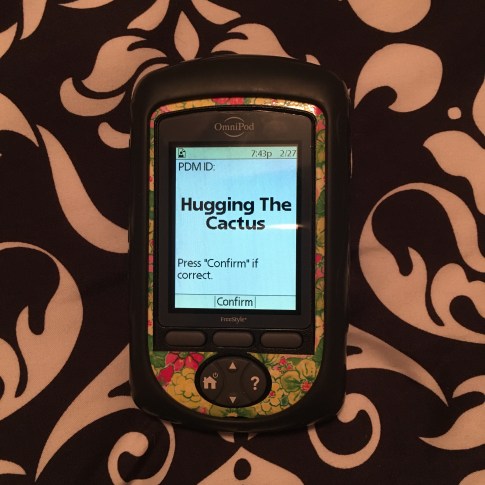
IMG_5979
I may or may not have changed my PDM’s display screen for the sake of this picture.

Luckily, I’ve been on it for just over five years now without any major issues. While I do love it more than I ever liked multiple daily injections, I do wish I had thought it over some more before just going with it…especially now that there are other insulin pumps out there with some amazing features. I know that the manufacturer of the OmniPod, Insulet, has some great upgrades in the works, but it can be hard to wait for them.

If I could go back in time, I’d definitely do more research before semi-idly deciding that the OmniPod is right for me. Of course, I could make the switch to a new insulin pump in the future…but if and when I do decide to try something else down the road, I know I’ll make much more of an effort to really learn everything I can about my options before committing to a new piece of diabetes technology.