Diabetes and the Blame Game: Why it’s Harmful to Judge People with T1D

Here’s a little disclaimer: This post is highly personal. I’m going to dive deep here and talk about a few things that bother me when it comes to how others perceive T1D. My opinions are strong, but I’m entitled to them – just like you are.

“I can’t believe his blood sugar got that low. He really needs to have better control over his diabetes.”

“Why wasn’t she carrying a snack with her? That’s so irresponsible, she should know better!”

“They’re unhealthy. The way they manage their diabetes isn’t okay and it’s no wonder they go to the doctor so much.”

These are words that others have spoken about people with diabetes in my presence. While these thoughts and feelings aren’t necessarily about me, it doesn’t mean that I don’t take them personally.

Why do they bother me? Because they’re dripping with judgment.

It’s easy for someone who simply doesn’t understand diabetes to make assumptions based on a couple of observations they make about someone with diabetes. But just because it’s easy to assume things, it doesn’t make it okay.

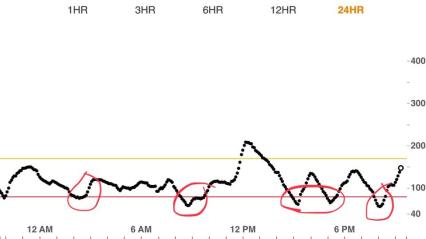
Just because you see someone have a tough diabetes day, it doesn’t mean that’s what it’s like all the time.

Just because someone forgot to carry a low blood sugar remedy on them, it doesn’t mean that they always forget one.

Just because you know of someone who frequently visits the doctor, it doesn’t mean their diabetes is “out of control.”

Just because you blame someone for not taking “proper care” of themselves, it doesn’t mean that they don’t try their damnedest.
28276753_2470934019799402_3452392286696220057_n
I can do all the right things for my diabetes over the course of a day, and still have it go wrong. Blaming and shaming me for being a bad diabetic only makes matters worse.

That’s what’s so wrong about making assumptions about how someone manages his/her/their diabetes: It’s impossible for anyone to know the full story about that individual’s diabetes, because they are the one solely in charge of it. They know how it behaves 24/7/365. They know it better than their doctor, spouse, family, friends, and coworkers. And the funny (and by funny, I mean really shitty) thing about diabetes is that sometimes, you can’t predict what it’s going to do next. So you have to be prepared to roll with the punches at a moment’s notice. And you’ve got to be that prepared all the damn time: when you’re awake, asleep, traveling, exercising, working, and just plain living.

Sounds exhausting, doesn’t it?

So that’s why I think the blame game is especially cruel when it’s played to cast judgment on people with diabetes. We have the incredibly difficult task of taking care of something that most other people never have to worry about, and blaming someone for not “doing what they should be doing” is heartless and does nothing to help them.

I challenge anyone reading this to think twice before they jump to conclusions about how a person with diabetes takes care of themselves. Remember that just because you may have witnessed them going through a difficult diabetes experience, it doesn’t mean that it’s like that for them all the time, or that they aren’t doing everything they can to take the best possible care of themselves. The world is occupied by enough critics – do your part to be supportive, not shameful.

Three Things I Learned about Myself after Running a 5K

I recently ran in my first-ever 5K race. In the weeks leading up to the race, I experienced a variety of emotions – particularly self-doubt – that made me question whether I could really do it. Would my diabetes cooperate the morning of the race? Should I eat a big breakfast before running, or go into the race fasting? How would I handle correcting a low blood sugar while running? What about a high blood sugar? Was I even competent enough to run?

All of my diabetes anxieties aside, I’ve always hated running. HATED it. I played field hockey every fall when I was in high school, and we were required to run a timed mile before the start of each season. I dreaded this mile because I usually wound up finishing the mile last, or close to last – my asthmatic lungs and negative attitude helped ensure that I would give up running halfway through and resort to walking a sluggish, defeated pace.

So like I explained in a recent blog post, making the decision to go through with this 5K wasn’t easy. But I wanted to take on the challenge and prove something to myself.

AND I DID IT!!! I’m pleased to say that I completed the race on a gorgeously sunny Saturday morning along with hundreds of other runners. I was totally proud of myself for accomplishing this goal, especially since I had less than a month to train for it. Plus, I learned a few things about myself after participating in the race:

  1. I should have more faith in my ability to manage my diabetes. I spent so much time dwelling on the “what ifs” (a bad habit of mine) regarding what my diabetes might do during the race that my stomach was doing somersaults as I approached the start line. But as soon as I turned my music up and started running with everyone else, my doubts vanished. And better yet, I was absolutely fine throughout the race. I didn’t eat anything beforehand and went into it with a blood sugar of 142, and I stayed pretty steady for most of the 3.1 miles (I did start to spike soon after crossing the finish line, but I’m certain that was because of the adrenaline). I simply did what I’d been doing during my past month of training, and my experimentation with fasting vs. non-fasting paid off.
  1. I’m a lot more determined than I realized. I’ll admit that there were a few points throughout the race when I wanted to give up. I was breathing hard and my legs were starting to ache, but not once did I stop running and slow down to a walk. I pushed myself to keep going, even though I didn’t want to, and my determination helped me achieve my personal best running time.
  2. I’m ready to train for future races. This experience awakened something in me that wants more challenges. I’m still not in love with running, but I think I am a fan of trying things out of my comfort zone. I want to continue to get faster and stronger so I can try tougher races and physical tests. It’s almost like it’s an outlet for me to tell my T1D that it can’t stop me – that I’m stronger than it no matter how hard it tries to knock me down.

I Get by with a Little Help from my Friends (Diabetes Edition)

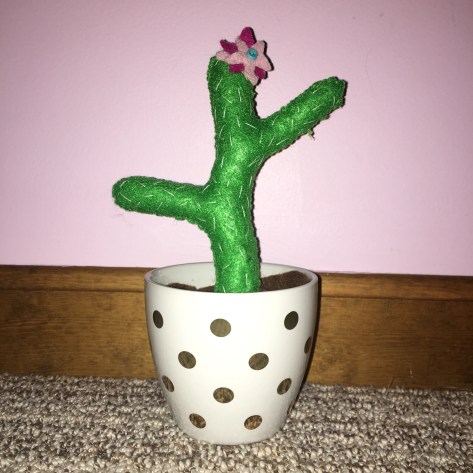
Let me introduce you to Nelly Needle:

F9013708-EC39-480A-9C5A-438CD3B59B68
A cactus filled with needles that don’t prick is my kind of cactus.

This adorable cactus-in-a-cup was handmade for me by one of my dear college friends, Emma. She made it for me for my birthday and I nearly cried tears of gratitude when she gave it to me. I felt the same way when another college friend, Kira, sent me a box for my birthday that contained a thoughtfully-chosen book and a cute little cactus pin that now adorns my meter case.

Emma and Kira, as well as our other friends from college, probably don’t realize how nervous I was to explain my diabetes to them when we first met. All my friends from back home had known about my diabetes growing up; as a result, it’d been a very long time since I had to open up about it to brand new people. I worried that they wouldn’t accept it or would treat me differently after learning about it.

I’m happy to say that I couldn’t have been more wrong. Within the first few days of my freshman year of college, I found the group of people that I wanted and needed to have in my life. They were not only accepting of my diabetes, but genuinely curious about it. They peppered me with questions that I was pleased to answer and marveled at my ease with injecting myself in the middle of the dining commons. To this day, they still express interest and desire to learn about diabetes, which means more to me than words can express.

The cacti I’ve amassed over the last few months, courtesy of my friends, serve as daily reminders that I 1) have some really incredible and supportive friends and 2) should always remember to embrace diabetes for what it is, needles and all.

CDN Creates New Guide for Young Adults Entering the Workforce

In 2014, I learned that I was eligible to graduate college one semester earlier than expected. The prospect should have excited me, but it made me more anxious than anything else. I couldn’t help but dwell on the fact that I’d be starting my career sooner than I planned. The thought terrified me. Questions coursed through my mind: How would I adjust to an entirely new daily routine? Would my employer be okay with my diabetes? How should I handle it when it inevitably comes up with my new colleagues? Was I really and truly ready for this?

I can’t emphasize enough how valuable the latest resource from the College Diabetes Network (CDN), the Off to Work Guide, would have been as I made this scary transition.

This new addition to CDN’s Guides is chock full of information for young professionals. In tandem with current CDN students, CDN alumni, and professional resources, CDN has crafted a guide that contains both advice and facts intended to help readers worry less, learn how to be prepared for the workplace, and make a healthy and successful transition into adult life. It covers everything from writing a resume to navigating health insurance options with an employer, and it even features general financial planning advice that could benefit more seasoned professional individuals.

OTW Banner 5-17-18-2

otw cover

As I read through the Guide for the first time, I found myself appreciating the sections that talked about workplace rights and networking. There are many legal rights that people with diabetes have as it pertains to the workforce, but I wasn’t familiar with most of them. The Guide presents this information in a way that’s easy to read and less intimidating. And it helped me be more comfortable with the word “disability” and what it means in a professional environment.

The networking section was also a great addition to the Guide. It covered both networking with others in the diabetes community as well as networking at professional events. I learned about several different ways I can keep up with my T1D peers now that I’m a CDN alum. From online groups to in-person meetups, there’s a bunch of options available to young professionals like me who value staying in contact with the diabetes community. Plus, there were some useful tips on how to handle social events when networking in a professional setting (and you’re not around other T1Ds). Check out this section and you’ll see quotes from yours truly on how to find a balance between networking on both a diabetes and non-diabetes level!

The Guide also features several other sections, including one about mental health, one with on the job tips, and one that details the steps to take after getting employment. Beyond that, the Guide covers so much more.

If you’ll be graduating college soon and you’re nervous about joining the professional world, don’t worry. You’re not alone in how you feel. CDN’s Guide contains all the information, advice, and materials you’ll want to know as begin this next chapter in life. And take it from me, someone who’s been through it already: This transition should excite you more than anything else. Don’t let your fears get in the way as you embark on your career path, and don’t let your diabetes deter you from pursuing your professional and personal goals. You can do this!

Request your free copy of the Guide now! https://www.tfaforms.com/4676766

Four Factors that Impacted my Diabetes in Las Vegas

Recently, I returned from a trip to Las Vegas with my best friends in the universe. It was awesome to take a vacation with them, especially in a place that’s virtually a playground for adults.

Before I went on the trip, I knew to expect some sort of disruption with my diabetes care and management routine. I did as much as I could to prepare myself for every potential scenario, from packing extra snacks and supplies, to asking the DOC how I should account for a sudden change in time.

While my preparation really did help, I still encountered the unexpected when it came to my diabetes on the trip. Four factors in particular come to mind…

  1. The heat – At first glance, this is a no-brainer. I’ve been to many hot climates on vacation, so it isn’t news to me that intense sun can make blood sugar go low quickly. We were literally in the middle of the desert, so I knew it would be important for me to watch my numbers closely, as well as keep myself hydrated. But I think the fear of going low all the time was a little too strong, which meant that I was running a bit higher than I’d normally like for most of the vacation. My paranoia about drinking plenty of water, though, was not a joke. I pride myself on being good about staying hydrated, but I struggled to keep up with the dry desert heat. I can’t help but wonder: If I’d been better about drinking water, would it have benefited me during some of the stickier high blood sugars? Speculation can only get me so far now; however, all signs are pointing to probably yes.
  2. The strip – The Las Vegas strip is less than five miles in length, but the whole stretch of it, marked by hotels, stores, casinos, and ginormous flashing lights, feels incredibly long. Nevertheless, my friends and I naively believed that we could skip taking taxis and walk all over the place. For the most part, we could, but it was definitely dicey when we walked nearly a mile and a half from the Cosmopolitan to the Rio one evening. It influenced my blood sugar in a positive way – the exercise brought my levels down to a nice and stable place – but that didn’t mean it wasn’t scary to walk practically on the highway at nighttime.
  3. The alcohol – I’m well aware of the fact that different kinds of alcohol can have different affects on blood sugar. To minimize blood sugar swings, I stuck with the less-sugary options as much as I could (i.e., opting to order a rum or whiskey with diet coke), only getting fancier drinks when I was consuming fewer carbs at mealtime. For the most part, this strategy worked well and proved to me that a little extra thought can go a long way when it comes to deciding how to treat yourself. But it also reminded me why I don’t have weekends like this often – it’s exhausting enough to take care of myself on a daily basis without alcohol being a factor. Throw it into the mix and I’m watching my blood sugar so carefully that my CGM’s battery is drained in half the time it normally takes to zap it.
  4. The pizza – The scientific answer to the reason why pizza is tough on blood sugar involves the glycemic index and some fairly complex calculations…boring! All you really need to know is that it takes a long time for pizza to have an affect on blood sugar due to its high fat-to-carb ratio. As a result, it tends to be a “treat” food for me that I only indulge in every once in a while. But when in Vegas…you have as much of it as possible. Pizza was one of the quickest and easiest food options for me and my girlfriends throughout our trip, so we ate it multiple times. I don’t regret a single cheesy, delicious bite…but I am slightly remorseful for not doing a better job bolusing for it. The first time we had pizza, I didn’t give myself enough insulin. The second time, I gave myself too much and went low, though that may have happened because I didn’t finish both slices like I thought it would. The bottom line? I didn’t realize that pizza would be a dietary staple on this vacation, and I’ll probably refrain from eating so much of it on future vacations.
IMG_6890
A slice a day does not quite keep blood sugar at bay. But it’s tasty as hell.

Despite the diabetes curveballs I encountered, I enjoyed my trip to the fabulous Las Vegas. I managed the challenges as best as I could without letting them interfere too much with what I wanted to do. Plus, it helped that my best friends were with me the entire time. I have to give them credit for making the most of my diabetes difficulties, too. For instance, I felt badly about sidelining them in the Bellagio on our last night there due to a low blood sugar that crept up on me after walking (the strip!) and over-bolusing (the pizza!), but they really rolled with the punches and made the most of it. In fact, I’m pretty sure they experienced their favorite people-watching moments while we sat and waited for my sugar to come up (I got a kick out of the weird people coming in and out of the lobby, too, but was slightly more focused on raising my number).

Thank you, Kortney and Roshani, for accompanying me on an incredible girls’ trip and for being my best friends in the world. Maybe Las Vegas 2020 needs to happen – now that we know to expect, perhaps my diabetes will be a more cooperative travel companion the next time around!

Celebrating 100 Posts on Hugging the Cactus

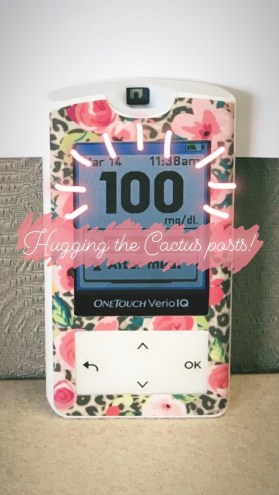
I’ve officially reached the 100-post mark on Hugging the Cactus. Wow!!!

9B0DD466-77F6-441A-9ACB-5757091FAEC0
I can’t believe I’ve already reached this milestone!

This blog debuted on October 2, 2017. I’ve spent the last eight months writing new content as often as possible, meeting more people with diabetes (both in person and online), and focusing on my personal health and well-being. It’s been an awesome ride, and I can’t wait to keep on enjoying it.

As always, thank you for your continued support. Every click, tweet, comment, and visit means the world to me, and every share couldn’t be more appreciated. Thank you for reminding me daily why this blog is so important to me and why I should continue to share my story.

Here’s to the next hundred posts – and many more after that.

Memory Monday: Cloudy and Clear

One Monday per month, I’ll take a trip down memory lane and reflect on how much diabetes technology, education, and stigma has changed over the years. Remember when…

…it was a thing to mix insulin?

Yup, I’m referring to the days of cloudy and clear insulins – also known as NPH and Regular, respectively (insert corny Neil Patrick Harris joke here). Oh, you don’t know what I’m talking about? This is going back at least 15 years, probably more like 20, to when short-acting and long-acting insulins needed to be mixed in order to avoid having to take two separate shots. I only vaguely remember mixing my insulins, but here’s what sticks out in my memory about the process:

  • It was always “clear before cloudy” – the Regular insulin had to be drawn up in the syringe first to avoid getting any of the cloudy insulin into the clear vial.
  • The cloudy insulin needed to be rolled between the hands before inserting a syringe into it…I can’t remember why. Maybe to help bring it to room temperature, or make sure it was adequately mixed?
1019C7D1-695B-4ECC-A9F2-8F63FAF6660C
I definitely do not miss the days of filling these bad boys with two different kinds of insulin.
  • Drawing the insulins into a single syringe was nerve-wracking as hell. Precision was everything.
  • Air bubbles! They ruined everything!

I certainly don’t miss the tedious process of having to draw up insulin in such a careful, precise manner. If only I’d known how much easier an insulin pump would make my life sooner…

…but I guess that just makes me appreciate my pump more.


Why I’m Thankful I DIDN’T Attend Diabetes Camp as a Kid

Growing up, the notion of diabetes camp was gently nudged into my brain each Spring. My endocrinologist and my parents would ask me, “Do you want to give it a try this year?” and my annual response, unfailingly, was “NO!”

To this day, I still don’t really know why I was so against diabetes camp. Part of the reason may be because I was a bit of a nervous Nelly growing up (okay, okay, I still am) and didn’t like the thought of sleepaway camp: It meant being away from home for an extended period of time, which made me feel nothing but anxious.

But my best guess as to why I didn’t want to go is that I felt that camp wouldn’t benefit me in any way. Both my mom and my aunt have type one diabetes, so they were (and still are) my go-to sources whenever any sort of diabetes issue crops up for me. I didn’t see how meeting kids my own age with diabetes would help me; after all, I thought I had everything I needed in my mom and aunt.

Things changed drastically for me when I started college and made the transition to caring for my diabetes independently. I got wind of a diabetes student organization on my campus and was interested in attending a meeting. That was it for me: for the next three years, I was very involved with this organization (the College Diabetes Network), eventually becoming the President of my school’s chapter and continuing to this day to volunteer for them whenever I can.

IMG_3242
I wasn’t ready for any kind of diabetes camp as a kid…but it’s a different story now that I’m an adult.

My involvement with the CDN has resulted in me meeting countless other T1Ds my own age, and it’s been amazing. I love sharing stories and learning from them. And as it turns out, most of these individuals went to diabetes camp when they were young and loved it. In many cases, diabetes camp is where they thrived and met some of their closest friends. They learned a lot about caring for their own diabetes and became more independent with diabetes management at a younger age.

But even after hearing the rave reviews about diabetes camp…I’m still thankful that I didn’t go to it when I was a kid.

Why? Because I think that a person’s journey with their own diabetes is highly personal. Like insulin-to-carb ratios or multiple daily injections versus insulin pumps, diabetes is often a disease about choices and responsibility. As an individual with diabetes, I hate being told how to handle my condition by someone who thinks they understand it better than me. I’m the one person in this world who understands MY diabetes better than anyone else. I know my body and I know what diabetes treatments and decisions are best. And for those few years of my life, I thought it was best for me to not go to camp. It was out of my comfort zone, and I refused to be coerced into going.

Perhaps in the back of my mind, I knew I’d have an opportunity later in life to connect with people my age who have diabetes. And I’m so thankful that I did because it came at a time in which I felt ready and was more accepting of my diabetes overall.

So there are no regrets for me when it comes to my choice to not attend diabetes camp. You could say that my decision to stay at home during those summers made me a happy camper…

Sorry, not sorry for the bad pun.


Training for my First 5K

At the start of the year, I told myself, this is your year. You’re going to be in the best shape of your life and finally run a 5K. I’ve never particularly enjoyed running, which is why the challenge of a 5K was more alluring than a different fitness goal. I felt that doing something I practically dreaded would make accomplishing it that much more gratifying.

But just a few short weeks into 2018, I broke a bone in my arm. I was crushed, because the kinds of physical activity I could do suddenly became severely limited. Instead of taking the injury in stride, I spent a long length of time moping over it. My exercise levels decreased and I stopped caring (for a short while, anyways) about my lean and mean pursuits. All I wanted was to heal, and heal swiftly.

Fortunately, I’ve fully recovered from the fracture, and so have my spirits. A renewed vigor took hold of me in April, and I spent many weekday mornings waking up early to complete a variety of workouts. I started to feel stronger and more confident in my athletic ability. So in the second week of May, just a few days after my 25th birthday, I decided the time was right to register for my first 5K.

And so I did, and I’ve devoted time training for it since then. It’s far from easy, but I must admit that each time I successfully complete a run, the feeling of accomplishment and pride that courses through my body makes it all worth it. It’s doubly wonderfully when I’m able to achieve in-range blood sugars before, during, and after each run.

I don’t have a convoluted strategy for stabilizing my blood sugar while running; rather, it seems to work best for me if I simply complete a fasting workout first thing in the morning. This eliminates a few variables affecting my blood sugar, including carbs consumed during a meal or insulin on board. I’ve found that I don’t even need to run a temporary basal or suspend any insulin – my body seems to do well if I’m running my normal basal rate. But with diabetes being a fickle fiend, I’m always prepared for a potential high or low blood sugar to occur on a run. In other words, portable glucose and my PDM are my constant running companions.

Race day is just a few short weeks away, and I can honestly say that I’m looking forward to it. Sure, I’m a little anxious, but I’m choosing to focus on the fact that I’m finally taking on something that tests me – and my diabetes – in all the right ways. I should be proud of that alone, but I must say, I’ll be over the moon when I get to cross that finish line.

Favorite Things Friday: Lauren’s Hope Medical IDs

One Friday per month, I’ll write about my favorite diabetes products. These items make the cut because they’re functional, fashionable, or fun – but usually, all three at once!

I’d been meaning to replace my medical ID for ages.

It was in rough shape. The medical snake symbol (a quick search on Google told me that the technical term for it is “Caduceus”) was scarcely recognizable, for the red paint that once made it stand out had peeled off a few years ago. The etching on the charm was nearly illegible due to age, and the bracelet itself was a Frankenstein creation: The original clasp it came with broke last year, so I had to transplant a mismatched clasp from an old bracelet onto it to be able to continue to wear it. All things considered…it’d seen better days.

Fortunately, I knew exactly where I should look for a new one: the Lauren’s Hope website. I’d heard about Lauren’s Hope a few years ago at a diabetes conference, and made a mental note to check it out some point down the road. Fast forward to the present and I’ve finally had a chance to shop on the site.

I was very pleasantly surprised to discover that there was a wide variety of medical IDs available. There were bracelets, charms, tags, and necklaces that ranged in style from fancy to simple. The choices were so varied that I decided to cut to the chase and check out bracelets only, since I knew that was the kind of ID I wanted.


But there was still quite a selection under that subcategory: I could choose from different metal tones, bracelet styles (cuff, stretch, woven, wrap, beaded, etc.), material types, and colors. Rather than go with something loud and flashy, I decided to stick with a basic silver link bracelet that came with an ID tag that allowed up to six lines of text to be engraved on it. I was thrilled that the space on the tag permitted so much information – I was even able to put a line on it about where I keep my glucose tablets stored.

And the part that’s really cool? The fact that the ID tag is interchangeable. This means I can go back to Lauren’s Hope whenever I want, order a new bracelet, and swap the tag from the old bracelet to the new one. It’s really refreshing to see a company understand the wants and needs of its customers so well; obviously, Lauren’s Hope gets that customization and options are important to people with medical conditions.

I’m loving my shiny, high-quality bracelet from Lauren’s Hope. It feels good to finally wear a piece of medical equipment (yes, I consider it medically necessary) that is both stylish and practical.