Bike Beyond, the Documentary: An Emotional Cinematic Experience

Last summer, a team of 20 international riders embarked on the journey of a lifetime. They spent 10 weeks cycling from New York City to San Francisco – east coast to west coast. As if this feat weren’t incredible enough, this team was comprised of individuals with type 1 diabetes.

This ride was risky enough, but throw diabetes into the mix, and it seemed impossible. Blood sugars would be a constant concern. Diabetes technology could fail. Careful watch of blood sugars could clash with the focus on cycling. Diabetes burnout could affect the riders physically and mentally.

But – spoiler alert – neither fear nor diabetes would prevent these riders from completing their arduous trip.

When Team Bike Beyond officially started their trek last summer, I remember following along as best as I could through various social media channels. I felt connected to the team: not just because of diabetes, but because I personally befriended a couple of the riders a few years ago at one of the College Diabetes Network’s Annual Student Retreats. I attended as a volunteer, and Jesse and Meagan were there as students. It’s funny how quickly friendships can form over the course of five days, but as anyone who’s gone to one of these retreats can tell you, there’s something about being immersed for a few days with a group of people who just get it. So it’s natural that we bonded over our mutually dysfunctional pancreases.

Anyways, as neat as it was to read those updates from Jesse, Meagan, and the team, there’s no way that words could capture what they were actually experiencing out on the road. I think that’s why watching the documentary was so emotionally captivating to me: Within the first few minutes, tears were rolling down my cheeks as the bikers explained the nervous energy they felt in the days leading up to the ride kickoff. In fact, my facial expressions changed so frequently throughout the film that I’m sure it was comical. One moment I’d be beaming, and in the next my jaw would drop open. I’d laugh when the riders were being goofy together on camera, and marvel with them as they took in stunning scenery across the country.

Overall, the documentary was incredibly well done. Victor Garber’s narration was fantastic – smooth and clear without taking attention away from what was happening onscreen – and the visuals were beautiful. I liked how footage from the riders’ GoPro cameras was incorporated so viewers could get an accurate representation of their perspectives from the bikes. It made me appreciate the physical intensity of the ride that much more, because diabetes aside, cycling such a long distance filled with rocky roads and steep inclines is extremely demanding on the body.

My recommendation? Check out the trailer. I included it above. I guarantee it’ll pique your interest and stir your emotions. You’ll want to watch the full documentary, which you can get here. After watching it, I think you’d agree with me that Team Bike Beyond crushed their goals of raising T1D awareness and eliminating stereotypes by completing this journey.


Baseball, Beers, and ‘Betes

I really wish that I could write a blog post entitled “Bears, Beats, and Battlestar Galactica”, and have it relate to diabetes in some way…but I guess I’ll have to deal with the fact that it’s not easy to work quotes from “The Office” into a diabetes blog.

Guess that this title will have to do! Plus, it really does tie into the content of this post, so…

There’s nothing like a baseball game in summertime. I admit that I’m far from a sports fanatic, but I do take pride in my Boston teams (namely, the Red Sox and the Patriots). When I found out that the Red Sox would be playing against the Nationals when I visited Washington, D.C. last week, I was pretty pumped and decided to buy tickets. After all, what better way to break up the workweek?

3FCC0E85-59B0-44E2-8EA0-8B6416859719
An important note: The Red Sox crushed the Nationals at this game. Final score: 11-4.

It was a great choice. Even though it was a sweltering 100 degrees out, I had a fun time with friends. We drank beers, ate burgers/French fries/hot dogs, and cheered loudly for the Sox. My diabetes stayed far from my mind for once as my blood sugars played nicely, which was pretty surprising to me because I wasn’t exactly consuming low-carb items. I think that walking around the stadium in the heat helped combat the starchy foods, though I did have to bolus for a high blood sugar by the time we got home from the game.

But the point is, it felt wonderful to not worry about my numbers, even if it was for just a few hours.


A Bad Case of T1D FOMO

You might be staring at the latter half of this post’s title and asking yourself, “What kind of acronym is THAT?”

Let me help you out: The title is meant to indicate that I’m suffering from a bad case of type 1 diabetes-specific fear of missing out. (T1D FOMO…if it wasn’t a thing before, it is now.)

I decided that this was the best way to describe how I’m feeling about missing out on tons of excellent diabetes conferences, events, and meet-ups this summer. I think it’s striking me particularly hard this week because I know that the Friends for Life conference is about to kick off in Orlando. That one is special to me because it’s the first conference I ever attended, and it’s hard to believe that it was already five years ago.

1A21FA0F-4B51-4F32-A3D7-293B7C269EB4
#SquadGoals from my first conference, which was already five years ago.

Why am I unable to go to most of these gatherings? And what’s so great about them, anyways? Well, to answer that first question, there’s several reasons why I have to skip many of them. The biggest reason is financial: The cost of conference attendance can be astronomical. Between airfare, hotel, registration, and various other conference fees, you’re easily looking at spending a minimum of $800 – and that’s if you can find cheap and direct flights to the destination. The other side of the coin is that I’d have to reserve my limited vacation time for these events, and potentially sacrifice time off that I could’ve spent with family and friends. I understand that logistically speaking, it makes the most sense to have the majority of these events in the summer months – kids are done with school, generally good weather makes it easier to travel, etc. But having to choose between a diabetes conference that’s bound to be a wonderful time and a highly-anticipated vacation with loved ones is a choice I’d rather not make.

So you think that those factors would make my decision easy, but it isn’t. I hate not going to these events because I know firsthand how magical they are. It’s really neat to meet up with so many people from the T1D community all at once, and it’s even more incredible when you get to shake hands or embrace someone you’ve connected with online, but hadn’t met IRL (in real life) yet. Whether the conference is just a weekend or several days long, it’s awesome to feel “normal” throughout the whole thing. You’re among people who don’t look at you funny when you test your blood sugar before a meal, and the chorus of beeps and buzzes from medical devices never get mistaken for cell phones going off. Sure, I can virtually attend a conference by scrolling through my social media feeds and reading updates from T1D attendees, but it just isn’t the same. While it makes me happy to see them having a fabulous time together, reunited at last, I can’t help but feel slight pangs of jealousy – this is where the FOMO comes into play – as I imagine everything I’m missing out on.

I know I’m not alone in this feeling – there are many others in the diabetes community who can’t go to conferences for several different reasons, even though they want to go. And I can take comfort in the fact that even though I couldn’t go to a bunch this time around, there will always be more in the future, and some will be more affordable than others.

My bad case of FOMO will go away before long, and in the meantime, I know that there are probably tons of other T1Ds who are attending their inaugural conferences this summer, and who will experience what I did five years ago for the very first time. And that thought puts a smile on my face.

Happy Birthday, America!

Today is the Fourth of July! I’ll be spending the day in our nation’s capital. While I’m not entirely sure what the day will bring, I do know that I’m bound to feel a swell of patriotic pride, as I imagine the vibe of Washington, D.C. this time of year oozes red, white, and blue.

439D9CEC-9F02-485C-811F-C60BF60811ED
The Stars and Stripes

As much as I love my country, I still think it has a long way to go. I promised myself I would refrain from getting overly political on my blog (for many reasons), but I will say this one thing: Many things about healthcare in America need to change. I found an article on the New York Times recently that opened my eyes to the dire state of the global insulin crisis. Here are some facts from that article:

  • One in four patients with diabetes are cutting back on insulin because of cost.
  • The typical cost of one vial of insulin is $130. One vial of insulin lasts no more than two weeks for a person with diabetes.
  • There is no generic form of insulin. This means that prices skyrocket since there is no competition among generics.

Why is this happening? Why do families find themselves being forced to choose between feeding their families or affording life-saving medication? It’s unacceptable that profits are valued over life in our great nation.

Things need to change. The politicians and policymakers who have the power to make right and just changes need to take a good, hard look at Americans who are crying out for help and struggling to simply live.

This topic is worthy of thousands more words, but I’ll leave it at that for now. Maybe it will open someone else’s eyes, too.

For now, have a beautiful Independence Day doing whatever it is that makes you feel free – and be safe!

Diabetes: A Condition of Consistency

“Consistency is key” is a well-known adage for a reason: It applies to many things in life, including diabetes.

This has resonated more and more with me over the last few months, as I’ve experienced greater interruptions in my day-to-day routines. The most obvious change has affected my Monday through Friday lunch hour at work. I usually need to go home three out of five days to take care of my puppy – feed him, play with him, and make sure he hasn’t totally destroyed anything in the few hours since I last saw him. I don’t mind this at all, because I love my little Clare-bear, but on days that I have to be with him, my diabetes is definitely affected.

For starters, I have to eat my lunch much later than I normally do on non-Clarence days. Technically, I could eat my lunch when I go home to see him, but I have a very narrow window of time – approximately thirty minutes – to be with him. It doesn’t seem fair for me to go home, pour out his kibble, then spend the majority of our half hour together putting together and eating my own lunch. So I spend my lunch break giving the puppy my full attention, which makes us both pretty happy.

Clarence
My Clare-bear certainly knows how to keep me, and my diabetes, on our toes!

Eating lunch during my allotted break is ruled out, so I have to decide whether to eat it before or after my stop home. I usually end up forcing myself to wait until I get back from feeding Clarence to eat, but this is easier said than done for a few reasons: Sometimes, my blood sugar will crash while I’m with the dog, so I have to eat a snack to correct it because my actual prepacked meal is waiting for me in the office refrigerator. Or I have to scramble from one meeting to home and then back to the office for another meeting and won’t have a chance to sit and eat until 2 o’clock, which means that I have to sit through an afternoon meeting without a full attention span because all I can think about is my grumbling stomach. On those days, I’m pretty hangry by the time I get to eat, and even more so irritated when my blood sugar retaliates at me later on for waiting so long to eat.

That being said, I’ve had to make peace with the fact that my weekday/lunchtime blood sugars will be a bit all over the place. I know that things will be easier when Clarence gets older, but for now, I’m determined to enjoy his puppy-hood without diabetes interfering too much. And if nothing else, it reminds me how important it is to stick to the basics with diabetes: Eat regular, healthy meals and the habit will reflect well on blood sugar and A1c.

Favorite Things Friday: Mini Boxes of Yogurt-Covered Raisins

One Friday per month, I’ll write about my favorite diabetes products. These items make the cut because they’re functional, fashionable, or fun – but usually, all three at once!

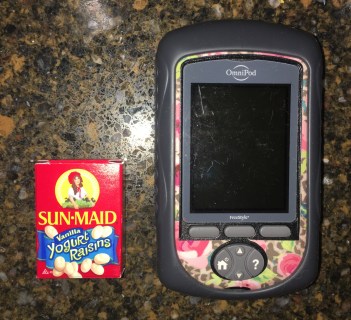
Mini boxes of yogurt-covered raisins is an oddly specific kind of food, but they’ve literally saved my life (and my mom’s) hundreds of times.

I’m almost certain that I introduced these raisins into our low supply kit because I was looking for something that 1) was portable 2) had 10-15 grams of carbs 3) could be quick and easy to consume and 4) wasn’t glucose tablets (I get sick of them). I must’ve been browsing through the aisles of the grocery store when I found a bag containing 10 mini boxes of raisins. Clocking in at exactly 10 grams of carbs per box, they seemed to fit the bill nicely. I brought them on a trip to Disney World soon after buying my first bag, and that sealed the deal for me. They proved to be super convenient throughout the trip and helped prevent me from over-correcting my lows, which was huge for me.

E132E84E-66A6-422A-BCE6-540FE52192D2
A box of raisins adjacent to my OmniPod PDM. I can easily fit several boxes of raisins into my purse, along with my other diabetes supplies.

Since that trip, the raisins have become a go-to low treatment for me and my mom, who agrees that they work just as well as glucose tablets. They’re much tastier than glucose tablets, and qualify as a healthier way to treat a low. As tempting as it might be to treat with Skittles or Starbursts, I struggle to control my intake of the candy when dealing with a particularly icky low. The raisins are already perfectly portioned, so that eliminates the can’t-stop-won’t-stop (eat ALL the foods!) feeling that can make dealing with low blood sugars difficult.

The raisins are excellent on the go, too. I can pop a box of them in the car, at my office desk, in the gym, or at church. I’ve even whipped them out at bars, and my friends get a bit of a chuckle when I down them like a shot of alcohol. But honestly, they’re so discreet and go down so easily that most of the time, people don’t even notice that I’m eating them. And if people aren’t noticing yet another part of my otherwise very prominent diabetes care kit, then that suits me just fine!

The T1D Taste Test: My Unofficial Ranking of Drugstore Glucose Supplements

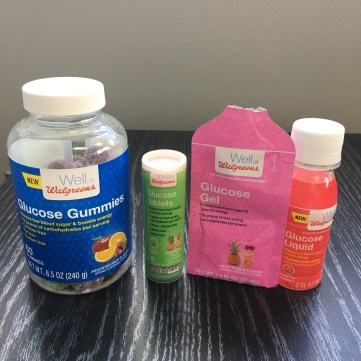
You may have heard of glucose tablets, but what about glucose gummies? Or liquid glucose, or glucose gel? Have you tried any of these forms of glucose?

B40CD359-8AE4-46A5-88E0-0E745CDE2A8C
The four forms of glucose (that I’ve tried).

I’ve used them all, and I’ve formed some pretty strong opinions about each of them. I thought it’d be fun to rank them in order of most appetizing to least appetizing, because while they can effectively and efficiently correct low blood sugar, they certainly aren’t created equally:

  1. Best Tasting: Glucose Tablets. I can hardly believe that the most boring variety is the winner here, but it blows the competition out of the water for several reasons. For starters, glucose tablets come in an array of flavors. Orange, raspberry, fruit punch, grape, tropical, and sour apple are among the flavors I’ve tried over the years, and most of them are palatable. Plus, glucose tablets are most akin to actually candy: I’ve described them as giant Smarties to inquiring friends in the past. While actually Smarties are more fun to eat, glucose tablets are their closest counterpart in the diabetes world, making them a number-one choice in low blood sugar situations.
  2. Runner-Up: Glucose Gummies. I’m awarding second place to glucose gummies, mainly because of their novelty. It’s not particularly a standout in other categories like taste and texture. The gummies only come in three flavors: grape, orange, and apple, leaving something to be desired in terms of variety. And all three of those flavors taste a little…off, like there’s a little too much artificial additives going on. Maybe this was done deliberately to distract from the texture of the gummies, which tends to be hard/stale in my experience. It’s nice that the gummies have a layer of sugar on them to convey the likeness of real gummies, but that stuck-to-your-teeth feeling makes it harder to appreciate the gummies for what they are.
  3. Third Place: Glucose Gel. I’ve only ever found glucose gels in the fruit punch flavor at Walgreens – do they actually come in other flavors? Besides being one-note, the gel is a unique texture situation…not quite a liquid, not quite a solid. Gels aren’t a mainstay in my low blood sugar kit because I’m not fond of having to slurp them out of the pouch like a tube of Go-Gurt; in fact, I’d much rather have yogurt from a plastic tube than a gel because the yogurt is much tastier. The gel is just too artificial, with a medicinal aftertaste. And it doesn’t help that the consistency of it reminds me of hand sanitizer.
  4. The Loser: Glucose LiquidIt’s surprising that the glucose liquid wound up in last place, because on the surface, it had a lot going for it. I liked that it came in a small bottle and it seemed like it would be super easy to consume. All I’d need to do is pop the cap off and swig it down. But MAN, the taste was HORRIBLE! I thought I’d like the mixed berry flavor, but it tasted so supremely saccharine and fake that I could scarcely force myself to swallow it. I know, I know, it’s liquid glucose, it’s supposed to be very sweet. But this stuff was just over the top. I definitely will not be buying glucose liquid again any time soon. I’ll stick with my tried-and-true tablets.

Do you agree with my rankings? Did I miss any form of glucose that can be bought in most drugstores, and you think I should give it a try? Let me know in the comments!

Memory Monday: The Diabetes Diet, 100 Years Ago

One Monday per month, I’ll take a trip down memory lane and reflect on how much diabetes technology, education, and stigma has changed over the years. Remember when…

…insulin had yet to be discovered? Of course you don’t actually remember it, unless you were born in or prior to 1921 (and if you were, wow!!! Thanks for checking out the blog!).

Anyway, prior to the groundbreaking discovery of insulin, people with diabetes lived difficult – rather miserable, actually – lives. I started reading a book called Breakthrough: Elizabeth Hughes, the Discovery of Insulin, and the Making of a Medical Miracle a little while ago. This book has made me realize just how fortunate I am to live during a time when insulin is around (even if it is grossly overpriced).

Many parts of this book have surprised, horrified, and downright depressed me. One of the more shocking things that I’ve learned from it, though, is the diabetes diet that was prescribed to patients in the early 1900s. Patients like Elizabeth Hughes, the T1D daughter of a U.S. politician, were expected to follow a strict meal plan upon admission to the Physiatric Institute in Morristown, New Jersey. Imagine following an eating plan like this every day:

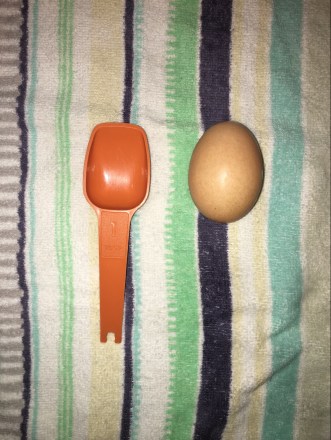
Breakfast – One egg with two and one-quarter tablespoons of string beans boiled three times, and one tablespoon each of cream and coffee.

10 A.M. – Half a small orange for a snack.

12 P.M. – Two and a half tablespoons of cod with two heaping tablespoons of Brussels sprouts boiled three times, as well as five small olives and a half pat of butter…with a cup of tea to wash it all down.

Dinner – One egg and one egg white, 2 tablespoons of spinach (yes, boiled three times), with a half pat of butter.

Oh, scratch that part about following this diet every single day – patients had to fast one day each week. No food was permitted, at all.

Does that not sound vile?

I mean, I love eggs, and I happily eat veggies on a daily basis. But I’m certain I’d get sick of them no matter how they were prepared. And veggies boiled THREE times? I would think that they’d be reduced to mush, which, according to the book, is the point. Boiling them so many times would ensure minimal carbohydrate consumption since the nutrients would basically be cooked out of the vegetable. Plus, with portions so tiny, it’s hard to imagine that anyone ever felt full after consuming a “meal”.

DD0B7735-4A89-42C5-81A4-732B91E1F4BF
For context, one egg is about the same size as one tablespoon, meaning that portions on this diet plan were miniscule.

This extremely restrictive diet left patients yearning for pictures of food they saw in magazines, as well as severely undernourished. Following this meal plan practically guaranteed that patients would become emaciated. In fact, by the time 15-year-old Elizabeth Hughes left the Physiatric Institute, she weighed a mere 45 pounds – less than half what a healthy girl that age should weigh.

Even though I haven’t finished the book yet, it already serves as a reminder to be grateful for what I’ve got in this day in age: not just insulin, but amazing technology, wonderful doctors, and radical ongoing research in the diabetes field.

All of today’s advancements make me hopeful for the possibility of the eradication of diabetes, maybe not too far after the 100-year anniversary of the discovery of insulin.

Diabetes Self-Care: Massaging Away my T1D Stress

Sometimes, you just gotta treat yo’self. (Parks and Recreation, anyone?)

One of my favorite ways to do that is through massage. I can’t think of a more relaxing way to unwind from various sources of stress than massage. Especially when your shoulders and neck are so tense that it feels as though they’re permanently knotted up.

So I went for a one-hour massage a couple of weeks ago to see if I could successfully take a mental break from everything while addressing my muscle tension. And I’m so glad I did that for myself. Plus, it didn’t hurt that my massage therapist was super attentive when it came to my diabetes.

IMG_7138
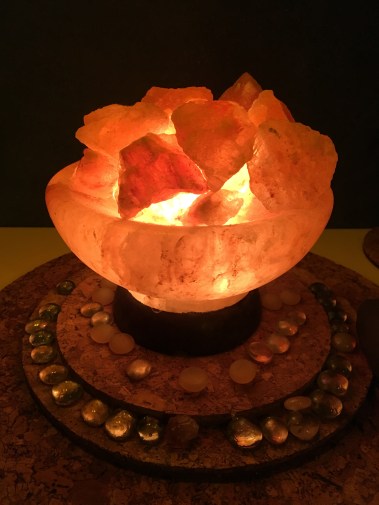
What makes for a good spa experience? Himalayan rock lamps, calming music, and silent diabetes devices.

I explained to her that I was wearing a tubeless pump on my lower back, and that she should feel free to massage around it. I also mentioned that if she happened to hear anything buzz or beep during our session, she should just disregard it – if my pump or CGM alarmed, I’d take care of whichever device that was going off at the end of the session.

The massage therapist couldn’t have been more reassuring. She let me know that she previously worked as a physical therapist and had experience in the field for more than 10 years. As a result, she’d seen just about everything over the course of her career – an insulin pump and a glucose monitor were nothing.

That short conversation before the start of the session really helped it start off on the right foot. I felt much better knowing that she wouldn’t be freaked out by my devices. My openness to talk about my diabetes also inclined her to ask me if it affected certain parts of my body more than others, and if she should be sensitive to that throughout the session. I appreciated her attentiveness, and she asked follow-up questions throughout the massage to ensure I was getting the best experience possible.

Not only did I leave feeling like a million bucks, but I also left feeling glad that my CGM and pump stayed silent throughout the one-hour massage: allowing me to truly free my mind from diabetes, even if it was just for a short time.

Dad Appreciation Post

Father’s Day was yesterday, but as I did the day after Mother’s Day, I want to use today’s blog as an opportunity to express my appreciation for dads: Namely, my own father.

Besides being the family patriarch, my dad is a firefighter/EMT. He makes his family feel safe with his emergency preparedness knowledge and skills. He also deals with his diabetic wife and daughter on an almost-daily basis, which warrants, at the very least, a ginormous golden trophy with his name engraved on it in fancy script.

18DF9F6C-8133-4E60-9EF3-F89103EA0C66
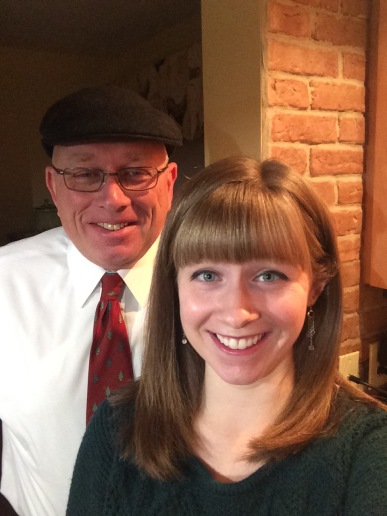
A dad and his daughter.

That’s because he sees the ugly side of diabetes from time to time. The side that causes blood to spurt out of mom’s abdomen when she removes a pod that struck a vein. The side that causes me to lash out, because my blood sugar won’t seem to come down from a sticky high, no matter what I do. The side that causes mom and I to lose sleep, because we’re treating another middle-of-the-night low blood sugar. The side that forces mom and I to be prepared for any and every possible diabetes scenario that could occur while traveling. The side that causes us to cry, because we just can’t deal with diabetes today.

And he’s there through it all.

He’s there to apply pressure and gauze to the bloody site. He’s there, feeling just as upset as I am, because he just wants my blood sugar levels to come back down, too. He’s there to make sure mom and I have enough glucose tablets or juice to bring our levels back up. He’s there, keeping us calm as we pack for our next trip and taking care of all the travel arrangements. He’s there to comfort us when we need him to, and he hates that we live with diabetes – probably even more than we do.

He’s the kind of guy who says he’d trade his pancreas with us in a heartbeat if it meant we wouldn’t have to live with diabetes anymore.

He’s the kind of guy I’m proud to call my dad.

Thanks, Dad, for helping me handle my diabetes over the years, and supporting every venture (diabetes and otherwise) that I pursue.