I Want to Love my Dexcom G6, but…

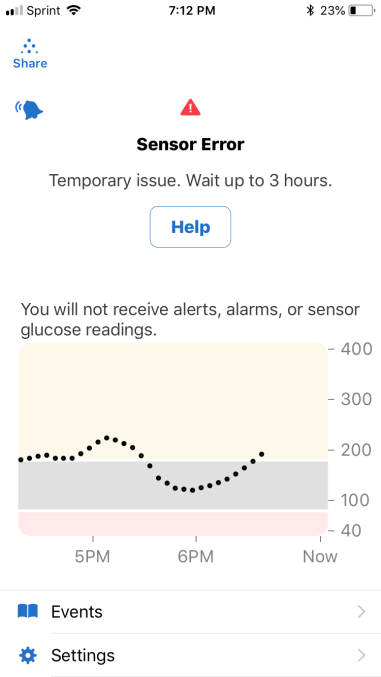
…this keeps happening on Day 9 of wear:
8C471733-1CC5-40D9-81D2-088D06A5B6D2

I don’t understand why the sensor error occurs. But it almost ALWAYS happens on the ninth day: My sensor will work wonderfully and provide me with extremely accurate data, but then BOOM it’ll sporadically stop working and produce graphs like the one above that are virtually useless. Even worse, there’s no telling when exactly it’ll start communicating again with my receiver. The error message SAYS I’ll get data back within 3 hours, and I normally do, but there’s a big difference between going 10 minutes and going 2 hours without any readings.

This device has so many good things working in its favor: longer wear, painless insertion, increased accuracy, compatibility with acetaminophen, slimmer profile. But I’m of the opinion that if something says it will totally function for a certain length of time, then it WILL. The fact that it doesn’t, and that this has occurred more than once to me, is alarming and frustrating.

The only possible explanation I’ve come up with is that maybe the upper arm isn’t a great place to wear the G6. As we all know, Dexcom devices are FDA approved to be worn on one location, the abdomen. However, that hasn’t stopped the cheeky diabetes community from wearing it elsewhere. Besides the upper arm, I’ve seen people with it on their forearms, thighs, and calves. I even know one clever person who chooses to wear it on the upper bum during the summer months to prevent tan lines (hilarious and brilliant, IMO). I choose to wear my CGM on my upper arm most of the time because it’s comfortable there, and I like to give the sites on my belly a break. But maybe it’s time I start wearing it more frequently on my stomach, the “officially okay” site, to see if that prevents these ridiculous sensor error scenarios.

What I’d like to know in the meantime, though, is has this happened to you or anyone you know using the G6? Has anyone pinpointed a cause, and is it worth notifying Dexcom of this issue? I’d love to hear your stories and thoughts – drop a note in the comments or get in touch with me directly!
Any Pods to Spare?

Not too long ago, the following message appeared in the inbox of one of my social media platforms:

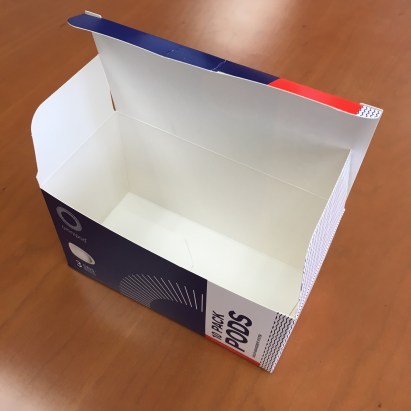
I’m so sorry to bother with something like this. I down to my last pod. And.. currently I’m having insurance issues.. I was wondering if there were any pods you could spare? I’m trying to search around. Or if you know anyone that does have extras? Or samples? I would hate hate to return to multiple daily injections.. I know u understand that. If not it’s ok. Sorry to bother. I don’t know where else to try apart from everything else I’ve tried

When I read it the first time, my heart immediately sank. The message was fraught with desperation, as evidenced by the typos and fragmented sentences. My gut reaction was to reach out to this person and let them know that everything would be fine, that there had to be an option out there that would help them.

E02996A8-72B9-4AC1-866C-D60F0BCF64DC
No pods to spare.

My next reaction, though, was pure skepticism. I’m not proud to admit that, but here are the facts that I was facing:

  1. I did not know this person. I tried to look at their profile to see if I could learn more about them, only to discover that it was private. I couldn’t see any of their information, other than a minute profile picture and numbers regarding their followers/activity.
  2. This person said they might be forced to go back to MDI. Personally speaking, if I ran out of pods and had to go back to shots, I wouldn’t like it – but if it was my only option, then of course I’d do it. I did it for something like 17 years before ever trying a pump. It sounded like this person wouldn’t want to do it, but…
  3. Most importantly, I do not have any pods to spare. I’m not sure why this individual thought that I did. It seemed like they’ve been asking as many people as possible on social media for pods, which makes me believe that they’re exploring the #omnipod or #podder hashtags. Regardless, I rely on regular shipments (every three months) from Insulet in order to maintain the bare minimum of pods that I need. And I can’t exactly give up “spare pods” that I don’t even have.

As horribly as I felt for this person, I had to take into consideration the facts that were in front of me, as well as the unfortunate truth that you can’t trust everything on the Internet. I told them that they should try to reach out to Insulet for assistance, and that I would be hoping for the best for them. I know that my kind words probably brought little comfort, but it was all that I had to offer to this total stranger.

The whole exchange haunts me. That’s why I want to know…

What would you have done if you were in my shoes?

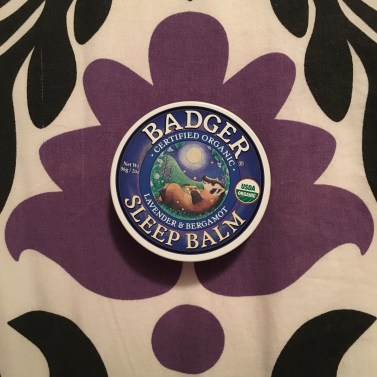
Favorite Things Friday: Lavender Sleep Balm

One Friday per month, I’ll write about my favorite things that make life with diabetes a little easier for me.

Diabetes and sleep can be mortal enemies. Some nights, I can sleep soundly for a full eight hours. Other nights, my sleep is interrupted three or four times by my CGM, buzzing and beeping to alert me to low or high blood sugar. It’s just as annoying as it sounds, and it’s even worse when I can’t fall back asleep after correcting accordingly. And even though I only experience interrupted sleep like this on a sporadic basis, that doesn’t make getting a sound night of sleep any less important to me.

And luckily, I’ve found something that helps me accomplish just that: lavender sleep balm.

8B4318E1-EFAC-49C4-B73F-832CD06F850E

I stumbled across it in a Target store a few months ago. I’d always known about aromatherapy and its alleged benefits, but I was definitely skeptical about it. How was I supposed to believe that sniffing essence of, well, anything would boost my mood, erase stress, or lull me to sleep?

I brushed my doubts aside and decided to give the balm a try. The instructions were simple: Massage a bit of it onto my pulse points, jump into bed, and let the soothing scents of lavender and bergamot calm me down into a blissful sleep.

The first time I tried it, I applied it to each side of my neck and on my wrists, dabbing it into my skin like a perfume. I breathed it in deeply – even if this stuff didn’t do what it promised, at least it smelled really nice. I’ve always liked the smell of lavender.

And then I don’t remember what happened next, because soon after I got into bed, I fell asleep. It…worked? And it has seemingly continued to work every night that I’ve remembered to apply it…

Don’t get me wrong here – I don’t think this balm is equivalent to a magical sleeping tonic or anything like that. But I do think that it’s a nice, relaxing thing to incorporate into my bedtime routine. I strongly suspect that the self-care aspect of it is what truly calms my mind and body down. Who knows, though? Maybe I should do a little more research into aromatherapy and learn the science behind it.

In addition to helping me sleep peacefully in spite of my diabetes, maybe it could even help me deal with the stress that it can sometimes inflict on me, as well.

The Sounds of a Blood Sugar Check

What does a blood sugar check sound like, exactly? And why would I want to capture those sounds in words?

I was thinking about it the other day – the precise ritual that is a blood sugar check. It involves very distinct sounds from start to finish.

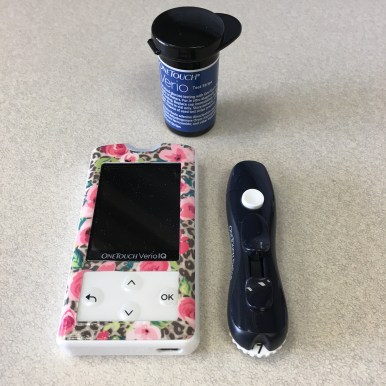
The ziiiiiiiiiip of opening up the meter case. The soft pop from flipping the cap off a vial of test strips. The pulling back of the lancing device to get it ready – click – and choosing a finger to draw blood from before pressing the button to prick it, a sound that’s a bit like a pow that ends in a dull thud.

301B8560-5345-4434-97C7-F0E99374A78B
These three things make very distinct sounds.

I’ve been in rooms filled with other T1Ds checking blood sugars all at the same time. It’s a chorus of the aforementioned sounds that are so recognizable to anyone with diabetes that they can’t be mistaken.

Sounds that punctuate our lives multiple times each day.

Sounds that help us make so many decisions – from mealtime boluses to deciding whether to have a snack before a workout or not.

Sounds that are a constant reminder of diabetes and its perpetual presence.

Sounds that will be there, always…until there’s a cure.

My New Favorite Low-Carb Recipe

The other night, I had two of my close girlfriends over for a couple hours of chatting and snacking. I’d thrown together a veggie tray for us to munch on and mentioned to my friends that I had tons of vegetables in the fridge that I wanted to try and use up in the next few days. They asked what I had, and I went through the list: tomatoes, snow peas, carrots, celery, peppers, and zucchini. At the mention of “zucchini”, one friend asked if I’d ever made zucchini pizza before.

My ears perked up. Zucchini pizza? I’d heard of making low-carb pizza using keto crust or even cauliflower crust, but not zucchini.

She told me how easy it was to make what she described as zucchini pizza bites: Cut up a zuke, top the slices with marinara sauce and cheese, and toss it in the oven. It was such a simple recipe that I decided to scour the Internet for ways to zest it up a bit.

That’s how I came across zucchini pizza boats, my new favorite way to consume pizza-esque food without all the guilt.

C856214C-24B7-4091-9775-B009E15BCF70
One half is shorter than the other…because I couldn’t resist tasting my creation before snapping a pic. Oops!

Here’s how I made ’em:

  1. Preheat oven to 425 degrees. Cover a baking sheet with tinfoil – this makes clean up easier.
  2. Cut zucchini in half, lengthwise. Pat the insides dry. Place both halves onto the baking sheet.
  3. Brush olive oil on each half. Sprinkle garlic salt on top.
  4. Spoon marinara sauce (or any kind of red pasta sauce) on top.
  5. Sprinkle any kind of shredded cheese you like on top (I used a Mexican blend), followed by Parmesan cheese.
  6. Add mini pepperonis on top. Bake in the oven for 12-15 minutes or until the cheese has melted nicely on top.

And that’s it! Incredibly quick, easy, tasty, and filling. I ate these with a small serving of roasted Brussels sprouts and chicken meatballs and I was super satisfied. The best part is that I barely bolused for this meal and wound up with a fairly straight CGM graph.

I’ll definitely be prepping zucchini pizza again in the future, and maybe I’ll even add a few more carbs into the mix to see how my blood sugar fares.

Feeling Pretty with Diabetes

Diabetes can be an ugly disease.

It’s defined by finger pricks, drops of blood, infusion site bruises. Diabetes rarely leaves beautiful markings behind on the body; rather, it can make me feel unsightly.

Needless to say, diabetes occasionally makes me feel worse about my body. I try to project body confidence when around others, but on the inside, I’m terribly self-conscious about the way I look.

So that’s why it was wonderful to feel pretty with diabetes this past weekend.

11CE0F9A-770B-479A-B621-225020B8512B
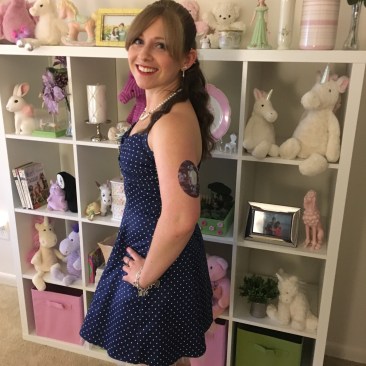
Unicorns on my patch and in the background. Because you can’t be surrounded by too many unicorns. If only someone would tell that to my blood sugar…

I got all dressed up to go to a “punk prom” that my friend helped organize. The night was all about singing along to the angst-filled tunes of our youth, listening to local bands jam out onstage, and getting glamorous so we could pose for an endless number of photos with fellow attendees.

In the hours leading up to the event, I was a bit anxious about wearing my insulin pump and CGM in visible spots. They didn’t exactly match the dress I’d dug out from the bowels of my closet (and that I’d last worn in the 9th grade). But as I applied hairspray to my carefully coiffed curls, it hit me that I should just own the look. Sure, nothing about boring medical adhesive or the words “Dexcom G6” screams formal wear, but I had a couple tricks up my sleeve that could doll up my gear nicely.

Namely, I had Patch Peelz. Created by the folks over at Pump Peelz, this patterned tape could make my CGM look fancy. Between the unicorn print and the dark purple and blue color scheme, the patch would look like it was styled to match my dress. I couldn’t help but beam once I was 100% ready for the evening. Coordinated aesthetics aside, I felt like one of the unicorns on my patch: magical, vivacious, and yes, pretty.

T1D and Cosmetics: My Thoughts on Jeffree Star’s “Blood Sugar” Palette

One of my many interests is makeup: shopping for it, applying it, experimenting with it. I love that it helps enhance certain features of my face, and nothing makes me happy quite like a glittery eye shadow palette or a fresh tube of bright lipstick.

A dear friend of mine shares this slight obsession with all things related to cosmetics/skincare/beauty products. Often, she’ll text me when she scores a good deal on a high-end product, and I’ll message her with details on my new favorite facial mask, and we’ll bask in our delight together.

So I wasn’t too surprised when I got a text from her a few weeks back that showed a picture of a new eye shadow palette she discovered online. She captioned the photo: “If this palette isn’t on your radar it needs to be. Just for the title.”

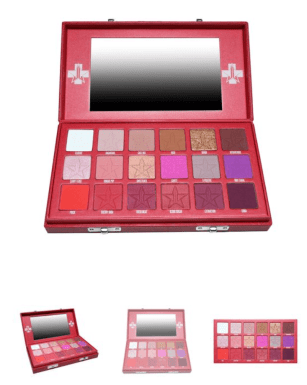
Here’s the palette she was talking about:

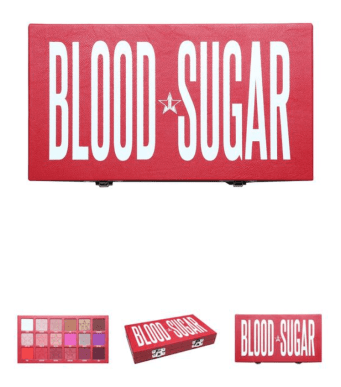
61f2a931-4142-4b80-950d-b7fd79d0f75b.pngdef9fa2c-a465-4bb3-b66d-f04c9f03071d.png


Nope, your eyes aren’t playing tricks on you: This palette is called “blood sugar”. My first reaction was OMG I NEED TO BUY IT. I was curious to see if it was created with T1D in mind, so I did a little more research on it.

Jeffree Star, a well-known makeup maven and cosmetic creator, is behind this particular palette. According to a video posted on his YouTube channel, and in Star’s own words, the palette got its shape and its name because:

I was very inspired by like doctor medical boxes. I’m very into the medical field in general. I love reading books and watching documentaries on Netflix. I am just very into that whole thing…”

So right away, I understood that this palette was NOT created with diabetes in mind. But I wonder whether it would’ve behooved Star to have done a little more research before naming some of the shadows in the palette…

I don’t take issue with “glucose”, “blood sugar”, “prick”, or “ouch” being the names of a few of the shades; however, I don’t think it was particularly wise to use “coma” as a shadow name. Yes, coma! In this context, it could be misconstrued, for sure.

As I watched his palette reveal video, I kept waiting for Star to offer up some sort of legitimate medical knowledge that might explain his reasoning for naming the colors comprising the kit. But no such luck. I couldn’t help but scoff by the time he reached the color he dubbed “coma” – he talked about how he wanted the stamp in the eye shadow pan to be the “medical symbol” (which is more formally known as the caduceus). The fact that he so easily (and seemingly carelessly) glamorized a coma AND the symbol that graces most medical IDs by naming a rich maroon-hued eye shadow after both…is something that just leaves me scratching my head.

Now I’m not someone who is necessarily “politically correct” at all times, and I don’t think I’m being oversensitive by having a negative reaction to this beauty product. Needless to say, I didn’t end up purchasing the palette, because I don’t want to support something that I find somewhat insulting and ignorant.

Jeffree Star is obviously extraordinarily talented and makes beautiful cosmetics, but I think he should consider a different approach the next time he gleans inspiration from something (such as the medical field) that he isn’t well-versed in.

Memory Monday: The First Time I Met an Endocrinologist that I Didn’t Like

One Monday per month, I’ll take a trip down memory lane and reflect on how much my diabetes thoughts, feelings, and experiences have unfolded over the years. Today, I remember…

…the first time I met a diabetes doctor (endocrinologist, or endo for short) who I didn’t like. At all.

I knew right off the bat that we would be a bad fit, because he started the appointment by sharing his own blood sugar with me (as he was also a T1D). “Oh, I’m 136 right now…that’s a bit high, so I’m going to take insulin for it.” He reached for his insulin pump and I stared at him, nonplussed. Since when was 136 a “high” blood sugar? Why was he sharing this with me? If his own target blood sugar range is so narrow, then what the hell is he going to think of me when he reviews my own data?

C0E4AC20-C524-432B-8F8C-8161C2F776CD
The face I make when I think about that awful appointment and the negative thoughts it gave me about my A1c.

The appointment only went downhill from there. At this point in my life, I was a brand-new college freshman, and my diabetes was simply no concern of mine. So my blood sugars and A1c weren’t great.

And I got scolded for it.

Throughout the entire appointment, I felt judged. I held back tears at points because I felt that I had to explain myself to this guy, that I had to somehow get him to understand that the transition to college hadn’t been easy on me, and that’s why my A1c was high. But I couldn’t get the words out. Instead, I sat there, numb, as he lectured me on what I should and shouldn’t be doing to take care of my diabetes. He kept insisting that I go onto a pump, which at that time, was totally scary to me – a non-option. He was so adamant that I got frustrated and shut down towards the end of the appointment, nodding and smiling tightly at his words.

I’m certain that I cried on the way home from that appointment out of frustration over how it went. I didn’t feel motivated to take better care of myself; instead, I felt rotten. I realized that just because someone is a doctor, it doesn’t mean that they necessarily know how to convey messages about health to patients. In other words, not everyone has an appropriate bedside manner.

Fortunately, that was the first and last time I saw that doctor. He moved to a different practice weeks after I saw him. My next endo appointment was with my current doctor, and seven years later, it’s one of the healthiest doctor/patient relationships I’ve ever experienced. When I look at it that way, it was worth experiencing the worst in order to get the best.

Why I Decided to do a 3-Day Cleanse (and How it Impacted my Blood Sugars)

No carbs. No dairy. No meat. No processed foods. Strictly vegetables, fruits, and shakes for the next three days. 72 hours – I could do it, right?

Last week, I completed a 3-Day Cleanse. My goal was that it would help me feel a little bit refreshed after a couple weeks of nonstop gluttony. I figured it’d help reset my system and make me feel less bloated and tired. I didn’t want to do a typical “cleanse” though, the kind that forces you to stop eating any and all food and stick with juices. That’s why I did this particular program – I would be eating real foods on a regular basis throughout all three days. The bonus was that it would be foods I’m familiar with and are generally low carb, which could only mean good things for my blood sugar.

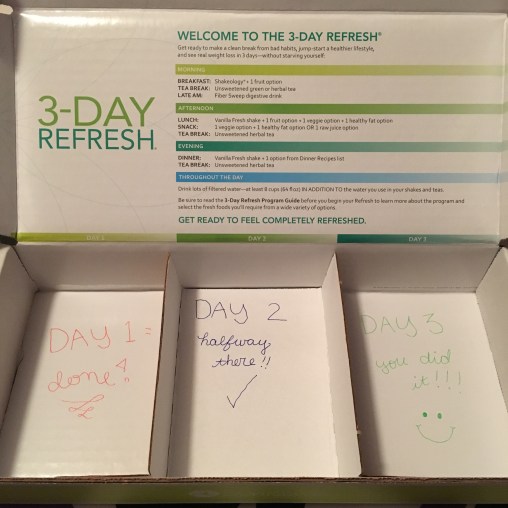
My routine for all three days would follow this format: Wake up, drink a glass of water, blend a shake together with one serving size of fruit. I’d have a cup of herbal tea one hour after breakfast, and one hour after that, I’d have a fiber-filled drink. Lunch would consist of another shake, one serving of vegetables, one serving of fruit, and one spoonful of hummus. I’d have an afternoon snack of baby carrots and one spoonful of almond butter with another cup of herbal tea an hour after consuming the snack. Dinner would be one last shake, one cup of vegetable broth, and a spinach salad with olive oil and lemon juice drizzled on top. I could have a final cup of herbal tea any time in the evening.

5A4A1ADE-4D94-4BDE-BA41-FA1453340655

I didn’t expect to learn as much as I did throughout the program, but those three days taught me a lot about how the things I put into my body impact not just my blood sugar, but my state of mind. Here’s what happened during my cleanse:

  • Day 1 – This day was by far the easiest to complete. Despite dialing back the amounts and types of foods I was consuming, I didn’t feel hungry at all – everything sated me. I was really enjoying watching my Dexcom CGM graph because it barely budged. I stayed right around 90-110 mg/dL for most of the day, probably because I was eating minimal carbs. Fewer carbs means less room for error, and this concept was definitely cemented into my mind by the end of the cleanse. I went to bed with a slight headache at the end of day 1, but a smile on my face. This would be a breeze!
  • Day 2 – My CGM sensor went kaput by mid-morning, and I was PISSED about it. I wanted the ability to continue tracking my blood sugars on this cleanse, and suddenly it was no longer available to me (because oh-so-conveniently, it was my last sensor in stock). Fuming over my CGM situation, I started feeling slight pangs of hunger shortly after having my fiber drink. I ate lunch as soon as I could after that, and spent much of the rest of the afternoon fighting a headache and dreading going home to see – not eat – my mom’s delicious home cooking. On the brighter side of things, my digestion seemed to be improving already and I felt a bit less bloated.
  • Day 3 – I went from “Oh, this cleanse will be a breeze!” to “OMG THESE ARE THE LONGEST THREE DAYS OF MY LIFE GIMME REAL FOOD AGAIN BEFORE I HAVE A MELTDOWN” in less than 48 hours. That’s gotta be a new record. I distracted myself as much as I could from my misery by burying myself in my work, which helped to a degree. But I couldn’t fight the lightheaded sensation that seemed to grip my entire body. I was confused by that – I though only eating real, plant-based foods would eliminate crummy feelings. Maybe I was experiencing a sort of withdrawal as my body got used to this new diet? I can’t confirm that, but I suspect that after a few more days, I likely would’ve felt much better…or hungrier. I’ll leave it to speculation because there is no way I’m doing this again any time soon. But MAN, am I proud of myself for completing the cleanse without cheating, not even once.

So if I felt THAT miserable toward the end of the cleanse, then why am I glad that I did it? Mainly, I’m astonished at how much easier it was to maintain my diabetes and “desirable” blood sugar levels in that three-day time period. Even without my CGM, I was still getting great results. It reinforced something that I already knew: that the body will react accordingly to the quantity and quality of foods that are used to nourish it. It made me realize that perhaps I should toy with cutting down my daily carb intake and upping my veggie/fruit/protein consumption to find out whether that positively impacts my blood sugar in the way that I think it will. This doesn’t mean I’m starting a low-carb or keto diet; rather, I’m simply going to follow a more thoughtful one.

To sum it up, this three-day cleanse/torture act/lesson (whatever you want to call it) helped make my understanding and appreciation of food much stronger, which makes it worth it in my book.


5 Ways that Hot Weather Affects Diabetes

The summer heat seems to be here to stay in Massachusetts. We’ve experienced several weeks of soupy, high-heat weather that *almost* makes me long for cooler, autumnal days…but not quite, because that just means winter (and snow – blech) is right around the corner.

Truly, I do enjoy the summertime. To me, summer is about trips to the beach, ice cream consumption (and lots of it), barbecues with family and friends, long walks in the neighborhood, and endless outdoor adventures. Aside from all of those lovely things, summer also means that it’s time to be a little more diligent when it comes to my diabetes. That’s because hot weather can play some cruel tricks on a T1D’s body. What do I mean by that? Here’s five ways diabetes can be affected by hot weather.

  1. Dehydration can lead to high blood sugar. Everyone knows that it’s important to stay hydrated when it’s hot out, but it might be less common knowledge that dehydration can directly affect blood sugar. There’s a scientific explanation for this: If not properly hydrated, the body sees an increase in blood glucose concentration because blood won’t flow as easily to the kidneys, making it difficult for the kidneys to get rid of excess glucose in urine. The best way to prevent this, naturally, is to drink plenty of water and monitor blood sugars.
  2. Sunburn can drive up blood sugars. I’m very familiar with how a sunburn can result in higher blood sugars; in fact, just last week I was dealing with a particularly gnarly sunburn on my thighs and belly that not only made my numbers higher, but also really hurt. My skin was literally damaged, so the stress from the injury lead to retaliation from my blood sugar. Luckily, it only lasted about 48 hours, but those couple of days were challenging as I dealt with sticky highs that were practically resistant to insulin. And for the record, I DID apply sunscreen – numerous times – when I was at the beach. Next time, I’ll seek shade under the umbrella.
  3. Sweat can make it difficult for devices to stick. I don’t know a single medical device that’s immune to prolonged exposure to moisture/water, but that doesn’t prevent me from spending as much time as I can outdoors/at the beach/by the pool in the summer. Thank goodness for Skin-Tac wipes and medical adhesive tapes that help preserve my precious pods and sensors!

    86499DC7-6F88-4A2F-AE0B-57E4F27B91E7
    “Sun-kissed skin so hot/We’ll melt your popsicle…and your insulin” – Katy Perry (with some help from Molly Johannes)
  4. Insulin can overheat. There’s a reason why insulin vials come packaged in cartons with directions that specify what temperature insulin should stay at in order for it to be safe to use. Insulin can spoil easily when it reaches a certain temperature, so it’s important to store it in a cool place when the weather’s warm. I alternate between a mini portable cooler (that can hold 3 vials of insulin) and a pouch from FRIO – both do an excellent job at keeping my insulin cool.
  5. Low blood sugars can occur more frequently. Summertime is prime time for outdoor activities that result in higher energy expenditure. So it’s no wonder that blood sugar tends to plummet in hot weather. Looking at it on the bright side, it’s an excuse to eat even more ice cream – but it also means that monitoring how I feel and checking blood sugars often is that much more important.

Regardless of the diabetes challenges it may cause, I love summer weather, and I know I’ll miss it the moment the first snowflake falls this year.