The $2,000 Mistake

Have you ever received an email that made you stop breathing for a moment? Did it feel like time stood still as you blinked rapidly and tried to comprehend the meaning behind it?

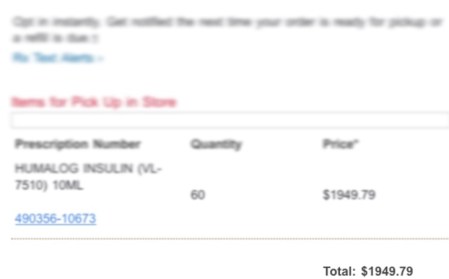
It sounds like a dramatic overreaction, but imagine getting a notification from your pharmacy notifying you that your prescription would cost almost $2,000. That’s a big old chunk of change. The mere thought of paying that much for a supply of insulin makes my heart race and my palms sweat.
51881C4A-A7D8-4A14-B960-78F85AEB970C
I nearly keeled over when I saw this dollar amount.

I’m happy to report that this was a giant mistake; for whatever reason, my doctor’s office sent my prescription for Humalog to my local pharmacy, even though I explicitly told them that I use Express Scripts for my insulin orders. It was a total mix-up, and the approximately $2,000 was an amount that I would pay if I didn’t have any insurance coverage. I do, and though I’m not sure how much I’ll be paying for my insulin yet, I know that it can’t possibly cost this much.

I’m relieved that I was able to call the pharmacy and straighten this out without spending a cent of my money. But it was also a major wake-up call to a reality that many people are forced to face when it comes to refilling insulin prescriptions. It’s not fair. (That last sentence is the understatement of the century.) I can’t make any sense of it and I don’t know how many people have no choice but to fork over such a large sum of money on a monthly basis in order to live. Thoughts of those individuals and their dire situations scare me far more than navigating the world of health insurance ever could.

While I didn’t appreciate the mini heart attack this email triggered, I guess I am glad that it alerted me to the fact that I’m going to have to be aware of things like this going forward. As I figure out my health insurance costs and coverage, I anticipate more confusion, surprises, and expenses…but hopefully I can also expect/experience a pleasant discovery or two along the way.


Trying to Stay in the Loop with DIY Diabetes

I can’t remember exactly when I heard of “DIY diabetes”, also known as “looping”. It may have been at a conference a few years ago, or maybe I saw something about it on social media. Either way, it seems to have totally blown up as more and more people with T1D are looping.

TRYING TO STAY IN THE LOOP WITH DIY DIABETES
Are you a Looper?

Before I talk about it more…a brief definition of looping. Loop refers to a kind of automated insulin delivery system. According to what I read about it on diaTribe, Loop systems are open-source and DIY, meaning that T1D Loopers download an app for the iPhone that communicates with a device that also communicates with compatible pumps and CGMs.

If you’re confused, don’t worry – so am I. There’s a number of moving pieces involved with Looping that make it daunting and difficult for me to keep up with as the technology changes. But the ultimate goal of Looping is what has me interested in it. Looping is supposed to help improve time-in-range, particularly overnight, because it does a lot of the thinking for you and ultimately makes life with diabetes easier. And I’m all for that.

Looping’s been popping up on my social media a lot lately because at the end of April, the geniuses behind Loop announced that compatibly with the OmniPod for the first time. (Previously, Looping was only available to Medtronic folks.) On what feels like a daily basis, I notice more people on my social media platforms – particularly Instagram – who are Podders that have made the decision to start Looping. The common denominator with many of these individuals, besides being Looping Podders (sounds like a wacky band name) is that they’ve found great success in doing so. It seems like each person spends 90% or more of his/her time in range, encounters fewer low/high blood sugars, and wastes less time worrying about diabetes in general.

All of that sounds too good to be true. Of course my interest is piqued by such incredible results, and of course I’d love to dive right into Looping and see whether it’s a good fit for me. But the reason why I don’t is simple…I just hesitate to trust new technology.

Technology can fail. Plain and simple. All operations for Looping with the OmniPod take place on the iPhone. That means that the PDM is rendered useless. What happens if I lose my cell phone? What if the battery dies when I need to bolus? What do I do when I upgrade to a new phone? There are so many questions I can think of related to the phone issues alone, never mind any other potential problems. Put simply, the unknowns – the “what ifs” – terrify me so much that I can’t help but be skeptical of Looping.

But this doesn’t mean my interest goes away. My curiosity about Looping is stronger than ever. The DIY element is frightening, but the rewards could be greater than the risks.

The only thing I know for sure is that I won’t even attempt to Loop until I have a conversation with my endocrinologist about it. Together, we make decisions about my diabetes care and treatment that we both feel are safe and right for me. I’d love her opinion on Looping to see how much she knows about it and whether she has any patients who use it. Until I talk to her and gain more information from other Loopers, it’ll just be something that I cautiously admire from afar on social media.

Starting Off on the Wrong Foot

“How are you today, ma’am?” The man behind the Dunkin’ Donuts counter smiled and looked at me expectantly, as I started back at him blankly.

I wasn’t sure how to answer. My mental state wasn’t great, that was for sure. I’d just come from a visit to a walk-in clinic, where I’d had X-rays of my foot taken to see whether or not it was fractured.

The previous 24 hours had been a bit of a whirlwind. I’d worked and gone to my first-ever kickboxing class, which was an awesome experience. I’d had dinner with my partner and started playing video games soon after as a way to unwind after the long day. That’s when pain in my foot flared up, suddenly and significantly.

Could I have injured it in the kickboxing class, without even knowing it? Was I overdoing it on exercising, in general? How and why did the pain just start up like that? Almost immediately, I plopped myself down onto the couch with an ice pack and extra cushions, hoping that I could stop the pain as quickly as it started.

No such luck. I went to bed early that night, but the pain was so severe that sleep was virtually impossible. I tossed and turned for hours, wondering what the hell was going on and coming up with a plan to get it checked out A.S.A.P.

That’s how I found myself at a walk-in clinic, a little over 12 hours after I first felt the pain. I was evaluated by a nurse practitioner who told me that “the likelihood of a fracture was low” (thank goodness) and that it was “probably tendinitis.” I was given instructions to rest, ice, and elevate my foot for the weekend, and take non-steroidal anti-inflammatory drugs (otherwise known as NSAIDs, like Ibuprofen or Aspirin) as needed.

Hugging the cactus - a t1d blog
I’m trying to put my best foot forward as I deal with this injury.

That meant hours and hours of being sedentary.

That meant no exercise of any kind – I even had to keep walking at a minimum.

That meant my spirits were crushed.

I was glad that it wasn’t worse, and proud of myself for not waiting to seek medical treatment. But that didn’t mean I was thrilled with the outcome. Basically, I had to take the wait-and-see approach. Time will tell how long the pain lasts, and I can’t stand not knowing. I also can’t stand not being able to be active. Daily exercise is a key element to maintaining good blood sugars. Sitting around idle doesn’t do my diabetes any favors, but it’s not like I had any other choice.

I left the clinic, trying to process this information. This certainly wasn’t the way I wanted to kick off the long Memorial Day weekend. It definitely could have gotten off on a better foot. (Okay, okay, I’ll stop with the puns.) I found myself at a nearby Dunkin’ Donuts minutes later. I hobbled in, hoping that an iced coffee might lift my spirits somewhat.

I blinked, bringing myself back into the moment, and smiled wryly at the Dunkin’ cashier. “I’m okay,” I said to him. It wasn’t just a response to his question, it was also a reassurance to myself. I’m okay and I will be okay. I won’t let this get me down.

4 Things That Make Traveling with Diabetes Easier

Throughout June and July, I’m going to be a travel fiend. I’ve got plans to travel by plane at least twice, and by car countless times. My trips will vary in length from just a couple hours to eight or nine hours. My head’s spinning just thinking about it, but I’ve got to get it together enough to think about how I can make traveling with diabetes a little bit easier. Given my past travel experience, I can think of four things that are absolute musts for me to take on any trip…

E42EFB15-760A-4288-9499-7DD92C0E73E4
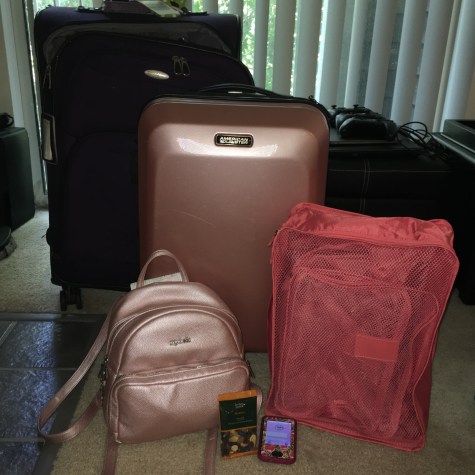
Some of my favorite things to have with me when I travel.

4. Packing cubes
I always thought packing cubes were a total gimmick…until I actually started using them. I got a set of four for Christmas and they’ve really turned me into a much more efficient packer. They help me visualize the space that will be taken up in my suitcases, and what’s even better is that one of the cube’s is the perfect size for my diabetes supplies. I can fit 15-20 pods, a handful of CGM sensors, various device chargers, alcohol swabs, IV prep wipes, and more into the compact little cube. It’s so much better and more organized than the lame-o gallon-size Ziploc bag that used to store all my diabetes supplies for a trip.

3. My Myabetic backpack
I don’t know how I ever traveled with a purse as opposed to my Myabetic backpack. I can fit way more things into my backpack than I ever could put into my purse, and I love that there are specific compartments in the backpack for certain diabetes supplies. I know exactly where things I might need during a flight are stored, eliminating that panicky feeling I used to get when I would dig frantically through my purse in order to find my tube of glucose or my PDM.

2. Snacks and water
This is an obvious one. In my opinion, traveling with diabetes shouldn’t even be attempted without a refillable water bottle or at least two emergency-low-blood-sugar snacks. Even though it’s basically diabetes 101, I’m guilty of going places without water or snacks…and I’ve always regretted it. There’s not much worse than being in an unfamiliar place and unsure of where the closest food and water is located, especially when dealing with a blood sugar crisis.

1. My CGM
The most important tool in my travel kit is, without a doubt, my CGM. More specifically, my receiver is key, particularly when I’m traveling by air. I am religious about turning my phone off for the duration of a flight (just a weird paranoia thing, don’t judge me), so my receiver becomes my go-to whenever I want a status update on my blood sugar without taking out my meter and kit. It helps me handle any weird blood sugar spikes and drops that occasionally happen when I travel, and it provides me with a peace of mind that makes traveling with diabetes much more bearable.


Brunching with ‘Betes

Confession: I’m a brunch lovin’ millennial who also really hates brunch.

The reason I hate brunch (besides waiting all morning long to eat my first meal, I get hangry) is that it annihilates my blood sugars.

Breakfast Alley
It’s not uncommon for me to spend several hours after brunch trying to correct a high blood sugar.

It probably has a lot to do with the aforementioned fact that the timing of a typical brunch is typically not favorable when it comes to my basal rates and insulin-to-carb ratios. On a normal weekday, I’m used to eating breakfast within an hour of waking up. My body and my blood sugars are very much so accustomed to this pattern, so when it’s interrupted, it shouldn’t be any wonder why they don’t respond well.

It’s not that I don’t try. I do everything I can to offset the lateness of a brunch meal by running a temp basal and ordering as low carb as I can. And it seems to work well, up until I get up to leave the table and head home. Often, I find myself correcting two or maybe even three times after brunch, and it’s extremely annoying.

Maybe I could help curb spiking blood sugar by ordering just one mimosa, as opposed to two or even three (or just skip drinking them altogether, but seriously, I’ve had enough mimosas in my life to know how to properly bolus for them). Maybe I could insist to my friends that brunch plans should be earlier and force all of us to wake up early on a weekend morning. Maybe I could skip brunch plans altogether.

But that would be accepting defeat. Just like I refuse to let diabetes ruin any aspect of my life, I won’t let it stop me from enjoying brunch with whomever I please. I’ll figure out how to avoid post-brunch highs, I just know it. It’ll just take a little more time and patience…and several more brunch outings. Yum.

Why It’s Important to Remember That The Doctor Isn’t Always Right

We should always do what medical professionals tell us to do…right?

I mean, why wouldn’t we? They’ve gone through many years of extensive training. They’ve got the education and degree(s) to prove their medical expertise. So why would a patient question a doctor or a nurse when they’re telling them to do something that will improve the patient’s health?

Well, a patient might question a medical professional’s advice when it seems contrary to everything else that the patient’s been told by other, trusted members of their healthcare team.

This is exactly what happened to me when I went to see my primary care doctor a few months ago.

Actually, more specifically, I saw a nurse practitioner who works at my primary care doctor’s practice. I made an appointment with the office because I’d been experiencing some wheeziness that made me think I might have asthma that couldn’t reliably be treated with a rescue inhaler (which is all that I had) on its own. I figured it’d be smart to talk it over with my doctor, or at least someone at his practice, to see if I should start treating my symptoms with another kind of medication or therapy.

Lemon Squeeze
As patients, we should always do what the doctor says…right?

My appointment barely lasted 20 minutes. I met with a nurse practitioner who I’d never seen before. I explained how I’d been wheezing the last several days, and how it got worse when I went to lie down in bed at night. Before I could get another word out, she asked me if a rescue inhaler was all I had to use in these situations. I said yes. She proceeded to tell me that rescue inhalers aren’t designed for daily use because, as the name implies, they’re for emergency situations. Then she started telling me about a steroid that she thought I should begin to use twice daily.

I cringed at the word “steroid” because I know that they don’t interact well with my blood sugars. Steroids can make blood sugars go high rapidly, and it can take hours for blood sugar to come back down to normal levels. I told her this, and she shrugged off my concerns by telling me that the inhaled steroid would be going directly to my lungs, not my entire body like a typical steroid. I remember nodding uneasily and asking her how to use the steroid – I wasn’t going to leave the room until I had a satisfactory amount of information on this new, unfamiliar drug.

She told me I’d take it once in the morning and once at night, before brushing my teeth. Apparently, I would need to be careful and remember to rinse my mouth out with water immediately after administering the medication in order to prevent…thrush. (If you’re unfamiliar with that word, it has something to do with oral, yeast, and infection…A.K.A. something that sounds like a nightmare.) That’s when I really became alarmed. I told her that people with T1D are already more susceptible to that kind of infection, and wouldn’t it be a bad idea to even risk it by taking this steroid two times a day? And again, she essentially disregarded my protests and told me I’d be fine as long as I remembered to rinse. Then, she sent the prescription to the local pharmacy and left me in the exam room in a confused daze.

I went to pick up the prescription, but I never used it. I decided to trust my judgment and avoid a steroid that seemed like it would cause more harm than good. I also figured that since the weather had abruptly gotten cold, then perhaps my asthma symptoms would subside before long; in the meantime, I could use my rescue inhaler as necessary. And you know what?

I was right. My breathing was normal again in a matter of days, and I only had to take a few puffs from the inhaler when it was all said and done. My decision to take my health in my own hands was further validated when I went to go see my allergist soon after this ordeal. I told her all about it as we ran through the list of medications that I regularly take. She was incredulous that I was prescribed the steroid in the first place, seeing as my asthma is practically non-existent. To quote her, “You’re (meaning me) already sweet enough, you don’t need this steroid or a risk of thrush!”

That remark alone sealed it for me: I did what I thought was best because I knew I was capable of making a decision about my body; nobody knows myself better than me…even a medical professional.

5 Things That I Don’t Mind About Having Diabetes

I thought about how I should title this blog post many, many times. It didn’t feel right to say “5 Things I Like About Having Diabetes” or “5 Things That Make Diabetes Okay”…because I will never like having diabetes, and I will never be okay with it.

But that being said, after living with it for 21 years, there are some “perks” to it that have made it somewhat more bearable. Okay, a LOT more bearable. Besides insulin, diabetes technology, and the like, there are five things that I came up with that make diabetes suck less for me.

5 things that i don't mind about having diabetes.png

First, and most obviously…diabetes has brought wonderful friendships into my life. I’ve written about these friendships many times before and I’m sure I’ll continue to do so in the future, because they’re invaluable to me. I have some regrets about not realizing the importance of peer support when it comes to diabetes when I was younger, but maybe I figured it out in adulthood because some part of me knew that was when I would need it the most.

Second, diabetes has made me stronger. I won’t downplay the fact that it increases my anxiety and stress levels…but I also can’t deny that the trials and tribulations of life with type 1 diabetes has made me a tougher person.

Third, diabetes has forced me to be an obsessive planner. I do wish that I could live a bit more spontaneously sometimes, but honestly, I’m pretty proud of my ability to think ahead and plan well in advance of things. These planning skills have translated to other aspects of my life, too – I wasn’t on the party planning committee at work just for the heck of it!

Fourth, diabetes has taught me so much about nutrition. I’ve been reading nutrition labels before I could read actual books. I’ve met with nutritionists at various points in my life to learn how to eat a balanced, healthy diet that consists of the right amount of carbohydrates for me. I’ve educated myself on the power of the glycemic index and how it impacts blood sugar. Without diabetes, I’m not so certain that I’d have such a clear understanding of how different foods affect my entire body. I’m grateful to know so much about nutrition, because I think it makes me a healthier person, overall.

And fifth, diabetes has lead me to several interesting (and in some cases, compensated) research opportunities. Yes, you’ve read that correctly – my diabetes has allowed me to be a research study participant in a handful of studies and I’ve gotten paid for my involvement. The amounts have varied over the years – anything from a $5 Amazon gift card to a $200 stipend – but it’s not just getting paid that makes research participation worth it to me. It’s also knowing that I could be making a difference to the larger diabetes community. For instance, offering detailed feedback on a diabetes device or product might help make it better in the future, and if that means I spend an hour on the phone answering questions, then of course I’ll do it.

In times of diabetes hardship, it’s important for me to remember these five things. Diabetes was a shit card in life that I was dealt, but it’s not the worst thing that could happen to me. Reminding myself of these bright spots help to make life with diabetes a little bit better.

Testing for Accuracy, in Addition to Blood Glucose

This post originally appeared on Hugging the Cactus on March 21, 2018. I’m republishing it now because of a recent experience I had with my meter reporting inaccurate and inconsistent blood sugar levels. Has this ever happened to you? Drop a comment and let me know.

Blood glucose meters serve the sole purpose of checking current levels of glucose in the blood. Pretty self-explanatory, right? And it’s equally obvious that it’s crucial for all meters to generate accurate results so PWD can make the right treatment decisions based on those numbers.

Unfortunately, though, accuracy isn’t always what I get.

The other day, I was running low before bedtime. I corrected with an organic rice crispy treat (honestly, it was a million times better than the brand name kind). I waited nearly an hour for my blood sugar to come up. When my CGM wasn’t showing any progress, I tested: I was 47. It’s rare for me to be that low, so I tested again. 52. I believed it, especially since I was experiencing several hypoglycemic symptoms.

B. J. Palmer

I chugged a glass of orange juice and plopped down on the couch to wait for signs of improvement. Before long, I was freezing cold – a sure sign I was coming up, because I had been sweating 20 minutes prior. But I didn’t feel comfortable going to bed yet. I wanted to see if my CGM would show an up arrow. When it finally did, I made my way upstairs to brush my teeth and wash my face. In the middle of my routine, though, I decided to glance at my CGM again – and saw the dreaded ??? screen.

I decided then that the Dexcom should be out of commission, a.k.a. not trusted at all, for the remainder of the evening.

I ripped it out and inserted a fresh one, not really caring that it would wake me up in two hours to be calibrated. I would need to set at least two alarms for the middle of the night, anyways, if I decided to go to bed disconnected from my Dex. So it just made sense.

Once that was done, I tested again. I was pretty tired at this point and really didn’t want to have to eat something else, so I did it as quickly as I could. In my haste, I jostled my meter just so – enough that I saw the test strip, already marked with my blood, move slightly as it brushed against my PDM and was placed next to it.

113 mg/dL flashed upon the screen. Normally, I’d be thrilled! But I furrowed my brow. Something just felt…off about that reading. So I tested again.

206.

What?!

I tested a third time – 203. Okay, something was definitely wrong. Either that 113 was wrong (likely) or my meter had just produced two wildly inaccurate blood sugars in a row (less likely).

This is one of the many times that it’s convenient to live with another PWD. I asked my mom if I could borrow her test kit and see what result it generated. Seconds later…a twin 203 popped up on the screen, reassuring me that the 113 was a fluke on my meter.

Relief with the reality and irritation with the technology washed over me simultaneously as I went to correct the high with a bolus. I was glad I wasn’t heading down again, but irked that my meter had failed me. True, it was a bit of human error there, but aren’t we at a point in technological advancements where this sort of thing just shouldn’t happen? I put my life into the “hands” of my meter, Dexcom, and OmniPod. They should produce results that are undoubtedly accurate.

I guess we aren’t quite there yet.

Blogger Burnout

Blogger burnout…it’s very similar to diabetes burnout, only not quite as frustrating because it doesn’t affect my physical and mental health as severely.

But it does best describe how I’m feeling right now. To be honest, I’m a passenger on the struggle bus at the moment as I try to balance many of life’s demands. I’m traveling frequently this month, attending numerous family and social events, scheduling all sorts of appointments, and trying to remember to breathe in between everything. A lot of this stuff is self-inflicted, I’ll admit, as I tend to thrive when I stay busy. But I won’t deny that it’s hard. When running this blog is tossed into the mix, I feel like I’m on the cusp of spontaneous combustion. Oh, and it doesn’t help that my blood sugars have been up and down as I run – no, sprint – from one thing to the next.Love always wins. (1)

I put a lot of pressure on myself to deliver the best content that I possibly can to my readers, who I care about very much, even if I don’t know all of them personally. I do my best to post brand-new content three times per week, which involves a lot more work than you might think. I have to come up with a topic, create an image to go with it, edit the piece, schedule its publication, and prepare multiple social media platforms to promote it. And that’s just for one single blog post.

By no means is this a “farewell” post or even an “I’m-taking-a-break-for-an-undisclosed-amount-of-time” post; rather, I just want to be honest with my audience that I’m struggling to keep up delivery of solid content. Please don’t be surprised if I continue to republish old content (but still originally written by me) in the next few weeks. Please continue to visit the blog as often as you can. And please, bear with me as I get through this little burnout phase – I promise to come out of it and be a stronger writer before long.

Type 1 Diabetes…the Uninvited Bachelorette Guest

T1D is an unwelcome presence in my life, but I’ve made peace with it. However, it doesn’t stop me from worrying about how its existence might affect others in a wide variety of situations.

Take a bachelorette party, for instance…I wasn’t sure how my diabetes would respond to a weekend spent in Saratoga Springs with my soon-to-be-married cousin and the gaggle of girls who would accompany her to a few different wineries, a comedy show, and other various shenanigans. I went into the situation hoping for the best, but expecting the worst.

I Volunteer To Drink! (1).png

What does “expecting the worst” mean? Basically, it meant that I was preparing for the apocalypse. The bachelorette weekend was barely 48 hours total, but I was so paranoid about something going wrong with my diabetes that I packed twice the number of pods that I would need, extra insulin, spare syringes, Glucagon, and a low-blood-sugar-snack stash. Although I had a rough idea of what our itinerary looked like for the weekend, I still wasn’t 100% of what we would be eating and when, which as any T1D could tell you, is kind of a major concern when it comes to taking proper care of diabetes – and that concern is intensified when alcohol gets thrown into the mix, as it unquestionably would on our quest to find the best winery in Saratoga.

My worry only grew when things didn’t exactly start as I envisioned them. We hit the road around 4 o’clock in the afternoon that Friday, and picked up the delighted bride in Western Mass a short while after 6 o’clock. I expected that we would stop for food soon after the bride joined our caravan of cars bound for New York…only to be proven totally wrong when I discovered that most people were too excited to stop and eat. “No problem,” I said to myself. “I’m sure that by the time it’s 7:30 or so, people will be hungry.”

No such luck. As I watched my blood sugar slowly drop, my stomach roared with hunger as I thought about the last meal I ate, nearly seven hours ago. I knew I should speak up and ask the group to pull over, but I was scared. I didn’t want to be “that” person who was making such demands, especially since I was merely a passenger in the car and not driving.

But it was almost 8 o’clock and I knew that if I didn’t eat soon, it wouldn’t bode well for the rest of the night. My body tends to rebel if I go to sleep soon after eating a decent amount of food, and my blood sugars usually make me pay for the lateness of the meal. I feebly requested a stop to the girl who was driving, and discovered that she desperately needed to make a trip to the ladies’ room – at last, my chance for food! I called one of the girls in the other car to let them know that we would all be hitting up the next rest stop. “And Molly needs to eat!” The driver yelled into my phone before I could hang up. I felt myself blush, not wanting to be a pain in the ass…but little did I know, the girls wanted me to speak up.

When we all met at the rest stop, everyone asked with genuine concern how I was doing. As I assured them that I was much better now thanks to my Subway sandwich, I was gently scolded by the bride – my cousin – for not saying something sooner. Each girl agreed and I promised them that I would be better about letting them know about potential blood sugar issues for the rest of the weekend.

The funny thing is, though, that I really didn’t have any problems whatsoever. I was very surprised, due to the fact that we were eating late/inconsistent/not-very-healthy meals each day, drinking a few different kinds of alcohol, and spending less time than I anticipated moving out and about…normally, that’s pretty much a recipe for disaster. I can’t help but wonder if I avoided problems because I did everything the “smart” way – ate plenty of food to combat the effects of alcohol, took extra insulin as needed, and stayed hydrated all day, everyday. It certainly is a formula for success, and deserves credit for taming the unwanted bachelorette guest all weekend long.

Now if only I can replicate this for the upcoming wedding weekend…