
Between this post and the one from a couple of weeks ago, this blog is rapidly turning into one in which I bemoan the battery life of my diabetes devices…
The fact of the matter is, though, that I’ve definitely had my share of battery issues lately. The Omnipod DASH problem was resolved (rather swiftly), thanks to the folks at Insulet. But now it’s my Dexcom transmitter battery that’s acting up…and resulting in a whole lot of lost data (and even more frustration) for me.
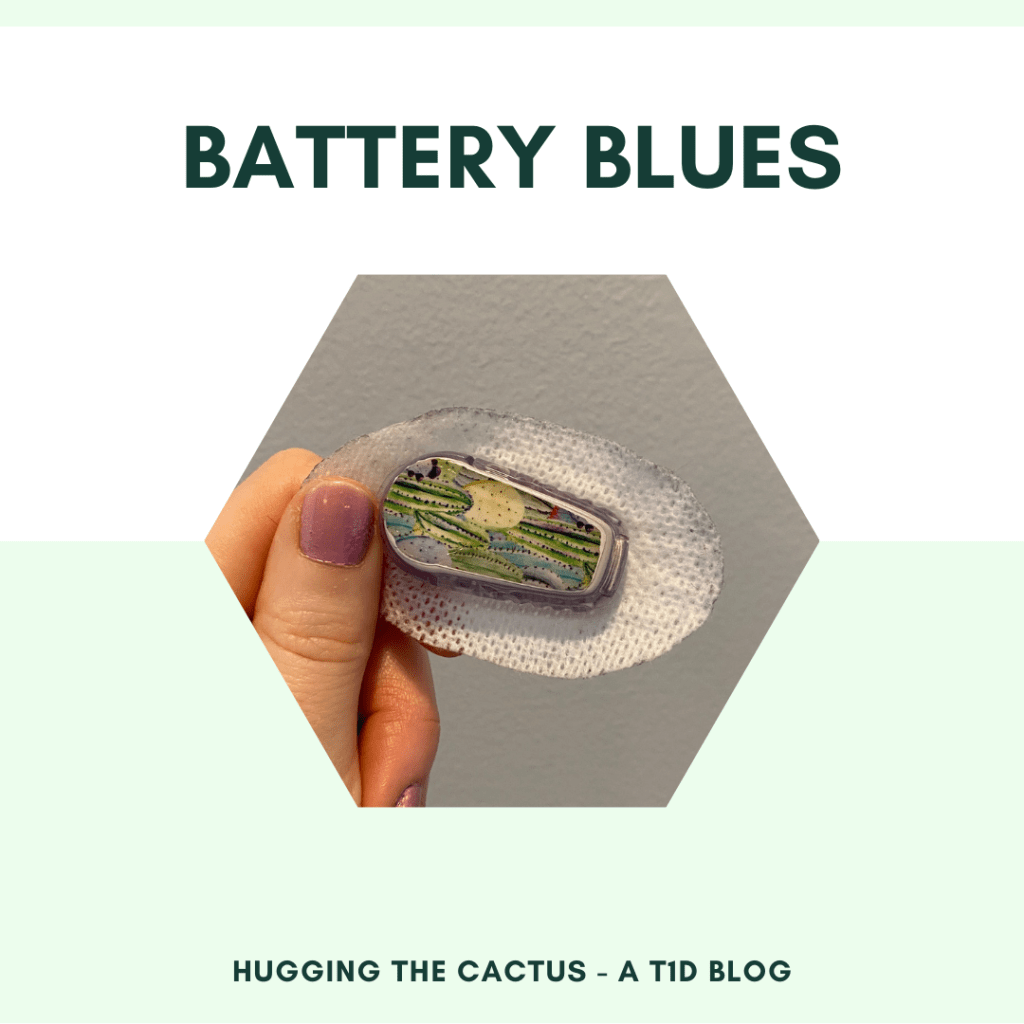
It all started about a week and a half ago, when my Dexcom app notified me that my transmitter battery would be expiring in 3 weeks. That was to be expected – Dexcom transmitter batteries last 90 days, and according to my records, the one I’d been using was for sure approaching the expiry date.
What I didn’t expect was that the waning battery life in my transmitter would trigger multiple false blood sugar readings and periods of no readings whatsoever. At least I think my transmitter is to blame – I hadn’t experienced any issues with sensors from my last shipment and the app usually never experiences errors like this unless there’s a problem with the sensor and/or transmitter, so logic led me to conclude that my transmitter was simply losing reliability as it came closer and closer to its expiration.
My workaround was to do finger stick checks any time I was untrusting of my Dexcom, or whenever it was giving me a “no readings” alert. Plus, I’ve got a fresh transmitter ready to be activated once this one stops working, so it’s not like I’ll be without a Dexcom for an unbearable length of time.
In spite of that, I still thought this was worth talking about here on the blog because 1) I can’t remember if I’ve ever had a transmitter fade so dramatically in the last 3 weeks of its lifespan, 2) it was an exasperating situation and I needed to vent, and 3) I’m wondering if this has ever happened to anyone else before, and if there’s a workaround.
At this moment in time, I’m not quite sure what a feasible solution would be besides ripping a sensor off prematurely and sticking to finger stick checks for a few days until my annoyance ebbs…which is exactly the strategy that I decided to go with. I’m definitely looking forward to new transmitter time…

 Hugging the Cactus