
Random confession time: I used to think that I couldn’t order anything at “fancy” coffee shops like Starbucks other than a plain, black coffee.
Truthfully, I do drink my coffee black 99% of the time. I used to load it up with Splenda and a generous pour of cream, but in an effort to reduce my artificial sweetener intake (and cut excess calories from the cream), I started drinking it black in my late teens and haven’t really looked back…
…except for when I find myself ogling the incredible-sounding concoctions from places like Starbucks.
Vanilla sweet cream cold brew? Iced brown sugar oatmilk shaken espresso? Mocha cookie crumble frappuccino? All of those sound fantastic, and I don’t even know what “shaken espresso” or “cold brew” really means! But besides having appealing monikers, these drinks’ names also imply heavy sugar contents, and that scares me as a person with diabetes who tries to avoid sugary drinks (I’d rather “save” my daily carbohydrate intake for actual food). Moreover, I’ve always assumed that it wasn’t worth it to ask for substitutions in those drinks, so up until recently I’ve just stayed away from them.
Things changed, though, when I won a couple of Starbucks gift cards at work and I decided that I wanted to venture out of my comfort zone. I wanted to try a “fancy” drink, dammit, or at least one that was a notch or two above my usual plain black coffee! So I hit up the website to see what my options were, and in pursuit of as much nutritional information as I could find.
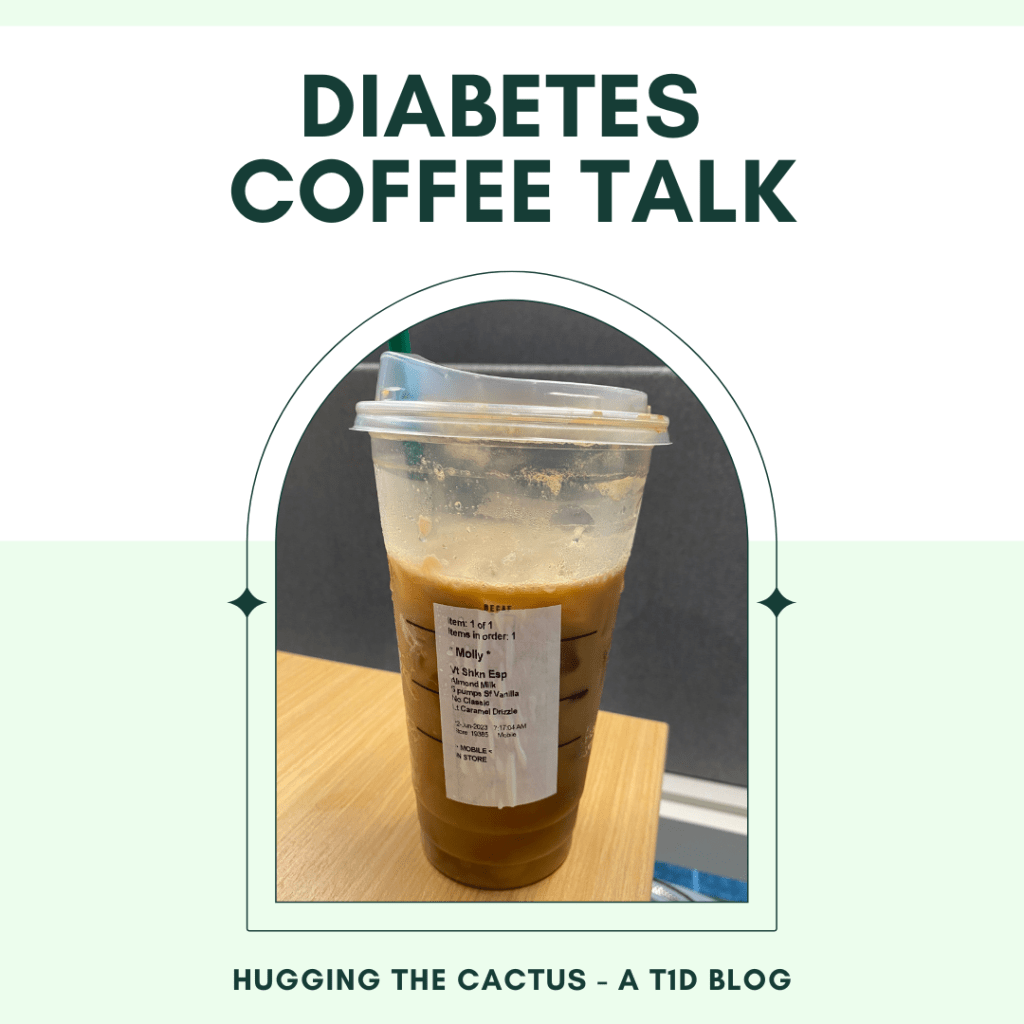
I was pleasantly surprised to discover two things: One being that nutritional information was extremely easy to locate, and the other being that I could customize any drink of my choosing by clicking on it and making modifications to my heart’s desire. So I started with the most intriguing-sounding drink – the shaken espresso – and swapped out the oatmilk for almond milk (which is much lower carb), the vanilla syrup for sugar-free vanilla syrup (they don’t have many sugar-free syrup options, but they do have basic flavors which was just fine by me), and a light caramel drizzle for fun (I liked that you could choose to make the drizzle light, regular, or extra). The website updated in real-time to reflect my customization options, so I had a sense of how many carbs the drink would contain. I opted to make it a large – venti in Starbucks-speak – and picked it up from the closest café to me.
I’m happy to report that my drink upgrade was delicious and didn’t spike my blood sugar like I feared its sugary counterparts would. It was a total win! And a learning experience to do a little more research before making assumptions about what I can and can’t have from different restaurants. I have to remind myself that many places are making strides to not only make nutritional information more accessible, but to also accommodate people with food sensitivities/allergies. So swaps aren’t necessarily an uncommon or unreasonable request for most spots oblige.
Duly noted (and appreciated) by this person with diabetes.

 Hugging the Cactus