Spring cleaning is more than a practice of tidying one’s home. It’s also a great way to keep blood sugar levels down, as I was reminded when I decided to take on the long overdue task of cleaning out my closet.
Ever since I moved into my home (nearly 3 years ago), the clothing and random other junk taking up space in my decently sized walk-in closet has largely remained untouched. Not in the sense that I don’t take things in and out of my closet every day, because I do. Rather, I haven’t sorted through anything in my closet since I decided what would go in there and what order it would stay in. Forget clearing out clothing with seasonal changes or refolding items as they got jostled out of place, no way! It’s really no wonder that over time, my closet grew more and more cluttered until finally I couldn’t take it anymore and devoted a few hours to cleaning it out.
It was an exhausting exercise – and yes, the word exercise really applies here because I was sweaty, huffing, and puffing in no time. I had to take everything out, lay it in heaps on my floor, go through each pile individually to see what I wanted to keep and toss, and either refold or rehang garments as I filed stuff back into place to my liking. I’m not sure how many pounds worth of clothing I actually sorted through, but it was definitely a sizeable amount as my arms ached from pulling clothes down from shelves and my hanger bar. And it definitely made sense that I was getting overheated, as I kept walking back and forth between my closet and my bedroom floor with my arms weighted down and in a space that was overly warm due to insufficient air conditioning.
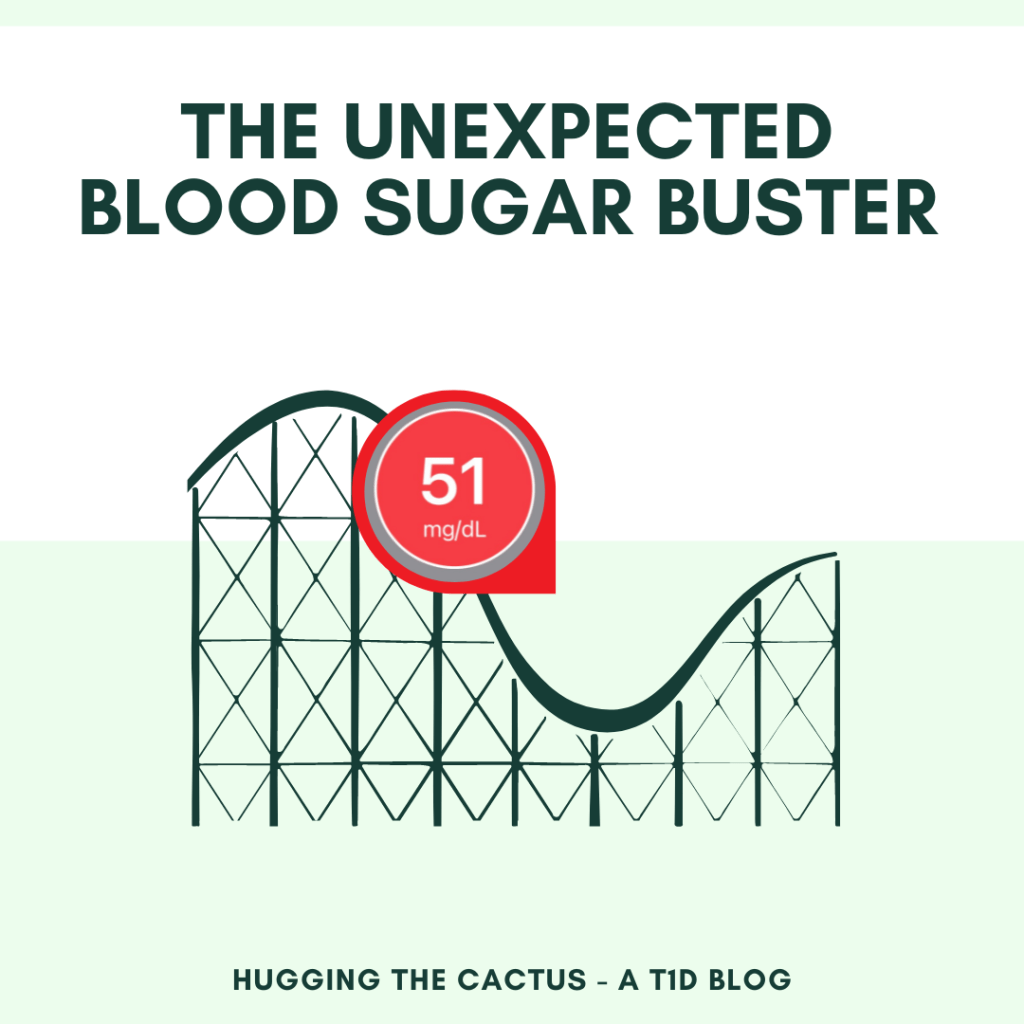
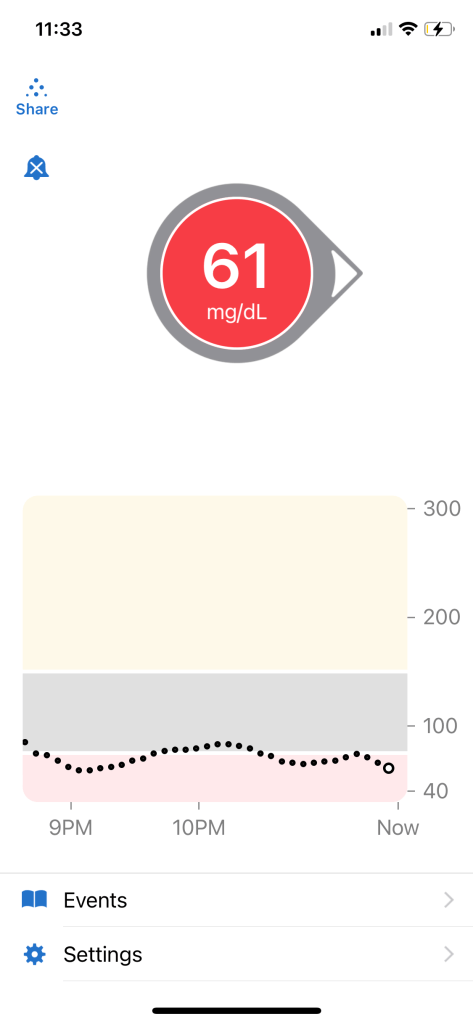
So when my blood sugar levels started tanking 30 minutes into my organizing process, I shouldn’t have been particularly surprised. But in hindsight, it makes perfect sense as the cleaning was basically an extended moderate-intensity cardio AND strength session. What I should’ve been was more prepared for the possibility of going low by enabling activity mode on my Omnipod so that my blood sugar target could be increased from 100 to 150 for the duration of my cleaning, but instead I was crashing and cursing that I had to interrupt my workflow with a fruit snack break.
Maybe next time I’ll do better and coincide my spring cleaning with a high blood sugar so I could reap the benefits of the extra exercise, thereby turning the unexpected blood sugar buster into a welcome one.
Any type of pizza, plus diabetes, usually equals one giant headache in terms of nailing a correct insulin dosage.
Nine times out of ten, my blood sugar ends up high in the hours following a pizza meal. This is a fairly common phenomenon for people with diabetes, because even though pizza contains high amounts of carbohydrates, it also contains a large amount of fat that ends up delaying the digestion of pizza – resulting in a belated blood sugar spike. My go-to workaround for this is to do an extended insulin bolus, meaning that I take part of my insulin dose at mealtime and my pump will deliver the remaining dose later on, but it can be tricky to nail the timing of it.
So imagine my surprise when, after enjoying an evening out with my boyfriend in which we split a very tasty flatbread pizza (half buffalo chicken, half brussels sprouts and bacon), my blood sugar didn’t spike even a little bit post-meal. In fact, it actually ended up tanking – so much so that over the course of 2 hours, I had to eat 3 packs of fruit snacks and a handful of leftover Easter candies in order to keep it from dropping too much.
My mind was blown. I had actually eaten more flatbread slices than I normally do during this meal – the two of us nearly demolished a large-size flatbread, which is quite a feat – and so I bolused for 60 grams of carbs, using the manual mode on my Omnipod 5 PDM to enable an extended bolus in which I gave myself half my insulin dose upfront with the remaining half to follow 1 hour later. I actually thought I was underestimating the total carbs I’d consumed, especially considering I had two cocktails with my meal. But nope, I had completely missed the mark on this one and paid the price as I did whatever I could to keep my blood sugar up in the hours before I planned to go to bed. You can see from my CGM graph below that this was a bit of a prolonged struggle, one that kept me up much later than I would’ve liked.
But, oh well. That’s just how it is with diabetes sometimes, and I remain optimistic that I can nail the pizza bolus next time. After all, I’ve done it before, so I can do it again. And this is the kind of bolus experiment that’s kind of enjoyable – any excuse to have some delicious pizza.
Forget “a diabetes first” as the title for this blog post – “a first” would suffice. That’s because I experienced *drumroll please* my very first stomach bug this past weekend! (At least, the first one that I can remember; most certainly, the first of my adulthood.)
I don’t know how I caught it and honestly, as I sit here and write this, it’s taking the very little energy I have to summarize what I dealt with over the weekend. But here’s the short version: I was out shopping with my partner on Friday evening. On our drive home, I grew increasingly nauseous and essentially bolted it to the bathroom when we made it home. I won’t cover all the gory details here, but basically, I was pretty ill for many hours. Food and drink quickly became out of the question for me, and even though my stomach was churning relentlessly, I still had enough mental bandwidth to check my blood sugar every so often to make sure it wasn’t climbing or falling.
Much to my relief, my blood sugar was the only thing that remained stable all weekend long. As I fought through waves of nausea, I was grateful that I didn’t have any insulin on board as an additional factor to contend with. It seemed like my diabetes knew I was going through enough, so the least it could do was play nice while my body dealt with the bug as best as it could.
I’ve slowly reintroduced foods into my diet today – I never would’ve thought I’d be so simultaneously excited and nervous to eat saltine crackers, rice, or plain chicken – and I’m still amazed at how my diabetes seems to be cooperating as I continue to recover. Granted, this could be because I’m eating very simple carbohydrates and not many at one time, but still. I’m appreciative of the fact that I can rest up without worrying as much about my blood sugar levels.
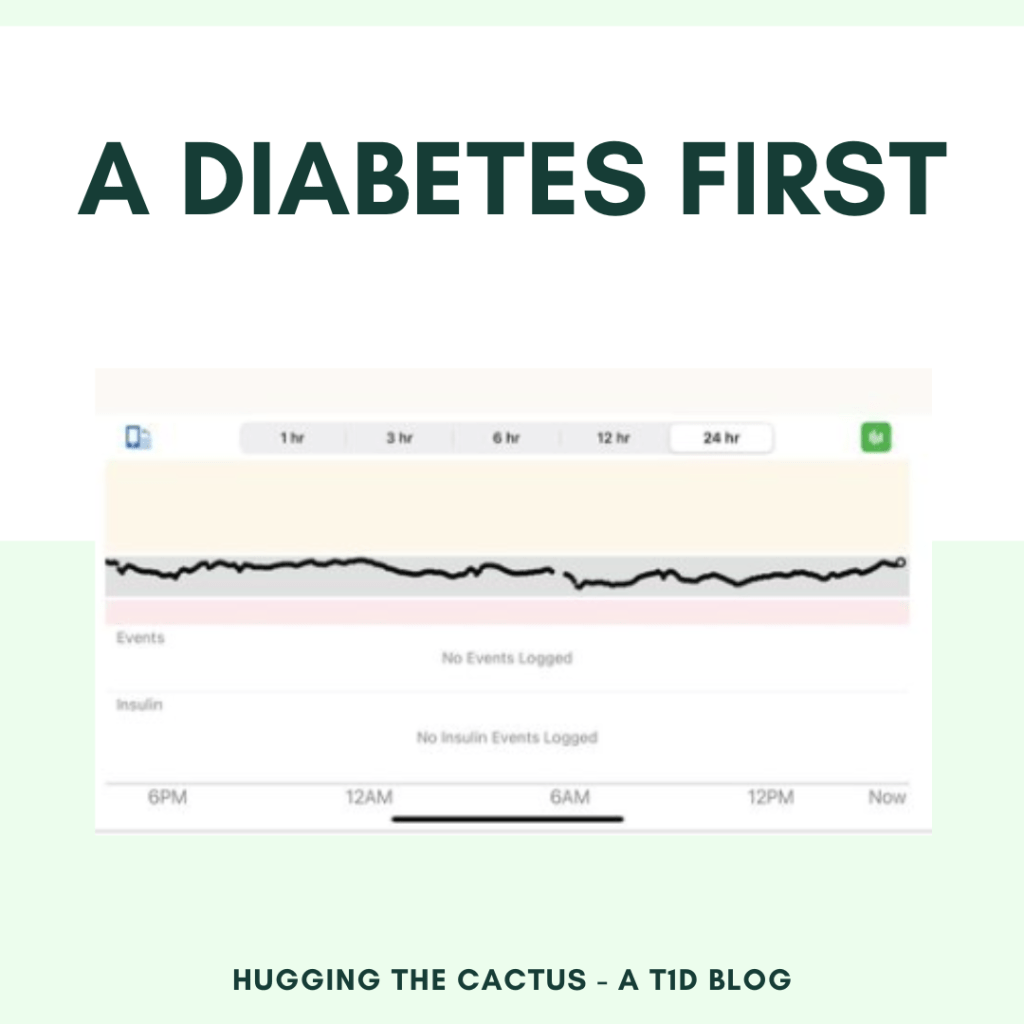
Don’t get me wrong, though…as nice as it was to have approximately 48 hours of in-range blood sugars (above 80 and below 150 on my own Dexcom graph), I definitely wouldn’t trade them in favor for a stomach bug. I’d much rather put in a little more effort on my own to obtain in-range readings than have to go through that whole ordeal again.
As anyone who lives with diabetes knows, it’s a condition that dislikes disruptions to a daily routine.
This was one of my main concerns when it came to starting my new job last week. The position is hybrid, meaning that I can work from home and in an office as it suits my needs. The prospect of returning to an office again after more than three years of working remotely positively excited me, but I’d be lying if I said that it also terrified me. I was anxious about my first day back in an office environment (in addition to all the jitters associated with starting a new job), and more than anything, I was worried about how my diabetes would be affected by this change.
This is because I’d settled into a fairly standard routine after all this time working from home. I have a workout regimen, eating schedule, and built-in breaks throughout my day that have greatly benefited my day-to-day blood sugar levels, and I knew that returning to an office setting would prevent me from maintaining these habits.
So that’s why I entered what I’m calling “diabetes hyper-prepare mode” the night before my first day in the office so I could try and think about all the ways my day would differ working in this setting versus my own home. And thus, I came up with these three tips that resulted in a very successful diabetes (and work) day:
Tip #1: Get ready as much as possible the night before. The week that I started my new job, I did my best to recall the routines that had worked well for me when I was regularly working in an office. The first thing that came to mind was the amount of preparation I typically did each weeknight so that I could get out the door as soon as possible in the morning. This included laying out my outfit, making breakfast ahead of time, putting together a lunch, and packing my bag. This extra work the night before really paid off the following morning and meant that I hit the road at exactly the time I had planned to; plus, the food prep worked wonders as I didn’t have to waste brain power in the morning trying to think about what I might eat throughout the day. The food was all set and ready to go, and I knew its carbohydrate contents, which resulted in phenomenal blood sugar levels all morning leading up to lunchtime.
Tip #2: Maintain movement. As it turns out, a 40-minute commute combined with lots of sitting in meetings means that my movement patterns in the office are minimal. I did my best to combat this by getting up a few times throughout the day to explore my new building in 10- or 15-minute intervals. Not only did this give my eyes a break from my dual monitors, but it allowed me to stretch and get familiar with the environment. It also helped to curb my post-lunch upward sloping blood sugar, so it was definitely beneficial to my body and mind to make sure I maintained semi-regular movement during the workday.
Tip #3: Have back-up supplies on hand. When I was packing my bag the night before, I made sure to slip a meter, test strips, and fingerstick device, as well as some fruit snacks, into one of the compartments as I didn’t want to run the risk of something going awry with my CGM or needing a low snack and not having it. Of course, I didn’t experience either scenario in the office that first day, but knowing that I had these items close by went a long way in reassuring me that I was prepared to handle any diabetes scenario that might crop up during the workday. And it turned out to be fodder for reminding me that I should also have an extra pod and insulin in my bag at all times, too – next time, I’ll make sure to bring those items with me so I can have even more diabetes bases covered.
These tips might seem pretty obvious, but I was kind of awestruck by just how weird it felt to be back in an office space after a long hiatus away from one. So I think that following these tips truly did help to ground me so I could stay focused on learning my new job and meeting my colleagues, rather than letting my diabetes take center stage for the day.
Despite the best of efforts to “control” all aspects of life with diabetes, the bottom line is that it can still be totally unpredictable from time to time.
Usually, these unexpected diabetes experiences aren’t exactly welcome…but sometimes, diabetes surprises me in wonderfully delightful ways.
Have you ever been pleasantly surprised by diabetes?
Here’s three of ’em that have occurred in semi-recent memory:
1 – That time I was able to eat an entire homemade blueberry muffin WITHOUT BOLUSING FOR IT. Um, that’s crazy, right?! I had planned on eating half of said muffin in order to bring up a low blood sugar, but, well, it just tasted so damn good that before I knew it OOPS the whole thing was gone. I hemmed and hawed for a long time over whether I should bolus for the excess carb intake, and finally decided that I would just monitor my blood sugar and correct it as needed. But, weirdly enough…I saw my BG slowly rise and settle into the mid-150s and STAY there. Absolutely amazing, right? Maybe blueberry muffins are the new cinnamon cure for diabetes…
2 – When a pod change coincided with said pod running on its very last unit of insulin. Talk about using insulin to the very last drop, right? I still don’t know how I managed to pull this one off, but all I know is that I wore a pod for the maximum amount of time (80 hours) and had just one unit of insulin left inside it by the time it expired for good. I wish I could make this happen with every pod change, but then again, it is a little nerve-wracking to go down to the wire like that on a pod…
3 – That one instance when I drank one cocktail too many and my blood sugar behaved perfectly. This was a total freak incident and let me say upfront: I condone drinking with diabetes as long as it is done by individuals 21 and over in a safe, educated manner!!! Okay, now that I have that out of the way…like other grown-ass adults, sometimes I like to unwind with an adult beverage…and like OTHER grown-ass adults, once in a blue moon (please acknowledge the pun) I go a little overboard. Now, normally when I go a little too hard, I pay for it the next day with a hangover and high blood sugar, but on New Year’s Eve? When I drank Prosecco and a beer and a frozen Irish cream cocktail that was insanely good but carb-o-licious? I wound up with stellar blood sugars (and only a slightly hangover that was likely me just being overtired thanks to my puppy)…a head-scratching occurrence that was an absolute pleasant surprise.
And these are just three happy diabetes accidents that I can think of – I’ve absolutely had others over the years. Dumb luck? Total coincidences? Events that happened because I actually do kind of know what I’m doing? Whatever you want to call them, I can for sure classify these moments as the good kind of diabetes surprises.
Time in range versus A1c…which measurement matters more when it comes to T1D care and management?
Well, I’m not exactly in a position to answer that, because I think the answer is unique to all people with diabetes. But I can explain what exactly both of these numbers are and how I view them.
A1c: Also known as Hb1c or hemoglobin A1c, this is a test that is conducted every 3 months (or as requested) by an endocrinologist. A patient gets blood drawn to determine the average amount of glucose concentration in the blood during that 3 month period. The result of this test is a percentage amount, with 5% being an average result for a non-diabetic individual. I consider the A1c result to be highly personal, so I don’t often share mine with others; however, I do refer to it when describing ways in which I want to improve my diabetes care and management.
Time in range: This value describes the literal amount of time that a person’s blood sugar is in “range” for a given period of time (e.g., one day, one week, one month, etc.). “Range” refers to above a person’s low threshold and below a person’s high threshold. One person’s defined range may vary greatly from another person’s, but for me, I have my low set at 80 and my high set at 180 on my Dexcom. In a perfect world, my range would be more like 80-120, but I have a higher threshold set to minimize the number of alarms that go off.
Diabetes…the chronic conditions with like, way too many acronyms.
So really, both are just two different ways of measuring blood sugar performance over the course of certain time frames. And while I try to bear in mind that these are both simply numbers that help me see part of the diabetes picture, and not sole indicators of how “well controlled” I am or am not, I do pay special attention to them and have certain goals for myself. (I strive for an A1c of under 7 and I like my time in range to be at least 75%: These are goals I came up with independently, without my endocrinologist’s feedback, because it’s what I feel comfortable with when it comes to my diabetes…other T1Ds feel differently, and that’s totally okay!)
It’s important to me that I remember that my “success” as a person with T1D is not defined by either of these numbers. In fact, I know many other T1D individuals feel the same way that they should be viewed as signposts along the road to achieving desired diabetes results. It can be hard to do, though, because of how much weight is placed on these numbers by medical professionals and from people across the Internet.
The bottom line? I try to tune out the background noise and focus on taking it one day at a time. By no means am I perfect, but nobody is, and I know better than to put pressure on myself to strive for perfection. Instead, I do the best that I can to maintain my A1c and time in range goals, while doing everything I can to keep the bigger picture in mind instead of individual numbers.
In order to “cheers” the weekend’s arrival, I might indulge in an alcoholic bevvy or two tonight.
And if you’re like most people who are curious about my diabetes, you may be wondering…how does alcohol affect my blood sugar?
Remember that it’s different for everyone, but personally, alcohol itself (hard liquor/spirits) doesn’t really impact my blood sugars too much. More often than not, it’s the sugary juices, syrups, and sodas that are found in mixed drinks that are wreaking havoc on my levels. That doesn’t mean I don’t allow myself to have a carb-o-licious margarita or a frozen cocktail (a local bar makes them with ice cream and they’re incredible) from time to time, but I definitely don’t do it frequently because the inevitable blood sugar spike just isn’t worth it.
So what do I stick to instead? I have a few go-to cocktails that play nice with my diabetes:
1 – Gin and tonic. Did you know that diet tonic water is a thing? It is, and it can be purchased by the bottle from just about any grocery store. I love having diet tonic water as an option because it eliminates the carbohydrates that are found in regular tonic water. This means that any carbs in this cocktail are coming from the gin, and it’s such a trace amount that I don’t need to factor it into a bolus (again, this is just what works for me). All I do is pour my gin and diet tonic water over a tall glass of ice, add a squeeze of lime juice, and enjoy knowing that I’ve created a nearly carb-free cocktail.
2 – Rum and Diet Coke. People always seem surprised when they see me drinking rum because of the connotation that it’s a sugary spirit. But I’ve never noticed rum impacting my blood sugar more than any other spirit such as bourbon, scotch, tequila, or gin. So when I’m leaning towards something that’s on the sweeter side in terms of taste but not heavy on carbs, I’ll go with a rum and diet coke.
Raise a glass to the weekend…and to drinking *safely* with diabetes!
3 – Whiskey on the rocks (or mixed with diet soda). This is pretty bare-bones in terms of mixology, but I’ve found that I can’t go wrong with this simple combination when I’m in the mood for something to sip slowly and enjoy. Whiskey purists might disagree with how “on the rocks” I tend to get, but I like whiskey best when it’s as cold as possible and, truthfully, a little watered down. But ice or no ice, I know that whiskey won’t make my blood sugar budge, which makes it a-okay in my book.
4 – A glass of wine. Okay, so this isn’t technically a cocktail, but it’d be very remiss of me to exclude wine from this roundup. Not only am I a big fan of whites, reds, and bubbly alike, but it just so happens that wine gets along very well with my blood sugar. The only time that I run into real trouble is if I’m drinking something super sweet like Moscato (which is rarely, if ever, because it’s waaaaay to saccharine for my tastes) or mixing the wine with something (such as Prosecco and orange juice for a mimosa). Otherwise, I know that a glass (or two) of most wines is the perfect way for me to unwind without it having a negative impact on my blood sugar.
To wrap up this particular post, I’m including a few links from Beyond Type 1 below about drinking and diabetes. I’ve found that this topic in general invites a lot of questions, so the resources on their website can help address some of the trickier ones. Remember that if you have diabetes, make sure that you go about it safely if and when you decide to drink alcohol (and if you don’t, that’s perfectly okay, too)!
I’ve decided to take a break from continuous glucose monitoring. This means that for an undefined period of time – maybe 3-4 days, a week, or a few weeks – I’m not going to wear my Dexcom G6 CGM.
Initially, I wanted to give myself a break because I was just burnt out from wearing it all the time and feeling so dependent on it. But as I started thinking about more, I realized that there were some other really great reasons for me to take a break from my CGM:
1 – I wanted to wear one less device. It can be tough to wear two medical devices 24/7. Sometimes I get super self-conscious of them. Other times they just aren’t comfortable to wear, such as when I roll over one the wrong way when I’m sleeping at night. So it’s nice to feel a little more free with one less device stuck to my body at all times.
2 – I was sick of the constant data feed. All those alarms going off whenever I cross my high or low threshold are straight up annoying!!! I know I could just turn them off on my CGM receivers, but the point of them (for me) is to try to maintain as tight of a control on my numbers as possible. But now that I’m intentionally not wearing my CGM, I’m realizing how much I appreciate the reprieve from all that buzzing and beeping.
There’s lots of reasons to take a break from continuous glucose monitoring, but sometimes one is enough.
3 – I have some new blood glucose meters to try. The only way that I can really put my new meters to the *test* (lol) is to use them – and goodness knows that I have very little desire to do manual finger stick checks when I’m wearing my CGM.
4 – I’d like to hold myself more accountable. I rely on my Dexcom heavily at all times. I look to it before I start exercising, before I eat something, before I do anything, really. I bolus using the data it provides and trust it implicitly. But I’ve recognized that by developing this habit, I’ve become lazy. I don’t measure out food as much because I figure that if I bolus too much or too little for it, I can just watch what my Dexcom tells me and treat from there. It’s kinda sloppy, in my humble opinion, so I’m trying to put more of the trust back in myself for my diabetes monitoring.
5 – I’m trying to reacquaint myself with my body’s cues. Before CGM technology, I was really good at recognizing high and low blood sugar symptoms…but then I started using a CGM and found myself reacting to highs and lows (e.g., treating them prematurely), even if I didn’t feel those high/low symptoms. So I want to retrain myself so I can make sure I never lose that ability, because I think it’s important to know exactly how my body alerts me to various blood sugars, rather than depending solely on a piece of technology to do it for me.
I shared that my company is offering a sweet new benefit for its associates with diabetes: a free blood sugar meter with free refills on test strips and lancets as the need arises.
While I waited for my new meter to come in the mail, I did some research on it. I was excited to learn that it would be a back-lit, full-color touchscreen. It looked sleek and modern, and I was impressed that it seemed to have a lot more features compared to my blood sugar meters of yore (I still remember having to use a giant droplet of blood and waiting an entire minute for my blood sugar results to appear on a very clunky screen…oh, the 90s). I couldn’t remember the last time I was so pumped about a new piece of diabetes equipment – my anticipation for this Livongo meter was hiiiiiiiigh.
Here she is – my new Livongo meter which I’ve dubbed Livi. Because what else would you call it?!
So when it arrived, I eagerly checked out all of its features. It is, indeed, a well-designed meter – though a bit heftier than I was expecting. Maybe I’m too used to the lightweight nature of my Verio IQ, but this Livongo meter almost feels like a chunky smartphone. It’s not as big as my OmniPod PDM, but it’s in that neighborhood.
I was more so surprised by the test strips – they looked and felt huge compared to my Verio strips! They reminded me of the test strips I used in the first few years of my diabetes diagnosis.
I admit that I didn’t have the patience to read through the instruction manual, I just jumped right into my first blood sugar check. After all, once you’ve used any one type of meter, it’s pretty easy to figure out how the rest of ’em work: insert a test strip, prick a finger, swipe blood onto the strip, and wait for results.
That’s exactly how this meter works, with one caveat. Once I inserted the test strip into the machine, I got a message that notified me the machine was “checking” the test strip. Uhh…checking for what, exactly? I’m not really sure, but the “check” took about 3 seconds before a soft-pitched beep let me know that I could put my blood onto the test strip.
So I did, but I was mildly bemused by the actual amount of blood the strip needed – it felt like it needed more than my Verio strips. I have no idea if this is truly the case, but there is distinct design difference between the strips beyond the hardiness of the Livongo strips, which are not only at least double the size of Verio strips but also feature a vertical line for the blood sample rather than a horizontal. It’s slightly trickier to get just the right amount of blood onto the strip, and I admit that I’ve wasted 2-3 test strips at a time with the Livongo machine so far because I was unsuccessful in getting enough blood on the strips.
Anyways, once I applied blood to the strip, I noticed that the machine didn’t countdown to my results – it merely informed me it was processing them. My very first check with the Livongo was high, in the 250s, and I was yet again surprised when I received an actual message along with my results.
“Your blood sugar is high. Did you know that exercising after meals can help lower blood sugar?”
(I should note that the meter knew I’d just eaten dinner because once it makes the blood sugar result available, you notify the machine whether or not this result was before/after a meal/snack, and then you let it know how you feel – you can select from a handful of pre-loaded options.)
I was taken aback by the message because, well, of course I knew that my number wasn’t great, and I’ve always known that exercising after meals can help bring blood sugar down. This meter is kind of funny, because as I continue to use it, it populates a bunch of different messages depending on my blood sugar in a given moment. Sometimes I get a “kudos”, other times I get random facts about nutrition like, “did you know that spinach is a great source of potassium?” Maybe if I was a newly diagnosed person with diabetes who didn’t know much about nutrition or ways to improve blood sugar levels, I’d find these tidbits of advice more helpful, but for someone as experienced as me they come across as both funny and judge-y.
Since receiving the meter, I’ve used it to check my blood sugar dozens of times and I’m still formulating my opinion on it in terms of its accuracy, usability, design, and overall appeal. I’ll say this for now: I’m intrigued enough by the meter and its ability to immediately send blood sugar data to a cell phone/computer via Bluetooth. It’s definitely one of the most high-tech blood sugar meters I’ve ever used and the touchscreen does make it kind of fun to play around with.
I plan on making a video to better showcase the actual experience of doing a blood sugar check with the Livongo, and I’ll have a full review available in the coming weeks. Stay tuned!
You know that feeling you get in the pit of your stomach when you receive bad news? It’s like your heart falls to the floor and your stomach starts swirling from the perceived sensation.
That’s unpleasant enough on its own, but for me, it can also cause blood sugar issues.
The same thing can be said for when I’m on a literal roller coaster (which doesn’t happen often, but when it does, involves extreme coercion from family or friends) – I get that awful swooping sensation on top of some sort of blood sugar impact.
Do you know how difficult it is to find a picture depicting an adrenaline rush that isn’t a cliche shot of a roller coaster or skydiver? Hence…a slew of moody “smiley” faces.
Whether it’s anxiety, adrenaline, fear, or just a rush of unidentifiable feelings, there’s no doubt about it: Extreme emotions tend to make my blood sugar unhappy by causing it to spike.
I’ve always been somewhat aware of this phenomenon, but I started thinking about it more last week when I got some upsetting news. (I’m okay, please don’t start to speculate on what it was…just a personal matter that I don’t care to discuss in greater detail here. Love y’all for understanding and respecting that.)
Actually, it’s kind of interesting to think about how the sequence of events unfolded last Thursday. I received a message that caused me to instantly panic. I was going to learn the context behind the message about a half hour after I got it, so in the interim, I was pacing all around the house and trying to figure out what exactly was going on. My stomach was roiling, my palms were coated in a light sheen of sweat, and my already-unruly hair frizzed out even more….
…and my CGM trend started going up, up, up, ever so slowly but noticeably.
I didn’t do anything to correct my blood sugar – at least, not right away. I waited until after I heard the specific news that had gotten me so worked up to really pay attention to my rising levels. I probably could have made my high blood sugar less severe by running a temporary basal increase right after I initially freaked out, but obviously, I had other things on my mind than my diabetes at that moment in time.
The whole experience was a stark reminder that food and insulin are far from the only things that impact blood sugar levels. Raw human emotion did that to me, and it will do that to me again in the future.
It sucks, but isn’t it also fascinating to think about how diabetes is totally a physical and emotional chronic condition, in every possible way?






 Hugging the Cactus