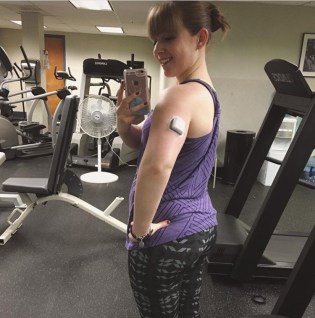
Four Factors that Impacted my Diabetes in Las Vegas

Recently, I returned from a trip to Las Vegas with my best friends in the universe. It was awesome to take a vacation with them, especially in a place that’s virtually a playground for adults.

Before I went on the trip, I knew to expect some sort of disruption with my diabetes care and management routine. I did as much as I could to prepare myself for every potential scenario, from packing extra snacks and supplies, to asking the DOC how I should account for a sudden change in time.

While my preparation really did help, I still encountered the unexpected when it came to my diabetes on the trip. Four factors in particular come to mind…

  1. The heat – At first glance, this is a no-brainer. I’ve been to many hot climates on vacation, so it isn’t news to me that intense sun can make blood sugar go low quickly. We were literally in the middle of the desert, so I knew it would be important for me to watch my numbers closely, as well as keep myself hydrated. But I think the fear of going low all the time was a little too strong, which meant that I was running a bit higher than I’d normally like for most of the vacation. My paranoia about drinking plenty of water, though, was not a joke. I pride myself on being good about staying hydrated, but I struggled to keep up with the dry desert heat. I can’t help but wonder: If I’d been better about drinking water, would it have benefited me during some of the stickier high blood sugars? Speculation can only get me so far now; however, all signs are pointing to probably yes.
  2. The strip – The Las Vegas strip is less than five miles in length, but the whole stretch of it, marked by hotels, stores, casinos, and ginormous flashing lights, feels incredibly long. Nevertheless, my friends and I naively believed that we could skip taking taxis and walk all over the place. For the most part, we could, but it was definitely dicey when we walked nearly a mile and a half from the Cosmopolitan to the Rio one evening. It influenced my blood sugar in a positive way – the exercise brought my levels down to a nice and stable place – but that didn’t mean it wasn’t scary to walk practically on the highway at nighttime.
  3. The alcohol – I’m well aware of the fact that different kinds of alcohol can have different affects on blood sugar. To minimize blood sugar swings, I stuck with the less-sugary options as much as I could (i.e., opting to order a rum or whiskey with diet coke), only getting fancier drinks when I was consuming fewer carbs at mealtime. For the most part, this strategy worked well and proved to me that a little extra thought can go a long way when it comes to deciding how to treat yourself. But it also reminded me why I don’t have weekends like this often – it’s exhausting enough to take care of myself on a daily basis without alcohol being a factor. Throw it into the mix and I’m watching my blood sugar so carefully that my CGM’s battery is drained in half the time it normally takes to zap it.
  4. The pizza – The scientific answer to the reason why pizza is tough on blood sugar involves the glycemic index and some fairly complex calculations…boring! All you really need to know is that it takes a long time for pizza to have an affect on blood sugar due to its high fat-to-carb ratio. As a result, it tends to be a “treat” food for me that I only indulge in every once in a while. But when in Vegas…you have as much of it as possible. Pizza was one of the quickest and easiest food options for me and my girlfriends throughout our trip, so we ate it multiple times. I don’t regret a single cheesy, delicious bite…but I am slightly remorseful for not doing a better job bolusing for it. The first time we had pizza, I didn’t give myself enough insulin. The second time, I gave myself too much and went low, though that may have happened because I didn’t finish both slices like I thought it would. The bottom line? I didn’t realize that pizza would be a dietary staple on this vacation, and I’ll probably refrain from eating so much of it on future vacations.

IMG_6890
A slice a day does not quite keep blood sugar at bay. But it’s tasty as hell.

Despite the diabetes curveballs I encountered, I enjoyed my trip to the fabulous Las Vegas. I managed the challenges as best as I could without letting them interfere too much with what I wanted to do. Plus, it helped that my best friends were with me the entire time. I have to give them credit for making the most of my diabetes difficulties, too. For instance, I felt badly about sidelining them in the Bellagio on our last night there due to a low blood sugar that crept up on me after walking (the strip!) and over-bolusing (the pizza!), but they really rolled with the punches and made the most of it. In fact, I’m pretty sure they experienced their favorite people-watching moments while we sat and waited for my sugar to come up (I got a kick out of the weird people coming in and out of the lobby, too, but was slightly more focused on raising my number).

Thank you, Kortney and Roshani, for accompanying me on an incredible girls’ trip and for being my best friends in the world. Maybe Las Vegas 2020 needs to happen – now that we know to expect, perhaps my diabetes will be a more cooperative travel companion the next time around!
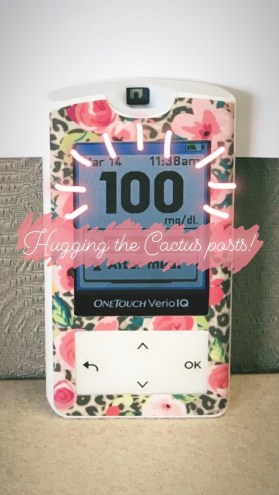
Celebrating 100 Posts on Hugging the Cactus

I’ve officially reached the 100-post mark on Hugging the Cactus. Wow!!!

9B0DD466-77F6-441A-9ACB-5757091FAEC0
I can’t believe I’ve already reached this milestone!

This blog debuted on October 2, 2017. I’ve spent the last eight months writing new content as often as possible, meeting more people with diabetes (both in person and online), and focusing on my personal health and well-being. It’s been an awesome ride, and I can’t wait to keep on enjoying it.

As always, thank you for your continued support. Every click, tweet, comment, and visit means the world to me, and every share couldn’t be more appreciated. Thank you for reminding me daily why this blog is so important to me and why I should continue to share my story.

Here’s to the next hundred posts – and many more after that.

Memory Monday: Cloudy and Clear

One Monday per month, I’ll take a trip down memory lane and reflect on how much diabetes technology, education, and stigma has changed over the years. Remember when…

…it was a thing to mix insulin?

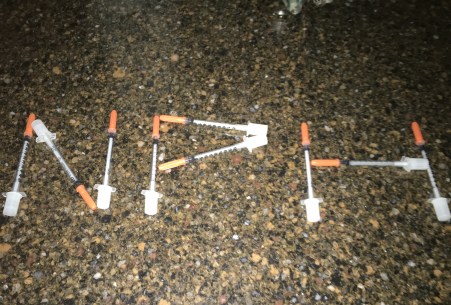
Yup, I’m referring to the days of cloudy and clear insulins – also known as NPH and Regular, respectively (insert corny Neil Patrick Harris joke here). Oh, you don’t know what I’m talking about? This is going back at least 15 years, probably more like 20, to when short-acting and long-acting insulins needed to be mixed in order to avoid having to take two separate shots. I only vaguely remember mixing my insulins, but here’s what sticks out in my memory about the process:

  • It was always “clear before cloudy” – the Regular insulin had to be drawn up in the syringe first to avoid getting any of the cloudy insulin into the clear vial.
  • The cloudy insulin needed to be rolled between the hands before inserting a syringe into it…I can’t remember why. Maybe to help bring it to room temperature, or make sure it was adequately mixed?
1019C7D1-695B-4ECC-A9F2-8F63FAF6660C
I definitely do not miss the days of filling these bad boys with two different kinds of insulin.
  • Drawing the insulins into a single syringe was nerve-wracking as hell. Precision was everything.
  • Air bubbles! They ruined everything!

I certainly don’t miss the tedious process of having to draw up insulin in such a careful, precise manner. If only I’d known how much easier an insulin pump would make my life sooner…

…but I guess that just makes me appreciate my pump more.


How Time Traveling Affected my Blood Sugar

I traveled through time last week.

No, I didn’t use a magical device or step through a portal. It’s much more boring than that: I flew across the country, east coast to west coast, to spend a few days in Las Vegas.

Okay, there’s no way in hell that I could justifiably describe my Vegas trip as BORING.

But my point here is that flying through a couple different time zones is totally trippy. And, of course, it impacted my blood sugar. Because why wouldn’t diabetes just cooperatively come along for the ride?

I knew I should anticipate some sort of blood sugar swings going to and from my destination, I just wasn’t sure of when and how they’d hit. But I did know that when I landed in Vegas, the first thing I needed to do was adjust the time on my PDM (my insulin pump). Surely, my blood sugar would not react kindly to thinking that it was three hours later than it truly was in my new time zone. My question, though, was when should I do this? On the plane? After we landed? Should I adjust it slowly, in one-hour increments? Or should I dial it back entirely in one go?

Normally, I would’ve asked my endocrinologist what to do – but I forgot to bring it up during my last appointment with her a few weeks ago. So naturally, I asked the next best source: the Diabetes Online Community (DOC).

The answers I received were varied…

…nevertheless, I appreciated the immediate replies. I decided to quit stressing about it so much and focus on getting to the actual destination, vowing to keep an eye on my blood sugar for any suspicious trends while on the flight.

Five and a half long hours later, my travel companions and I arrived at our hotel. While in line for check in, I fixed the time on my pump and glanced at my CGM (which I didn’t bother adjusting, since none of the settings on it or my meter were dependent on time). I was steady at 97 mg/dL…not too shabby at all. And I’m pleased to say that I maintained that decent graph for the next day or so. I was nonplussed by the phenomenon, but I couldn’t complain about it.

The next few days are a different story, due to some “lifestyle choices” I made while in Vegas (c’mon, you know all I mean by that is eating junk food and imbibing alcohol). But that’s a tale for another post, coming soon.

This one’s about time travel, and while I had no issues flying TO Vegas, I did encounter trouble flying home FROM Vegas. My friends and I chose to a red-eye flight, which I don’t regret per se, but I’d never done one before and didn’t realize how much trouble I’d have falling asleep on the plane. It was disorienting enough leaving one place at 9 P.M. to arrive in another at 5 A.M., but add a freezing cold aircraft, turbulence, and an unsettled stomach to the mix, and you’ve got a recipe for disaster. As I tossed and turned in my seat, violently shivering a few times, my blood sugar was very slowly, incrementally, rising. I didn’t realize how much until we landed and drove home, where I had to bolus for an out-of-the-blue 308 mg/dL. I was so bloody tired, yet sleep evaded me further as I anxiously waited for my blood sugar to budge – which it did, but not for several, agonizingly long hours.

It definitely didn’t help matters that I wasn’t eating regularly; at the time of our arrival home, I hadn’t eaten real food in about 36 hours due to nausea that wouldn’t seem to leave me alone. I’d muscled down toast and a couple of granola bars, but not much else. I’d like to think that my entire body was just rebelling against me for spending the weekend eating too much pizza, staying up too late, and drinking a little too much whiskey, because that train of thought at least helps me make sense of my lack of appetite and recurring high blood sugars.

I’ve been back on the east coast for a couple days now, and I’m relieved to report that things have settled down. I’m eating regular meals (and I actually feel hungry for them), and besides a few flukes in my CGM graph, my blood sugars are mostly back to normal. I wish I could say that there was some big takeaway from this all: that I know exactly what to do next time I travel through time zones, or that I know just what to do to prevent it. But that’d be silly, because with diabetes, there are just too many variables. At least I CAN say that I know to take it in stride next time, to roll with the punches. Monitor my blood sugar like a hawk, correct as often as needed, eat normal meals as much as possible, and drink plenty of WATER. In any case, isn’t that what diabetes is all about…

…regardless of time travel and/or sorcery?


Why I’m Thankful I DIDN’T Attend Diabetes Camp as a Kid

Growing up, the notion of diabetes camp was gently nudged into my brain each Spring. My endocrinologist and my parents would ask me, “Do you want to give it a try this year?” and my annual response, unfailingly, was “NO!”

To this day, I still don’t really know why I was so against diabetes camp. Part of the reason may be because I was a bit of a nervous Nelly growing up (okay, okay, I still am) and didn’t like the thought of sleepaway camp: It meant being away from home for an extended period of time, which made me feel nothing but anxious.

But my best guess as to why I didn’t want to go is that I felt that camp wouldn’t benefit me in any way. Both my mom and my aunt have type one diabetes, so they were (and still are) my go-to sources whenever any sort of diabetes issue crops up for me. I didn’t see how meeting kids my own age with diabetes would help me; after all, I thought I had everything I needed in my mom and aunt.

Things changed drastically for me when I started college and made the transition to caring for my diabetes independently. I got wind of a diabetes student organization on my campus and was interested in attending a meeting. That was it for me: for the next three years, I was very involved with this organization (the College Diabetes Network), eventually becoming the President of my school’s chapter and continuing to this day to volunteer for them whenever I can.

IMG_3242
I wasn’t ready for any kind of diabetes camp as a kid…but it’s a different story now that I’m an adult.

My involvement with the CDN has resulted in me meeting countless other T1Ds my own age, and it’s been amazing. I love sharing stories and learning from them. And as it turns out, most of these individuals went to diabetes camp when they were young and loved it. In many cases, diabetes camp is where they thrived and met some of their closest friends. They learned a lot about caring for their own diabetes and became more independent with diabetes management at a younger age.

But even after hearing the rave reviews about diabetes camp…I’m still thankful that I didn’t go to it when I was a kid.

Why? Because I think that a person’s journey with their own diabetes is highly personal. Like insulin-to-carb ratios or multiple daily injections versus insulin pumps, diabetes is often a disease about choices and responsibility. As an individual with diabetes, I hate being told how to handle my condition by someone who thinks they understand it better than me. I’m the one person in this world who understands MY diabetes better than anyone else. I know my body and I know what diabetes treatments and decisions are best. And for those few years of my life, I thought it was best for me to not go to camp. It was out of my comfort zone, and I refused to be coerced into going.

Perhaps in the back of my mind, I knew I’d have an opportunity later in life to connect with people my age who have diabetes. And I’m so thankful that I did because it came at a time in which I felt ready and was more accepting of my diabetes overall.

So there are no regrets for me when it comes to my choice to not attend diabetes camp. You could say that my decision to stay at home during those summers made me a happy camper…

Sorry, not sorry for the bad pun.


Training for my First 5K

At the start of the year, I told myself, this is your year. You’re going to be in the best shape of your life and finally run a 5K. I’ve never particularly enjoyed running, which is why the challenge of a 5K was more alluring than a different fitness goal. I felt that doing something I practically dreaded would make accomplishing it that much more gratifying.

But just a few short weeks into 2018, I broke a bone in my arm. I was crushed, because the kinds of physical activity I could do suddenly became severely limited. Instead of taking the injury in stride, I spent a long length of time moping over it. My exercise levels decreased and I stopped caring (for a short while, anyways) about my lean and mean pursuits. All I wanted was to heal, and heal swiftly.

Fortunately, I’ve fully recovered from the fracture, and so have my spirits. A renewed vigor took hold of me in April, and I spent many weekday mornings waking up early to complete a variety of workouts. I started to feel stronger and more confident in my athletic ability. So in the second week of May, just a few days after my 25th birthday, I decided the time was right to register for my first 5K.

And so I did, and I’ve devoted time training for it since then. It’s far from easy, but I must admit that each time I successfully complete a run, the feeling of accomplishment and pride that courses through my body makes it all worth it. It’s doubly wonderfully when I’m able to achieve in-range blood sugars before, during, and after each run.

I don’t have a convoluted strategy for stabilizing my blood sugar while running; rather, it seems to work best for me if I simply complete a fasting workout first thing in the morning. This eliminates a few variables affecting my blood sugar, including carbs consumed during a meal or insulin on board. I’ve found that I don’t even need to run a temporary basal or suspend any insulin – my body seems to do well if I’m running my normal basal rate. But with diabetes being a fickle fiend, I’m always prepared for a potential high or low blood sugar to occur on a run. In other words, portable glucose and my PDM are my constant running companions.

Race day is just a few short weeks away, and I can honestly say that I’m looking forward to it. Sure, I’m a little anxious, but I’m choosing to focus on the fact that I’m finally taking on something that tests me – and my diabetes – in all the right ways. I should be proud of that alone, but I must say, I’ll be over the moon when I get to cross that finish line.

Favorite Things Friday: Lauren’s Hope Medical IDs

One Friday per month, I’ll write about my favorite diabetes products. These items make the cut because they’re functional, fashionable, or fun – but usually, all three at once!

I’d been meaning to replace my medical ID for ages.

It was in rough shape. The medical snake symbol (a quick search on Google told me that the technical term for it is “Caduceus”) was scarcely recognizable, for the red paint that once made it stand out had peeled off a few years ago. The etching on the charm was nearly illegible due to age, and the bracelet itself was a Frankenstein creation: The original clasp it came with broke last year, so I had to transplant a mismatched clasp from an old bracelet onto it to be able to continue to wear it. All things considered…it’d seen better days.

Fortunately, I knew exactly where I should look for a new one: the Lauren’s Hope website. I’d heard about Lauren’s Hope a few years ago at a diabetes conference, and made a mental note to check it out some point down the road. Fast forward to the present and I’ve finally had a chance to shop on the site.

I was very pleasantly surprised to discover that there was a wide variety of medical IDs available. There were bracelets, charms, tags, and necklaces that ranged in style from fancy to simple. The choices were so varied that I decided to cut to the chase and check out bracelets only, since I knew that was the kind of ID I wanted.


But there was still quite a selection under that subcategory: I could choose from different metal tones, bracelet styles (cuff, stretch, woven, wrap, beaded, etc.), material types, and colors. Rather than go with something loud and flashy, I decided to stick with a basic silver link bracelet that came with an ID tag that allowed up to six lines of text to be engraved on it. I was thrilled that the space on the tag permitted so much information – I was even able to put a line on it about where I keep my glucose tablets stored.

And the part that’s really cool? The fact that the ID tag is interchangeable. This means I can go back to Lauren’s Hope whenever I want, order a new bracelet, and swap the tag from the old bracelet to the new one. It’s really refreshing to see a company understand the wants and needs of its customers so well; obviously, Lauren’s Hope gets that customization and options are important to people with medical conditions.

I’m loving my shiny, high-quality bracelet from Lauren’s Hope. It feels good to finally wear a piece of medical equipment (yes, I consider it medically necessary) that is both stylish and practical.

Diabetes Connections: Gym Edition

“Are you a diabetic?” Despite the fact that I was wearing earbuds, I heard the question that was undoubtedly being directed toward me.

I glanced to my right and met the gaze of the teenage girl on the treadmill next to me. I smiled, tugging an earbud out, and said, “Yes, I am. My OmniPod gave it away, didn’t it?”

She nodded eagerly. “I have a Medtronic pump, but I know what an OmniPod looks like. When I saw it, I had to say something to you.”

This marked the beginning of what wound up being a thirty minute interaction with Shae, a high school senior with bucketloads of energy and questions for me about life with diabetes. We specifically chatted about college, and I couldn’t resist telling her all about the College Diabetes Network and what a useful tool it was for me during my three and a half years at UMass. The more we spoke, the more it felt like I was looking at a mirror image of myself from seven years ago. She had just finished taking her AP Psych exam and was relieved it was done. Her senior prom was in a few days, and she described how she’d wear her pump while donning her fancy gown. She was excited about college, but a little nervous about the dreaded “Freshman 15” and whether her diabetes would adjust well to college dining halls.

IMG_3979
It’s so funny to think how something as crappy as diabetes can introduce so many amazing people into your life.

I did my best to answer Shae’s rapid-fire questions frankly but reassuringly. As I told her about how much my CGM helped me in college (especially since I was still on multiple daily injection therapy at that time), she exclaimed that I was inspiring her to want to give her CGM another shot (pun unintended – I love spontaneous diabetes humor).

As we parted ways, we both grinned broadly and wished one another well. This is why moments like this – diabetes in the wild – are so great. Diabetes instantly bonds you to a stranger who you might not otherwise ever interact with, and the beauty in that immediate connection is priceless.

Mom Appreciation Post

I know Mother’s Day was yesterday, but mothers deserve more than a Hallmark-card holiday in order to be adequately recognized. (They also deserve more than just this blog post; however, I can only express my admiration for moms using my words.) Let me explain my appreciation for moms.

All of the mothers I know, especially my own mom, work tirelessly to support their families in multiple ways. This is especially true of mothers of children with diabetes. They spend so much time counting carbs, losing hours of sleep, injecting insulin, attending doctors’ appointments, and dealing with difficult diabetes emotions all on top of normal mom duties. And many of the diabetes moms I know work(ed) full-time jobs, to boot!

IMG_4673
My mom is so wonderful that Chewbacca (yes, the famous Wookiee) embraced her admiringly within the first few seconds of being in her presence.

I think my mom is particularly amazing because she did all of the above, all while managing her own diabetes, too. Now that I’m an adult, I can’t help but marvel over how she did it all with such capability, humor, and unconditional love. I’m blessed to have an incredible mom who taught me what it means to be a dia-badass.

I love you, Mom!!!


The CGM Experiment: Comparing the Dexcom G5 to the G6

I have the extremely good fortune of being one of the first people in the world to receive the Dexcom G6, the latest in continuous glucose monitoring (CGM) technology. After spending almost two years eagerly anticipating its FDA approval, I could scarcely believe that I finally had it in my hands when it first arrived a few weeks ago.

I am partway through my second-ever G6 sensor, so I’ve had enough time to come up with some initial opinions on the system as a whole compared to the G5.

Let’s start with what I knew going into the first insertion of the G6. I knew that the transmitter would have a sleeker profile than the G5. I also was aware that the insertion process would be much more streamlined – all I would need to do is push a button and it would be on my body.  Plus, the G6 required 0 finger sticks or calibrations, could be worn for 10 consecutive days, and would no longer block acetaminophen (Tylenol) like its predecessors did. So far, me and the G6 were off to a solid start.

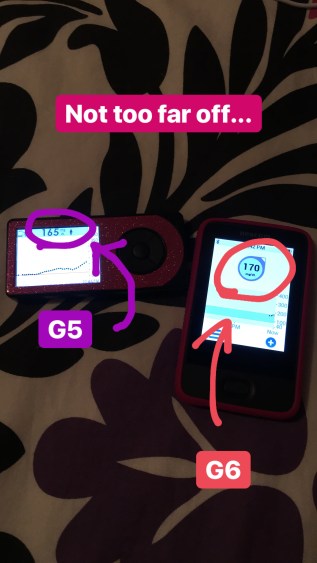
Then, it came time for me to actually put it on. Rather then end my current session with my G5, I decided to leave it on so I could see how accurate it was compared to the G6.

5af0f7d2789dd724634597

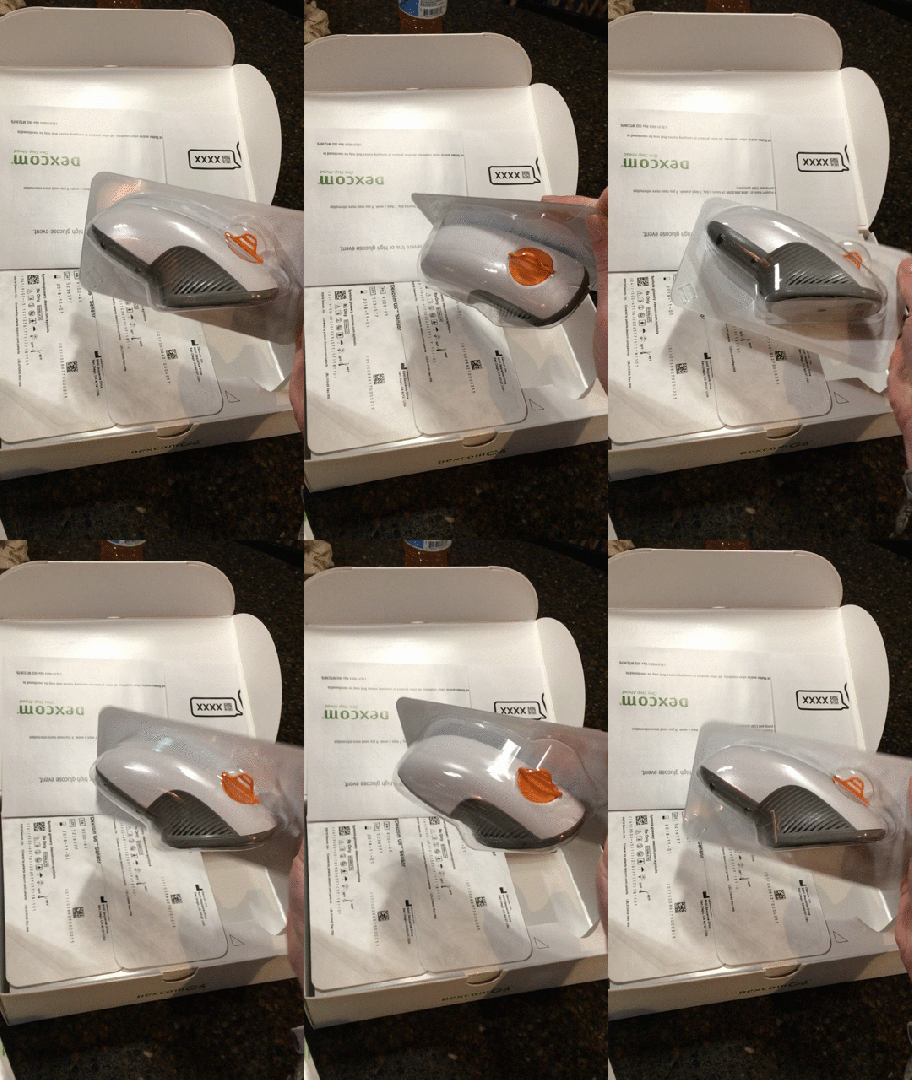
I was amazed by how easy it was to insert the G6. All I had to do was input a 4-digit code located on the sensor into my receiver. Once the code was accepted, I peeled the adhesive off the sensor, placed the system on my abdomen, folded the orange safety clip until it snapped off, and pushed the big orange button. I cringed when I did it for the first time; truthfully, I was prepared for it to hurt. It made a ka-shunk sound as the sensor inserted itself into my skin, and I…didn’t feel a thing. I marveled at how ridiculously comfortable it felt as I snapped the sleeker transmitter into place. I pressed one more button on my receiver to get the sensor warmed up, and that was it. Once two hours elapsed, my G6 system would be fully operational and could determine my blood sugar without requiring manual calibrations.

IMG_6655

While it felt great to know that I didn’t need to worry about calibrating my new device, I was more interested in seeing how well it matched up with my G5.

And I was a little let down…at least, I was in the beginning.

Initially, I was not impressed at all by the G6’s reports. They matched pretty damn closely with my G5. I was beginning to wonder whether the technology really was that excellent, and then my G6 proved to me that it was, indeed, kind of a big deal.

That moment came when it caught a low blood sugar sooner than my G5. I was feeling the early signs of a low, so it wasn’t much of a surprise when it alarmed. But what was particularly neat to me was that it was able to tell me that a serious low blood sugar (below 55 mg/dL) was oncoming in the next 20 minuets or less. In other words, it knew that I needed to treat my blood sugar right away to prevent a more urgent hypoglycemic event. That predictive feature was definitely a pleasant surprise.

As I wore my first G6 sensor for a few more days, it seemed to adjust better and better to my body. As evidenced in the above picture, it proved to be spot on when I compared it to the blood sugar readings I got from my meter. There’s absolutely still a bit of the classic CGM lag, as it takes about 15 minutes or so to catch up to what’s actually going on in the body, but that was to be expected.

I’m already on second sensor and I think it’s safe to say that I’m sold on the G6. But I don’t think that any product comparison/review is complete without a list of pros and cons, so here’s what I’ve come up with:

Pros of the G6 (compared to the G5)

  • Slimmer transmitter profile
  • 0 fingerstick calibrations (which I really loved when I didn’t have to wake up in the middle of the night to calibrate a sensor I inserted before bed)
  • Predictive low feature
  • Modern touchscreen receiver
  • Absolutely painless and foolproof application – honestly, it was THAT good that it might win me over from the G5 if that was the sole difference between the two

Cons of the G6 (compared to the G5)

  • Clunky applicator – as many other members of the DOC have noted, the system is comprised of a lot of plastic. Probably not very environmentally friendly. I wish it was possible to recycle it somehow
  • Automatic expiration after 10 days – with the G5, you could restart a sensor after a week had elapsed, and in theoryyou could use the same single sensor more than once for a few weeks in a row. The G6 automatically shuts down after 10 days, so you’re forced to put on a new sensor. This medical device is already pretty expensive, and you could at least get your money’s worth with the G5
  • No super noticeable improvement in blood sugar reporting capabilities

The bottom line is that the G6 is unquestionably an upgrade in diabetes technology. It requires fewer blood sugar checks and allows for greater discretion with its smaller size. The G6 is far from perfect, but it’s still a valued component of my diabetes toolkit. I’m excited to continue on this journey with it and discover just how much it helps me take the best possible care of myself.