This time last year, I was headed to the beach for a week and wrote a post expressing my excitement over the change of scenery…and the fact that the CWD FFL conference was taking place, albeit virtually, during the same span of time.
I was beyond stoked to get away for a week, my enthusiasm no doubt fueled by having spent the last few months in isolation (with my parents) due to the pandemic. But I was also incredibly anxious seeing as I didn’t know how drastically this vacation would differ from the ones we’ve taken in years past because of COVID concerns. I wrote:
I have no idea if my family and I will be able to even go to the same strip of sand and ocean without having to worry about things like too many people and not enough masks. We probably won’t be able to eat at many restaurants like we typically do on vacation; instead, we’ll likely cook a significantly higher percentage of our food at home. And we definitely won’t be able to peruse the shops like we have done every year since going to this particular beach town – we’ll have to be a little more creative when it comes to staying entertained.
Granted, I also wrote in that blog post that I was grateful to have the FFL conference to “attend” as a distraction that was both one that I wanted but also one that might be necessary so I wasn’t completely without fun things to do over vacation.
The beach I’m heading to may not look exactly like this but that doesn’t make me any less excited for vacation.
What a relief it is to think about how much things have changed between now and then. Thank goodness for vaccines!
This is my long, roundabout way of saying that I’m on vacation all of next week and I’m so excited to have all that time to unplug and unwind. As much as I liked attending the FFL conference virtually last year, it didn’t foster that sense of community and joy as much as it does when I’m attending it in-person. I’m thrilled for the individuals who are able to go in-person this year, though – I know they’ll get so much out of it and have a truly fun time.
But for now, it’s time for me to hit the recharge button. I’ll still have a couple of new blog posts up and ready next week so be sure to come back then to check them out!
Remember that time that Oprah Winfrey did a Weight Watchers commercial and proclaimed loudly and proudly before the cameras that she loves bread? (If you don’t know what I’m talking about, here’s the link to the ad with a little doctoring done to it – it is worth a watch.)
Well, I can relate to Ms. Winfrey – except my obsession with carbs extends beyond bread. I love cake, candy, chocolate, pizza, pasta, sushi…and just about every other carbohydrate-laden food that exists. So while I think it’s awesome that many of my peers with T1D choose to follow low or close to no-carb diets, that’s not the kind of thing that works for a girl like me: I’m happy managing my diabetes in tandem with a moderate carb intake. But that’s not to say that I don’t eat lower carb sometimes or that I don’t have an interest in the principles of the keto diet, just because it’s so restrictive.
At least, that’s what I used to think about it.
Would my love of carbs prevent me from trying out aspects of the keto diet?
When my boyfriend decided to go on the keto diet back in May (he’s had experience with it before), I was simultaneously impressed with his dedication to it, but also a little worried. We have dinner together a few times each week and since I wanted to show him that I support him 100%, I knew that I’d have to change up my cooking so it adhered better with the dietary guidelines of keto.
So for the last two months, I’ve had a lot of exposure to the keto diet, and this is what I’ve learned about it:
It’s not as restrictive as I thought it would be. I figured that eating strictly keto meant that the only food groups we could eat were meats/proteins, fibrous vegetables, and cheese. That wasn’t 100% true. While we stuck to proteins and vegetables for most dinners, we also had plenty of snacks that kept things fun and interesting. I developed a mild addiction to cheese crisps and chicharrons (otherwise known as pork rinds). I also had a lot of fun trying different keto dessert options out there, including cookies, ice creams, and peanut butter cups (the latter being my absolute favorite).
Snacks can get expensive. One of the keto peanut butter cups that we ate cost $10 for a bag of 7. That’s an insane price. When you factor in the cost of other more expensive grocery items, like beef jerky or nuts, things add up quickly, which is definitely a downside to the keto diet.
My blood sugars tended to respond well when I ate keto…for the most part, anyways. Eating keto dinners was mostly great for my blood sugar and it stayed relatively steady more often than not. On the occasions it didn’t, it was because I was trying to bolus for the amount of protein or the negligible amount of carbs in the veggies I was consuming at dinner, and I would go low as a result. There’s an art to bolusing on the keto diet, for sure, but since I was half-assing it (really quarter-assing it) and not following it all the time, I never got a grip on how to account for minimal carbs.
Keto can inspire creativity in the kitchen. The best thing I made, ate, and loved throughout my experience with the keto diet was cauliflower crust pizza. I found the best recipe for it that was so easy to make and yielded delicious results. I always assumed that cauliflower pizza crust would be too difficult to make or not satisfying in the same way that pizza is, but that isn’t accurate at all. I grew to appreciate the challenge that keto presented me to come up with new things to eat that were tasty and filling, which I didn’t expect but liked.
A “yay”: Summer is here!!! Hooray for warm weather, beach trips, and backyard BBQs! (Not to mention VACCINES!)
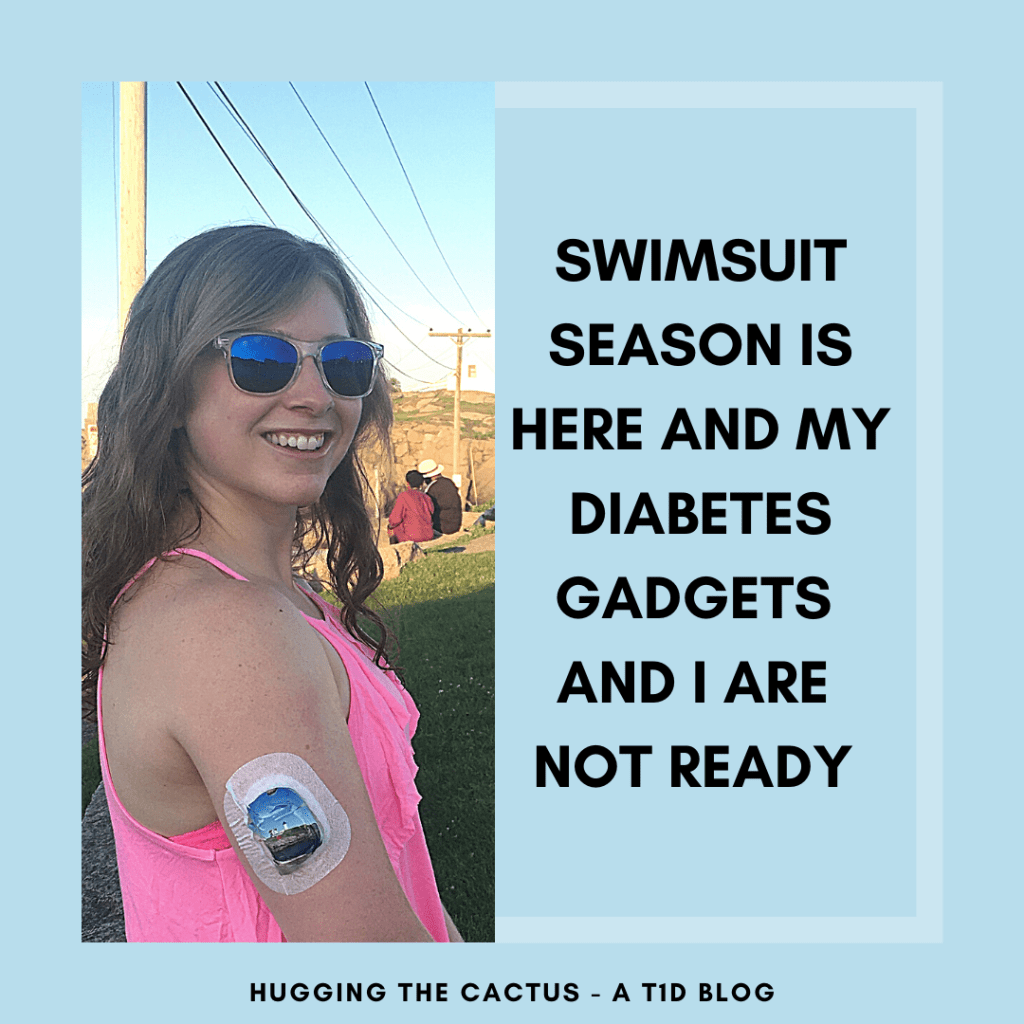
A “nay”: My pods and my CGM sensors are about to bare themselves for the world to see and we are NOT READY for it.
My confidence in my appearance is rarely, if ever, high. But I like to fake it ’til I make it and act like I’m rocking my summer wardrobe instead of stressing about how my legs or arms look in the staples of the season that are designed to show more skin.
Usually, I have a lot more success in feeling good about how my medical devices appear on my body. Whether they’re hidden under my clothes or out for the world to see, I typically don’t care because these gadgets are keeping me alive!!! And that’s a lot more important than any negative body image connotations they may create.
A picture from a time during which I was very okay with PDA (public displays of my arms).
But something about this year feels different to me. I am so not looking forward to the extra stares that my diabetes technology attracts. I’m not sure if it has to do with being sheltered in the last year and a half because of the pandemic, but whatever the cause may be, this is something I’m grappling with as the temps creep up and the temptation to hit the beach grows stronger.
I know I’m not the only one dealing with this. In fact, I was in Maine for a couple of days with my parents and I was wearing my pod on my leg, whereas my mom had hers on her arm. And we had multiple people approach us about our pods! They weren’t necessarily rude in their approaches – curiosity drove them to speak with us and that’s innocent enough – but it’s still weird to know that people are looking closely enough at our bodies to see our devices and feel comfortable enough to ask us about them. Plus, I felt extra self-conscious about it because in typical Molly fashion, I had a sunburn all around my pod thigh site…when applying sunscreen, I almost always miss the area directly around my pods because I’m afraid of the sunscreen making my adhesive weaker or interfering with the pod’s functionality. So not only did I have this big chunk of plastic sitting on my leg, it was also red all around the site, drawing even more attention to it. It was a relief when I was able to put shorts on over my swimsuit and cover up both the burn and the pod.
So while I’m not loving how wary I’ve felt lately about baring my diabetes devices, I’m also coming to terms that it’s just a sort of phase that I’m going through right now. And that’s okay. I’m also trying to remind myself that I don’t have to feel obligated to go into detailed explanations when people ask me about my pod or CGM. It’s a natural tendency that I have to use it as a teaching moment and be a good diabetes advocate, but sometimes I just don’t have the energy for it. I’m keeping my fingers crossed that as the summer season goes on, my comfortability with my diabetes devices increases and I worry less about the looks they tend to draw.
I attended a Massachusetts #insulin4all meeting recently that got me thinking about how good people with diabetes tend to be at minimizing.
I speak for myself, and some other people with diabetes I know, when I say that we’re really good at making it seem like it’s not a big deal. We manage a 24/7, 365 chronic condition like it’s not the full-time job that it is. I have family and friends who occasionally pick up on this and marvel at my ability to be present in a myriad of social situations while discreetly watching my blood sugar levels or calculating insulin dosages. I rarely act like diabetes is as serious as it is and that’s because I’ve become an expert at making it seem like small potatoes in my life.
And I’m not just good at minimizing my diabetes – I’m also highly proficient in minimizing the fact that it has forced me to make difficult decisions in my life, particularly when it comes to financial choices.
Over the years, I’ve become excellent at downplaying the impact of diabetes on many aspects of my life.
During this #insulin4all meeting, I was conversing with other chapter members about whether or not we, as individuals, have struggled to afford insulin. And a lot of us confessed that we’ve been pretty lucky and have never really had to resort to making truly difficult choices when it comes to affording insulin or other diabetes supplies. Despite that, we feel passionately about those who struggle to gain access because we understand how high the stakes are – it’s literally a matter of life or death.
But just because we’re able to (for the most part) afford insulin, that doesn’t mean that we haven’t had to make certain choices that we might not have had to make if we didn’t have diabetes.
For example, when it comes to my career, I’d never consider a job that doesn’t offer solid health insurance plans. Even if my strongest desire was to be a freelance writer, I wouldn’t go through with it because I know that it would be challenging to figure out my health insurance. And I know that the minute I run out of FSA dollars each year, I start thinking about setting money aside just to cover the costs of my diabetes supplies…which means that instead of buying some new clothes or planning a weekend getaway, I sometimes have to sacrifice those luxuries in favor of ensuring I have enough money to cover my fixed expenses as well as my diabetes medications.
When I think about it, of course I realize that it’s not fair, but haven’t really considered it before because this is just how it is. I’m used to it. And so are many other members of my #insulin4all chapter. We’re all accustomed to having to make certain choices about our lifestyles or spending habits that minimize the larger issue of insulin affordability. We’re used to it, even accepting of it, but that doesn’t make it right and it certainly underscores the terrifying fact that too many people simply can’t afford insulin and have to make much tougher decisions in order to get it.
It’s time to become a little less good about minimizing and better at vocalizing – not just the seriousness of diabetes, but also the dire nature of insulin affordability and access that affects millions around the world.
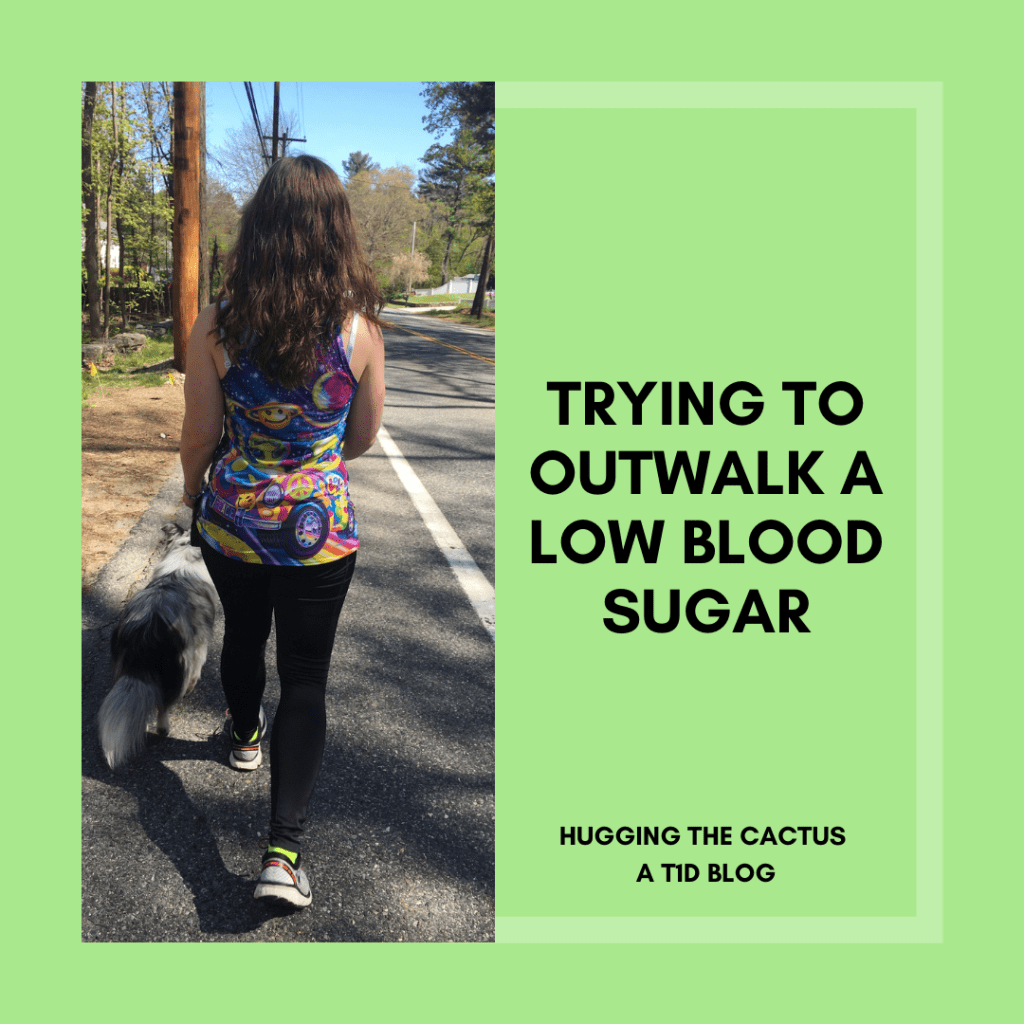
I was a mile into my regular morning walk when the beeps started.
Dammit.
The beeps were coming from my Dexcom app on my phone and they were alerting me to a low blood sugar. Rather than correcting the low, though, or even opening up the app to dismiss the alarm, I just kept walking.
Outwalk the low blood sugar, Molly.
Outwalking a low blood sugar is easier said than done.
I really couldn’t understand why my blood sugar was low in the first place considering that I had no food in my system or insulin on board (other than my standard basal rate). Fasting workouts tend to virtually guarantee stable blood sugars for me, which is wonderful because otherwise exercise tends to make me crash. But what was different about this morning? I was utterly befuddled. My Dexcom alarm chimed a second time.
Outwalk the low blood sugar, Molly.
Even more confusing was my complete and utter determination to not treat the low blood sugar until I got home. I had glucose tablets on me, so it’s not like it was a matter of lacking a treatment. Rather, I think I was more focused on maintaining my fasted state for as long as possible, since I almost always do an exercise circuit (weight lifting, cardio training, HIIT intervals, etc.) when I return home from my morning walks. My low alarm rang a third time, just as loudly as it had before.
Outwalk the low blood sugar. You’re only 15 minutes from home.
I was deaf to my Dexcom’s persistent alarms for the next 15 minutes as I somewhat floundered down the road home, letting my impatient puppy tug me along. It’s almost like she knew that I was low and was trying to hurry me home, and I was 100% okay with that because my brain was starting to get fuzzy.
Outwalk the low blood sugar…
At long last, nearly half an hour after my first low alarm sounded, I was crossing the threshold of my front door and fishing my phone from my bag. I tapped through my notifications and cleared the low alert, noting that I was 66 mg/dL and definitely needed to eat something before continuing on with my morning routine. I sighed, set my sight on the kitchen (where a low blood sugar food stash awaited me), and resigned myself to the fact that I couldn’t outwalk the low blood sugar this time.
This was originally published on the T1International blog on June 8, 2021 and it is written by Alzahrra Almajid. I decided to share it on Hugging the Cactus because it is my goal to understand the challenges faced by the BIPOC community and learn what can be done to help. Alzahrra’s experience is a massive wake-up call that we still have a long way to go when it comes to advocating for marginalized groups. Thank you to Alzahrra for sharing her story.
I was diagnosed with type 1 diabetes when I was 8 years old. Having parents who were immigrants from Iraq and people of color was especially hard in navigating diabetes. My mom dealt with a lot of demeaning comments from healthcare providers because she was not taken seriously. In the initial months after diagnosis, her ability to care for me and help manage this new disease was often questioned. It felt like they thought she was too incompetent to understand how diabetes is treated. I remember how disrespected and vulnerable I felt because of the tone doctors spoke to us with.
When I was about eleven years old, I was hospitalized for having a high fever and diabetic keto-acidosis (DKA). On the second day of my stay at the hospital, a nurse asked me if I was purposely not giving myself insulin because it “did not make sense” that my blood sugars were still elevated. I was stunned by how demeaning that comment was. I felt so belittled in that moment that it has stuck with me all these years. Why would I want to feel that way? How could I fake it if the nurses were the ones administering my insulin at the hospital? It turned out I had an infection that was causing the high blood sugars and fever so no, I was not purposely not giving myself insulin. After that day, I started to notice how different my life was compared to other diabetics I met.
Alzahrra noticed her experience with diabetes was very different compared to that of other people with diabetes she has met.
There was not much awareness about type one diabetes in my community so it was difficult for me and my mom to find resources about what treatments were out there. We were not aware of what an insulin pump was or what a continuous glucose monitor (CGM) was. We had no idea that they even existed until I began to research diabetes on my own when I was about eleven years old. Only after I mentioned insulin pumps to my doctor, did we start discussing them as a viable option. When I learned about CGMs later on, I wanted one so bad because I was certain it would help my elevated A1cs. However, after hearing how much it cost, I knew that it was nearly impossible to get it.
Seven years after my diagnosis my brother was also diagnosed with type 1 diabetes which made the already bad financial burden worse. Although all people with diabetes struggle with how expensive diabetes can be, immigrants and people of color often do not have access to quality health insurance (or any access) so they are less likely to benefit from advanced diabetes technology. As I got older I began to understand how difficult it is to navigate a system that makes it harder for people in underrepresented communities to get adequate care.
I knew from early on that I wanted to advocate for marginalized groups. Being a person with type 1 diabetes is already mentally draining and expensive. When you add the challenges of navigating through racial or ethnic disparities, diabetes becomes agonizing. Black, Indigenous, and People of Color (BIPOC) deserve to have representation in the diabetes community and have their concerns addressed. They deserve the same level of care and access to resources that their white counterparts have. I chose to become a Communities of Color Lead for the Illinois #insulin4all Chapters because I want to influence positive change by making sure BIPOC are not left out of the conversation.
There’s no doubt that T1D directly affects my relationship with food.
Sometimes, I eat whatever I want with zero guilt. Other times, I painstakingly count not just the carbs, but every single macro of any morsel that meets my mouth. And more often than not, I fall somewhere between those two extremes.
But no matter what, my relationship with food is exhausting and probably one of the most inconsistent relationships I’ve ever had in my entire life.
It’s also a relationship that causes me to make what I’m calling “inspired” food choices.
Diabetes certainly impacts my food choices…especially when it comes to blood-sugar spikers like pizza, pasta, waffles, cake, and more.
Choices like eating dessert before dinner because my blood sugar is low.
Choices like only eating low- or no-carb foods because my blood sugar is high.
Choices like timing my meals down to the minute because I know that my body functions best when I eat regularly.
Choices like keeping snacks in my purse, my overnight bags, my car, and miscellaneous other locations because I never know when I might need food on the fly.
Choices like restricting my eating because a low blood sugar made me binge on food one day, and the guilt carried over to the next day.
Maybe “inspired” isn’t the right word to describe my food choices here. There’s so many more that could apply: weird, strategic, healthy, unhealthy…the list is limitless.
Just like the number of “inspired” food choices that my diabetes triggers.
Good, bad, and everything in between, though, the first step in making changes to my relationship with food is acknowledging the flaws in it. While I admit that I’m not sure what the next step is, I do know that I’m feeling determined to finally establish a guilt-free relationship with food.
Diabetes already takes too much from me…I refuse to let it continue to make my relationship with food negative.
Hey, it’s me, Molly, the blogger behind Hugging the Cactus.
As you may or may not be aware, I’ve had a lot going on lately.
The newest, most exciting thing in my life is, of course, my new job (I’m aware that I keep gabbing about it…I can’t help it and there’s definitely more to come about that in the future).
I’ve been busy getting acclimated to my role at CDN. When I’m not working, I’m taking care of my dog, Violet, maintaining/cleaning/attempting to update my relatively new-to-me condo, and trying to keep some semblance of a social life – which, now that summer is here, is getting downright crazy with plans. And I love it! I truly love staying busy in some form or fashion.
This blog is great at keeping me busy when everything else in my life is slow or when I need a distraction. But lately, life’s been so hectic that I’m getting distracted from the blog, so I’ve decided to temporarily decrease the frequency at which I post…from 3 to 2 blogs per week, posted on Mondays and Wednesdays (instead of Monday/Wednesday/Friday).
I’ve decided it’s time for a temp basal – I mean blog – decrease.
It’s not a dramatic change and I’m certain it’s only temporary…just like a temp basal decrease on my pump can improve my blood sugar levels, cutting down on the number of blogs I post per week will help me improve my overall blogger abilities and prevent me from feeling too pressured to keep churning out posts at the pace I’ve been doing so that last few years.
So I won’t have new content posted here on Fridays for the time being, but never fear: I’ll pick it up again before long. And maybe now this will mean that I can interact a little more with the diabetes community within other platforms, like Twitter and Instagram, which will be a nice change.
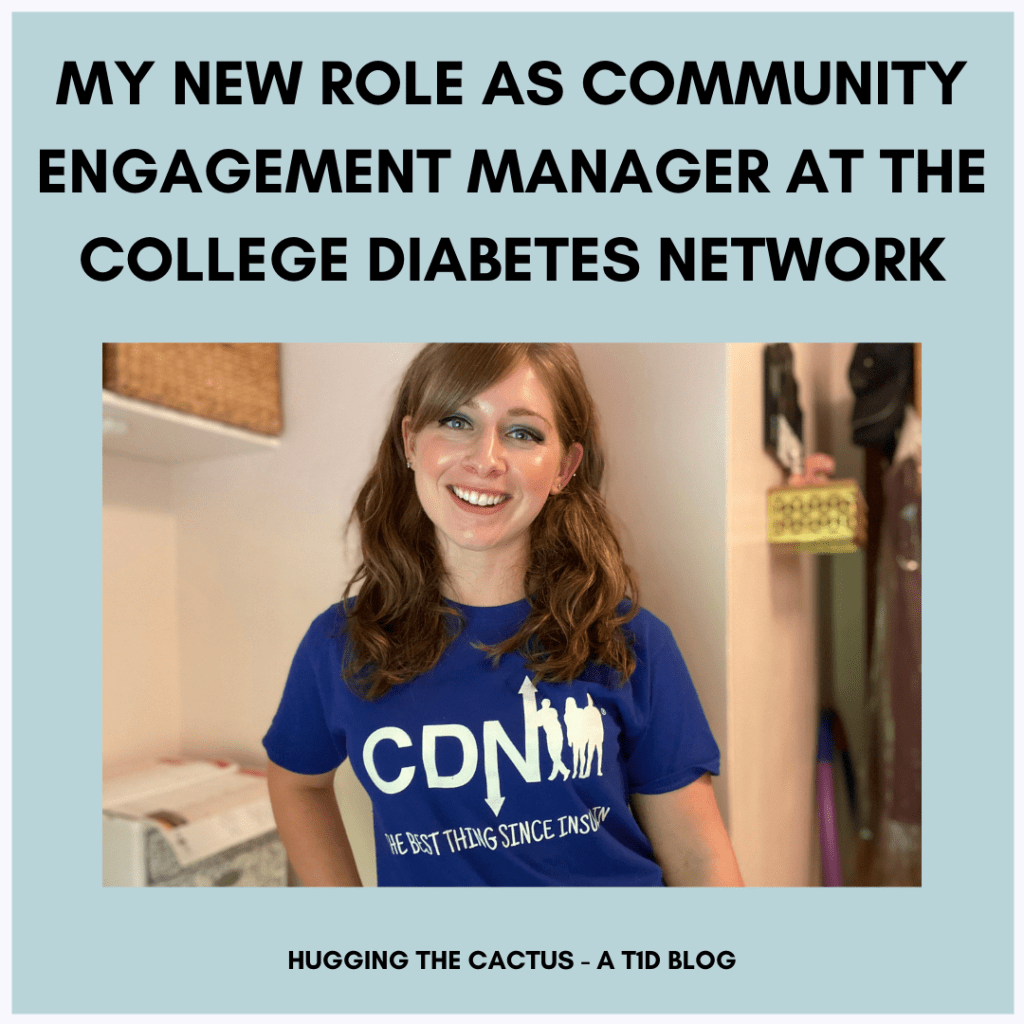
This blog post was written by me and it was originally published on the CDN website on June 8, 2021. I just wrapped up my first week as their new Community Engagement Manager, so I figured it’d be fitting to share the post I wrote for their website here so my readers can get a better understanding of what this role means to me! Read on for more…
Growing up, I wanted nothing to do with diabetes. My parents and doctors encouraged me to attend diabetes camp so I could meet and make friends with T1D peers, but I stubbornly resisted the notion…until it was time for me to go off to college at the University of Massachusetts Amherst.
I was nervous about making this transition, but this changed when I had a chance encounter with someone named Christina Roth. She told me all about a group she started when she attended UMass herself: And that happened to be the College Diabetes Network.
In September 2011, I attended my very first CDN chapter meeting and I couldn’t believe I had waited so long to hang out with people my age who knew exactly what it’s like to live with diabetes. I was hooked and wanted to make as many connections as possible! In my three-and-a-half years at UMass, I served as the Chapter President and started writing for an online diabetes magazine in my spare time.
CDN…the best thing since insulin.
When I graduated, I put diabetes work on the backburner and started my career as an Editor in the financial technology industry. But I still kept in touch with my contacts at CDN and volunteered at the annual student retreats and provided my editorial skills to some of their resource guides. Eventually, I missed actively forging connections within the diabetes community, so I decided to blend this with my love for writing/creating content by launching my own diabetes blog, Hugging the Cactus, in October 2017. My blog has cultivated and deepened my relationships within the diabetes community, and by choosing to leave the corporate world behind and officially joining the CDN team, I will continue to do so on a new, exciting level as the Community Engagement Manager.
I’m thrilled to be part of an organization that has given me confidence, skills, connections, and so much more over the years. I can’t wait to jump into all things CDN and help provide young adults with what they need in order to live their best lives, despite diabetes!
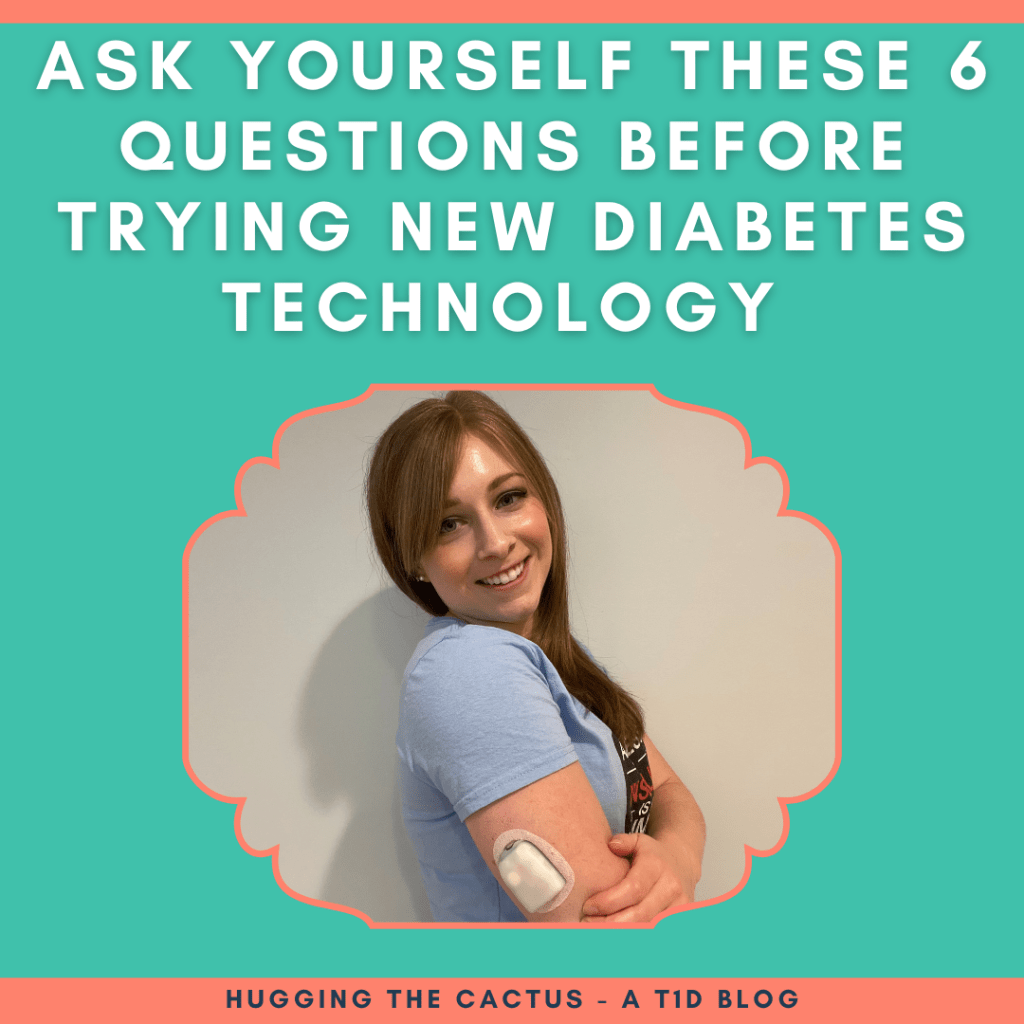
This blog post was originally published on Hugging the Cactus on May 13, 2020. I’m sharing it again today because I think it’s super important to weigh the answers to these questions before deciding to try new diabetes technology. This is coming from someone who waited 17 years before she tried her first insulin pump, and even though it has had an enormously positive influence on my life and sometimes I wish I’d tried it sooner, I’m ultimately glad that I waited that long! Read on for more details…
So you want to try your first continuous glucose monitor. Or maybe you’re ready to leave behind multiple daily injections and switch to insulin pump therapy. Whichever diabetes device you’re looking to start using, there are some questions you’ll probably want to have answers to before decide that now’s the time to introduce new diabetes technology into your daily routine.
The following is a compilation of the questions that I thought long and hard about (literally for years) and that I wish I’d thought long and hard about before I made the transition to the OmniPod insulin pump.
1.Am I ready for it? It took me 17 years before I decided that I was ready to try an insulin pump. 17 freakin’ years!!! I spent most of that time being too afraid of introducing such a drastic change to a routine I’d had down pat for such a long period of my life. There are times when I wish I’d gone onto my insulin pump sooner, but ultimately, I’m glad that I wasn’t swayed by my family or doctors to go on it before I truly felt ready. By the time I started using my OmniPod, I had the maturity, responsibility, and emotional intelligence that I felt that I needed for an insulin pump.
2. Will I be able to afford it? Obviously, this isn’t a question that I wondered about when I was younger, but it’s one of the first things that comes to mind as an adult on her own health care plan. We all know that diabetes supplies are expensive, and it seems that the more technologically advanced something is, the more money that has to be forked over in order to obtain it. This isn’t right or fair, but it’s a simple truth and an important one to think about before choosing one pump or continuous glucose monitor over another.
3.Why do I want to start using it? I wanted to start using my OmniPod because my mom experienced great success when she started using it. And I decided to get a Dexcom CGM because I fell in love with the technology after undergoing a trial period with my endocrinologist. In both situations, I felt very much in control of my decision to start using these devices and I didn’t really listen to anyone else’s opinions. But I am very aware of the fact that social media and real-life friendships with other people with diabetes can often sway people in different directions. After all, if I saw a post on Instagram from a dia-influencer who was singing the praises of a Tandem T:slim pump, then I might seriously start thinking about switching to it (this has actually happened to me). But the bottom line is to think about the why – will this device enhance quality of life for me? Will diabetes be easier to manage with it? Will it help me achieve my A1c and/or blood sugar goals? Do I need to add something new to my routine because I’m feeling burnt out by doing things the same way all the time? Knowing why I wanted to use an OmniPod or a Dexcom CGM made me feel that much better during the whole process of learning how to use them – I felt like I had clear goals that would help me navigate the integration of these new technologies into my daily routine.
Did you know that Insulet/OmniPod has demo pods that you can wear? They don’t hold insulin or deploy a cannula, but they can give you a good sense of what it’s like to wear a pod on a daily basis!
4. Will I be comfortable wearing it 24/7? This is a big one! Pods, pumps, and CGMs are very visible, and it can be jarring to go from being “naked” to having bumps and lumps underneath clothes that can get caught on doorknobs, chairs, and the like. Personally, the benefits of my OmniPod and Dexcom outweigh something like this which is a bit superficial, but that doesn’t mean it’s not something to think about. But it’s also worth thinking about comfort and what is least painful when it comes to insulin delivery, so that’s why this is an important question to ask.
5.Do I know anyone else using it who can provide feedback from a patient’s perspective? I’ve talked about this before, but I’m not sure when, if ever, I would have seriously considered using the OmniPod if my mother hadn’t tried it first. The fact that we both have diabetes has probably made us a little closer and strengthened our bond, so if there’s anyone’s opinion that I’m going to trust when it comes to something like this, then it’s hers. I can actually remember her first few weeks on the OmniPod – in which she learned a lot of valuable lessons – and how pleased she was with it once a few months with it elapsed. She taught me the ins and outs of the OmniPod when I started to use it, and I’d argue that her advice was more helpful than that of my diabetes educator. So I’d advocate gathering opinions from family and friends (if either is applicable) or the diabetes online community before going on a new diabetes device, in addition to the research component below…
6.Have I done enough research on it? …Like any smart shopper, it’s crucial to really consider all options and research them thoroughly, especially when it comes to the top contender. I definitely did not complete sufficient research before going onto the OmniPod or Dexcom; rather, I trusted that they were just right for me. If I were to switch to something else tomorrow, though, you can bet that’d I’d spend a lot of time scouring the web for every last bit of information on the device so I could make the most informed decision possible.
New diabetes technology can be both scary and exciting. But more than anything else, it can really make life with diabetes much more carefree, and I’m glad that in this day and age there are so many options available to people with diabetes that continue to be technologically impressive



 Hugging the Cactus