I hope that the moment you read the title of this blog post, Avril Lavigne’s smash hit from 2002 got stuck in your head (sorry, not sorry).
On a related note, it felt like it was the right phrase to use as a title for this post.
In the past, I’ve written how diabetes has turned me into a bit of a control freak (meaning that I don’t do well with the curve balls it sometimes launches into my path). I prefer a schedule – nothing too regimented, just enough to know what to expect in terms of diabetes issues in a day. And that’s not always possible; hence, I have some control-freak tendencies.
Lately, I’m also wondering if diabetes has made me more emotional.
The thought occurred to me when I was deep in self-reflection mode, a place I’ve found myself going to again and again throughout my quarantine. I started thinking about instances in which I let my blood sugar influence my mood, and I realized that it happens more often than I care to admit.
Life with diabetes sometimes means reacting like all of these emojis within a matter of moments.
I wonder if the tie between my emotions and my diabetes exists because my diabetes requires me to be so attentive to my body at all times that it’s also caused me to have a heightened awareness of my emotions and what may be causing them. I definitely allow blood sugars, both high and low, to affect how I feel when they happen. I let the successes and failures of diabetes technology influence my mood. And when I start to get down in the dumps about non-diabetes things, it often turns into full-blown diabetes burnout.
Diabetes is complicated on its own.
But to think that it interferes with my emotions, too?
Isn’t it enough for diabetes to impact me just physically and leave my mental state out of it?
I’m not big on scary things, in general (besides Halloween…I love dressing up)…but horror stories, in the form of tales told ’round the campfire or in media such as television or film, have never been my cup of tea. Probably because I’m a giant scaredy-cat, but I digress.
My disdain for horror doesn’t mean I’ve been able to successfully avoid it over the years. I’ve traipsed through my share of haunted houses, watched countless scary movies (with my hands over my eyes for a good portion of all films), and listened to spooky ghost stories.
The scariest story of all that I’ve heard over and over again has to do with…
Diabetes. And feet. Without going into more detail – because I’m shuddering at the mere thought – diabetes complications could lead to, um, amputations.
I’m not trying to make light of a very serious subject here: Let me be crystal clear when I say that diabetes complications are real and terrible, I wouldn’t wish them on anyone. They also frighten me so much that I tend to avoid blogging or even talking about them altogether. The slightest blur in my vision or tingling in my toes can send waves of panic through my brain that are so intense that I convince myself that I’m experiencing my first diabetes complications.
So when I discovered a cut on my toe several weeks ago, I couldn’t help but totally freak out, especially when I noticed blood around the site.
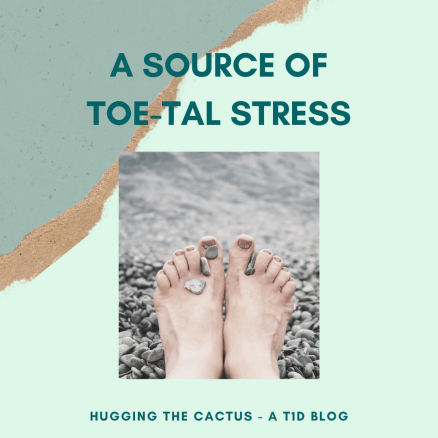
As a person with diabetes, you’d never catch me barefoot and surrounded by all those rocks. OUCH.
For most people, a cut on the toe sounds like no big deal – you just put some antibiotic cream on it, wrap a Band-Aid around it, and let it heal. But for someone like me who has diabetes, a little cut triggers fears of serious issues like cellulitis or other infections that could lead to major problems.
It might sound ridiculous, but in the first couple days after I noticed my cut (it was a bit like a split in my skin), I had horrifying visions of my toe turning black and falling off. I became hyper-aware of every sensation I could and couldn’t feel in that area, and when I felt a slight stinging around the area a few times, I imagined that it meant that my days with all of my toes were numbered.
Was it silly for me to jump to such dramatic conclusions? Probably. Was I being paranoid? Definitely. But my overactive imagination was enough to convince me to at least consult my primary care physician about the matter.
I’m glad that I did. Over a two-week span, I had two virtual appointments with my doctor who took my concerns seriously. I described the issues and he gave me advice as to how to treat the cut (stop putting Neosporin and a Band-Aid around it each day, let it breathe, use a nail file to very gently proximate the wound, make sure I wear socks and shoes for all forms of exercise to better protect my feet). He agreed with my overarching concern: to heal it in order to prevent it from getting worse.
My toe is doing much better now, and after all that, I feel a bit (okay, a lot) sheepish that I made such a big deal about it in my head when I initially spotted the split in my skin. But in life with diabetes, everything related to my health has to be taken seriously, even if it means dealing with an added source of toe-tal stress.
Life with diabetes can be the opposite of a cakewalk. In fact, it can be so frustrating at times that I seriously consider ripping my hair out due to sheer agitation.
When thinking about the things that drive me nuts about diabetes, I came up with a list of 8 occasions in which I come this CLOSE to losing my freakin’ marbles:
1. When low blood sugars refuse to come up…
2. …And when high blood sugars refuse to come back down.
I’m considering these first two as separate list items because the scariness of a lingering low and the frustrating nature of a stubborn high can be two very different types of “GAAAAAAAAHHHH!” But both can be especially suck-y when you feel and know that you’ve been doing everything right to treat them without experiencing the expected results.
3. Pod and CGM sensor failures.
Oooh, any sort of device failure can be so exasperating any time of day. But they’re worse when they happen at inconvenient times, such as in the middle of the night or during an important conference call. All diabetes technology should work flawlessly at all times, but that’s not always the reality that we live in.
4. Inaccurate results.
I can’t stand when my blood sugar meter or my CGM report false readings. Sometimes, I’ll check my blood sugar two times in a row just to see how close both readings are to one another, and it makes me want to throw my meter across the room when I see that they’re off by 20+ points. Once, I had a reading that was off by more than 50 points! That makes a major difference in how much insulin I give myself in that moment in time, so inaccurate results can really derail my blood sugars for hours after.
I’m sure you can imagine how entertaining the search results were when I looked up images to go with this blog post.
5. Folds in the adhesive.
Whenever I apply a fresh sensor or a pod, I try to be super careful and make sure that the adhesive sticks smoothly…but despite my best efforts, that doesn’t always happen. Folds in the adhesive are far from the worst thing in the world, but they do make it more difficult for my devices to stick on for the full length of time that I need to wear them, and I usually end up having to add tape around them to reinforce the hold. More tape = more folds = more irritation!!!
6. Unexplained blood sugars.
Anyone with diabetes has been there, done that. You could follow the exact same routine from one day to the next, even eating the same foods at the same times, and get totally different blood sugar results. Or maybe you thought that you bolused perfectly for a meal, only to find out hours later that you’re much higher or lower than you anticipated. Whatever the reason behind them may be, unexplained blood sugars are just obnoxious.
7. Screeching alarms.
Speaking of things that are obnoxious, let’s talk about wailing OmniPod or Dexcom alarms for a hot second. There’s nothing like a resounding BEEEEEEEEEEEEEEEEEEEP to ruin your day!
8. The INSANE costs of our supplies.
Undoubtedly, the thing that most makes me want to rip my hair out when it comes to diabetes is the cost of supplies. I’ve blogged more and more recently about the criminal cost of insulin – since the 1990s, the cost of insulin has increased over 1,200% (!!!) – and I’ll continue to do so until EVERYONE with diabetes can afford this life-saving medication. We never asked for diabetes to happen to us. But it did. And the fact that many people with diabetes have to make sacrifices in order to, well, survive, is simply not okay, and the most infuriating thing about living with this chronic illness.
We all know that 2020 hasn’t exactly gone to plan so far, largely thanks to COVID-19.
In a word, the last 8-10 weeks or so have been…weird. Collectively, the world experienced a lot of things: shock, rapid-fire adjustments, loss, and more than anything else, change.
It goes without saying that I’ve been very fortunate given the circumstances. I’ve had my job throughout this whole ordeal, and I’ve had experience working from home before which arguably made my transition to full-time remote work a little easier. While each week has come with its own unique set of challenges and emotions, there’s no denying that I’ve had it pretty good, overall, these last couple of months.
But now, along with everyone else, I’m about to enter a “new normal” (gosh I hate that term) as states begin to re-open. And with this “new normal” comes the possibility of returning to a physical office building each workweek.
I’ll admit that the sheer thought of it simultaneously excites and terrifies me.
My thoughts on re-entering the workplace are…complicated.
On the one hand, I’m yearning to go back to work in an office space. I miss my little cubicle, office camaraderie, and meetings that are held in-person, in conference rooms, as opposed to virtually.
On the other hand, I’ve never felt more anxious about returning to a space that is shared by people other than my family members.
There are a LOT of people that enter and exit my company’s building throughout the typical workday. There are at least a dozen other companies besides mine that occupy the other floors in the building. Tons of deliveries are made to these office suites each day. While there are custodial staff who do their best to keep the building clean, it can be…a challenge, as anyone who has seen our bathrooms can attest to.
Basically, I suppose that I’m feeling incredibly nervous about the exposure to germs that is bound to happen upon my return to the office.
Even if I didn’t have diabetes and wasn’t considered at a higher risk for COVID, I’m sure I’d still feel worried because it’s not just about me: It’s also about the people I live with. I’d never want to bring anything harmful into my family’s home, period, bottom line, end of story. And while the odds are pretty damn high that PPE (personal protective equipment) will become standard when re-entering the workplace, it does little to placate me because I’ve seen firsthand how sloppy people can be when it comes to wearing it or disposing of it properly.
And so, with much still unknown about COVID, it just seems like a giant gamble to resume working in an office environment when I can’t be sure that I won’t be exposed to anything.
As it stands right now, I don’t have a concrete “return to work” date. And I don’t know what exactly it will take in order for me to feel totally comfortable about returning to the office. But I do know that I’m cautiously optimistic for a smooth transition to a “new normal” that is safe for all.
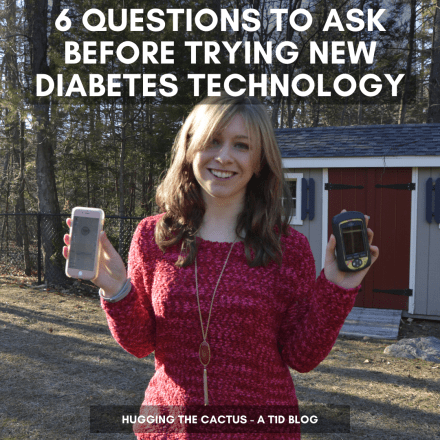
So you want to try your first continuous glucose monitor. Or maybe you’re ready to leave behind multiple daily injections and switch to insulin pump therapy. Whichever diabetes device you’re looking to start using, there are some questions you’ll probably want to have answers to before decide that now’s the time to introduce new diabetes technology into your daily routine.
The following is a compilation of the questions that I thought long and hard about (literally for years) and that I wish I’d thought long and hard about before I made the transition to the OmniPod insulin pump.
Am I ready for it? It took me 17 years before I decided that I was ready to try an insulin pump. 17 freakin’ years!!! I spent most of that time being too afraid of introducing such a drastic change to a routine I’d had down pat for such a long period of my life. There are times when I wish I’d gone onto my insulin pump sooner, but ultimately, I’m glad that I wasn’t swayed by my family or doctors to go on it before I truly felt ready. By the time I started using my OmniPod, I had the maturity, responsibility, and emotional intelligence that I felt that I needed for an insulin pump.
Will I be able to afford it? Obviously, this isn’t a question that I wondered about when I was younger, but it’s one of the first things that comes to mind as an adult on her own health care plan. We all know that diabetes supplies are expensive, and it seems that the more technologically advanced something is, the more money that has to be forked over in order to obtain it. This isn’t right or fair, but it’s a simple truth and an important one to think about before choosing one pump or continuous glucose monitor over another.
Why do I want to start using it? I wanted to start using my OmniPod because my mom experienced great success when she started using it. And I decided to get a Dexcom CGM because I fell in love with the technology after undergoing a trial period with my endocrinologist. In both situations, I felt very much in control of my decision to start using these devices and I didn’t really listen to anyone else’s opinions. But I am very aware of the fact that social media and real-life friendships with other people with diabetes can often sway people in different directions. After all, if I saw a post on Instagram from a dia-influencer who was singing the praises of a Tandem T:slim pump, then I might seriously start thinking about switching to it (this has actually happened to me). But the bottom line is to think about the why – will this device enhance quality of life for me? Will diabetes be easier to manage with it? Will it help me achieve my A1c and/or blood sugar goals? Do I need to add something new to my routine because I’m feeling burnt out by doing things the same way all the time? Knowing why I wanted to use an OmniPod or a Dexcom CGM made me feel that much better during the whole process of learning how to use them – I felt like I had clear goals that would help me navigate the integration of these new technologies into my daily routine.
Me, being a goofball with my two favorite diabetes devices.
Will I be comfortable wearing it 24/7? This is a big one! Pods, pumps, and CGMs are very visible, and it can be jarring to go from being “naked” to having bumps and lumps underneath clothes that can get caught on doorknobs, chairs, and the like. Personally, the benefits of my OmniPod and Dexcom outweigh something like this which is a bit superficial, but that doesn’t mean it’s not something to think about. But it’s also worth thinking about comfort and what is least painful when it comes to insulin delivery, so that’s why this is an important question to ask.
Do I know anyone else using it who can provide feedback from a patient’s perspective? I’ve talked about this before, but I’m not sure when, if ever, I would have seriously considered using the OmniPod if my mother hadn’t tried it first. The fact that we both have diabetes has probably made us a little closer and strengthened our bond, so if there’s anyone’s opinion that I’m going to trust when it comes to something like this, then it’s hers. I can actually remember her first few weeks on the OmniPod – in which she learned a lot of valuable lessons – and how pleased she was with it once a few months with it elapsed. She taught me the ins and outs of the OmniPod when I started to use it, and I’d argue that her advice was more helpful than that of my diabetes educator. So I’d advocate gathering opinions from family and friends (if either is applicable) or the diabetes online community before going on a new diabetes device, in addition to the research component below…
Have I done enough research on it? …Like any smart shopper, it’s crucial to really consider all options and research them thoroughly, especially when it comes to the top contender. I definitely did not complete sufficient research before going onto the OmniPod or Dexcom; rather, I trusted that they were just right for me. If I were to switch to something else tomorrow, though, you can bet that’d I’d spend a lot of time scouring the web for every last bit of information on the device so I could make the most informed decision possible.
New diabetes technology can be both scary and exciting. But more than anything else, it can really make life with diabetes much more carefree, and I’m glad that in this day and age there are so many options available to people with diabetes that continue to be technologically impressive.
Just over 365 days ago, I made the switch from my parents’ health insurance plan to my own plan, provided by my employer.
In the last year, I’ve learned some important lessons about being responsible for my own healthcare coverage. Some lessons were easier to learn than others. I figured it might be helpful to others who just made the switch themselves (or who will be doing so in the near future) for me to sum up three big takeaways I’ve discovered along the way in the hopes that it makes the transition a little easier for those individuals, or at least saves them some time down the road.
Navigating the confusing world of health insurance has taught me quite a few lessons in the last year.
Take advantage of a flexible spending account (FSA), if the option is available. I grew up knowing that FSAs exist – my parents would always bring their FSA account cards to all my doctor’s appointments and pay for all of my supplies using those cards – but I had no idea what the big deal was about them until I switched to my own health insurance plan. Basically, FSAs are a great employer-sponsored benefit because they allow account holders to pay for eligible medical expenses on a pre-tax basis. So those who have an FSA are able to pay for things they need tax-free, and the money is typically available to account holders on the first day of the health insurance plan year. My current health insurance plan allows a maximum contribution of $2,300, so I was able to put up to that amount on my account for 2020. It really comes in handy because my wallet doesn’t take as much of a beating from all of my necessary (and very expensive) diabetes supplies, and unlike the last half of 2019, I’m not paying as much out of pocket after my deductible is met.
Keep records of everything. It might seem fussy to hold onto any and all receipts or transaction records, but there might come a day when one is needed. Case in point? At the end of 2019, my company announced during open enrollment that our FSA administrator was changing…which, at the time, I didn’t think was a big deal. I knew what the maximum contribution was, and I figured I’d only need to log into my FSA account sporadically to see how much money I had left for the year. Well…I was wrong about that. Back in February, I got a notification that I needed to submit verification of purchases of my regular OmniPod shipment, Dexcom sensors and transmitters, and my Humalog prescription. And you can bet your bottom dollar I didn’t have receipts for all three of those transactions because, well, my old FSA provider never once asked for receipts. As silly as it sounds now, I guess the thought never crossed my mind that my new FSA administrator would need purchase records. Long story short, I was able to submit an explanation of benefits in lieu of the receipts, but it would’ve been easier just to hold onto the original records (and I can assure you I’ve done that since this whole incident).
Don’t be afraid to ask questions when things don’t add up. I had my annual physical in January and I had quite the shock when I was billed over $300 for all of the lab work that my primary care physician had me do. The moment I got that charge, I knew something wasn’t right – never before in my life have I been charged that much for a standard battery of tests that I take for my physical. So I wrote in to my PCP’s billing department and asked about the charges. That’s when I learned that I was mistakenly charged this amount and that I needed to reach out to my health insurance provider to re-run the charges. Although it was a little annoying to have to go back and forth between my health insurance provider and my PCP’s office, it was worth it because I saved myself $300 that I never actually owed in the first place. This taught me the importance of asking questions and following up with people until I understand, well, anything that’s confusing to me when it comes to my health insurance.
If I was an old-timey sailor keeping a log on my voyage across the ocean right now, I imagine that my entry for today would look a little something like this:
Quarantine, Day #55: It’s been almost two full months since I’ve set foot outside of the confines of my home. I’m so appreciative of the little things, like good weather days and food to sustain me, but I never realized how much I would miss face-to-face interaction with human beings. I miss everyone: my extended family, my friends, my coworkers. I miss people who are physically close by and far away from me. I miss strangers. No wonder all the rum is gone, me hearties!
Okay, so that last line is a bit of a stretch, but you get the gist of it.
The times and the circumstances are making me (and many others) feel a unique sense of loneliness.
Yes, I’m lucky enough to be quarantined with people and a dog who love me. I don’t take that granted for a second, nor do I want to forget how fortunate I am to have so many things that others do not (ample food, clothing, Internet access, entertainment options, etc.).
Still, I’ve felt deep, dark pangs of loneliness and sadness a handful of times since my quarantine began.
This whole situation has made me rather introspective.
I’ve felt profound sadness for others: My heart aches for anyone who has lost a loved one due to this wretched thing. I constantly worry about the physical and mental health of those on the front lines of it all and wish there was more I could do.
I’ve felt isolated from my loved ones: Sure, I have video chat and texting and those are excellent ways of keeping in touch with people. But it doesn’t compare to the in-person connection that I have with my extended family, friends, coworkers, and others in general.
In my most melancholy moments, I’ve cried ugly tears that I couldn’t control because I can’t find the words and I can’t even fully understand my own feelings in those fleeting periods.
Is it disgust at myself for crying in the first place when I don’t really have anything to cry over because I am a gainfully employed individual who has access to her medication and other living essentials?
Is it frustration at myself for allowing myself to be dragged down by my conflicting emotions?
Is it anger over taking the little things for granted or for this whole situation, in general?
Is it grief over the many life changes I’ve faced in the last year? A longing for the way things were before?
I don’t know the answers to those questions, but I do know that the waves of loneliness I’ve ridden in the last six weeks (and are bound to continue to ride occasionally) have directly impacted my diabetes.
I’m going to be real with myself (and you) for a hot second here: I haven’t taken particularly excellent care of myself in all this. My eating habits have changed. I’ve spent more time knocking down my body and its appearance than appreciating it for what it is. And I’ve berated myself over and over again, asking myself why I can’t just get my shit together and produce better blood sugars, dammit.
So…how exactly am I going to change this? How can I make my thoughts and feelings about myself and my diabetes healthier when I’m already struggling with loneliness during a global pandemic?
I think the answer, for now, is simple but effective: I’m going to work harder at keeping a routine that incorporates setting and achieving small but meaningful goals each week. I’m going to follow the tried-and-true SMART (specific, measurable, attainable, relevant, and time-based) goal-setting formula and more importantly, I’ll take the time to actually write them down. I may share them here sometimes, but I think I should also be consistent and capture them in some sort of journal that is only for my eyes. Writing in a journal may seem silly to some, but after seeing some posts on Instagram about the benefits of doing so and talking with a few friends who actively maintain journals…I think it’s just what I need right now, in tandem with leaning a little harder into my various support networks during those particularly blue moments.
Plus, gentle reminders to myself that even though I may feel on my own when it comes to my diabetes and other roller coaster emotions during this global pandemic, I’m never truly alone. And neither are you.
Wow…this was truly such a special way to celebrate the weeks leading up to my 27th birthday.
I’ve spent time this weekend reflecting on how my thoughts and feelings about this challenge have changed over the last four-ish weeks. Some days were easier than others. I grappled with doing my best to make a true difference while also staying safe and maintaining social distance guidelines.
That was probably the hardest part – not being able to interact with more people throughout this whole process. It was really hard to feel like anything I was doing had any sort of impact. But given the limitations of the circumstances, I can end this challenge knowing that I tried my hardest to do something unique each day…and like I said at the beginning, if a single act made someone feel good or inspired someone else to commit an act of kindness, then I feel as though my mission was accomplished.
With that said, here is what I was up to this weekend:
Friday, 5/1 – Act of Kindness #25: I wanted to make sure I made another effort to support small, local businesses as the week drew to a close, so I purchased a gift card for future use as well as ordered takeout from two separate places. Yes, I’ve done that a couple of times since my challenge began, but I feel strongly about supporting my community as much as possible these days.
Saturday, 5/2 – Act of Kindness #26 and Sunday, 5/3 – Act of Kindness #27: Lumping these together may seem like a copout, but I swear, that’s not what I tried to do with the last couple days of the challenge! Instead of focusing on very specific/deliberate acts, I decided to just…be. I wanted to be there for family and friends, whether it was in-person or virtually. I had conversations with loved ones. I helped out my parents as much as I could. I started to learn more about my new role advocating for T1International (more to come on that). I enjoyed the outdoors and tried to reduce my overall screen time. I soaked up the sun and appreciated a beautiful birthday celebration for what it was, not what I wished or thought it should have been.
I just…wanted the people and things that I care about to feel some of that in a more pronounced way. I admit that I wasn’t perfect the entire time – I said some things without thinking and could have done more – but I’m now reflecting on it and trying to learn from it so I can be the kind of person who doesn’t have to think long and hard about certain acts of kindness that I can do each day: I want it to come naturally.
So even though the formal “27 acts of kindness” thing is done, the meaning behind it is far from over for me. I want to continue to do things that make people smile or that have some sort of impact going forward.
The only difference between the start and the end of the challenge is that I now have greater insights on how I can do little things on “ordinary” occasions that mean something, to someone, somewhere.
And I think that realization is a great gift to receive for my 27th birthday.
One last fun GIF-image hybrid to round off the challenge.
Thanks for following along with the challenge, Cactus Huggers. There’s a recap of the last 27 days below, and I’ll be publishing new blog posts again starting Wednesday this week.
The 27 Acts of Kindness Round-Up
Sent some money to a loved one as a special treat
Wrote and mailed a card to a hospitalized child
Emailed a hardworking coworker to let her know she’s appreciated
Donated to a fundraiser that was delivering pints of ice cream to essential workers
Gave a large tip when ordering takeaway from a restaurant
Sent a thank you message to my church’s priest
Invited friends to join me for a virtual yoga session with an instructor
Posted Instagram shout-outs to some of my favorite accounts
Donated to my community’s food pantry and got a double match from my employer
Reconnected with old friends virtually
Made coworkers smile and laugh by dressing up as Dwight Schrute for meetings
Gave half of my CWD FFL 2020 registration fee back to CWD after it was canceled
Spent the day helping my parents
Reached out to a friend who is struggling
Visited fellow diabetes bloggers’ sites and left comments on posts
Filmed a video to spread some cheer to those living in nursing homes
Volunteered virtually and talked to high school students about my career
Wrote a special thank you card to my father, who is an essential employee
Made a sign for the yard thanking ALL essential employees
Made digital greeting cards and expressed words of encouragement and appreciation to essential employees
Virtually adopted a red panda
Purchased and sent requested supplies to a local animal shelter
Signed up to become a digital advocate for T1International
Donated in my mother’s name to a cause that she supports
Bought a gift card to use at a local business at a future date
This means that I’m rapidly approaching the last few days of my acts of kindness challenge…though I certainly do have some ideas on how to keep the positive vibes going in the near future.
Speaking of, I think that Wednesday’s act of kindness will definitely help me make that happen…
Wednesday, 4/29 – Act of Kindness #24: So this one’s really special to me. For months now, I’ve expressed to many people how I want to become a better diabetes advocate. Sure, I have this blog and it’s one form of raising diabetes awareness, but I want to do more. I started looking into some options on Wednesday and it brought me to the T1International website. I’ve had a vague awareness of T1International and their work for some time now – that website is where I purchased my awesome #Insulin4All sweatshirt – but I wanted to understand what they do to a greater extent.
Turns out, they have a pretty awesome mission: T1International works to support local communities by giving them the tools they need to stand up for their rights so that access to insulin and diabetes supplies becomes a reality for all.
After clicking around their website some more, I found out that they are seeking digital advocates who can help spread the word about their organization and its goals…so I decided to sign up to become a digital advocate for T1International and I couldn’t be more thrilled about it.
I’m learning more about what I will specifically be doing this weekend, but as for now, I’m just excited about the chance to advocate for a cause that I’m very passionate about, which is access to insulin for all. Because like it says on the T1International website, life with diabetes is complicated enough…nobody should have to worry about access to vital insulin, diabetes supplies, or medical care on top of it.
Water and insulin are two very important liquids that not all people have access to…and that’s not okay.
Thursday, 4/30 – Act of Kindness #25: You know what else everyone should have access to, but unfortunately, many people in the world do not? Clean water.
Access to clean drinking water is absolutely something that I take for granted…and it’s simply unfathomable to me that 785 million people – which is to say, 1 in 9 – lack access to safe water. How wild is that? Water is crucial to so many aspects of life, and there isn’t one single human on this planet that can survive without it.
So after a conversation with my mom yesterday about causes that are near and dear to our hearts, in which she reminded me that for years now she’s been hoping to build a water well in a place that it’s greatly needed, I donated to water.org. Talking with my mom and hearing the dedication in her voice made me want to do what I could to help her support a cause that means a lot to her, so I happily made the donation in her name and even got to send her an eCard notifying her of it. Hopefully, it makes her smile and reminds her that she does have the ability to get that well built one day because those closest to her will support her every step of the way.
Whether it’s insulin, water, food, shelter…there are simple basic needs that all human beings deserve to have access to, and its an injustice that they don’t. Fortunately, there are amazing organizations out there like T1International and Water.org that work tirelessly to change this, and it’s humbling to be able to support them in any capacity. I linked to their websites in this post – hover over their names above – I encourage you to check them out and consider the ways you might be able to help them, too.
I can’t remember a time in my life that I didn’t. In fact, as a child, I was convinced that my future profession would be a veterinarian (a marine biologist was also in the mix at one point). I went as far as shadowing a real-life veterinarian during my 8th grade career day, and I took an Introduction to Animal Science class in college when my major was still undeclared.
Alas, I decided that a career with animals wasn’t in the cards for me when I realized I probably wouldn’t be able to handle the emotional and physical challenges associated with caring for them. Interacting with animals is all fun and adorable until one gets sick and may need to euthanized (I witnessed such a thing on shadow day in 8th grade…it was so sad). Or when a large, strong billy goat charges you because you have his food and he’s hungry (true story, it’s a miracle I got out of his pen uninjured). But just because I don’t deal with animals professionally, it doesn’t mean that my love for them is any less.
So I focused on how I could help them to kick off this week’s acts of kindness.
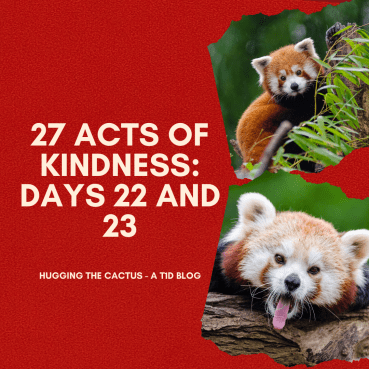
Monday, 4/27 – Act of Kindness #22: I adopted a RED PANDA on Monday!!!
…I wish I could say it was a REAL panda who was going to come and live with me and frolic around the backyard with me and my dog, but that’s just too good to be true – this adoption is just virtual. But I’m excited about it nonetheless. I love red pandas because 1) they’re adorable 2) they’re hilarious and 3) they’re seriously photogenic – really, I’ve never seen a bad picture of one. Sadly, they’re also an endangered species: According to the Smithsonian’s National Zoo and Conservation Biology Institute, there may be fewer than 2,500 adult red pandas living in the wild today.
So as I thought of how I could combine my love for animals with an act of kindness, the idea came to me that I might be able to support one of my favorite exotic species via virtual adoption. I chose to make my donation to the Smithsonian National Zoo in Washington, D.C. because I was lucky enough to spend a handful of treasured days there last year. The zoo is incredibly gorgeous and home to countless fascinating animals, including two sweet red pandas. During my last visit to the zoo, I was able to see one of them very up-close through a window. I was so charmed by the little one that I practically had to be ripped away so other people could take a look, too. It’s really neat that I’m able to support them, in some way, now through my virtual adoption (and I get a red panda plush sent to me as a thank you…I’m not gonna lie, I can’t wait to receive that in the mail).
Just look at it how cute and funny they are!!!
Tuesday, 4/28 – Act of Kindness #23: Of course, I was looking for a way to help out furry friends a little closer to home yesterday. Specifically, I wanted to do something to help out dogs.
Dogs have always been and will always be part of my life (even though I am allergic, LOL). I grew up with two Shetland Sheepdogs and my parents have their third, Clarence, now. My aunts and uncles always had dogs, too (Labradors, Dachshunds, and some mixes are among them). Life is just…better with a dog. The more dogs, the merrier, in my opinion.
The second Sheltie that my family had was from a shelter. We never knew too much about her history, other than she must’ve suffered some sort of trauma before she was rescued. Even though she had major challenges to overcome behaviorally, my family cherished the time she was with us and we were always grateful that we’d connected with the shelter that we rescued her from.
So she was on my mind yesterday when I decided to visit a local animal shelter’s website to see if they were requesting any special support during this time. That’s when I found their Amazon wish list – literally a list of items that the shelter needs that can be purchased on Amazon.com – and went about purchasing some items that could be shipped directly to them. I bought some collars, leashes, and harnesses that they will be able to provide to new pet owners as animals are adopted. I wanted to do more, but I’m hopeful that when it’s safe to do so and when the shelter begins accepting new volunteers, I can maybe continue my support in that fashion.
Animals are awesome. I know that my pets and any that I’ve seen over the years at zoo have taught me so much. Giving back to them in any way, shape, or form is humbling and almost as nice as getting to hug a smooshy fluffy pupper or red panda…almost.

 Hugging the Cactus