Any Pods to Spare?

Not too long ago, the following message appeared in the inbox of one of my social media platforms:

I’m so sorry to bother with something like this. I down to my last pod. And.. currently I’m having insurance issues.. I was wondering if there were any pods you could spare? I’m trying to search around. Or if you know anyone that does have extras? Or samples? I would hate hate to return to multiple daily injections.. I know u understand that. If not it’s ok. Sorry to bother. I don’t know where else to try apart from everything else I’ve tried

When I read it the first time, my heart immediately sank. The message was fraught with desperation, as evidenced by the typos and fragmented sentences. My gut reaction was to reach out to this person and let them know that everything would be fine, that there had to be an option out there that would help them.
E02996A8-72B9-4AC1-866C-D60F0BCF64DC
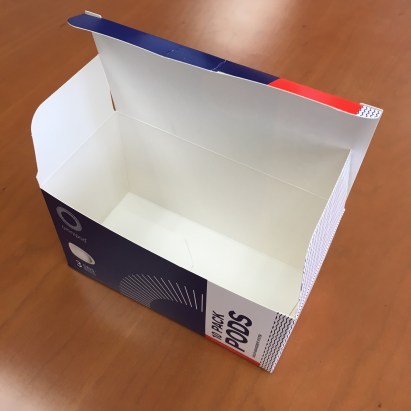
No pods to spare.

My next reaction, though, was pure skepticism. I’m not proud to admit that, but here are the facts that I was facing:

  1. I did not know this person. I tried to look at their profile to see if I could learn more about them, only to discover that it was private. I couldn’t see any of their information, other than a minute profile picture and numbers regarding their followers/activity.
  2. This person said they might be forced to go back to MDI. Personally speaking, if I ran out of pods and had to go back to shots, I wouldn’t like it – but if it was my only option, then of course I’d do it. I did it for something like 17 years before ever trying a pump. It sounded like this person wouldn’t want to do it, but…
  3. Most importantly, I do not have any pods to spare. I’m not sure why this individual thought that I did. It seemed like they’ve been asking as many people as possible on social media for pods, which makes me believe that they’re exploring the #omnipod or #podder hashtags. Regardless, I rely on regular shipments (every three months) from Insulet in order to maintain the bare minimum of pods that I need. And I can’t exactly give up “spare pods” that I don’t even have.

As horribly as I felt for this person, I had to take into consideration the facts that were in front of me, as well as the unfortunate truth that you can’t trust everything on the Internet. I told them that they should try to reach out to Insulet for assistance, and that I would be hoping for the best for them. I know that my kind words probably brought little comfort, but it was all that I had to offer to this total stranger.

The whole exchange haunts me. That’s why I want to know…

What would you have done if you were in my shoes?
Diabetes in the Wild: Beach Edition

I’d just settled into my beach chair, ready to crack open a book, when I spotted her.

She was walking as quickly as she could through the sand to help her friend carry a cooler, but not fast enough for me to miss the CGM on her upper arm. I sat up in my chair and wondered whether I should say something to her – after all, not all T1Ds are excited to encounter one another in the wild.

She caught up with her friend and grabbed the other end of the cooler. As they passed me, I saw she was wearing an OmniPod on her opposite arm. Not just any OmniPod, though: This one was decorated with some sort of emerald green design. I took that as a sign, a literal green light, that she probably wouldn’t mind if I said something.

“Nice OmniPod!” I called out.

She looked around, trying to locate my voice. My mother, who’d been reading the whole time and was unaware of a fellow T1D in our midst, shot a bemused look in my direction as the woman finally made eye contact with me.

“I have one too,” I said, pointing to my arm.

“Nice! I like your decoration. Do you have a Dex, too?” She asked, smiling at me.

“Yup – I’m wearing mine on my abdomen. I saw you had both and couldn’t resist saying something.”

“Well, we’ve got two OmniPodders over here,” She pointed to where she’d set up camp for the day.

Beaming, I told her that we had two in our group, as well. My mom offered her arm up to show her pod. I think that Mom was half entertained, half embarrassed over the whole exchange, so it made me happy to see her join in at the end.

The woman returned to her spot and we wished her well. Mom and I soaked up the sun for a few hours before deciding to pack up for the day. As we were getting our belongings together, a young woman approached us.

1AC16B6B-1C34-4BC7-B8E9-96D612287930
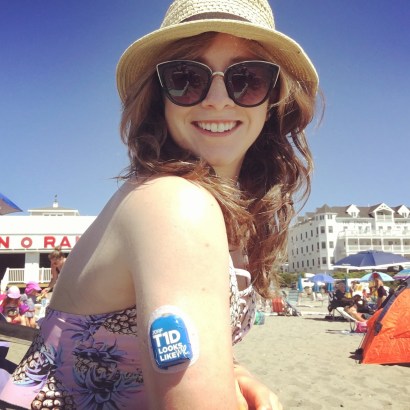
Proud to wear my pod.

“Excuse me, may I ask what is on your arms? I’ve seen numerous people wearing that sort of thing today and I can’t figure out what it is, for the life of me!”

I was going to answer for the both of us, but my mom beat me to the punch. She explained that it was an insulin pump, though other people may wear different medical devices that look similar to it. The girl, seemingly appreciating the response, remarked that it was cool and that she was surprised to see so many people wearing them on the beach. She wondered out loud if she was missing out on some sort of trend.

“Yeah, all the cool kids have them,” Mom said, and we all laughed.

I don’t know how many people on the beach that day were wearing OmniPods – or any other insulin pump, for that matter – but I do know for certain that my mom is right: All the cool kids have them, and they’re much cooler for wearing them with pride in full view of the world.

What It’s Like to Wear a Medical Device 24/7

A question I’m often asked is: “Can you feel your CGM or insulin pump on your body?”

The simple answer to that is: usually, no. It’s something that you just get used to. You grow accustomed to seeing a lump underneath your clothing. You adjust to putting clothes on (and taking them off) carefully to avoid accidentally ripping a site out. You acclimate to showering without being completely naked.

And, of course, you get used to the questions from strangers asking about that device stuck to you.

But the more honest answer to that question would be that there are times that I feel it more than others. For example, sometimes I forget where I’m wearing my pump until I hit it against something (I’m a major klutz who constantly runs into doorways and trip over things, almost always managing to catch my pod on whatever it is), resulting in pain at the site and a curse word or two to fly out of my mouth.

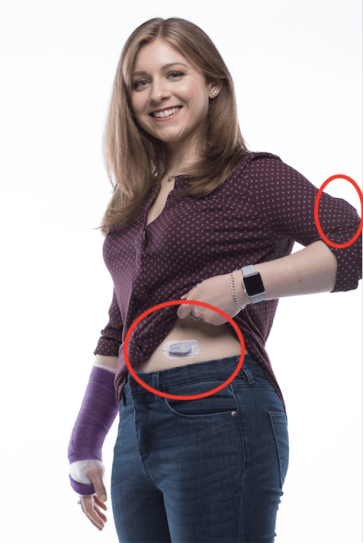
Circled Devices
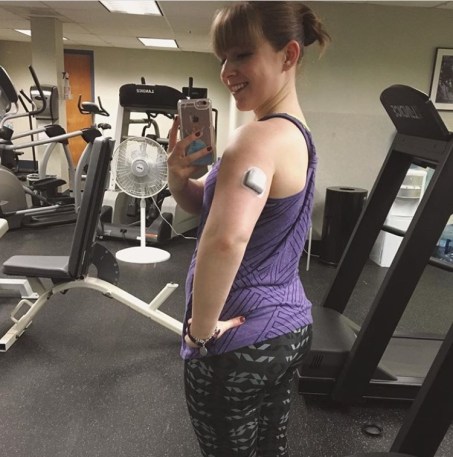
My OmniPod (on my arm) and my Dexcom (on my stomach) are stuck on me 24/7.

I feel it the most, though, when people stare. Whether unconsciously or purposely, people do ogle at it in very not subtle manners. Which makes me feel extremely uncomfortable. It’s worse when they don’t even ask me what it is – I’d rather have a chance to use it as a teaching moment than to have someone walk away not knowing what the device does. This tends to make swimsuit season a little less welcome for me. Nothing will stop me from donning a bathing suit at the beach or by the pool, and I do so as much as possible in the summertime. But it’s just not as fun when I’ve got to cope with lingering looks, especially when I’m an admittedly insecure person in the first place.

So it’s a more complex question to answer than you might realize. Wearing a medical device 24/7 is humbling. It keeps me alive. I’m privileged to have access to it. I’m grateful for the ways it’s improved my life. I’m always wearing it, but it’s not at the forefront of my mind – unless it chooses to make its presence known by alarming, or I’ve got people blatantly checking it out. It’s kind of like diabetes itself. It can make you feel a gamut of emotions, but no matter what, it’s always there. It’s just a part of me, and I can deal with that.

How to Change an OmniPod

I decided to do something a little different and take video of how to change an OmniPod. Rest assured, though, that it does not take 22 seconds – it’s more like a seven-minute process.

Some things you’ll notice about my process:

  1. I fill my syringe with insulin and set it aside before deactivating my old pod. This simply means that I wear the old pod a little bit longer so there’s less of an interruption in time that I go without insulin.
  2. I use a pen to smack bubbles out of the syringe. Air bubbles will inevitably develop when drawing insulin out of a vial, so I find that gently hitting the sides of the syringe with a pen is the most effective way to get rid of the pesky air pockets.
  3. I prep my site with an alcohol swab, followed by a skin-tac wipe. The alcohol merely cleans the site, whereas the skin-tac makes the pod adhere to my skin better and longer.
  4. The new pod activates best when it is adjacent to my PDM. I always place my new pod to the right of my PDM. This helps the PDM register the new pod.
  5. It doesn’t actually hurt when I rip off an old pod. Not sure if you detected my dramatic facial expressing, but I was just yukking it up for the camera. It truly doesn’t hurt, especially if you just remove it in one swift motion.

So that’s it, the full process boiled down into 22 measly seconds. I admit that I kind of had fun making this video, even though the sight of myself sans make-up is semi-horrifying. But give me a break, I was on my way to a Pilates class! And let’s be real, diabetes isn’t always glamorous.

Insulin Pumps and X-rays

“You have to remove your insulin pump before we can take your X-rays,” the technician said to me. I stared at him, and responded point-blank, “What? No, I can’t take it off.” I tried to hide the panic in my voice, but it quavered as tears stung my eyes.

“Well, let me check our insulin pump protocol…” his voice trailed off as he left me in the dark room with my right arm held up in the air in an attempt to mitigate the throbbing sensation going up and down my forearm.

IMG_3979
That pod on my arm can’t simply be removed on command.

When I fell and broke my ulna a couple weeks ago, my insulin pump was one of the last things to cross my mind as I was shuffled from doctor to doctor and one medical facility after the other. All I could concentrate on was the injury – how severe was it? Would I be able to work? Could I keep up my exercise regimen? Was I going to need surgery? My diabetes, for once, was far from my thoughts.

But this instantly changed when I went to get an X-ray. When the technician told me that I’d have to remove my pump, I wanted to shout at him, “No! If I do that, my blood sugar will skyrocket! You can’t expect me to do that!” It was hard to keep calm, and my emotions were already running amok due to the chaos of the morning so far. So even as I tried to fight the tears, a couple escaped and ran down my cheeks. When he came back into the room, the X-ray technician’s expression changed. He looked at me empathetically.

“It’ll be okay. Come on, let’s call your endocrinologist. We’ll see what she has to say and get this all figured out.”

Twenty minutes later, after a series of phone calls and a few accidental hang-ups, we received confirmation that I could, indeed, wear my pump for the X-ray. The nurse practitioner who I spoke with at my endo’s office said that it was safe as long as I wore the protective vest. “It’s really only a problem if you’re going in for an MRI or a CAT scan, because those involve magnets,” he told me.

Once I got off the phone, I ran over to the X-ray technician and explained it to him. He smiled at me and said, “Got it. Let’s get these pictures over with – you’ve already had quite a day so far.”

I nodded and thanked him for his patience. He was right, I was overwhelmed from the events of the day – it wasn’t even noon yet – but in hindsight, I’m glad that the technician didn’t try to fight me when I said I couldn’t remove my pump. His willingness to hear me out was huge. It’s not easy to be your own advocate in a high-stress situation like that. But I’m proud of myself for speaking up and getting the answers we needed. Everything worked out in the end – well, except for that pesky broken-bone bit.